 Ferndale Siding
 Two Fiber Cement Products, One Real Difference
If you've collected a few siding bids in Ferndale or anywhere else in Whatcom County, you've probably noticed that most reputable contractors have moved away from vinyl, LP SmartSide, and wood toward fiber cement. That's a good sign — fiber cement is the right general category for our climate. But "fiber cement" isn't a single product. Allura and James Hardie are the two brands you'll run into most often on quotes, and while they're both cement-based composite siding, they are not interchangeable. We install only James Hardie, and we think homeowners deserve a straight answer about why, instead of a marketing line.
This isn't a case of one product being junk and the other being magic. Allura makes a legitimate fiber cement board. But when we compare the two head-to-head against what a house on the water side of Whatcom County actually has to survive — salt-laden air off Bellingham Bay and the Strait of Georgia, long stretches of driving rain, and a moss season that can run eight months out of the year on shaded, north-facing walls — the gap between the two products becomes a business decision we're not willing to compromise on.
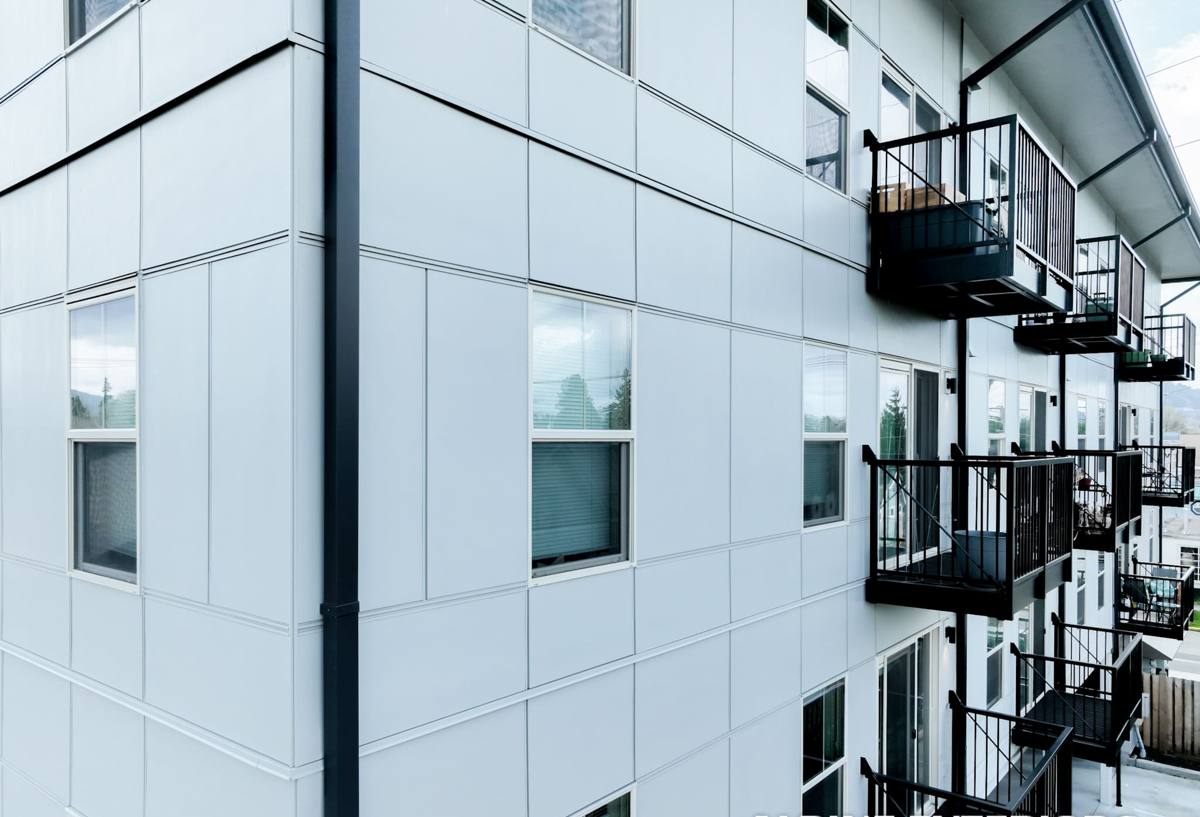
What Allura Gets Right
To be fair to the product, Allura fiber cement shares the same basic composition as James Hardie: portland cement, sand, cellulose fiber, and water, autoclaved into a dense, non-combustible board. That composition is what makes fiber cement superior to vinyl and wood in the first place — it doesn't melt, doesn't rot, doesn't feed pests, and holds paint far better than wood siding ever did. Allura's boards are manufactured to a real industry standard, they're sold through legitimate distribution, and plenty of contractors around the country use them without major complaints.
Allura also tends to run a little less expensive than Hardie on a per-square-foot material basis, which is the main reason it shows up on competing bids. For a homeowner comparing quotes side by side, that price gap can look like free money. It's worth understanding what that gap is actually paying for before deciding it's a good trade.
Where the Two Products Diverge
Factory Finish vs. Field-Applied Paint
This is the single biggest difference, and it matters more here than almost anywhere else in the country. James Hardie's ColorPlus finish is baked on in a controlled factory environment, using a multi-coat process with UV-cured technology, before the board ever reaches a job site. That finish is engineered specifically to resist fading and to hold up against moisture cycling. Allura offers primed boards that are typically painted on-site or shortly after installation, using standard exterior paint applied under whatever weather conditions happen to be occurring that week — which, in Ferndale, often means damp, cool, and less than ideal for paint adhesion and cure time.
A field-applied finish is only as good as the day it was sprayed and the conditions it cured in. A factory finish is consistent every time, on every board, regardless of what the sky is doing on installation day.
Edge and Moisture Engineering
Fiber cement's one real vulnerability is cut and exposed edges — that's where a board can wick moisture if it isn't sealed and treated correctly. James Hardie has spent years refining edge treatments, factory-primed cut edges, and installation specs written specifically around keeping water out of those seams. Allura's edge treatment and installation guidance exist too, but the depth of climate-specific engineering and the volume of field data behind Hardie's HZ5 product line, built specifically for the Pacific Northwest's wet-and-mild weather pattern, isn't something we've seen matched.
Warranty Structure
James Hardie backs its siding with a non-prorated limited warranty that's transferable to a subsequent homeowner, and its ColorPlus finish carries its own separate finish warranty. Allura provides warranty coverage as well, but the terms and the finish coverage differ, particularly once you factor in a field-applied paint job, which typically falls under the paint manufacturer's warranty rather than the siding manufacturer's. For a homeowner planning to stay in a Ferndale home for decades — or planning to sell — a warranty that follows the house and covers the finish as a single package is worth more than it looks like on paper.
Why Ferndale's Climate Makes This Decision Matter
None of this is theoretical for a house in Whatcom County. Ferndale sits close enough to the water that salt air is a real factor on siding, trim, and fasteners, not just a coastal talking point. Add in the Pacific Northwest's driving, wind-blown rain — rain that doesn't just fall straight down but gets pushed sideways into wall assemblies — and you have a climate that stress-tests every seam, edge, and finish on a house continuously, not just during one bad storm a year.
Then there's moss. Shaded, north- and east-facing walls under mature trees, which describes a lot of Ferndale lots, stay damp for extended stretches. Moss and algae need sustained moisture to establish, and a finish that's degrading or a board edge that's absorbing water gives them exactly the foothold they need. A factory-cured, climate-engineered finish resists that biological growth better and longer than a field-applied coat has to.
We're not choosing a product for a house in Arizona or a rain-shadow region east of the Cascades. We're choosing for a house that will sit in wet, salty, shaded conditions for the next 30-plus years, and we'd rather standardize on the product with the deepest track record for exactly those conditions.
Side-by-Side: Allura vs. James Hardie
| Factor | Allura Fiber Cement | James Hardie Fiber Cement |
|---|---|---|
| Core material | Cement, sand, cellulose fiber | Cement, sand, cellulose fiber |
| Finish application | Primed board, painted on-site or after install | Factory-applied ColorPlus, UV-cured before shipping |
| Climate-specific product lines | General product offering | HZ5 zone engineered for Pacific Northwest wet climates |
| Finish warranty | Tied to field-applied paint product | Separate ColorPlus finish warranty from the manufacturer |
| Siding warranty transfer | Manufacturer-specific terms apply | Non-prorated, transferable to next owner |
| Fire resistance | Non-combustible | Non-combustible |
| Typical material cost | Slightly lower | Moderate premium over Allura |
Installation Sensitivity: Why the Installer Matters as Much as the Product
Fiber cement in general is less forgiving to install than vinyl. It has to be cut, fastened, gapped, and flashed to spec, or the product's real-world performance falls well short of its lab performance — regardless of brand. That's true of Allura and true of Hardie both. Where it becomes an argument for standardizing on one product is training depth and consistency: our crews install one fiber cement system, day in and day out, to one set of manufacturer specifications. We're not mentally switching between two different edge-clearance rules, two different fastener schedules, and two different manufacturer flashing details depending on which board happens to be on the truck that week.
A siding job installed slightly wrong will fail early no matter whose name is on the box. Specializing in one system is how we keep that risk as low as we can control it.
Cost Factors Homeowners Should Actually Weigh
- Material price per square: Allura is often modestly cheaper on the board itself.
- Painting labor and timeline: field-applied finishes add a paint step and weather-dependent scheduling that factory finish skips.
- Repaint cycle: a field-applied coat generally needs repainting sooner than a factory-cured finish, which is a recurring cost most homeowners don't price into the "savings" up front.
- Warranty value if you sell: a transferable, non-prorated warranty can be a selling point; a field-paint warranty tied to a separate paint company is a harder story to tell a buyer.
- Resale and appraisal familiarity: Hardie's name recognition in the Pacific Northwest resale market is high, which can matter to appraisers and buyers alike.
A Checklist for Evaluating Any Fiber Cement Bid
- Ask whether the finish is factory-applied or will be painted on-site, and get that in writing.
- Ask what warranty covers the finish specifically, separate from the board itself.
- Confirm the crew installing your siding is trained and, ideally, certified on the specific product being quoted.
- Ask what edge and cut-board sealing process will be used at every field cut, not just factory edges.
- Get the manufacturer's installation instructions referenced by name in your contract, not just "installed per code."
Why We Standardized on James Hardie
We didn't arrive at "Hardie only" out of brand loyalty. We arrived at it after weighing what actually determines how siding performs on a Whatcom County house over 20 or 30 years: the durability of the finish, how well the product handles wind-driven rain and salt air, how deep the manufacturer's climate-specific engineering goes, and what the warranty actually covers when something does go wrong. On every one of those points, James Hardie's factory-finished ColorPlus system and HZ5 product line gave us more confidence for this exact climate than Allura's field-painted alternative. Running one product line also means our crews aren't relearning install specs between jobs — they're getting better at one system, house after house.
If you're planning a siding project in Ferndale or anywhere else in Whatcom County, we're happy to walk you through exactly what we install, why, and what it should cost — no pressure, no hard sell. Reach out for a free estimate using the form below.