 Ferndale Siding
 Siding Built for Custer's Coastal Exposure
Custer sits close enough to the water and open farmland north of Ferndale that homes here take a different kind of weathering than houses further inland in Whatcom County. Salt-tinged air off the Strait, wind-driven rain that comes in sideways during winter storms, and a moss season that can stretch from October through May all work on exterior surfaces year-round. Siding that looks fine in a showroom in July can start showing its weaknesses by the second or third Whatcom County winter if it wasn't built for this specific climate.
We install James Hardie fiber cement siding exclusively for homes in Custer and the surrounding Ferndale area. That's not a marketing position — it's a decision we made after years of doing tear-offs and repairs on other products that couldn't hold up to the combination of moisture, wind, and organic growth that defines this part of the county. Below is an honest look at what Custer homes are up against, and how we approach siding, roofing, windows, and decks here.
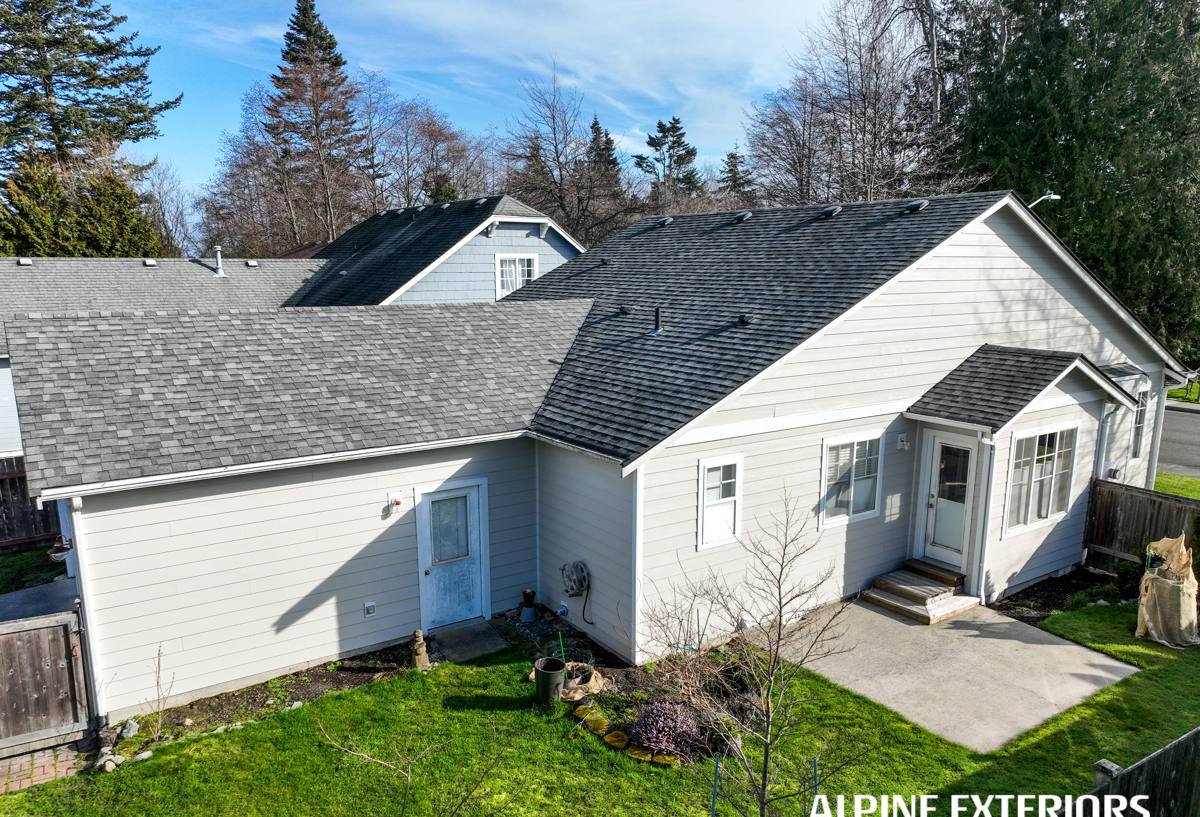
What the Local Climate Actually Does to Siding
Salt Air and Metal Fastener Corrosion
Custer isn't beachfront, but it's close enough to marine air that corrosion-prone materials age faster than they would forty miles inland. Cheap fasteners, unprotected trim flashing, and some engineered wood products show rust streaking and material breakdown well ahead of schedule in this environment. It's a slow, cumulative effect — not something a homeowner notices in year one, but it shows up by year five or six if the materials and fasteners weren't chosen for this specific exposure.
Driving Rain and Wall Assembly Moisture
Whatcom County's winter storms don't just drop rain — they push it horizontally into wall assemblies, especially on west- and southwest-facing elevations that catch the prevailing weather. Siding that relies on tight seams and paint film alone to keep water out struggles here. What matters more is how a product behaves when it does get wet: does it swell, does it wick moisture into the substrate, does it hold water against the wall long enough to feed rot underneath.
Moss, Mildew, and the Long Gray Season
Custer's tree cover, shaded lots, and long stretches of overcast, damp weather create ideal conditions for moss and mildew growth on north-facing walls and anywhere siding stays shaded and damp. Some siding materials are essentially inert to this kind of biological growth. Others become a food source for it once the surface finish starts to break down, which turns a cosmetic problem into a maintenance cycle that never really ends.
Why We Only Install James Hardie
We used to install a broader range of siding products. We stopped installing several of them — not because they're incapable of ever performing, but because we were the ones getting called back to Custer and Ferndale homes to deal with the consequences of moisture intrusion, swelling, and premature paint failure that these products are more prone to in this specific climate. Here's the honest rundown on the alternatives, and why we standardized on James Hardie fiber cement instead.
LP SmartSide
LP SmartSide is an engineered wood product with a resin-treated strand board core. It's a reasonable product in dry, moderate climates. In a wet coastal climate like Custer's, any breach in the factory coating — a nail hole, a cut edge, a caulk failure at a seam — gives moisture a path into a wood-based substrate that can swell and deteriorate once wet. We were doing too many callback repairs on SmartSide installs to keep recommending it here in good conscience.
Vinyl Siding
Vinyl is inexpensive and low-maintenance in a general sense, but it's a poor match for this specific climate profile. It expands and contracts significantly with temperature swings, it can crack in the cold snaps Whatcom County gets some winters, and it doesn't hold paint — so if a homeowner wants to update the color down the road, the only option is full replacement. It also doesn't offer the impact resistance or fire resistance that fiber cement does.
Cemplank and Allura
These are both fiber cement products, and fiber cement as a category is the right call for this climate. Where they fall short, in our experience, is the factory finish and the manufacturer's long-term backing on that finish. James Hardie's ColorPlus finish is baked on and warrantied specifically against fading and peeling in a way we've found more consistent in the field than the competing fiber cement finishes.
Primed Spruce and Cedar
Real wood siding has a genuine appeal, and cedar in particular has a long history in the Pacific Northwest. But in a moss-prone, high-moisture area like Custer, wood siding demands a maintenance commitment — re-staining or repainting on a real schedule, checking for rot at end grain and seams — that most homeowners underestimate when they buy the house. We'll install it if a homeowner understands and wants that commitment, but we don't recommend it as the practical choice for this climate.
James Hardie: What Actually Makes It Work Here
- Non-combustible core — fiber cement doesn't feed a fire the way wood-based products can, which matters given wildfire smoke seasons are becoming a more regular part of Pacific Northwest summers.
- Engineered moisture resistance — Hardie's fiber cement formulation doesn't swell or rot when it gets wet, which is the single biggest factor in a climate where wall assemblies stay damp for months at a stretch.
- ColorPlus factory finish — baked-on color that resists fading and peeling far longer than field-applied paint, with a real manufacturer warranty backing it.
- HZ5 product line — Hardie engineers specific product lines for different climate zones; the HZ5 line is built for the freeze-thaw and moisture conditions common to the Pacific Northwest.
- Proven longevity — when installed to Hardie's specifications, the product has a multi-decade track record in wet coastal climates similar to Whatcom County's.
What Correct Installation Looks Like
Fiber cement siding is only as good as the installation behind it. Hardie's own warranty terms hinge on installation to their specifications, and the details that get skipped on a rushed job are exactly the ones that matter most in Custer's climate.
Flashing and Water Management
Every window, door, and penetration needs proper flashing that directs water out and away from the wall assembly, not just caulk covering a gap. Given how much wind-driven rain Custer gets, flashing details are where a shortcut install and a correct install diverge most.
Fastener Spacing and Type
Hardie specifies fastener type, spacing, and placement precisely. Using the wrong fastener or spacing too wide can lead to boards working loose or cracking over time, especially with the wind loads this area sees during winter storms.
Proper Clearances
Siding needs the correct clearance from grade, roof lines, and decks to avoid trapping moisture against the bottom edge of the boards — a detail that matters more in a high-rainfall area like this than in a drier climate.
Cost Factors for a Custer Siding Project
| Factor | Why It Affects Cost |
|---|---|
| Home size and story count | More square footage and higher walls mean more material and labor, plus staging/lift needs on two-story homes |
| Existing siding removal | Tear-off of old wood, vinyl, or damaged fiber cement adds labor and disposal costs |
| Moisture or rot damage found underneath | Sheathing repair or replacement is common once old siding comes off, especially on shaded, moss-prone walls |
| Trim and architectural detail | Corner boards, window trim, and fascia detail work add labor time |
| ColorPlus color selection | Standard factory colors versus premium or custom-matched colors can shift material pricing |
| Siding profile | Lap siding, shingle-style panels, and board-and-batten each have different material and install labor costs |
Roofing, Windows, and Decks Alongside Siding
Most Custer homeowners who call us about siding are also dealing with related exterior wear — a roof nearing the end of its service life, windows that have fogged or leaked, or a deck that's showing rot at ledger boards and posts. We handle all four trades, which matters in this climate because these systems interact: a roof that's shedding water poorly can rot the top edge of new siding, and a deck ledger attached without proper flashing can create a moisture path into the wall behind it. Addressing them together, or at least with awareness of how they connect, produces a better long-term result than treating each as an isolated project.
Why a Local Crew Matters in Custer
Custer and the greater Ferndale area have their own microclimate quirks — wind exposure that varies block to block depending on tree cover and proximity to open fields, drainage patterns that affect how water moves around a foundation, and moss growth that's heavier on some lots than others just a few hundred yards apart. A crew that works this area regularly recognizes these patterns on sight, rather than treating every job like a generic siding install. That local knowledge shows up in small decisions — where extra flashing attention is warranted, which elevations need closer inspection for existing moisture damage — that a crew unfamiliar with Whatcom County's specific conditions might miss.
Pre-Project Checklist for Custer Homeowners
- Walk the exterior and note any areas with visible moss buildup, especially on north-facing walls
- Look for soft spots, discoloration, or bubbling paint that could indicate moisture behind the siding
- Check caulking and trim around windows and doors for gaps or cracking
- Note any areas where siding meets the roofline, deck, or grade with little to no clearance
- Ask any contractor you're considering for their specific fastener schedule and flashing details, not just a general product pitch
- Confirm in writing which fiber cement product line and warranty terms apply to your project
Get a Straight Answer for Your Home
If you're weighing a siding, roofing, window, or deck project in Custer, we're happy to take a look and give you a straightforward assessment — what's actually going on with your exterior, what your options are, and what a correct installation would involve. There's no pressure and no cost to have us out for a free estimate.