 Ferndale Siding
 Why We're Asked About Cedar So Often
Cedar siding has a long history in Whatcom County. Drive through the older neighborhoods in Ferndale, out toward Mountain View, or along the river roads, and you'll still see original cedar siding and shingle work from decades ago, some of it holding up, plenty of it not. Homeowners ask us about cedar all the time, usually because they love the look, or because they inherited a cedar-sided house and want to know whether to repair it or replace it with something else. This page is our honest answer.
We are a James Hardie fiber cement installer. We do not install cedar siding, and we want to explain why in plain terms rather than just saying "we don't do that." Cedar is a real, respected building material with genuine strengths. It also has real-world maintenance and performance trade-offs that matter a lot in this specific climate, and those trade-offs are the reason we stopped offering it.
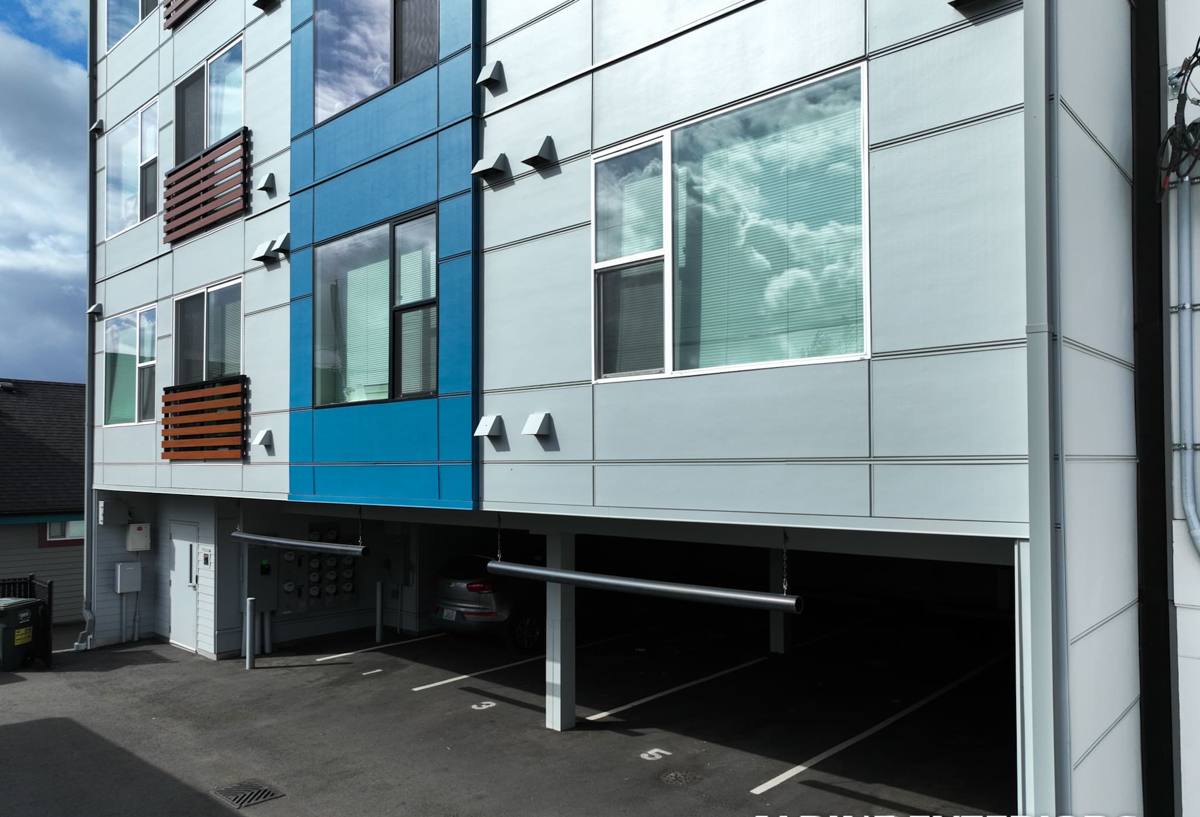
What Cedar Gets Right
We're not going to pretend cedar is a bad product, because it isn't. Its strengths are real:
- Appearance: Natural wood grain and depth that manufactured products still try to imitate. Cedar's look is the reason it stays popular decades after most contractors stopped defaulting to it.
- Natural rot resistance: Western red cedar contains natural oils (thujaplicins) that give it better decay resistance than most other softwoods, which is part of why it became the Pacific Northwest's traditional siding choice in the first place.
- Renewable material: Wood is a renewable resource, and cedar is often sourced regionally in the Pacific Northwest.
- Workability: Cedar is easy to cut, shape, and detail on site, which is part of why it shows up so often on custom trim and architectural accents.
If a homeowner wants the authentic look of real wood and is prepared for the upkeep that comes with it, cedar is not an unreasonable choice in the abstract. The problem is what "prepared for the upkeep" actually means once you factor in where Ferndale sits.
The Climate Problem: Why Ferndale Is Tough on Cedar
Salt Air and Marine Moisture
Ferndale sits close enough to Bellingham Bay and the Strait of Georgia that salt-laden marine air is a constant factor on the exterior of every home here, not an occasional event. Salt air accelerates the breakdown of finishes on wood siding, pulls moisture into the grain, and speeds up the cycle of expansion and contraction that eventually opens up joints, cups boards, and cracks paint or stain films.
Driving Rain
Whatcom County gets a lot of rain, and a good share of it doesn't fall straight down — wind off the Strait and the Nooksack valley pushes rain sideways into west- and south-facing walls. Wood siding depends on its finish (paint or stain) to keep water out of the grain. Driving rain finds every hairline crack in that finish, and once water gets behind the film, cedar starts absorbing and releasing moisture with every wet-dry cycle, which is exactly the mechanism behind cupping, checking, and eventual rot.
Moss and Shade
Ferndale's tree cover and long damp season create ideal moss and algae conditions on north-facing and shaded walls. Moss doesn't just look bad on wood siding — it holds moisture directly against the wood surface for months at a time, which is one of the more common causes of hidden rot we find when we tear off old cedar siding for replacement.
None of these three factors is unique to cedar. Every siding material has to survive salt air, driving rain, and moss season in this county. The difference is how much ongoing maintenance each material needs to keep doing so, and that's where cedar asks more of a homeowner than most people expect going in.
The Real Maintenance Burden
This is the heart of the trade-off. Cedar siding is not a "finish it once and forget it" product. To get anywhere close to its potential lifespan, it needs an ongoing maintenance schedule that most homeowners underestimate when they first choose it.
| Maintenance Task | Typical Interval | Why It Matters Here |
|---|---|---|
| Re-staining or repainting | Every 3-7 years depending on finish and exposure | Salt air and UV break down finish films faster than inland climates |
| Caulking and joint inspection | Annually | Driving rain finds gaps quickly once caulk shrinks or cracks |
| Moss and algae removal | 1-2 times per year on shaded walls | Trapped moisture against wood is a direct path to rot |
| Board replacement (cupped, split, or rotted sections) | Ongoing, as needed | Individual boards fail at different rates depending on exposure |
| Full inspection for hidden moisture damage | Every few years | Rot often starts behind the finish before it's visible on the surface |
Skip or delay that schedule — which is common, because most homeowners have better things to do than repaint siding every few years — and cedar's performance drops off fast. We've torn off cedar siding that was only 12-15 years old and badly deteriorated, right alongside cedar on a neighboring wall that was 30+ years old and still solid, and the difference almost always comes down to maintenance discipline and how much weather exposure that particular wall got.
Cost Over Time
Cedar's upfront material cost is often comparable to or even less than premium fiber cement, but that's an incomplete comparison. The honest way to compare siding materials is lifecycle cost — installation plus every maintenance dollar over 30 years — not just the day-one price. Repeated refinishing, caulking, and board repairs add up, and they add up faster in a marine climate than they would somewhere drier and more sheltered.
Installation Sensitivity
Cedar siding performance depends heavily on installation details that are easy to get wrong and expensive to fix later:
- Back-priming or back-sealing: All six sides of a cedar board should be sealed before installation, including the back, which is often skipped to save time and cost.
- Proper spacing and fastening: Wood needs room to move with moisture cycles. Fasten it too tight or too rigid and boards split or cup.
- Rainscreen or drainage gap: Cedar performs far better with an air gap behind it that lets moisture escape rather than sitting against the sheathing.
- Flashing at every penetration: Windows, doors, and any wall penetration need careful flashing, because cedar has little tolerance for water intrusion at those points.
These details matter with any siding material, but cedar has less margin for error. A missed detail on fiber cement might cause a cosmetic issue years down the road. The same missed detail on cedar can mean active rot within a decade, hidden behind a finish that still looks fine from the curb.
Fire Consideration
Wood siding is combustible. That's a straightforward fact, not a scare tactic, and Whatcom County isn't the highest wildfire-risk part of Washington. But insurance underwriting has been tightening around exterior material in general across the state, and non-combustible siding is increasingly relevant to coverage and premiums, not just to wildfire zones directly. It's a factor worth weighing alongside the aesthetic and maintenance questions.
Why We Standardized on James Hardie Instead
We install James Hardie fiber cement siding exclusively, and cedar's trade-offs are a big part of why. Hardie is engineered specifically to hold up in wet coastal climates like Ferndale's:
- Non-combustible material — fiber cement doesn't burn, which removes an entire category of risk that wood siding carries.
- HZ5 and climate-engineered product lines built for high-moisture, freeze-thaw Pacific Northwest conditions rather than a one-size-fits-all national spec.
- ColorPlus factory-applied finish that's baked on under controlled conditions and backed by its own finish warranty, instead of a field-applied stain or paint job that starts degrading in salt air from day one.
- Dimensionally stable — fiber cement doesn't expand and contract with moisture the way wood does, so it holds paint lines and caulk joints far longer.
- Resists moss and rot at the material level rather than depending on a maintenance schedule to keep moisture out of the substrate.
- Strong transferable warranty that reflects the manufacturer's confidence in how the product performs over decades, not just years.
We're not claiming Hardie is maintenance-free — no exterior siding is. Caulking still needs periodic inspection, and factory finishes eventually age. But the maintenance burden is dramatically lower than cedar's, and the failure mode when something is missed is far less severe. That's the honest trade-off, and it's why we put Hardie on Ferndale homes instead of cedar.
Questions to Ask Before Choosing Cedar
If you're still weighing cedar against other options, these are the questions worth answering honestly first:
- Are you willing to commit to refinishing every 3-7 years, on schedule, even when it's inconvenient?
- Does your home have significant north-facing or heavily shaded wall area where moss will be a persistent problem?
- Is your home exposed to direct west or south wind-driven rain without much roof overhang protection?
- Have you priced the 30-year maintenance cost, not just the installation cost?
- Is the installer proposing back-priming, proper spacing, and a drainage gap — or just nailing boards to the sheathing?
If those answers give you pause, it's worth seriously comparing fiber cement before committing.
Get an Honest Look at Your Options
Every home and every wall exposure in Ferndale is a little different, and we're glad to walk your property, point out where moisture and moss are likely to be a problem, and talk through what James Hardie siding would look like on your specific home. There's no pressure and no obligation — just a straight assessment from a contractor who installs one product and knows it well. Reach out any time for a free estimate.