 Ferndale Siding
 What Primed Spruce Siding Is
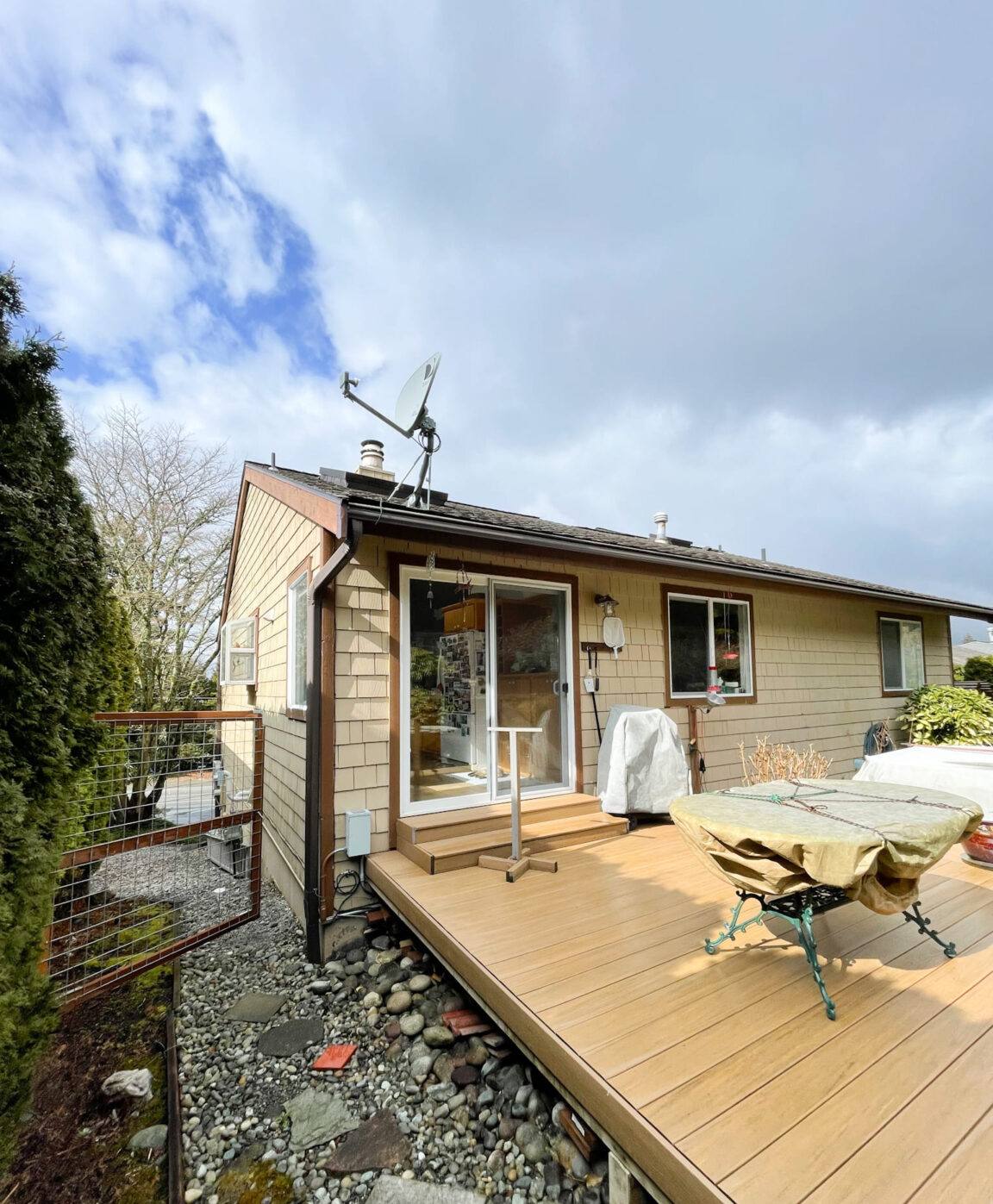
Primed spruce siding is solid-wood lap or panel siding milled from spruce lumber and coated at the factory (or in some cases at a local mill) with a primer coat before it ships to the job site. It's been a staple of Pacific Northwest construction for decades, and there are homes all over Whatcom County wearing it right now. It's real wood, it takes paint well when it's fresh, and it has the kind of traditional look and slight grain texture that some homeowners specifically want and that manufactured products only approximate.
We get asked about it often enough that it's worth a straight answer: we don't install it, and this page explains why, based on how it actually performs once it's on a house in this climate rather than how it looks on the truck.
What Primed Spruce Gets Right
Fair is fair. Primed spruce has real strengths, and pretending otherwise wouldn't be honest.
- Authentic material. It's actual wood, not a composite or a synthetic imitation — some homeowners want that and nothing else will satisfy them.
- Workability. It cuts, copes, and fits trim details the way carpenters have worked wood for a century. Custom corners and transitions are straightforward for an experienced crew.
- Repairable in place. A damaged section can often be patched, filled, or spot-replaced by a competent painter or carpenter without specialty tools.
- Familiar upfront cost. Material pricing is often competitive at the outset, before you factor in the maintenance it will demand.
If a homeowner's top priority is the exact look and feel of traditional painted wood and they're committed to the upkeep, primed spruce isn't a scam or a bad product in the abstract. Our objection isn't to the material — it's to what it takes to keep that material sound on a house in this specific climate, year after year, and what happens when that upkeep slips.
Where Primer Falls Short of Finish
The word "primed" does a lot of work in the marketing, and it's worth being precise about what it means. Primer is not a finish coat. It's a preparatory layer designed to help paint adhere — it is not designed to be a long-term weather barrier on its own. Primed spruce siding is supposed to be top-coated with quality exterior paint within a matter of weeks of installation, not months. In practice, on real job sites with real schedules, that window gets missed more often than manufacturers would like to admit, and every week the bare primer sits exposed to Whatcom County rain is a week of moisture finding its way into open wood grain and fastener holes before the paint film ever seals it.
The Core Problem: Wood, Primer, and Whatcom County Moisture
Ferndale sits close enough to the water that homes here deal with a combination most siding materials never have to survive together: salt-laden air off the Strait, driving wind-driven rain during fall and winter storms, and a long, low-light moss season that keeps north- and west-facing walls damp for weeks at a stretch. Wood siding, even good wood siding, is dimensionally reactive to all of that. It swells when it takes on moisture and shrinks as it dries out, cycle after cycle, season after season.
That movement is the root of almost every long-term problem we see with painted wood siding in this county:
- Paint film cracking and peeling at the points where the wood expands and contracts fastest — butt joints, board ends, and around nail heads.
- Checking and splitting as grain-oriented wood dries unevenly after repeated wetting.
- Moisture wicking at end grain, which is the single most common failure point on lap siding — cut ends at corners and openings that don't get resealed after installation or after repairs.
- Fungal staining and soft spots on shaded, damp elevations where moss and algae hold water against the board longer than sun-exposed walls ever see.
None of this means the siding will fail catastrophically in year two. It means the clock on repainting, caulking, and spot repair starts running the day it goes up, and in this climate that clock runs faster than it does in drier parts of the state.
Maintenance Reality: What Ownership Actually Looks Like
This is the part of the conversation that matters most and gets skipped most often. A painted wood siding system is not a one-and-done exterior — it's an ongoing commitment.
| Task | Typical Frequency in This Climate |
|---|---|
| Full repaint / recoat | Every 5-8 years, sometimes sooner on sun- and rain-exposed walls |
| Caulk inspection and touch-up at joints and trim | Annually |
| Moss and algae wash-down on shaded elevations | Annually to every other year |
| Spot-priming exposed or damaged wood | As soon as it's noticed — delays compound the damage |
| End-grain resealing after any repair or trim work | Every time a board is cut or replaced |
Skip any one of those steps for a season or two and it isn't a cosmetic problem anymore — it's an open path for water into the wall assembly. We've been called to enough homes with soft siding and hidden sheathing rot behind neglected paint jobs to take that risk seriously, and we'd rather not sell a product that puts a homeowner on that maintenance treadmill for the life of the house.
How Primed Spruce Compares to James Hardie Fiber Cement
| Factor | Primed Spruce Siding | James Hardie Fiber Cement |
|---|---|---|
| Material composition | Solid wood, moisture-reactive | Cement, sand, and cellulose fiber — dimensionally stable |
| Factory finish | Primer only; paint applied after install | ColorPlus factory finish baked on, or ready for field paint |
| Combustibility | Combustible | Non-combustible |
| Moisture/rot risk | High if paint film fails or maintenance lapses | Engineered to resist moisture-driven damage |
| Repaint cycle | Every 5-8 years (factory-primed only) | 15-25+ years with ColorPlus finish |
| Insect vulnerability | Susceptible to carpenter ants, woodpeckers, rot-loving pests | Not a food or nesting source for wood-boring insects |
| Manufacturer warranty | Varies by mill; typically limited | Long-term transferable limited warranty, backed nationally |
None of this is a knock on wood as a material in the abstract — it's a statement about what performs with the least ongoing risk on homes exposed to salt air, driving rain, and moss growth on a near-daily basis for a good part of the year.
Moss Season and Salt Air: The Local Variables That Tip the Scale
Whatcom County's moss season isn't a minor annoyance — on north-facing walls under tree cover, moss and algae can hold moisture against siding for weeks without a real drying period. On solid wood, that sustained dampness is exactly the condition that breaks down a paint film from the back side, where you can't see it happening until the finish is already bubbling or peeling. Salt air adds a second, slower mechanism: airborne salt accelerates the breakdown of paint binders and can leave a slightly hygroscopic residue on exterior surfaces that actually attracts more moisture over time. Combine that with wind-driven rain hitting exposed elevations during fall and winter storms, and painted wood siding here is working harder than the same product would in a drier, inland climate. Fiber cement doesn't ignore these conditions, but it doesn't rely on an intact paint film as its only line of defense against them either.
Installation Sensitivity Most Homeowners Never Hear About
Wood siding is far less forgiving of installation shortcuts than most people realize. Every fastener penetration, every cut end, and every joint is a potential entry point for water if it isn't primed and sealed correctly before the board goes up — not just after. Crews under time pressure sometimes prime the face of a board and skip back-priming or end-sealing cut edges, because it's invisible once installed and doesn't show up as a problem for a year or two. By the time it does show up, it reads as a "bad batch of wood" or "bad paint," when the real cause was a sealing step that got skipped on day one. We'd rather not put our name on a product where the difference between a 20-year exterior and a 6-year exterior comes down to steps nobody can verify after the fact.
Why We Standardized on James Hardie
We made a decision as a company to install one siding system — James Hardie fiber cement — instead of offering primed spruce, cedar, vinyl, or engineered wood products alongside it. That's not because Hardie is the cheapest option on the market; it usually isn't. It's because fiber cement holds its dimensions and its finish through the wet-dry, freeze-light, moss-and-salt cycle that defines a Ferndale exterior far more consistently than solid wood does, with a factory ColorPlus finish that isn't relying on a homeowner's repaint schedule to keep water out of the wall. Hardie's HZ5 product line is engineered specifically for climates with sustained moisture exposure, which describes Whatcom County about as well as any spec sheet can. Add in the fact that it's non-combustible and backed by a strong transferable warranty, and it's the system we can stand behind on every home we touch — not just the ones with ideal sun exposure and an attentive owner who never falls behind on maintenance.
Before You Choose Primed Spruce, Ask
- Who is responsible for the first full paint coat, and how soon after installation will it happen?
- Are all cut ends and back sides of the boards being primed or sealed before installation, not just the visible face?
- What does the manufacturer's warranty actually cover — the wood itself, or just certain defects — and for how long?
- What's a realistic repaint interval on this specific wall's sun and moisture exposure, not just the marketing average?
- Who is doing the annual maintenance — caulk checks, moss removal, spot repairs — and what's the real cost of that over 15 years?
If those answers are solid and a homeowner still wants the look and feel of real painted wood, that's a legitimate choice — it just isn't one we offer, because we'd rather build a business around a system we can back without caveats.
If you're weighing siding options for a home in Ferndale or elsewhere in Whatcom County, we're happy to walk the exterior with you, talk through what your specific exposure looks like, and give you a straight, no-pressure estimate on a James Hardie install — no obligation, just the honest version of this conversation in person.