 Ferndale Siding
 Serving Sumas from a Ferndale-Based Crew
Sumas sits out near the Canadian border in Whatcom County, and homes out that way deal with a version of the same weather that shapes exterior work across the rest of the county — just with its own local wrinkles. We're based in Ferndale and have spent years working on homes throughout Whatcom County, which means we already know what a house in this part of the state needs before we ever pull up to the driveway. That local knowledge matters more than people think. A crew that mostly works dry-climate jobs and occasionally drives out to the Pacific Northwest is going to make different assumptions than a crew that deals with this weather every single week, all year.
We handle siding, roofing, windows, and decks. For most homeowners, exterior problems don't show up as one isolated issue — a failing deck board, a leaky window, and deteriorating siding are often symptoms of the same underlying moisture problem working its way through different parts of the house. Having one crew look at the whole exterior, rather than four separate contractors each looking at their own narrow piece, tends to catch things that would otherwise get missed.
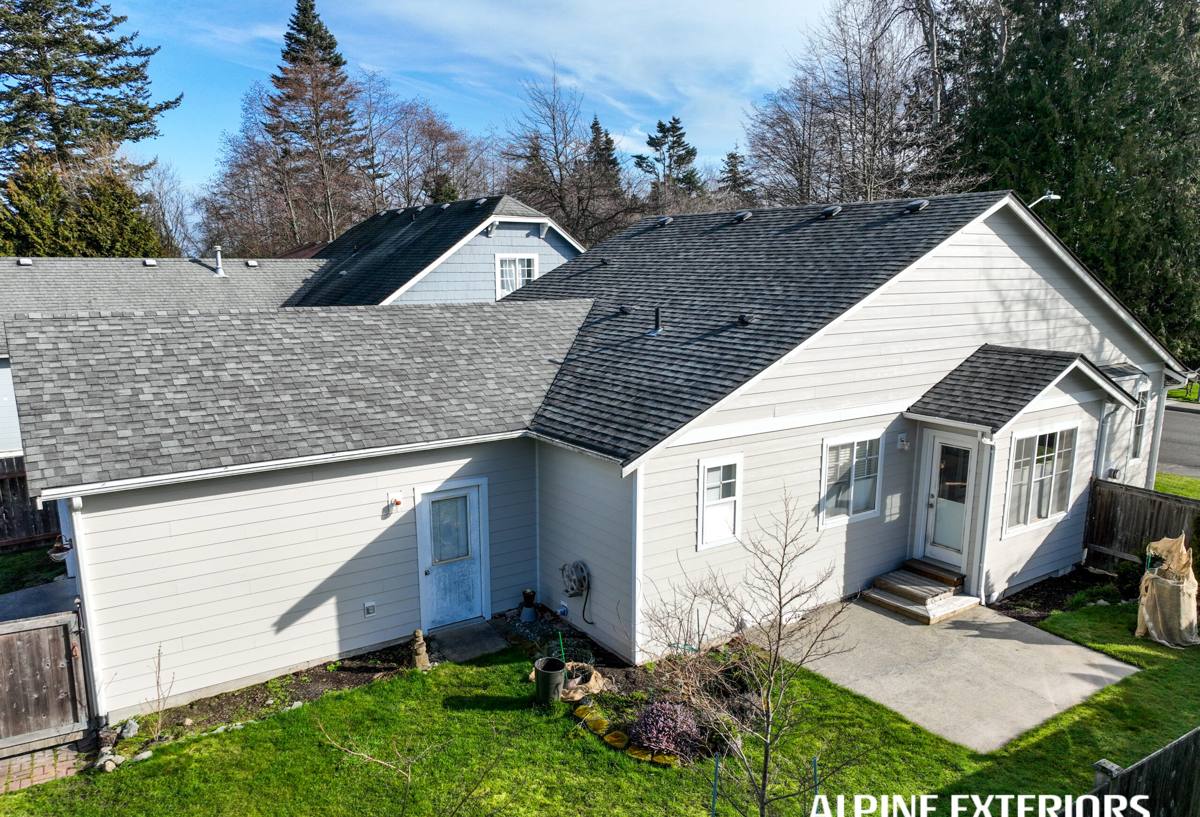
What Whatcom County Weather Does to a House
Whatcom County's climate is defined by three things that matter a lot to exterior materials: driving rain, salt-tinged coastal air pushing inland through the lowlands, and a long, damp season that gives moss and algae plenty of time to take hold. None of these are dramatic in the way a hurricane or hailstorm is dramatic. They're slow. They work on a house year after year, and the damage tends to show up gradually — which is exactly why it gets ignored until it's expensive.
Driving Rain and Wind-Driven Moisture
Rain that falls straight down is easy for most siding and trim to shed. Rain that comes in sideways during a windstorm is a different problem — it gets pushed up under laps, into seams, and behind trim boards that weren't built or installed to handle water moving in that direction. Over time, wind-driven rain finds every weak point in a house's exterior: a caulk joint that's started to crack, a butt seam that wasn't flashed correctly, a window that wasn't properly sealed at installation.
Moss, Shade, and Slow-Drying Surfaces
Whatcom County doesn't get a long, dry summer the way places east of the mountains do. Surfaces here — especially north-facing walls, shaded areas near trees, and anything that doesn't get direct sun for much of the day — stay damp longer than they would elsewhere. That extended dampness is what lets moss and algae get established. On wood siding and trim, that's not just cosmetic. Moss holds moisture against the surface, and sustained moisture against wood is how rot gets started.
Salt Air and Metal Fatigue
Being inland doesn't fully insulate a house from the Pacific Northwest's coastal air. Salt-laden moisture moves further inland than people expect, especially with the region's prevailing weather patterns, and it's hard on unprotected or poorly coated metal — flashing, fasteners, gutters, and roofing components. Corrosion on these small parts is often what causes bigger problems, since a rusted-through flashing detail or a failed fastener is a direct path for water into the wall assembly.
Siding That's Actually Built for This Climate
We install James Hardie fiber cement siding exclusively. That's a deliberate choice, not a default. We don't install vinyl, LP SmartSide, or unfinished cedar, and we're upfront about why: those products all have real strengths, but each comes with a trade-off that shows up faster in a climate like this one than it would somewhere drier. Vinyl can warp and become brittle with age and temperature swings. Wood-based products need more diligent maintenance to keep moisture out of exposed edges and cut ends. Unfinished wood siding needs regular refinishing to hold up against the kind of sustained dampness this region sees for months at a time.
James Hardie fiber cement is engineered specifically to resist moisture intrusion, and it's non-combustible, which matters given how many Whatcom County properties border trees and brush. Hardie's ColorPlus finish is baked on at the factory under controlled conditions, which gives it more consistent, longer-lasting color than field-applied paint — and it comes backed by a strong transferable warranty when installed to Hardie's specifications. That last part matters: fiber cement siding installed poorly can still fail early, regardless of the product's own durability. Correct installation — proper flashing, correct fastening, right clearances at grade and roof lines — is what makes the material's climate resistance actually count for something.
Roofing in a Wet Climate
A roof is the first line of defense against everything described above, and in this climate it takes the brunt of it. Moss growth on roofing is one of the most common calls we get — moss doesn't just look bad, it lifts shingle edges and holds water against the roofing material longer than it's designed to tolerate. Flashing details around chimneys, vents, and valleys are where most roof leaks actually originate, not the field of the roof itself, so that's where we pay the closest attention during both installation and inspection.
Windows That Handle Both Moisture and Temperature Swings
Whatcom County doesn't see extreme heat, but it does see a lot of temperature swing between damp winter cold and warmer, drier stretches — enough to stress window seals and frames over the years. Poorly sealed or aging windows are a common source of the kind of moisture intrusion that eventually shows up as damage in the wall cavity behind the siding, not just as a draft. When we're doing siding or exterior work, we're also looking at window flashing and condition, because a window failure and a siding failure often trace back to the same root cause.
Decks Built for Freeze-Thaw and Standing Water
Decks in this region deal with a specific combination of problems: near-constant dampness for large parts of the year, occasional freeze-thaw cycling, and — depending on the site — shade that slows drying after every rain. Fasteners, ledger board connections, and the flashing where a deck ties into the house are the parts that fail first, usually well before the decking boards themselves show serious wear. A deck that looks fine on the surface can have a compromised ledger connection underneath, which is a safety issue, not just a cosmetic one.
Why a Local Crew Matters
Working across Whatcom County means we've seen how these climate factors play out differently from one property to the next — a shaded lot near mature trees behaves differently than an open one, and a house exposed to prevailing wind patterns takes weather differently than one that's more sheltered. That's the kind of judgment that comes from doing this work locally and repeatedly, not from a general knowledge of siding installation. It also means a shorter response time if something needs a follow-up look, and a crew that's still around and reachable years after the original installation — which matters when you're dealing with a manufacturer's warranty that depends on documented, correct installation.
Comparing Siding Options for This Climate
| Material | Moisture Resistance | Maintenance Needs | Typical Lifespan Considerations |
|---|---|---|---|
| James Hardie Fiber Cement | Engineered for moisture and non-combustible | Low — factory-applied ColorPlus finish, no regular repainting needed | Long service life when installed to spec; strong transferable warranty |
| Vinyl Siding | Sheds water but seams and edges can allow intrusion | Low, but can warp or become brittle with age and temperature swings | Variable; performance drops as material ages |
| LP SmartSide / Wood-Based Siding | Good if sealed and maintained; vulnerable at cut ends and seams | Moderate — cut edges and seams need diligent sealing over time | Depends heavily on installation quality and upkeep |
| Unfinished Cedar | Absorbs moisture without regular refinishing | High — needs periodic refinishing/staining to hold up in a wet climate | Shorter without consistent maintenance |
Signs Your Exterior Needs a Look
A lot of exterior problems in this climate develop slowly enough that they're easy to write off as cosmetic. A few things worth paying attention to:
- Moss or algae buildup on siding, roofing, or decking that keeps coming back after cleaning
- Soft spots, discoloration, or bubbling paint on wood siding or trim, especially near the ground or roofline
- Streaking or staining below window and door trim, which often points to a flashing or seal issue
- Rust staining around fasteners, flashing, or gutter hardware
- Gaps, warping, or separation at siding seams and corner boards
- A deck that feels spongy underfoot or shows movement at the ledger board connection to the house
None of these are emergencies on their own, but they're worth a professional look before they turn into something more expensive — especially heading into another wet season.
Get a Free, No-Pressure Estimate
If you're in Sumas or elsewhere in Whatcom County and want an honest read on your siding, roofing, windows, or deck, we're happy to come take a look. There's no pressure and no obligation — just a straightforward assessment from a crew that works in this climate every day. Use the form below to request a free estimate.