 Ferndale Siding
 Siding Built for Everson's Climate, Not Just Its Curb Appeal
Everson sits inland from Bellingham Bay along the Nooksack River, but "inland" in Whatcom County doesn't mean dry. Marine air pushes up the valley off the Salish Sea most of the year, carrying moisture and a faint salt edge even this far from the water. Combine that with the valley's low-lying humidity, heavy fall and winter rain, and the shaded, tree-lined lots common throughout the area, and you get exterior conditions that are genuinely hard on a home's siding. We've worked on enough houses in this part of the county to know which products hold up here and which ones start showing problems inside of five to ten years.
This page is about what Everson homeowners specifically deal with, how we handle siding (and the roofing, window, and deck work that often comes with it) for this area, and why our crews only install one siding system: James Hardie fiber cement.
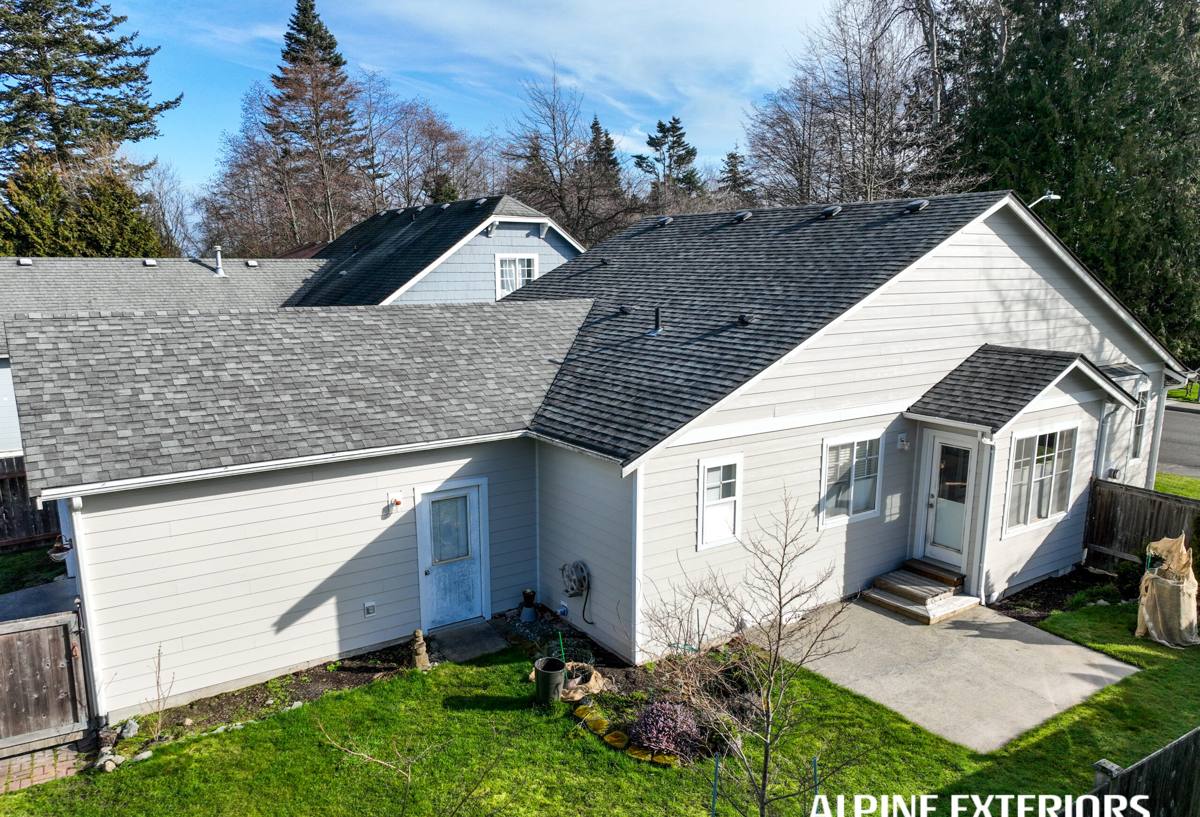
What Everson Homes Are Up Against
Driving Rain and Wind-Driven Moisture
Whatcom County storms don't just fall straight down — wind pushes rain sideways into wall assemblies, especially on the west- and south-facing elevations of a house. Over time, that driving rain finds every seam, gap, and poorly caulked joint in a siding system. Materials that swell, wick moisture, or rely on paint film to stay sealed are the first to fail under this kind of repeated exposure.
A Long, Real Moss and Mildew Season
Between the tree cover common on Everson properties and the persistent damp from fall through spring, moss and mildew get a long runway. Siding that stays damp longer than it should — because of poor drainage planes, absorbent substrate, or shaded north walls — becomes a growing surface. That's not just cosmetic; sustained moisture behind or on top of siding is what eventually rots trim, delaminates panels, and invites pests.
Temperature Swings and UV, in Smaller Doses Than You'd Think
Everson doesn't get the extreme heat of eastern Washington, but summer sun still bakes south-facing walls, and the freeze-thaw cycles of a Pacific Northwest winter still stress caulk joints and fasteners. Siding that isn't dimensionally stable across seasons loosens, cups, or cracks at the joints over the years — usually right where water then gets in.
Why We Standardized on James Hardie
We used to install a wider range of siding products. We don't anymore, and the reason comes directly from what we've seen happen to houses in this climate over time. Fiber cement from James Hardie is engineered specifically to resist the moisture, temperature swing, and biological growth that define a Pacific Northwest exterior. It's non-combustible, it holds paint and factory finish far longer than wood-based products, and it doesn't swell or rot the way engineered wood siding can when a seam fails.
Just as important: Hardie's HZ5 product line is formulated for exactly this region — colder, wetter climates with real moisture exposure — as opposed to the HZ10 line built for hot, humid Southern climates. Installing the correct HZ designation for Whatcom County isn't a marketing detail; it changes how the product performs over 20-plus years.
What We Don't Install, and Why
| Product | Where it falls short here |
|---|---|
| Vinyl siding | Warps and distorts in temperature swings, seams are a chronic water-entry point, thin material shows impact damage |
| LP SmartSide | Engineered wood core is more moisture-sensitive at cut edges and seams than fiber cement; a compromised seal invites swelling |
| Cemplank / Allura | Competing fiber cement brands with thinner factory finish warranties and less climate-specific engineering than Hardie's HZ system |
| Primed spruce / cedar | Beautiful material, but demands a repainting and caulking maintenance cycle most owners underestimate in a wet climate |
None of these are junk products used incorrectly — they're reasonable choices in the right climate or budget. Our position is narrower: for the rain, humidity, and moss exposure typical of Everson and the surrounding county, we've decided Hardie fiber cement is the one system we're willing to stand behind with our own installation crews.
How We Approach a Siding Project in Everson
Assessment First
Before we talk products, we look at the house: current siding condition, signs of moisture intrusion at trim and window flashing, roofline drainage, and how much shade and tree cover the exterior deals with. A house tucked under fir trees on a north-facing lot needs a different moisture strategy than one sitting open to full sun.
Correct Water Management Behind the Siding
Most siding failures we're called out to inspect aren't a failure of the siding material itself — they're a failure of the water-resistive barrier, flashing, and drainage plane underneath it. We install house wrap, flashing, and drainage details to spec every time, because in a climate with this much sustained moisture, the assembly behind the siding matters as much as the siding itself.
Factory-Finished Color, Not Field Paint
James Hardie's ColorPlus finish is baked on at the factory under controlled conditions, which holds up better against UV and moisture than field-applied paint — and it means touch-up matching is simple rather than a repaint project. In a climate where repainting siding every several years is a real maintenance burden, factory finish is a meaningful advantage.
Beyond Siding: The Rest of the Exterior
Siding doesn't work in isolation. We also handle roofing, windows, and decks, because a wet-climate exterior only performs as well as its weakest connection point:
- Roofing — a roof that's shedding water properly, with clean flashing at valleys and walls, is what keeps water from ever reaching your new siding in the first place
- Windows — window flashing integration is one of the most common places we find hidden rot during a siding tear-off; replacing windows at the same time lets us get that detail right
- Decks — exposed to the same driving rain and moss growth as siding, and often ledger-board connections that need the same water-management attention
If you're planning siding work in Everson, it's worth having a local crew look at all four at once, even if you're only budgeting for one this year — the interactions between them matter more than any single component.
What a Siding Replacement Actually Involves
- On-site assessment of existing siding, trim, and any visible moisture or rot damage
- Removal of old siding down to the sheathing, with an honest look at what's underneath
- Repair of any rotted sheathing or framing found during tear-off — this is common and should be priced as a contingency, not a surprise change order
- Installation of house wrap and flashing per manufacturer and code specifications
- Installation of James Hardie panels or planks in the HZ5 formulation, with correct fastening and gapping per Hardie's published specs
- Trim, caulking, and final inspection
A Quick Checklist for Homeowners Comparing Bids
- Does the bid specify the exact Hardie product line and HZ designation, or just "fiber cement"?
- Is house wrap and flashing repair included, or only mentioned as a possible add-on?
- Does the contractor carry Hardie-specific installer training or certification?
- Is the warranty transferable if you sell the home?
- Does the quote separate labor, material, and any sheathing repair contingency clearly?
Cost Factors Worth Understanding
| Factor | Why it moves the price |
|---|---|
| Existing siding removal | Multiple layers or hidden damage add labor time |
| Sheathing condition | Rot found underneath old siding requires repair before new siding goes on |
| Home shape and trim detail | More corners, windows, and dormers mean more cutting and flashing work |
| Siding profile chosen | Lap, shingle, and panel styles have different material and labor costs |
| Access and site conditions | Tree cover, slope, and setbacks affect scaffolding and staging |
We won't quote a number without seeing the house — anyone who does is guessing. But these are the variables that actually move a bid up or down, and a straightforward local estimate should walk you through each one.
Why a Local Crew Matters in Everson
Whatcom County's microclimates vary more than people expect between the coast, the valley floor, and the foothills. A crew that works this specific area regularly knows what driving rain does to a north-facing wall in Everson versus a more sheltered lot closer to Ferndale, and adjusts flashing and drainage details accordingly rather than installing to a generic national spec. That local judgment — not just the product on the wall — is what determines whether siding lasts 10 years or 40.
If you're planning a siding project in Everson, or want a straight answer on whether your current siding is worth repairing versus replacing, we're happy to take a look. Estimates are free, there's no pressure, and you'll get an honest assessment either way — just fill out the form below to get started.