 Ferndale Siding
 Exterior Work Built for the Sudden Valley Setting
Homes around Sudden Valley sit in a setting that's beautiful to live in and genuinely tough on exterior building materials. Mature tree canopy, close proximity to water, and the damp, gray stretch of a Pacific Northwest winter all combine to create conditions that push siding, trim, and roofing systems harder than they'd be pushed in a drier, more open part of the state. We've worked on enough homes throughout Whatcom County to know that "it's just weather" undersells what's actually happening on a wall over ten or twenty years.
This page is about what we see in the Sudden Valley area specifically, and how our approach to siding — and the rest of the exterior, including roofing, windows, and decks — is built around those realities rather than around a generic install.
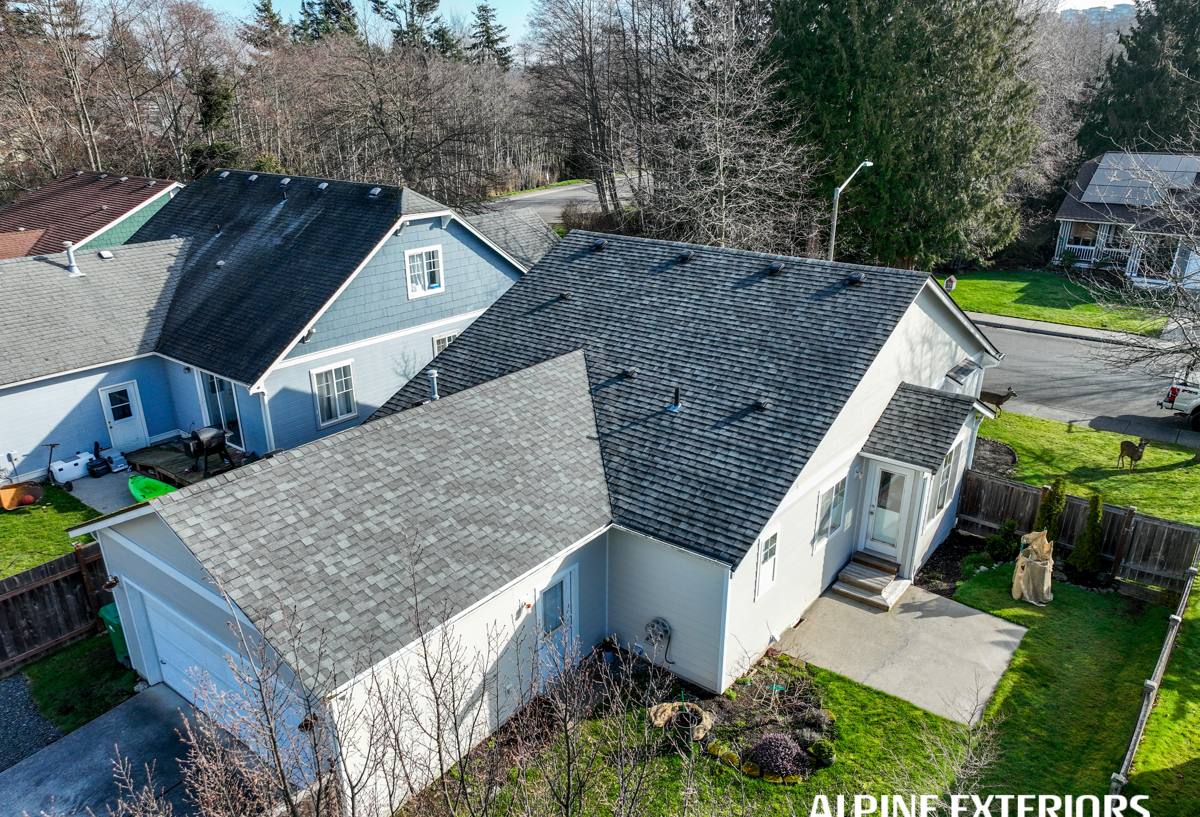
What the Climate Actually Does to a House Here
Salt Air and Moisture Load
Whatcom County's proximity to the Salish Sea means homes throughout the region deal with a steady low-level dose of salt-laden, moisture-heavy air. It's not the same as being right on a beach, but it's enough over time to accelerate corrosion on fasteners, trim flashing, and any exposed metal, and it keeps the ambient humidity around a home elevated for more of the year than most homeowners realize.
Driving Rain
Storms coming off the water don't fall straight down — they come in sideways, driven by wind, and that changes how a wall system needs to perform. Driving rain finds every gap in flashing, every under-caulked joint, and every seam where two materials meet. A siding product and installation detail that would be fine in a calm, dry climate can fail here simply because the water pressure and wind loading are higher.
The Long Moss Season
Tree cover, shade, and consistent moisture add up to a moss and algae season that runs far longer than most homeowners expect — often close to year-round on north-facing walls and shaded sections of roof. Moss holds moisture directly against a surface, and organic growth on a wall isn't just cosmetic; it's a sign that the surface underneath is staying wet longer than it should.
Put those three things together — salt air, driving rain, and a long moss season — and you get an exterior environment that rewards materials and installation practices that manage moisture well, and punishes anything that doesn't.
Why We Only Install James Hardie Fiber Cement
We made a decision, as a company, to install one siding system: James Hardie fiber cement. We don't install vinyl, LP SmartSide, Cemplank, Allura, primed spruce, or cedar. That's not a marketing position — it's a standard we hold ourselves to because of what we've seen these climate conditions do to exterior materials over time, and because we'd rather stand behind one system we trust completely than offer a menu of products with very different long-term outcomes.
What Matters for a Home Like This
- Non-combustible material — fiber cement doesn't feed a fire the way wood-based products can, which matters in a region where wildfire smoke seasons have become a normal part of summer.
- Dimensional stability — fiber cement doesn't swell and shrink with moisture the way wood-based siding does, which matters directly for driving-rain performance and long-term paint/finish adhesion.
- Factory-applied finish — Hardie's ColorPlus finish is baked on in a controlled factory environment, which holds up better against the freeze-thaw and constant damp cycling than most field-applied paint jobs.
- Climate-engineered product lines — Hardie makes HZ5 and HZ10 formulations specifically engineered for wetter, colder climate zones, which is exactly the zone Whatcom County sits in.
- A real warranty structure — a manufacturer warranty that's transferable and backed by a large, established company matters when you're planning to be in a house, or sell a house, in a climate that's actively working against the exterior.
We're not telling you those other products are worthless — plenty of homes around the country wear them fine. We're telling you what our own field experience in this specific climate led us to conclude, and why we'd rather turn away a job than install something we don't believe will hold up here.
How Siding, Roofing, Windows, and Decks Work Together
A house is a system, not a collection of separate products, and that's especially true in a climate this wet. Siding that's perfectly installed can still let water in if the roof-to-wall flashing above it is wrong. Windows that are properly flashed can still leak if the siding around them wasn't integrated correctly. Decks attached to the house create their own set of ledger-board and flashing details that, done wrong, become a chronic moisture entry point right into the wall assembly.
Because we handle siding, roofing, windows, and decks, we're able to look at a Sudden Valley home as one connected envelope rather than trading blind spots between separate contractors who never talk to each other. That matters most at transitions — roof-to-wall, window-to-siding, deck-to-wall — which is exactly where driving rain and long-term moss growth cause the most damage.
Where We Look First on an Aging Exterior
- Roof-to-wall flashing and step flashing at any roof-siding intersection
- Window and door head flashing, and whether housewrap laps over it correctly
- Deck ledger attachment and flashing where it meets the siding
- North- and shade-facing wall sections for moss, algae, and soft or delaminating material
- Butt joints, corner boards, and any field-caulked seams original to the home
What a Siding Project Looks Like for a Sudden Valley Home
Assessment
We start by walking the exterior and looking at how the existing siding, trim, and flashing have actually performed — not just how they look from the street. Shaded and tree-covered elevations get particular attention, since that's usually where moisture problems show up first.
Moisture and Substrate Check
Before any new siding goes up, we want to know the sheathing and framing underneath are sound. Installing a durable new product over a wet or compromised substrate just hides a problem instead of solving it.
Weather-Resistive Barrier and Flashing
This is the layer that does the real work of keeping driving rain out, and it's also the layer most likely to be shortcut on a low-bid job. Correct lapping, sealed penetrations, and properly integrated window and door flashing matter more in this climate than almost anywhere else in the state.
James Hardie Installation
We install to Hardie's published fastening, clearance, and joint-treatment specifications — not shortcuts that happen to look fine on install day. Proper ground clearance and roof clearance in particular are worth getting right in a moss-prone, shaded environment, since tight clearances trap moisture and organic debris against the bottom edge of the siding.
Trim, Caulking, and Finish Details
The small stuff — corner treatments, caulk joints, touch-up paint at cut edges — is where a lot of long-term callbacks originate. We treat it as part of the job, not an afterthought.
Comparing Siding Options in This Climate
| Factor | James Hardie Fiber Cement | Vinyl | Wood / Engineered Wood |
|---|---|---|---|
| Moisture response | Dimensionally stable, engineered for wet climates | Doesn't absorb water, but can warp/buckle with heat and age | Absorbs moisture; prone to swelling, rot at edges |
| Moss/algae resistance | Factory finish resists staining; cleans well | Can stain and hold algae in shaded areas | Holds moisture, feeds moss and rot in shade |
| Fire performance | Non-combustible | Combustible, can melt/deform near heat | Combustible |
| Finish longevity | Factory ColorPlus finish, long repaint interval | Color molded in, can fade/chalk over time | Field-applied paint, needs regular recoating |
| Long-term maintenance | Low; occasional wash and caulk check | Low, but repairs can be visually mismatched | Higher; repainting, caulking, spot repairs recur |
Homeowner Checklist: Is It Time to Look at Your Siding?
- Persistent moss, algae, or dark staining on shaded or north-facing walls
- Soft spots, bubbling, or visible delamination anywhere on the siding surface
- Paint that's peeling or failing faster than a normal repaint cycle would suggest
- Visible gaps or cracked caulking at trim, window, and corner joints
- Warping, buckling, or panels that no longer sit flat against the wall
- Musty odor or interior staining near exterior walls, which can point to moisture getting behind the siding
- A roof, window, or deck project coming up — a good time to evaluate the whole envelope at once
Why a Local Crew Matters Here
Siding installation detail that works in a dry inland climate isn't automatically right for a lake-adjacent, tree-covered, storm-exposed part of Whatcom County. Clearance heights, flashing laps, fastener choice, and even the order operations happen in all get influenced by how much moisture and wind-driven rain a wall is actually going to see. A crew that works this region regularly builds a feel for where water wants to go on these homes — and that shows up in the parts of a job you can't see once it's finished, which are usually the parts that matter most ten years down the line.
We also think there's real value in a contractor who's still local and reachable if a question comes up two or five years after the job is done. Warranty support, a caulk touch-up, a question about a new moss patch — that's a lot easier with a crew based in the same county dealing with the same weather.
Getting Started
If you're weighing a siding project — or thinking about siding alongside a roof, window, or deck update — we're happy to walk your property, look at how the existing exterior has held up, and give you a straightforward assessment of what we'd recommend and why. There's no pressure and no obligation. Fill out the form below and we'll set up a free estimate for your Sudden Valley home.