 Ferndale Siding
 Why Birch Bay Decks Wear Out Faster Than You'd Expect
Birch Bay sits right on the water, and that proximity is exactly what makes deck maintenance here different from a deck repair job ten miles inland in Ferndale or Lynden. Salt-laden air corrodes fasteners and hardware faster than dry Whatcom County air does. Wind-driven rain off the bay pushes moisture into joints and seams that would stay dry on a more sheltered property. And the long, gray moss season that defines a Pacific Northwest winter doesn't just grow on roofs — it takes hold on deck boards, railings, and anything horizontal that stays damp for weeks at a time.
None of this means a Birch Bay deck is doomed. It means the repair has to account for the actual exposure the structure is dealing with, not a generic checklist. A repair that would hold up fine in a dry, inland yard can fail within a season or two on a waterfront lot if the wrong fasteners or the wrong sealing approach get used.
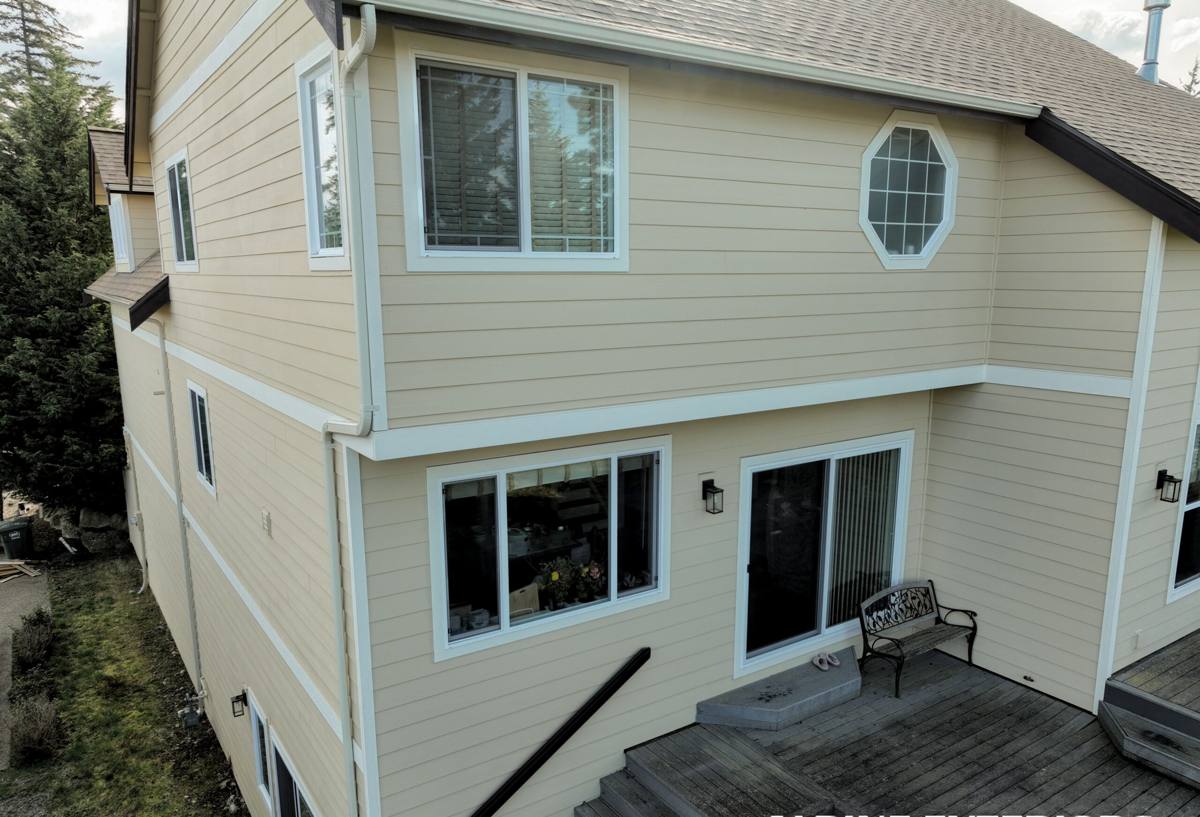
The Deck Problems We Actually Find in Birch Bay
Corroded Fasteners and Hardware
Standard galvanized nails, screws, and joist hangers hold up reasonably well in most of Whatcom County. Close to the bay, salt air accelerates corrosion, and we regularly find fasteners that are rusting from the inside out while the surrounding wood still looks fine. Corroded fasteners lose grip strength long before they look obviously bad, which is part of why they're easy to miss on a casual inspection.
Moss and Algae Buildup
Moss doesn't just make a deck slippery — it holds moisture against the wood surface for extended periods, which speeds up rot underneath the growth. A deck that gets shaded part of the day, or that sits low to the ground with limited airflow underneath, will grow moss faster and need more frequent cleaning to keep the surface from breaking down.
Ledger Board and Framing Rot
The ledger board — where the deck attaches to the house — is one of the most important structural components and one of the most common failure points. Flashing that wasn't installed correctly, or that has degraded over time, lets water track behind the ledger and rot the framing from a spot that's hard to see without pulling back decking boards or siding.
Railing and Post Instability
Railing posts anchored into a deck frame that has softened from moisture intrusion will start to wobble well before the deck surface itself shows obvious damage. This is a safety issue, not just a cosmetic one, and it's one of the first things we check on any repair call.
Composite Board Issues
Not every deck in Birch Bay is wood. Composite decking is common, and while it resists rot better than wood, it isn't maintenance-free. Some composite boards can delaminate or fade unevenly with prolonged UV and moisture exposure, and hidden fastener systems can loosen over time, leading to board movement that needs to be addressed before it gets worse.
What a Correct Deck Repair Actually Involves
A repair that just replaces the boards you can see and calls it done often misses the underlying cause. Our approach starts with figuring out why a section failed, not just patching the symptom.
- Full visual inspection of decking, framing, ledger board, posts, and railings
- Probing suspect wood with a moisture meter or awl to find soft spots that aren't visible from the surface
- Checking fastener condition, not just board condition — corroded hardware gets replaced even if the wood around it looks fine
- Inspecting flashing at the ledger board connection, since this is the most common hidden source of rot
- Confirming railing posts are solidly anchored and meet current safety expectations
- Checking drainage and airflow underneath the deck, since standing moisture is often the root cause of repeat problems
Skipping any of these steps means there's a real chance the same failure shows up again in a year or two, just in a slightly different spot.
Repair or Replace? How We Help You Decide
Not every deck problem calls for a full rebuild, and not every deck problem should be patched over either. The right call depends on how much of the structure is affected, how old the deck is, and what it's built from.
| Factor | Leans Toward Repair | Leans Toward Replacement |
|---|---|---|
| Extent of damage | Isolated boards or a single section | Rot or corrosion spread across multiple areas |
| Framing condition | Joists and ledger board are sound | Structural framing is compromised |
| Deck age | Under 10-15 years, built to current standards | Older deck nearing the end of its practical life |
| Fastener condition | Hardware still solid, just surface boards affected | Widespread fastener corrosion throughout |
| Material type | Solid wood or composite in otherwise good shape | Older wood not rated for continued coastal exposure |
We'll tell you honestly which category your deck falls into. If a repair will genuinely hold up given the bay's exposure, that's what we recommend — there's no reason to sell a full rebuild when a targeted fix will do the job.
How Our Process Works
1. Inspection and Estimate
We walk the deck with you, point out what we find, and explain what's driving each issue — not just what needs replacing. You get a written estimate with the scope spelled out before any work starts.
2. Removing and Assessing Hidden Damage
Once we open up a problem area, we sometimes find the damage extends further than what was visible from the surface. If that happens, we'll show you what we found and adjust the plan together rather than proceeding on a guess.
3. Repair or Rebuild
Damaged boards, framing members, and hardware get replaced with materials suited to the site's actual exposure — which for most Birch Bay properties means corrosion-resistant fasteners and careful attention to flashing and moisture management, not just matching the old materials.
4. Cleanup and Final Check
We check railings, stair connections, and overall stability before calling the job done, and leave the site clean.
Material and Fastener Choices That Matter Near the Bay
On a property with regular salt air exposure, the small material decisions matter more than they would inland. This is one of the areas where cutting corners shows up fastest.
Fasteners
We favor stainless steel or high-grade coated fasteners rated for coastal or treated-lumber exposure over standard galvanized hardware in areas that see direct salt spray or persistent dampness. It costs a bit more up front, but replacing fasteners again in a few years costs more in the long run, both in money and in the labor to pull boards back off.
Wood Species and Treatment
Pressure-treated framing lumber is standard for structural components, and it needs to be rated appropriately for ground contact or exposed use depending on where it sits on the structure. For visible decking boards, cedar remains a popular choice in this region for its natural rot resistance, though it still needs periodic cleaning and sealing to perform well.
Composite Decking
Composite is a reasonable option for homeowners who want to reduce the sanding, staining, and sealing cycle that wood decking requires. It won't rot the way wood can, but it isn't immune to moss growth or UV fading, and the substructure underneath still needs to be built and maintained correctly — composite boards don't fix a framing problem underneath them.
Maintenance That Extends the Life of a Repair
A good repair job is only half the equation. What happens between now and the next inspection matters just as much, especially given how long the wet season runs here.
- Clean moss and algae off decking surfaces at least once a year, ideally before the wettest months set in
- Keep gutters and downspouts clear so runoff isn't draining directly onto or under the deck
- Reseal or restain wood decking on the manufacturer's recommended schedule, not just when it looks faded
- Check railing posts for movement a couple times a year, especially after storms with strong wind off the bay
- Keep planters, rugs, and furniture from sitting in one spot for months at a time, since trapped moisture underneath accelerates wear
- Make sure under-deck airflow isn't blocked by stored items or overgrown landscaping
Why a Crew That Already Works Birch Bay Makes a Difference
Deck repair advice that's written for a national audience doesn't account for what a bay-front lot in Whatcom County actually goes through in a year. A crew that regularly works this specific stretch of coastline already knows which fastener grades hold up, which flashing details tend to fail first, and how much moss buildup is normal versus a sign of a drainage problem. That familiarity means fewer surprises during the job and a repair that's built for the exposure your deck actually sees, not a generic assumption about Pacific Northwest weather in general.
It also means we're not guessing at permitting or structural expectations for the area — we handle deck work across Ferndale and the surrounding Whatcom County communities regularly, so we know what a compliant, durable repair looks like here specifically.
Get a Straight Answer About Your Deck
If your deck in Birch Bay has soft spots, rusted hardware, persistent moss, or a railing that doesn't feel as solid as it should, it's worth getting an honest look before the next wet season makes the problem worse. We offer free, no-pressure estimates — use the form below to schedule a time for us to come take a look.