 Ferndale Siding
 Siding Built for Life Near Bellingham Bay
Fairhaven sits close enough to the water that its homes live with a different set of conditions than houses ten or fifteen miles inland. Salt-laden air off Bellingham Bay, wind-driven rain that comes in sideways during the winter storm season, and long stretches of shade under mature evergreens all put steady pressure on exterior siding. None of that is dramatic on any given day — it's cumulative. A house in this part of Whatcom County doesn't fail because of one bad storm; it wears down over years of exposure that inland neighborhoods simply don't deal with in the same way.
We serve Fairhaven as part of our regular service area out of Ferndale, and we've built our approach around the coastal reality here rather than a generic Pacific Northwest playbook. That starts with the material we put on the wall and carries through every detail of how it's installed.
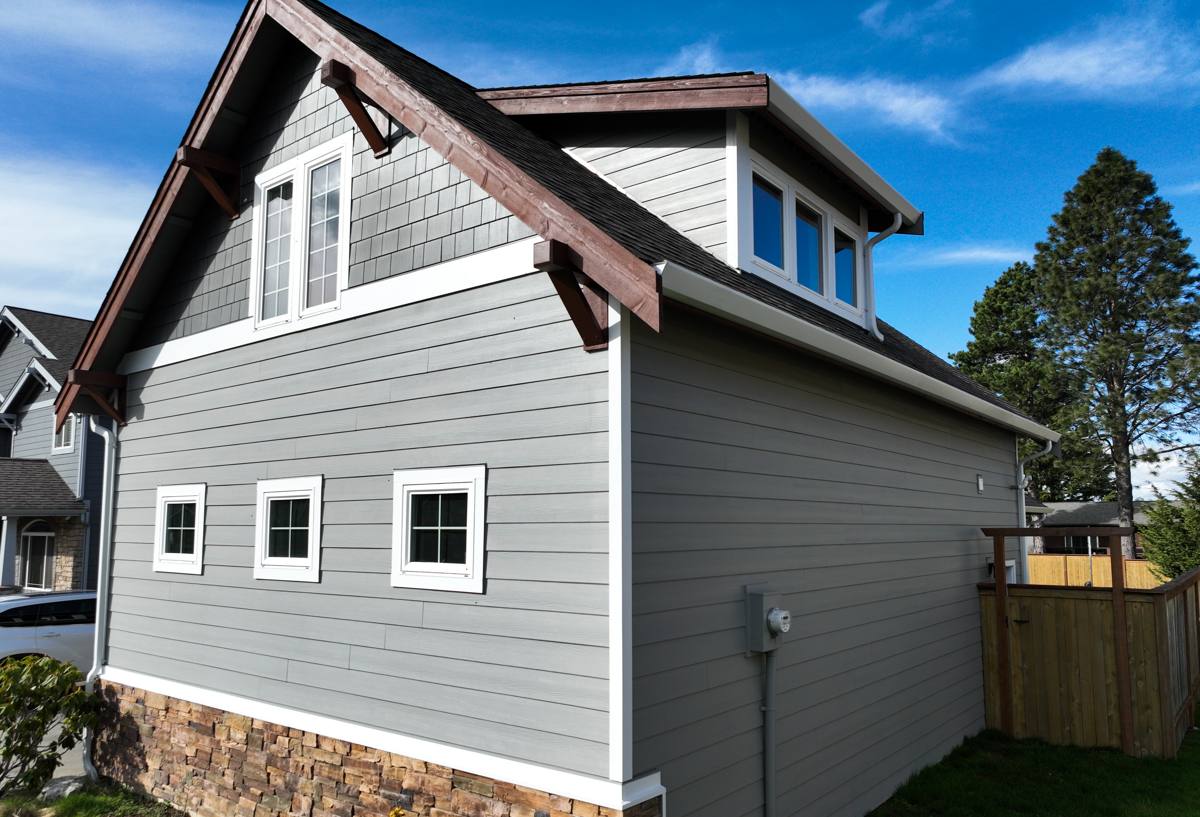
What the Coastal Climate Actually Does to Siding
Salt Air and Slow Corrosion
Proximity to salt water changes the chemistry of the air homes are exposed to. Salt accelerates corrosion of fasteners, trim flashing, and any exposed metal components, and it can also speed the breakdown of lower-grade paint films and coatings over time. This isn't something you notice in year one or two — it shows up as premature fastener staining, early caulk failure, and paint that chalks or fades faster than the same product would a few miles inland.
Driving Rain and Wind-Driven Moisture
Storms moving through the Strait of Georgia and off the Salish Sea don't just drop rain straight down — wind pushes it horizontally into wall assemblies, especially on west- and south-facing elevations that catch the brunt of a system. That means seams, laps, and butt joints in siding take on real hydrostatic pressure during a heavy winter storm, not just incidental moisture. Siding that isn't dimensionally stable, or that wasn't installed with correct overlap and flashing detail, is where water finds its way behind the cladding.
A Long Moss and Shade Season
Fairhaven's tree cover and marine-layer humidity add up to long stretches where north-facing and shaded walls stay damp far longer after a rain than they would in full sun. That's exactly the environment moss, algae, and mildew need to establish themselves on a wall surface. On porous or absorbent siding materials, that growth doesn't just sit on the surface — it can hold moisture against the substrate and contribute to slower, harder-to-see deterioration underneath.
Why Material Choice Matters More in a Neighborhood Like This
Inland, a mediocre siding choice might perform acceptably for a decade or more before problems show up. Close to the water, the same product is under more stress from day one. That's the reason we standardized on James Hardie fiber cement siding and don't install vinyl, LP SmartSide, cedar, primed spruce, or comparable fiber cement alternatives like Cemplank or Allura. It isn't brand loyalty — it's a judgment call based on how these materials actually behave under sustained coastal exposure.
| Material | How it holds up near the coast |
|---|---|
| Vinyl siding | Can warp or deform under repeated wet-dry and temperature cycling; seams are a common moisture entry point in driving rain |
| Cedar / primed spruce | Natural wood; needs disciplined recoating and maintenance to resist moisture and moss in a shaded, humid microclimate |
| LP SmartSide (engineered wood) | Performs well when maintained on schedule, but edge and seam sealing is unforgiving if upkeep lapses in a wet climate |
| James Hardie fiber cement | Non-combustible, dimensionally stable, factory-baked ColorPlus finish resists fading and doesn't rely on field-applied paint for its primary protection |
None of the products we don't install are bad products in every context. Each has trade-offs we're honest about on other pages of our site. But when a home is going to spend decades absorbing salt air, wind-driven rain, and shade-driven moss, we'd rather put one material on the wall that we trust to perform consistently than offer several options with meaningfully different long-term outcomes.
Why We Install Only James Hardie
James Hardie fiber cement is engineered specifically around regional climate demands — the HardieZone system accounts for moisture exposure and freeze-thaw patterns by region, and the Pacific Northwest falls under specifications built for wet, marine-influenced conditions. A few things matter most for a Fairhaven property specifically:
- Non-combustible core — fiber cement doesn't feed a fire the way wood-based products can, which matters for insurance considerations as much as safety
- ColorPlus factory finish — the color coat is baked on in a controlled environment, so it isn't relying on field conditions or a rushed paint day to bond correctly
- Dimensional stability — fiber cement doesn't swell and contract with moisture the way wood-based sidings can, which keeps seams and laps tighter over time
- Transferable warranty — a real factor if a Fairhaven home changes hands, since siding warranty coverage is one more thing a buyer's inspector will ask about
None of that replaces correct installation. Even the best material performs poorly if it's hung wrong, and that's where a lot of the real risk in a coastal job actually lives.
How We Approach a Siding Project in Fairhaven
Assessment Before Anything Gets Ordered
We start by walking the exterior and looking specifically at the elevations that take the most weather — usually the sides facing the water or open exposure — along with any shaded, moss-prone walls. We check existing flashing, window and door transitions, and any spots where past moisture intrusion has already left evidence, since those are the areas that determine detailing decisions later, not just the overall square footage.
Installation Detail That Matches the Climate
Correct installation in a coastal environment comes down to a handful of details that are easy to skip and expensive to skip wrong:
- Proper drainage plane and weather-resistive barrier behind the siding, not just the siding itself
- Correct fastener spacing and type to resist the corrosive effects of salt air over time
- Adequate clearance at grade, decks, and roof lines so wind-driven rain has somewhere to go rather than pooling against a bottom course
- Flashing and kick-out details at every roof-to-wall intersection, which is one of the most common failure points we find on older coastal homes
- Correct joint and butt-seam treatment so laps shed water instead of wicking it
Signs a Fairhaven Home May Need Attention
- Visible moss or persistent green staining on north-facing or shaded wall sections
- Paint or finish that's chalking, peeling, or fading faster on water-facing elevations than the rest of the house
- Soft spots, bubbling, or discoloration near window trim and butt joints
- Rust streaking from fasteners or trim hardware
- Gaps opening up at seams or corners after a hard winter storm season
Roofing, Windows, and Decks — the Whole Exterior Envelope
Siding doesn't work in isolation. On a property exposed to driving rain and salt air, the roof, windows, and any deck structures are all part of the same moisture-management system as the siding. A roof with failing flashing will push water into a wall assembly no matter how well the siding was installed, and window flashing that wasn't integrated correctly with the water-resistive barrier is one of the most common sources of hidden rot we find when we open up a wall during a siding project. Because we handle roofing, windows, and decks along with siding, we can look at a Fairhaven home as one connected system rather than treating each trade as a separate problem to coordinate between different contractors.
Cost Factors for a Coastal Siding Project
Every home is different, but the same handful of variables tend to drive the cost of a siding project in this area more than anything else:
| Factor | Why it matters here |
|---|---|
| Existing moisture damage | Hidden rot behind old siding, common on water-exposed elevations, adds repair scope beyond the siding itself |
| House size and complexity | More corners, dormers, and roof-to-wall transitions mean more flashing detail and labor time |
| Current siding removal | Tear-off of old vinyl, wood, or failing fiber cement adds time and disposal cost versus new construction |
| Trim and accent work | Fairhaven's mix of older and architecturally detailed homes often calls for more trim than a simple ranch-style layout |
| Access and site conditions | Sloped lots, mature landscaping, and tight setbacks near the water can affect staging and scaffolding needs |
We'll always walk through these specifics on-site before giving you real numbers — broad online estimates rarely account for what's actually happening behind the existing siding.
Why a Local Crew Is Worth the Difference
A contractor based elsewhere in western Washington can absolutely hang siding, but they're not the ones who've spent seasons watching how a north-facing wall in a shaded Fairhaven yard holds moisture longer than the same wall would three miles east, or how a water-facing elevation takes on wind-driven rain differently than an inland home in the same town. That kind of familiarity shapes real decisions — which elevations get extra attention to flashing detail, where moss growth is likely to return if drainage isn't addressed, and what a home's specific exposure actually calls for rather than a one-size-fits-all install. Being based in Ferndale means we're regularly in this part of Whatcom County, not passing through on a one-off job.
Get a Straight Answer on Your Home
If you're weighing a siding project in Fairhaven — whether it's driven by visible moss, aging trim, storm damage, or just a house that's due — we're glad to take a look and give you an honest read on what your home actually needs. There's a free, no-pressure estimate form below whenever you're ready.