 Ferndale Siding
 Siding in Kendall: A Different Kind of Pacific Northwest Exposure
Kendall sits inland from Ferndale, up toward the Mt. Baker foothills along the Nooksack River drainage. That location changes the exterior story a bit compared to homes closer to Bellingham Bay or the Ferndale waterfront. Salt-laden air off the Salish Sea is less of a factor out here — but that doesn't mean Kendall homes get an easier ride. If anything, the combination of heavier tree cover, valley humidity, and long stretches of shaded, damp weather can be just as hard on exterior materials as coastal salt exposure, just in a different way.
What Kendall homes deal with is persistent moisture: driving rain that comes sideways off the foothills, dense conifer canopy that keeps siding shaded and slow to dry, and a moss and algae season that can run most of the year in the wetter, shadier lots. Add in the freeze-thaw swings that happen more often as elevation creeps up toward the mountains, and you've got a climate that punishes any siding product that isn't dimensionally stable and genuinely moisture-tolerant.
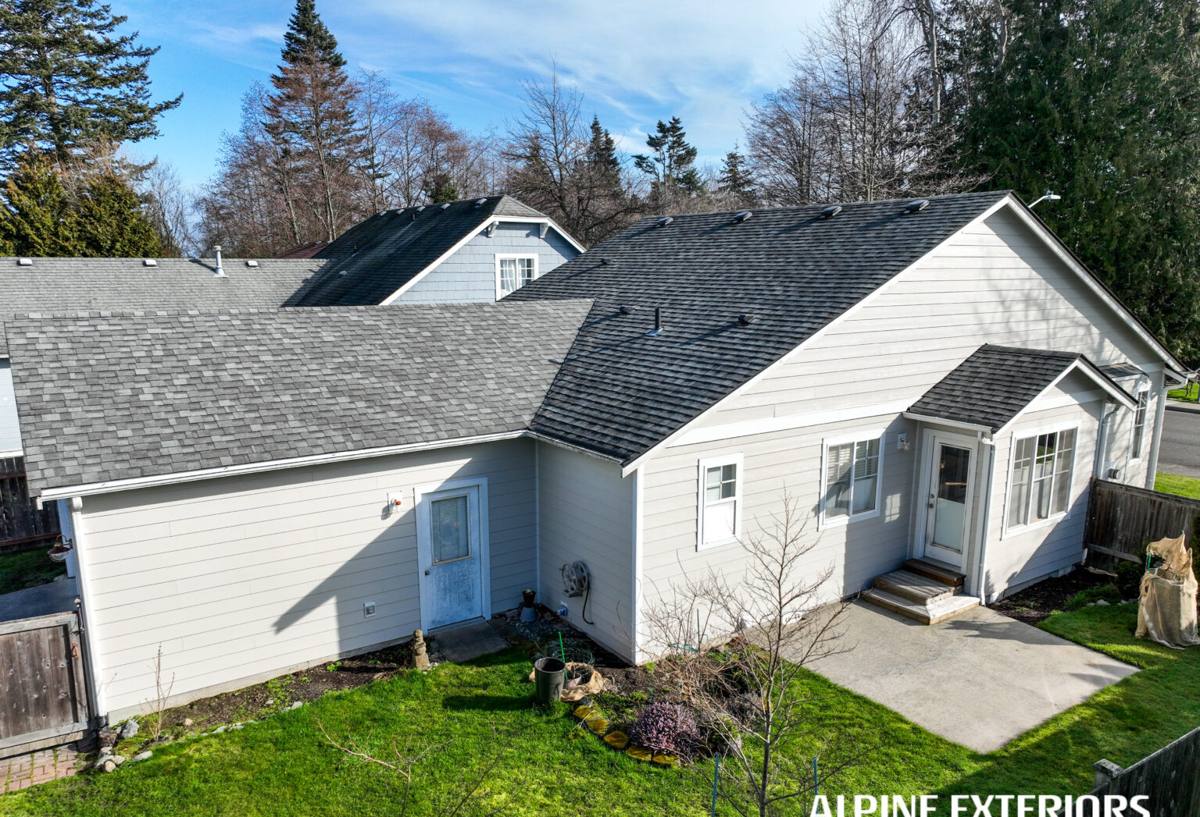
What This Climate Does to the Wrong Siding Material
Constant Moisture, Slow Drying
A lot of Kendall properties are wooded or partially shaded, which is part of what makes the area appealing to live in. But shade means siding stays wet longer after every rain event. Materials that swell, wick moisture, or trap water behind the surface don't get the drying time they'd get on a more open, sun-exposed lot.
Moss, Algae, and Organic Growth
Wherever there's shade and standing moisture, moss and algae follow. On porous or textured siding surfaces, that growth doesn't just sit on top — it can work into the material over time, holding moisture against the substrate and accelerating whatever damage is already happening underneath.
Temperature and Humidity Swings
Kendall's inland, higher-elevation position means slightly wider temperature swings than the immediate coastline — colder snaps in winter, warmer highs in summer, and more freeze-thaw cycling. Siding that expands and contracts a lot, or that absorbs water that then freezes, is going to show that stress faster here than it would somewhere more climate-moderate.
Why We Install James Hardie Fiber Cement Only
We made a decision a while back to standardize on James Hardie fiber cement siding and stop installing everything else — vinyl, LP SmartSide, Cemplank, Allura, primed spruce, cedar, all of it. That's not a marketing position. It's a maintenance and durability call based on what actually holds up in Whatcom County conditions, including the wetter, shadier lots you find around Kendall.
Fiber cement is a mix of cellulose fiber, sand, and Portland cement, pressed and cured into a rigid board. It doesn't absorb water the way wood-based products do, it doesn't soften or delaminate under sustained moisture exposure, and it's dimensionally stable enough that it isn't constantly expanding and contracting with every weather swing. It's also non-combustible, which matters more every year given how wildfire smoke and dry-season risk have crept into the broader Pacific Northwest conversation, even in a generally wet county like this one.
ColorPlus Factory Finish
Most of what we install carries Hardie's ColorPlus finish — a factory-applied, baked-on finish that's more consistent and more UV- and moisture-resistant than a field-applied paint job. For a property like a Kendall home that may sit shaded for long stretches, a factory finish that isn't relying on perfect on-site painting conditions is a real advantage.
HZ5 Engineering
James Hardie engineers its products by climate zone, and our region falls into the HZ5 category — built for high-moisture, freeze-prone conditions. That's not a generic siding product with a regional sticker slapped on; it's formulated and tested for exactly the kind of weather Kendall and the rest of Whatcom County get.
What We Don't Install, and Why
We get asked fairly often why we won't quote vinyl or LP SmartSide, since both are cheaper up front. Here's the honest version, not a sales pitch against them:
- Vinyl siding is affordable and low-maintenance in mild, dry climates, but it can warp or crack in freeze-thaw cycling, and it doesn't hold paint or offer the same solid, substantial look. In a wooded, moisture-heavy setting it also tends to show moss and grime buildup at the panel laps.
- LP SmartSide and other engineered wood products perform reasonably well when installation and caulking are perfect and stay perfect for decades — but they're wood-based, so any breach in the moisture barrier (a nail hole, a caulk failure, a gap at a trim joint) gives water a path into a material that will eventually swell or rot at that point.
- Primed spruce and cedar are traditional, attractive options, but they require an ongoing paint and maintenance cycle to stay protected, and in a shaded, damp environment like parts of Kendall, that cycle gets more demanding, not less.
None of these are bad products in every context. They're just not what we're willing to put our name behind in this specific climate, on this specific type of terrain.
Siding Material Comparison
| Material | Moisture Tolerance | Moss/Algae Resistance | Maintenance | Typical Lifespan |
|---|---|---|---|---|
| James Hardie Fiber Cement | High | High (non-porous surface) | Low | 30+ years |
| Vinyl | Moderate | Moderate | Low, but limited repair options | 20-30 years |
| LP SmartSide / Engineered Wood | Moderate (installation-dependent) | Moderate | Moderate to high | 20-30 years if maintained |
| Cedar / Primed Wood | Low to moderate | Low | High (repaint/reseal cycle) | 15-25 years with upkeep |
What a Siding Project Looks Like in Kendall
Every property out this way is a little different — some are more open and sun-exposed, others sit under heavy fir and cedar canopy. Before we quote anything, we look at the specific exposure, drainage, and moisture patterns on that lot, not just a generic siding price.
Assessment and Moisture Check
We look at the existing siding, trim, and flashing details for signs of past water intrusion, and we check how the house is oriented relative to prevailing weather and shade. That tells us where extra flashing or drainage detailing matters most.
Installation to Manufacturer Spec
James Hardie's warranty depends on correct installation — proper clearances, fastening patterns, joint treatment, and flashing. We install to that spec every time, not as an upsell but because it's the only way the product performs the way it's engineered to.
Beyond Siding
We also handle roofing, windows, and decks, which matters for a project like this because siding doesn't work in isolation. Roof flashing, window flashing, and deck ledger connections all interact with the siding envelope. Having one crew responsible for how those systems tie together avoids the finger-pointing that happens when three different contractors each installed a piece of the same wall.
Cost Factors for Kendall Properties
We won't quote a number without seeing the property, but a few things consistently move the price on jobs out this way:
| Factor | Why It Matters |
|---|---|
| Existing siding removal | Tear-off and disposal adds labor, especially with layered or damaged material underneath |
| Trim and flashing detail | Homes with more corners, gables, and window trim require more precise (and more time-consuming) flashing work |
| Site access | Wooded lots and longer driveways can affect staging, scaffolding, and material delivery |
| Moisture damage repair | If sheathing or framing has taken on water damage, that gets repaired before new siding goes on — it's not optional |
| Product line and profile | Lap width, panel style, and trim selections within the Hardie lineup affect material cost |
Choosing a Contractor for a Kendall Property
A siding job is only as good as the crew doing the flashing and fastening details you'll never see once the wall is closed up. A few things worth checking before you hire anyone:
- Are they a factory-certified installer for the specific product they're quoting, not just "familiar" with it?
- Will they walk you through the actual flashing and moisture-barrier plan for your house, not just the color and style?
- Do they carry current licensing and insurance appropriate for exterior work in Washington State?
- Can they explain, specifically, how your home's shade, drainage, and exposure affect their installation approach?
- Is the warranty transferable, and do you understand what voids it?
A crew that's used to working in Whatcom County's shadier, wetter pockets — not just open, sunny lots — is going to catch details a generalist might miss.
Get a Local, No-Pressure Estimate
If you're weighing a siding project for a Kendall property, or you've got moss, staining, or moisture concerns on your current siding, we're happy to take a look and give you a straight assessment — no pressure, no inflated scare tactics. Use the form below to request a free estimate.