 Ferndale Siding
 Sandy Point: A Beautiful Place to Live, A Tough Place to Own Siding
Sandy Point sits right up against the water in Whatcom County, close enough to Ferndale that we treat it as part of our home turf, but far enough into the marine environment that houses out there age differently than homes a few miles inland. If you own property in Sandy Point, you already know the trade-off: incredible water views and shoreline living, paired with an exterior envelope that takes a beating year-round. Salt-laden air, wind-driven rain coming straight off the water, and a moss season that can stretch from fall through spring all work on your siding, trim, roof, and windows in ways that inland Whatcom County homes simply don't experience to the same degree.
We've built our business around understanding that difference. A siding job that holds up fine in a sheltered subdivision closer to town can fail early in Sandy Point if it's the wrong material or the wrong installation approach. This page walks through what we see out there, how we handle it, and why we only install one siding system on homes in this kind of exposure.
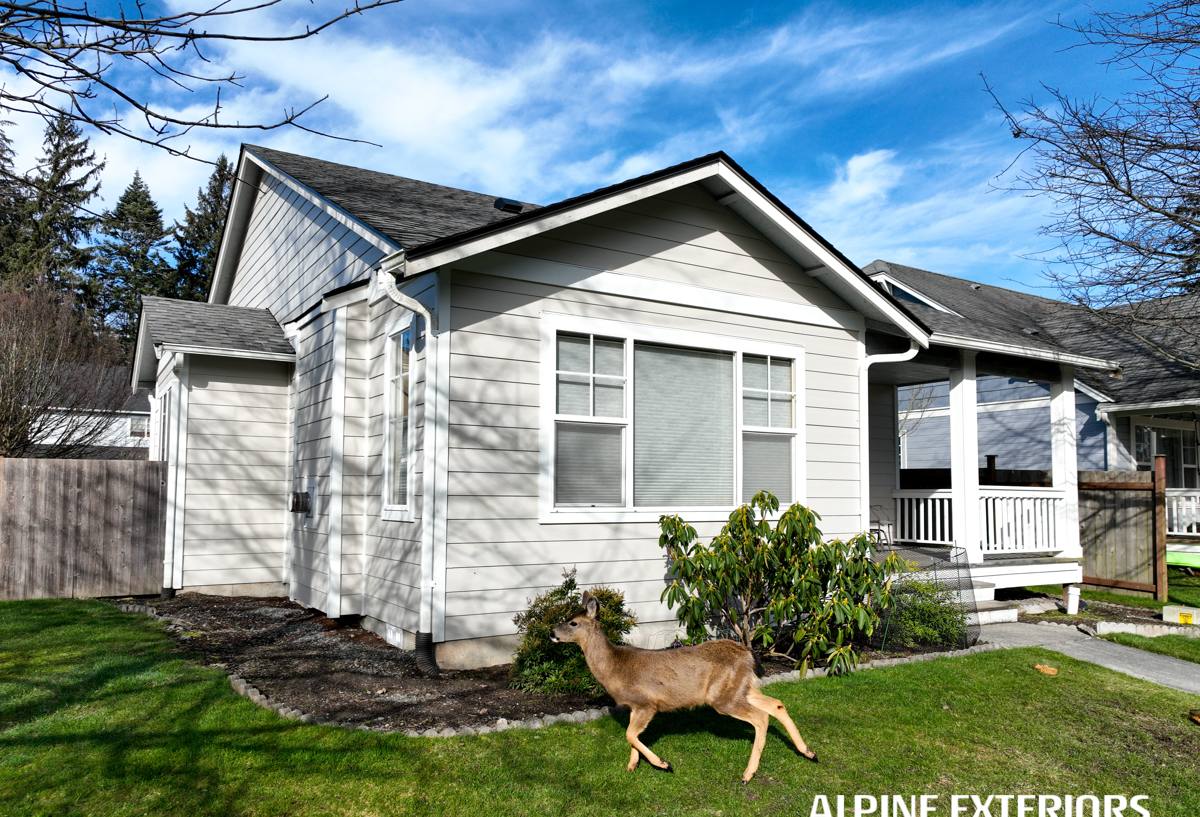
What Shoreline Exposure Actually Does to a House
Salt Air
Airborne salt doesn't just affect metal fasteners and hardware, though it does accelerate corrosion there too. It settles into any porous or seam-prone surface on your exterior. Over years, that constant low-grade salt exposure speeds up the breakdown of paint films, softens caulk joints, and works into any gap where water and air can get behind a siding panel. Homes right along the water get the worst of it, but even properties set back from the shoreline in Sandy Point catch enough salt-bearing wind to matter.
Driving Rain
Rain that falls straight down is one thing. Rain that's being pushed sideways by wind off the water is another. Wind-driven rain finds every weak seam, every under-caulked joint, and every spot where flashing was installed as an afterthought rather than as part of the plan. It's the single biggest reason we see moisture problems on siding, window trim, and deck ledger connections in shoreline communities — not because the material failed outright, but because water got behind it and stayed there.
Moss and Sustained Dampness
Whatcom County's moss season is long everywhere, but shaded, damp, wind-sheltered pockets around Sandy Point can hold moisture even longer. Moss and algae growth on siding and roofing isn't just a cosmetic issue — sustained dampness under organic growth keeps the material wetter for longer stretches, which matters a lot if that material is something that absorbs moisture rather than shedding it.
Why We Only Install James Hardie Fiber Cement
We get asked fairly often why we don't offer vinyl, LP SmartSide, or other engineered wood and composite sidings that are common elsewhere. The honest answer is that we made a standardization decision based on what holds up in exactly the conditions Sandy Point throws at a house, and we'd rather turn down a job than install something we don't believe in on a home in this kind of exposure.
James Hardie fiber cement is made from cement, sand, and cellulose fibers. It doesn't have the moisture-absorption vulnerabilities of wood-based composite siding, and it doesn't share the thermal expansion and contraction behavior of vinyl, which can loosen fastening and open seams over time, especially with the temperature swings a shoreline location experiences. Fiber cement is also non-combustible, which matters to a lot of homeowners regardless of climate, and it takes a factory-applied ColorPlus finish that's engineered to hold color and resist the kind of UV and moisture cycling that fades and chalks a field-painted surface faster.
Hardie also builds region-specific product lines — including an HZ5 formulation engineered for harsher, wetter climate zones — which lines up with what a marine-influenced property like the ones in Sandy Point actually needs, rather than a one-size-fits-all product.
Material Comparison for Shoreline Exposure
| Material | Moisture Behavior | Salt Air / Corrosion Factors | Long-Term Finish |
|---|---|---|---|
| James Hardie Fiber Cement | Does not absorb and swell like wood-based products; dimensionally stable when installed to spec | Cement composition doesn't corrode; correct fastener selection still matters | Factory ColorPlus finish resists fading and chalking |
| Vinyl Siding | Sheds water but seams and panels can move with temperature swings, opening gaps over time | Fasteners and trim pieces still need corrosion-resistant hardware | Color is through-body but can fade and become brittle with UV exposure over decades |
| LP SmartSide / Engineered Wood | Wood-fiber core is vulnerable if the factory-sealed edges and finish are ever compromised | No inherent salt resistance; finish maintenance is critical near water | Requires diligent caulk and paint maintenance to keep moisture out |
| Cedar / Primed Spruce | Natural wood; absorbs and releases moisture, which drives cupping, checking, and rot risk | Salt air accelerates weathering of the wood surface | Needs regular refinishing to stay protected |
Installation Is Where the Real Protection Happens
No siding material, including the one we install, will perform well in Sandy Point's exposure if it goes on with shortcuts. Most of the moisture failures we've seen on shoreline homes trace back to installation details, not the product itself. Our approach on every Sandy Point project includes:
- A weather-resistive barrier installed as a continuous drainage plane, not just a wrap-and-staple afterthought
- Correct flashing at every window, door, and roof-to-wall transition, since these are the spots wind-driven rain exploits first
- Rain-screen or proper gapping details where conditions call for it, to let any incidental moisture drain and dry rather than sit against the wall
- Stainless or hot-dip galvanized fasteners appropriate for salt air, not standard hardware that will corrode early
- Manufacturer-specified nailing patterns and clearances, including ground and roof clearance, so the bottom edge of the siding isn't sitting in a moisture trap
Beyond Siding: The Whole Exterior in a Marine Climate
Siding doesn't work in isolation. On a shoreline property, your roofing, windows, and decking are dealing with the same salt air, wind-driven rain, and moss pressure, and a weak point in any one of them can undermine the others.
Roofing
A roofing system that's shedding water properly and isn't holding onto moss growth protects everything below it, including your siding and fascia. Flashing details at roof-to-wall intersections are especially important on homes with any wind exposure.
Windows
Window flashing and integration with the siding plane is one of the most common leak points we find on older shoreline homes. When we replace siding, we always check window flashing and address it as part of the job rather than working around a weak point.
Decks
Ledger board connections, fastener corrosion, and moisture trapped between decking boards are all accelerated by salt air. A deck built or maintained without that in mind ages fast in a location like Sandy Point.
Why a Local Crew Matters Here
We're based in Ferndale and work throughout Whatcom County, but shoreline communities like Sandy Point get a different level of attention from us because the stakes for a wrong material choice or a sloppy install are higher. A crew that mostly works inland subdivisions may not think twice about standard fastener hardware or a minimal flashing detail — those shortcuts can survive for years in a sheltered location and fail fast on the water. Knowing the difference, and building for it, comes from actually doing this work in this specific climate, not from a generic install spec.
Signs Your Sandy Point Home May Need Siding Attention
- Persistent moss or algae staining that returns quickly after cleaning
- Soft spots, bubbling, or visible swelling in siding panels or trim
- Paint that's chalking, peeling, or failing faster than expected
- Visible gaps opening up at seams, corners, or window trim
- Rust streaking from fasteners or trim hardware
- A noticeably musty smell near exterior walls, which can point to trapped moisture
What Affects the Cost of a Sandy Point Siding Project
| Factor | Why It Matters |
|---|---|
| Extent of existing moisture damage | Hidden rot or sheathing damage found once old siding comes off adds repair scope |
| Home size and wall complexity | More corners, dormers, and trim details mean more labor and material |
| Siding profile and finish selection | Lap width, texture, and ColorPlus color all affect material pricing |
| Flashing and window integration work | Proper detailing at every opening takes time but is what prevents future leaks |
| Access and site conditions | Shoreline lots with limited access or steep grades can affect staging and labor |
We don't publish blanket pricing because every one of these factors changes the number, but we'll walk your specific home and give you a straightforward, itemized estimate before any work starts.
Our Process for Sandy Point Homeowners
- An on-site walkthrough where we assess your current siding, trim, and any related roofing or window concerns
- An honest conversation about what we're seeing, including anything that looks like existing moisture damage
- A written estimate with the James Hardie products, colors, and details specific to your home
- A installation timeline that accounts for weather windows, since we won't install siding under conditions that compromise the work
- A final walkthrough so you know exactly what was done and what maintenance, if any, to expect
If you own a home in Sandy Point and you're noticing any of the warning signs above, or you're just ready to stop maintaining siding that isn't built for this exposure, we're happy to come take a look. Fill out the form below for a free, no-pressure estimate — there's no obligation, and we'll give you a straight answer about what your home actually needs.