 Ferndale Siding
 Why Sandy Point Roofs Wear Differently
Sandy Point sits close enough to the water that its roofs live a different life than a roof three miles inland in Ferndale proper. The salt air off the water accelerates corrosion on anything with exposed fasteners or unprotected metal edges. Add Whatcom County's long, wet shoulder seasons and the moss and algae growth that comes with shaded, north-facing roof planes, and you've got a combination that punishes roofing systems not specifically detailed for it. We've worked enough roofs out here to know that a roof spec that's fine in a dry inland neighborhood can fail early at Sandy Point if the fastener coating, panel seams, or underlayment aren't chosen with the coastal exposure in mind.
This page is about metal roofing specifically for that Sandy Point environment — what the salt air and moss season demand, what a correctly installed system looks like, and how we approach the work when we're up on a roof that's going to spend the next several decades a short walk from saltwater.
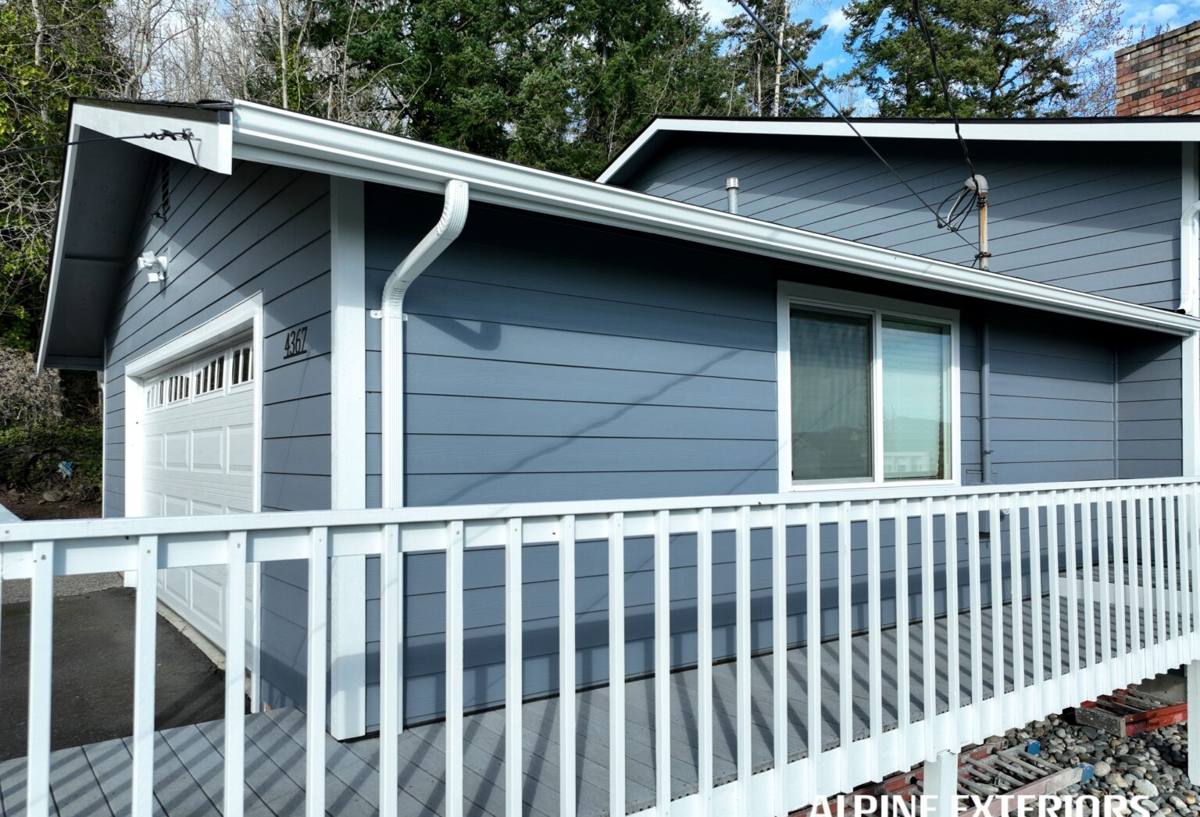
What Salt Air and Moss Season Actually Do to a Roof
Salt Air and Corrosion
Salt-laden air carries chloride particles that settle on roofing metal and accelerate oxidation, especially at cut edges, screw heads, and any spot where a factory coating has been scratched during handling or installation. On a standard asphalt shingle roof, this shows up as faster granule loss and earlier flashing failure. On metal roofing, it shows up as rust bleed at exposed fasteners, pitting on unprotected steel edges, and premature failure of cheap or mismatched flashing metal. The fix isn't complicated, but it does require choosing the right coatings and fastener hardware up front rather than treating coastal exposure as an afterthought.
Moss, Algae, and Moisture Retention
Whatcom County's wet fall-through-spring stretch, combined with tree cover common around Sandy Point, keeps north- and west-facing roof planes damp for long periods. That moisture supports moss and algae growth, which on a shingle roof works its way under tabs and lifts them. Metal roofing handles this dramatically better because there's no organic mat for moss to root into and the smooth, sloped panel surface sheds water fast, giving moss far less to hold onto. It's not moss-proof — debris in valleys and around penetrations can still collect and hold moisture against the panel — but it removes the single biggest driver of moss damage that shingle roofs deal with here every year.
What a Correct Metal Roof Install Looks Like on This Site
A metal roof is only as good as its details, and on a coastal-exposed roof those details matter more than the panel itself. Here's what we treat as non-negotiable on a Sandy Point job:
- Fasteners rated for coastal/marine exposure, not standard-grade — the difference shows up in year 8, not year 1
- Panel and trim metal matched in coating type so galvanic corrosion isn't triggered between dissimilar metals
- A high-quality underlayment (synthetic or self-adhered membrane at eaves and valleys) as a real second line of defense, not a formality
- Properly lapped and sealed ridge, valley, and penetration flashing — the most common source of leaks on any metal roof, coastal or not
- Panel seams and edge details specified for the actual wind exposure of the site, since open water nearby can mean higher sustained gusts than a sheltered inland lot
- Attention to ventilation so trapped moisture under the deck doesn't undo the benefit of a moss-resistant surface
Skipping any one of these doesn't necessarily cause an immediate problem — it causes a problem five or ten years out, after the crew that cut the corner is long gone. That's the trade-off we won't make on a roof we're putting our name on.
Panel Style and Finish Considerations
Standing seam panels are generally the strongest choice for this environment because they have no exposed fasteners on the field of the roof — the clips are hidden under the seam, which removes the most common corrosion entry point. Exposed-fastener panel systems cost less up front and can be a reasonable option on secondary structures like garages or sheds, but they require more diligent fastener maintenance over time given the salt exposure. We'll walk through both honestly based on your budget and the structure in question rather than defaulting to the higher-margin option.
Comparing Roofing Approaches for a Sandy Point Home
| Factor | Standing Seam Metal | Exposed-Fastener Metal | Asphalt Shingle |
|---|---|---|---|
| Salt air resistance | Strong — no exposed field fasteners | Fair — fasteners need periodic inspection | Weak — flashing and granules degrade faster |
| Moss/algae resistance | Strong — smooth, sloped, non-porous | Strong — same surface behavior | Weak — organic mat holds moisture |
| Typical lifespan (coastal exposure) | 40-60+ years with proper detailing | 25-40 years, fastener-dependent | 15-20 years, often less near salt air |
| Upfront cost | Highest | Mid | Lowest |
| Maintenance needs | Low — periodic sealant/flashing check | Moderate — fastener re-torque/replace over time | Higher — moss treatment, granule loss, flashing repair |
None of these is universally "right" — it depends on how long you plan to own the home, your budget, and whether the structure is a primary residence or a secondary building. We'll give you our honest read on which fits your situation rather than steering toward one option.
Our Process on a Sandy Point Roof
Assessment
We start with a full roof and attic inspection — deck condition, existing ventilation, current moss and moisture patterns, and how exposed the specific roof planes are to prevailing wind and salt spray off the water. This tells us which details need the most attention before we ever talk panel style or color.
Spec and Proposal
You get a written scope that specifies panel type, gauge, coating, fastener grade, and underlayment — not just "metal roof installed." If a detail matters for coastal durability, it's in writing, not assumed.
Installation
Deck repair where needed, underlayment installed to manufacturer spec, panels run and seamed correctly, and every flashing point — ridge, valley, penetrations, wall transitions — detailed for water shedding first and appearance second. Appearance still matters, but a roof that leaks in three years isn't a good-looking roof for long.
Walkthrough
We walk the finished roof with you where safely possible, or review it in detail on the ground, covering what maintenance (if any) the system needs and what to watch for given the site's specific exposure.
Maintenance That Actually Matters Here
One advantage of a correctly installed metal roof at Sandy Point is how little ongoing maintenance it needs compared to shingle. That said, "low maintenance" isn't "no maintenance" in a salt-air environment:
- Clear debris from valleys and around penetrations once or twice a year so moisture doesn't sit against panel seams
- Have exposed-fastener systems checked periodically for fastener backing-out or early corrosion
- Rinse accumulated salt residue off the roof surface if the home is in a particularly exposed spot near the water
- Keep gutters clear so water isn't backing up under eave flashing during heavy Whatcom County rain events
- Have flashing and sealant points inspected every few years, especially after any major windstorm
Why a Crew That Already Works This Area Matters
Coastal roofing isn't a different trade, but it is a different set of judgment calls — which fastener grade to spec, how much wind exposure a given roof plane actually sees, where moss is going to be a recurring problem versus a one-time issue. A crew that's already worked roofs around Sandy Point and the greater Ferndale waterfront has already made those judgment calls on other homes in this exact microclimate. That's not something you can fully substitute with a generic spec sheet — it comes from having stood on roofs in this specific stretch of Whatcom County and seen which details held up and which didn't.
It also means we're a known, reachable local outfit if a question comes up two or five years after installation — not a crew that worked the area once and moved on.
Getting an Honest Look at Your Roof
Every roof at Sandy Point has its own exposure, its own tree cover, and its own history of moss or wear patterns. We'd rather look at the actual roof than quote off a description over the phone. If you're weighing a metal roof, dealing with recurring moss, or just want a straight answer on what your current roof needs, we're happy to take a look and give you a clear, no-pressure estimate — fill out the form below and we'll get in touch.