 Ferndale Siding
 Siding Built for Cordata's Marine Climate
Cordata sits close enough to the water and to the lowland river valleys of Whatcom County that its homes deal with a specific combination of weather stresses: salt-tinged air moving in off the Strait of Georgia and Bellingham Bay, long stretches of driving rain from fall through spring, and short winter days that keep north- and west-facing walls damp for weeks at a time. None of that is dramatic on any single day. It's the accumulation that wears exteriors down — and it's why we approach siding, roofing, windows, and decks in this area differently than a contractor working inland or in a drier climate would.
We're a Ferndale-based crew that works throughout Whatcom County, and Cordata is regularly on our route. That matters more than it sounds like it should. A crew that works this specific stretch of the county knows which elevations get hit hardest by wind-driven rain, which lots stay shaded and mossy into June, and which older homes were built with materials that were never really suited to this climate in the first place.
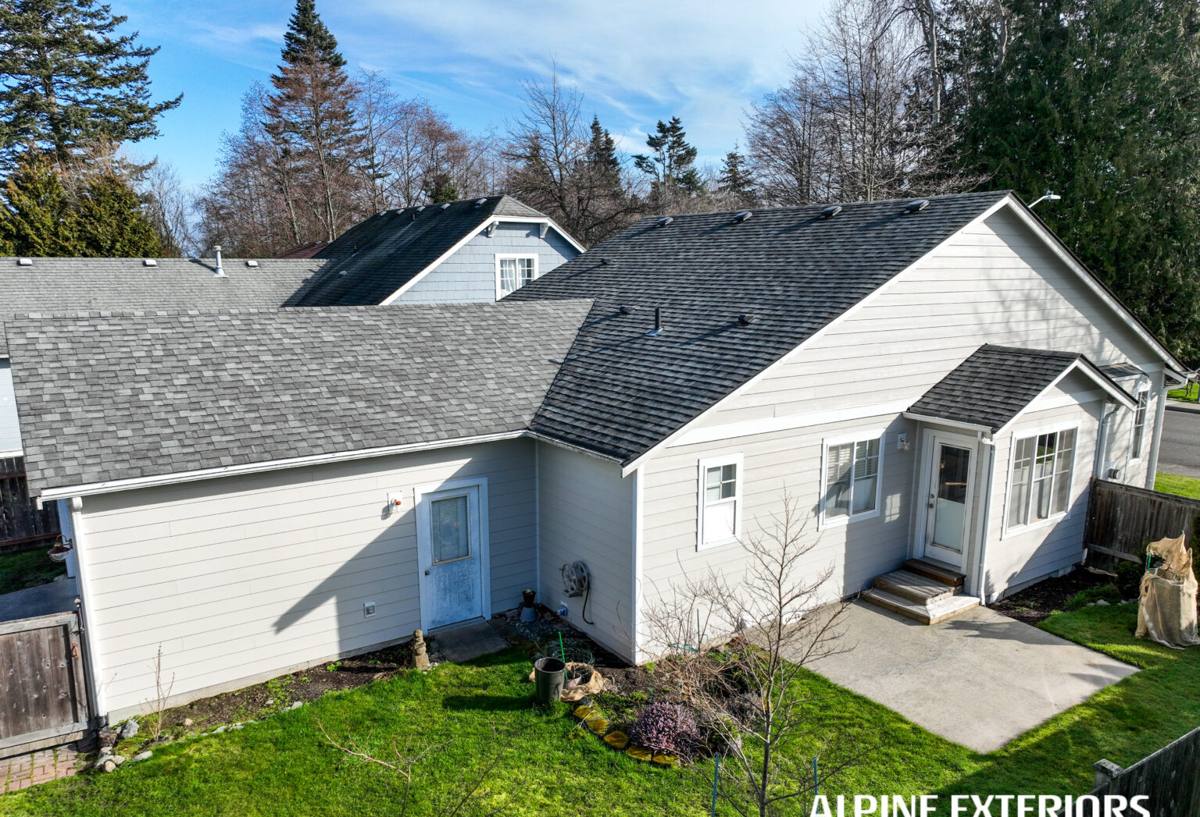
What the Climate Actually Does to Siding Here
Moisture Is the Root Cause of Most Problems
Whatcom County doesn't get the heaviest rainfall totals in the state, but it gets a lot of low-intensity, long-duration rain, often pushed sideways by wind off the water. That means siding doesn't just get wet on top — it gets wet at seams, laps, and fastener points, and it often doesn't fully dry out between storms during the wetter months. Any siding product that absorbs moisture, swells, or relies on paint film to stay sealed is working against the climate here, not with it.
Moss and Algae Are a Year-Round Fact of Life
Shaded walls, tree cover, and consistent moisture add up to a long moss and algae season — often longer than most homeowners expect. Moss holds water against a wall surface and, on wood-based products, can accelerate rot at the exact spots you can't easily see: behind the moss itself. Siding that resists moisture intrusion at the core, not just at the surface finish, handles this far better over the long run.
Salt Air Adds a Quiet, Ongoing Stress
Cordata isn't oceanfront, but this part of Whatcom County is close enough to tidal water that salt-laden air is a real factor, especially with onshore winds. Salt accelerates the breakdown of some caulks and finishes, and it can be tough on fasteners and trim that aren't rated for it. It's a slower process than direct rain damage, but it shows up over years as premature fading, chalking, or finish failure on lower-grade materials.
Why We Install Only James Hardie Fiber Cement
We made a deliberate decision as a company: we install James Hardie fiber cement siding, and we don't install vinyl, LP SmartSide, Cemplank, Allura, or primed wood species like spruce or cedar. That's not a marketing position — it's a standard we hold ourselves to because we've seen how each of those categories performs, or doesn't, in exactly this climate.
- Vinyl can warp or become brittle over years of temperature swings and doesn't hold paint well if a homeowner ever wants to change color; it also relies on lap joints that can let moisture behind the panel in wind-driven rain.
- LP SmartSide and other wood-strand products are engineered wood — better than raw lumber in some ways, but still wood at the core, meaning any breach in the factory coating or field-cut edge is a path for moisture absorption and eventual swelling or delamination.
- Primed spruce or cedar is real wood siding with all of wood's classic vulnerabilities: it needs ongoing paint maintenance, it moves with moisture, and it's a food source for the rot and mold that a moss-heavy climate practically guarantees if maintenance slips.
- Other fiber cement brands (Cemplank, Allura) are chemically similar to Hardie in the base material, but we standardized on one manufacturer so we can guarantee consistent factory finish quality, product specs, and warranty terms across every job we do.
James Hardie fiber cement is non-combustible, dimensionally stable in wet-dry cycling, and finished at the factory with ColorPlus Technology — a baked-on finish that resists fading and chipping far better than field-applied paint. Hardie also engineers specific product lines (their HZ5 line, for example) for climates like ours, accounting for moisture exposure rather than treating every region the same. Combined with a strong, transferable warranty, it's the product we're willing to put our name behind on a Cordata roof line.
How a Siding Project Works, Start to Finish
- On-site assessment. We look at the current siding, sheathing, flashing, and any problem areas — especially around windows, roof-to-wall intersections, and any north- or west-facing walls that see the most moisture exposure.
- Tear-off and inspection of what's underneath. This is where hidden rot or water damage from the old siding system usually gets found. We address it before anything new goes up — covering a damaged wall with new siding just hides the problem.
- Weather barrier and flashing detail. Correct house wrap, seam taping, and flashing at every penetration and transition is what actually keeps water out — the siding product itself is only part of the system.
- Hardie installation to manufacturer spec. Proper fastener placement, clearances, and caulking at the right joints (and not over-caulking where it isn't needed) are what determine whether the product performs for its full service life.
- Final detail and cleanup. Trim, caulking, and touch-up finishing, followed by a walk-through so you know exactly what was done and what to expect going forward.
Comparing Siding Options for a Cordata Home
| Material | Moisture Behavior in This Climate | Maintenance | Typical Longevity |
|---|---|---|---|
| James Hardie Fiber Cement | Dimensionally stable, resists moisture absorption at the core | Occasional wash; factory finish holds up well | Decades, backed by a strong transferable warranty |
| Vinyl | Doesn't absorb water, but joints can let wind-driven rain behind panels | Low, but can't be repainted easily if faded | Variable; can warp or crack over time |
| LP SmartSide / Engineered Wood | Vulnerable at cut edges and coating breaches | Moderate; edge sealing and inspection matter | Shorter if moisture gets into the strand core |
| Primed Cedar/Spruce | Absorbs and releases moisture readily; prone to swelling | High; repainting and caulking on a cycle | Shorter without diligent upkeep in a wet climate |
Roofing, Windows, and Decks Face the Same Climate
Siding rarely fails in isolation. In our experience, a roof that's shedding granules or has aging flashing sends water down the wall assembly behind the siding, and old windows with failed seals let moisture into the same wall cavities from a different direction. Decks in shaded, moss-prone yards deal with the same wet-dry cycling as walls, just horizontally, which is even harder on materials and fasteners.
Because we handle siding, roofing, windows, and decks, we can look at a Cordata property as one connected exterior system rather than four separate problems. A roofing issue that's quietly soaking a wall from above, or a window that's letting water track down into the siding below it, is easy to miss if you only ever get quotes from single-trade contractors who aren't looking at the whole picture.
What to Check Before You Hire Anyone
- Are they licensed and insured to do exterior work in Washington State, and will they provide proof without you having to ask twice?
- Do they install to the manufacturer's written specifications, including fastener schedule and clearances — not just "however the last guy did it"?
- Will they inspect and address sheathing and flashing issues before covering them with new siding?
- Can they explain, specifically, why they use the products they use — not just that they're "high quality"?
- Do they know this part of Whatcom County, or are they generalizing from experience in a different climate?
Why a Local Crew Matters More Than It Seems
A siding job done by a crew unfamiliar with this region can look fine on install day and still underperform within a few years — the wrong flashing detail at a wall-roof transition, underestimating how long a shaded wall stays wet, or specifying a product that just isn't built for sustained moisture exposure. Being based in Ferndale and working Whatcom County regularly means we're not guessing at what Cordata's climate does to a house; we're accounting for it in the materials we choose and the details we get right during installation.
If your home in Cordata has siding showing its age — cracking, staining, persistent moss growth, or soft spots near the bottom courses — it's worth having someone look at it before those issues spread into the wall structure itself. We're happy to walk the property, look at your roof, windows, and deck while we're there, and give you a straightforward assessment of what's going on and what it would take to fix it right.
If you'd like a free, no-pressure estimate for your Cordata home, the form below is the fastest way to get in touch.