 Ferndale Siding
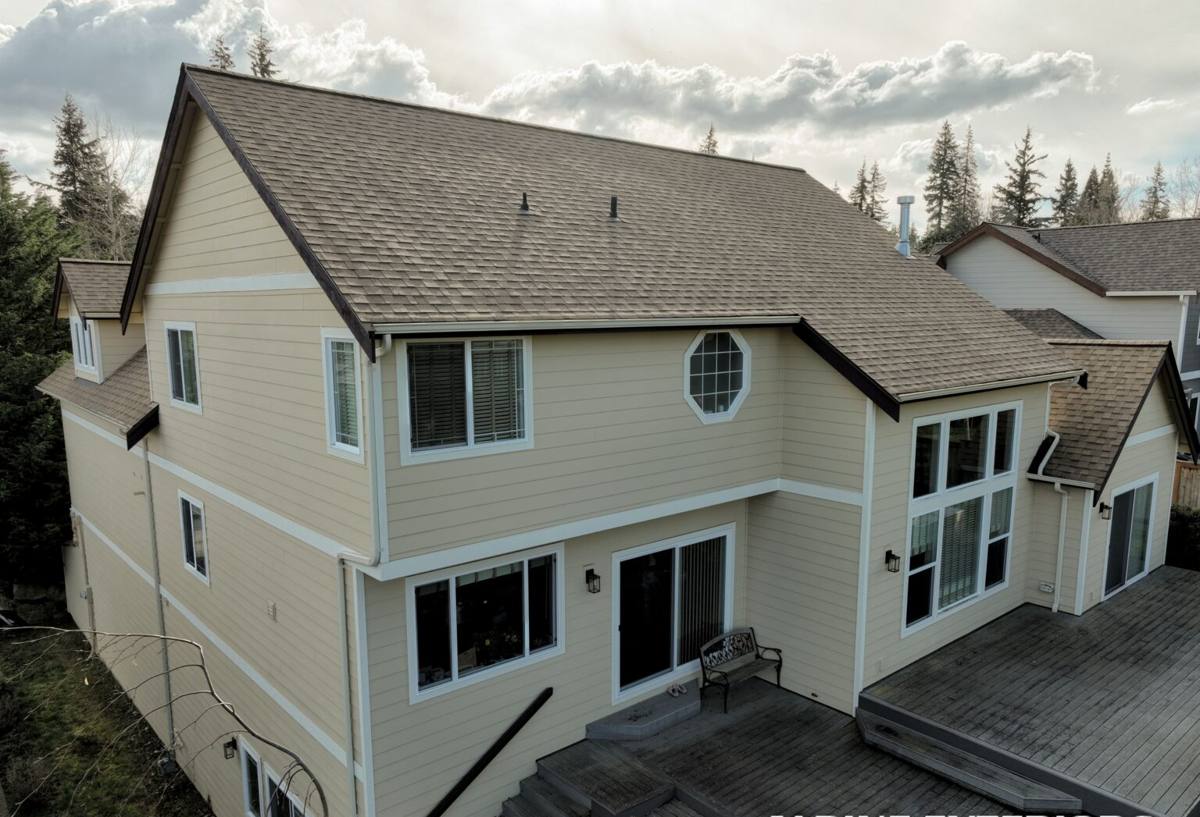
 Asphalt Shingle Roofing Built for the Cordata Area
Homes in and around Cordata sit close enough to the water and the foothills to catch the worst of both worlds: salt-laden air rolling in off the Strait, driving rain for a good stretch of the year, and a moss season that seems to start earlier every fall. An asphalt shingle roof that's installed and maintained with those conditions in mind will hold up for decades. One that isn't will show its age in five to eight years, no matter what the shingle bag promised.
This page covers what asphalt shingle roofing needs to look like for a Cordata-area home specifically — not a generic roofing overview, but the details that actually matter for Whatcom County's climate and for a neighborhood that mixes older single-family homes with newer construction near the growing commercial corridor.
What This Climate Actually Does to a Roof
It's worth being specific about why local roofs age differently than roofs in drier parts of the country.
Salt air and metal components
Being close to Bellingham Bay and the Strait of Georgia means airborne salt reaches roofs more than most homeowners realize. It doesn't just affect siding and trim — it accelerates corrosion on exposed fasteners, flashing, and any unprotected metal on the roof. Cheap or improperly coated flashing and nails corrode faster here than in an inland climate, and once corrosion starts at a fastener, water finds a path in.
Driving rain and wind-driven water
Whatcom County doesn't just get rain — it gets rain pushed sideways by wind off the water, which means water gets tested at every horizontal seam, valley, and penetration on a roof. A roof that would be fine under straight-down rain in a calmer climate can leak here if the underlayment, valley work, and flashing details aren't done to a higher standard.
Moss, shade, and moisture retention
Mature trees and a long damp season are a perfect combination for moss growth on shingles. Moss isn't just cosmetic — it holds moisture against the shingle surface, works its way under shingle edges as it grows, and can lift tabs enough to let wind-driven rain underneath. Roofs with more shade, north-facing slopes, or nearby tree cover need more attention to ventilation and periodic moss management than roofs in full sun.
What a Correct Asphalt Shingle Job Includes Here
A shingle roof is only as good as what's underneath it and around it. For this area, that means paying real attention to the parts that don't show up in a driveway estimate photo.
Underlayment
Given the rain totals and wind-driven exposure typical of this area, we don't treat underlayment as an afterthought. A quality synthetic underlayment, with self-adhered ice-and-water membrane at eaves, valleys, and any low-slope transitions, gives the roof a real second line of defense if wind ever drives water past the shingle surface.
Flashing at every penetration
Chimneys, plumbing vents, skylights, and roof-to-wall transitions are where most leaks start — not in the open field of shingles. Step flashing, counter-flashing, and pipe boots need to be sized, lapped, and sealed correctly, using materials that hold up to salt air rather than corroding out in a few seasons.
Ventilation
Balanced intake and exhaust ventilation keeps moisture from building up in the attic, which matters twice over in a damp climate: it protects the roof deck from the underside, and it keeps shingles from aging prematurely from trapped heat and humidity. A roof can have brand-new shingles and still fail early if the attic underneath is poorly vented.
Starter strips and edge details
Proper starter strip at eaves and rakes, along with correctly sealed drip edge, is what keeps wind-driven rain from getting under the first course of shingles. It's a small material cost that has an outsized effect on how a roof performs in a windstorm.
Choosing a Shingle for Cordata Conditions
Not every asphalt shingle product is a good match for a moss-prone, salt-air, high-rain environment. The table below outlines the trade-offs we walk homeowners through.
| Shingle Type | Typical Lifespan Here | Moss Resistance | Notes |
|---|---|---|---|
| 3-tab (standard) | 15-20 years | Lower — flat profile holds moisture | Lowest upfront cost, least wind resistance in gusty conditions |
| Architectural / dimensional | 25-30 years | Moderate | Best all-around value for this climate; better wind rating and thicker mat |
| Algae/moss-resistant (copper or zinc granule) | 25-30 years | Higher | Worth the upgrade on shaded or north-facing roofs with heavy tree cover |
| Premium/designer laminate | 30+ years | Moderate to higher, depending on product | Longer warranty terms; best where appearance and longevity both matter |
For most Cordata-area homes, an architectural shingle with algae-resistant granules is the sweet spot — enough moss resistance to matter, without paying for a premium tier the home doesn't need. Homes with heavy shade or a north-facing main roof slope are the ones where we recommend spending up for the higher moss-resistant option.
How Our Process Works
Inspection and honest assessment
We start by getting on the roof, not just looking at it from the ground. We check shingle condition, flashing, moss buildup, ventilation, and the state of the decking underneath where accessible. If a roof has years of useful life left with a repair or a moss treatment, we'll say so — a full replacement isn't always the right recommendation.
Written scope before any work starts
Every job comes with a clear, written scope: shingle brand and line, underlayment type, flashing approach, ventilation changes if needed, and cleanup expectations. No verbal promises that don't make it onto paper.
Tear-off and deck check
Old material comes off down to the deck so we can actually see what's there. Soft spots, rot, or water staining on the sheathing get addressed before a single new shingle goes down — covering up a bad deck is how roofs fail early.
Installation to manufacturer spec, not just "close enough"
Nail placement, pattern, and count matter for wind rating and warranty validity. We install to the shingle manufacturer's published specifications, not a shortcut pattern, so the warranty actually holds if it's ever needed.
Final walkthrough
We walk the finished roof and the property with the homeowner, cover maintenance basics specific to the site (tree cover, gutter placement, moss watch points), and make sure everything is cleaned up before we call the job done.
Maintenance That Actually Extends Roof Life Here
- Have gutters and downspouts checked and cleared at least twice a year — clogged gutters back water up under the first course of shingles
- Watch for moss buildup on shaded slopes and address it before it thickens; light moss is manageable, established moss mats are not
- Trim back overhanging branches where practical to reduce shade, debris, and abrasion on the shingle surface
- Have flashing around chimneys, vents, and skylights visually checked every couple of years, since these are the most common leak points
- After any major windstorm, do a ground-level visual check for lifted or missing shingles rather than waiting for a leak to show up inside
- Avoid pressure washing a shingle roof — it strips granules and shortens shingle life; use gentle moss treatment methods instead
Signs It's Time for a Repair or Replacement
- Granules collecting in gutters or at downspout outlets
- Shingle edges curling, cracking, or visibly lifting
- Dark streaking or thick moss coverage on north-facing slopes
- Daylight visible through the roof deck from inside the attic
- Soft or sagging spots when walked on, or interior water stains after heavy rain
Why Local Experience in This Area Matters
A roofing crew that already works Cordata and the surrounding Ferndale area knows which slopes tend to hold moss, which older homes were built with ventilation that's undersized by today's standards, and how the local rain-and-wind pattern actually behaves against a roof over a full year — not just on a calm inspection day. That's the kind of judgment that comes from working this specific climate repeatedly, not from a general roofing checklist.
It also matters for warranty and code compliance. Whatcom County and local jurisdictions have permitting and inspection requirements for roof replacement, and a crew that pulls permits correctly and knows the local inspection process avoids delays and problems down the line that an out-of-area contractor might not anticipate.
What Affects the Cost of a Shingle Roof Here
| Factor | Why It Matters Locally |
|---|---|
| Roof pitch and access | Steeper roofs and limited access add labor time and safety equipment needs |
| Number of penetrations and valleys | Each chimney, skylight, and valley adds flashing labor and material |
| Underlayment and ice-and-water coverage | Higher-rain areas justify more premium underlayment coverage, which adds material cost but reduces leak risk |
| Shingle tier chosen | Standard vs. architectural vs. moss-resistant vs. premium changes both material cost and expected lifespan |
| Deck condition | Rot or soft decking found during tear-off adds repair cost but is far cheaper to fix now than after a leak |
| Ventilation upgrades | Older homes sometimes need added intake or exhaust vents to meet current best practice |
We give homeowners a real number after an on-site look, not a phone estimate — too many of these factors can't be judged accurately without seeing the actual roof.
If you're in Cordata or elsewhere around Ferndale and want an honest look at what your roof actually needs, we're happy to come out for a free, no-pressure estimate — just fill out the form below.