 Ferndale Siding
 Siding Built for Marietta's Coastal Edge
Marietta sits close enough to Bellingham Bay and the Nooksack River delta that homes here deal with a different mix of weather than siding just a few miles inland. Salt-tinged air off the water, near-constant winter dampness, and long stretches of shade under fir and cedar canopy all push exterior materials harder than a typical suburban lot. If you've owned a home in this part of Whatcom County for more than a few years, you've probably already noticed it: paint fades faster on the west-facing wall, moss creeps up the north side no matter how often you clean it, and anything wood-based seems to need attention every other summer.
We're a Ferndale-based crew, and Marietta is inside our regular service area — not a stretch assignment we drive an hour to reach once a quarter. That matters more than most homeowners realize until they've dealt with a contractor who doesn't know the area. We know which streets sit low and hold moisture longer, which lots get hit hardest by wind off the water, and which older homes in the neighborhood were built with materials that just weren't made for this climate.
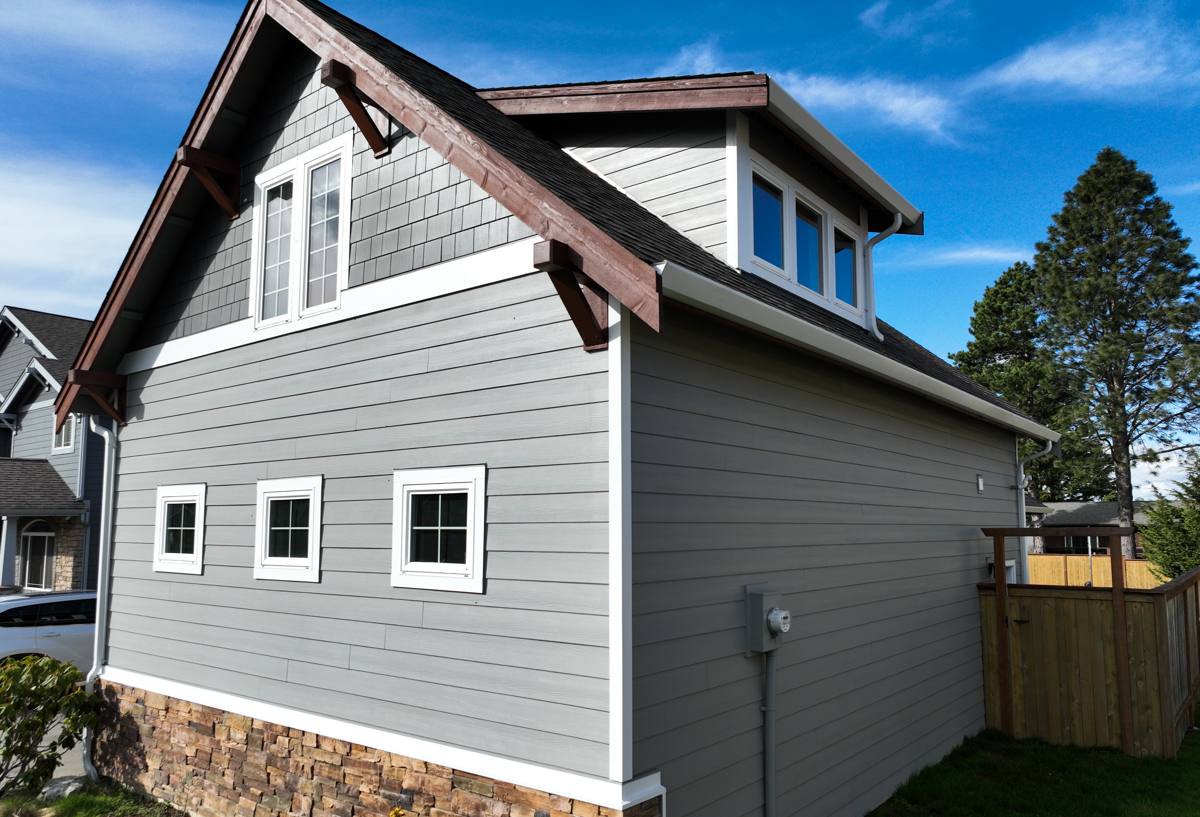
What Marietta's Climate Actually Does to a House
Salt Air and Metal Fasteners
Proximity to saltwater accelerates corrosion on anything metal — nails, flashing, hose bibs, light fixtures. Over years, corroding fasteners behind or through siding panels can telegraph rust stains to the surface and weaken the hold of the siding itself. It's a slow problem, which is exactly why it gets ignored until it's expensive.
Driving Rain and Wind-Driven Moisture
Storms coming off the strait don't fall straight down — wind pushes rain sideways into wall assemblies, testing every seam, joint, and piece of trim. Siding that isn't installed with correct flashing, house wrap integration, and drainage gaps will eventually let moisture in, even if the material itself is sound. This is as much an installation issue as a materials issue, and it's where a lot of siding jobs fail regardless of what brand went up.
Moss, Algae, and Shade
Whatcom County's tree cover and grey-sky months create ideal conditions for moss and algae growth on north-facing and shaded walls. Untreated wood siding and some fiber cement products without factory finishes can absorb enough moisture in these conditions to feed sustained organic growth, which holds moisture against the wall even longer. It becomes a cycle: shade feeds moss, moss holds water, water degrades material, and the whole assembly ages faster than it should.
Why We Install James Hardie — and Only James Hardie
We made a deliberate decision years ago to standardize on James Hardie fiber cement siding and stop installing everything else — no vinyl, no LP SmartSide, no Cemplank, no Allura, no primed spruce or cedar. That's not a marketing angle; it's a practical response to what we see in the field, especially in a climate like this one.
- Non-combustible core: Hardie's fiber cement composition doesn't burn, which matters in a region where wildfire smoke seasons have become a normal part of summer.
- ColorPlus factory finish: The color is baked on in a controlled environment rather than field-applied, which means better UV and moisture resistance than most site-painted siding, and no repainting cycle every 5-7 years.
- HZ5 engineering: Hardie's HZ product lines are engineered for specific climate zones, and our region's moisture exposure is exactly what that engineering targets.
- Density and stability: Fiber cement doesn't expand and contract with moisture the way wood-based products do, so it holds paint lines and caulk joints better over time — fewer gaps for water to exploit.
- Transferable warranty: A strong, transferable manufacturer warranty adds real resale value, which matters if you ever sell the home.
We're not going to pretend other products are without merit — vinyl is inexpensive and low-maintenance in mild climates, engineered wood products have a warmer look some homeowners prefer, and cedar has genuine aesthetic appeal. But in a coastal, high-moisture, high-moss environment like Marietta, we've watched those trade-offs turn into callbacks, and we'd rather build a smaller product lineup we can stand behind fully than offer options we know will disappoint a homeowner in year eight.
How a Marietta Siding Project Actually Runs
1. On-Site Assessment
We walk the exterior, check existing siding and trim condition, look at moisture staining, inspect flashing at windows and rooflines, and check for soft spots that indicate water intrusion behind the current siding. This tells us whether we're dealing with a straightforward re-side or whether there's sheathing repair needed underneath first.
2. Moisture Barrier and Flashing Review
Given how much wind-driven rain this area gets, we pay close attention to the water-resistive barrier and flashing details at every penetration — windows, doors, hose bibs, vents. This is the step that gets rushed on cut-rate jobs and is usually the actual cause of siding failures people blame on the material.
3. Installation to Manufacturer Spec
Hardie siding installed off-spec — wrong nailing pattern, insufficient clearance from grade or roofline, missing kick-out flashing — voids warranty protection and invites the exact moisture problems the product is designed to resist. We install to the manufacturer's published requirements, not shortcuts.
4. Final Walkthrough
We go over caulking, trim lines, and paint touch-up points with the homeowner before calling the job done.
Cost Factors for Siding in This Area
Every home is different, but a few factors consistently move the price on Marietta-area siding jobs more than they would somewhere drier and less exposed:
| Factor | Why It Matters Here |
|---|---|
| Existing moisture damage | Sheathing or framing repair adds cost but is common on homes with long-neglected wood siding in this climate |
| Home exposure to wind/water | Waterfront-facing or elevated lots may need extra flashing detail and thicker HZ5 product spec |
| Trim and detail complexity | Older Marietta homes often have more trim and architectural detail than newer builds, adding labor time |
| Access and lot layout | Tree cover, slope, and tight lot lines common in the area can affect equipment staging and labor time |
| Siding profile chosen | Lap, shingle, and panel Hardie products vary in material and install cost |
We give firm, itemized quotes after the on-site assessment — not ballpark numbers pulled from a phone call.
Why a Local Crew Is Worth Something
A lot of exterior contractors serve Whatcom County from a home base an hour or more away, which means they see your neighborhood a handful of times a year, if that. Being based in Ferndale means we're already familiar with the microclimate variations between Marietta and the rest of Ferndale, know which building department and permitting expectations apply locally, and can respond quickly if something needs a follow-up look after a storm. It also means warranty service isn't a logistics problem — we're not scheduling a special trip from out of county to handle it.
Siding Isn't the Whole Envelope
We also handle roofing, windows, and decks, and on a lot of Marietta homes those systems age together. A roof nearing the end of its life will eventually cause the moisture problems that show up as siding damage, and old windows often have flashing integration issues that show up as staining right at the siding line. When we assess a siding job, we're looking at the whole exterior envelope, not just the wall cladding, because treating them separately often means fixing the same water problem twice.
Signs It's Time to Look at Your Siding
- Persistent moss or algae growth that returns within weeks of cleaning
- Soft or spongy spots when you press on siding, especially near the bottom courses
- Paint that's peeling or bubbling rather than just fading
- Visible gaps at seams, corners, or trim joints
- Rust staining running down from nail heads or fasteners
- Rising energy bills that suggest the wall assembly isn't insulating or sealing as well as it used to
None of these alone mean you need full replacement, but a few of them together — especially on a home that's had the original siding for 20-plus years — are worth a professional look before small problems become structural ones.
Get a Straight Answer for Your Home
If you're in Marietta and dealing with any of the signs above, or you're just planning ahead for a home that's due for new siding, we're happy to come take a look. We'll give you an honest read on what your home actually needs — whether that's a full re-side, targeted repair, or simply keeping an eye on things for another season. Request a free, no-pressure estimate using the form below.