 Ferndale Siding
 Siding Built for a Saltwater Address
Semiahmoo sits about as close to the water as a Whatcom County home can get. That waterfront position is the whole draw — and it's also the reason siding here takes more punishment than siding ten miles inland in Ferndale or Lynden. Salt-laden air off the bay, wind-driven rain rolling in off the Strait, and a wet season that stretches from October well into spring all work on an exterior nonstop. We've installed and repaired siding up and down this stretch of coastline, and the pattern is consistent: whatever's on the wall either handles constant moisture and salt exposure for decades, or it starts showing problems inside the first five to eight years.
This page is about what that exposure actually does to different siding materials, and why we install James Hardie fiber cement — and only James Hardie — on every home we side in this area, waterfront or not.
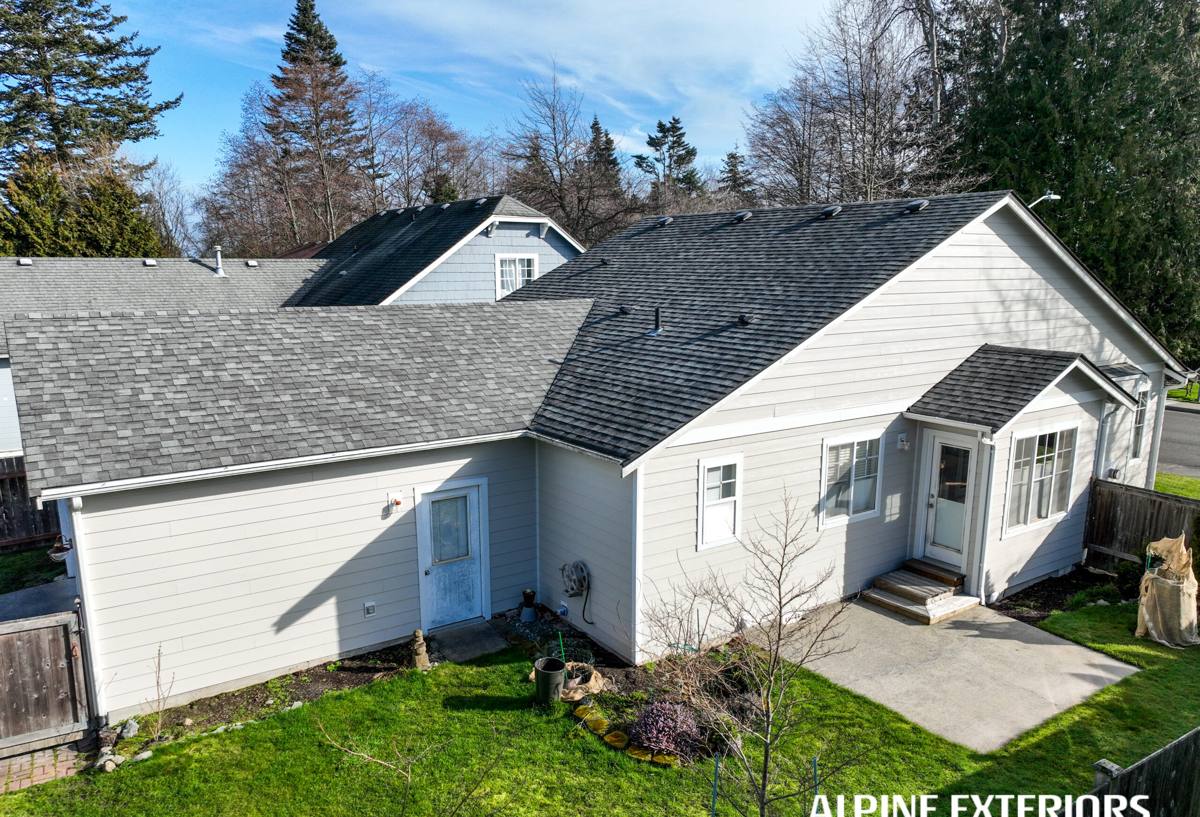
What Salt Air and Driving Rain Do to a House
Salt Air
Airborne salt from the bay settles on every exterior surface within reach of the wind, not just the homes with a water view. It accelerates corrosion on fasteners, flashing, and hardware, and it can degrade certain paint and coating systems faster than a standard weathering estimate would predict. Materials that rely on a factory or field-applied finish to keep moisture out need that finish to hold up under salt exposure specifically, not just under generic UV and rain testing.
Driving, Wind-Driven Rain
Semiahmoo catches wind off open water with little to break it up before it hits a house. That means rain doesn't just fall here, it drives sideways into wall assemblies, gets forced under laps and around trim, and tests every seam in the siding system. A material that's merely water-resistant on a calm day can still let moisture in during a real Pacific storm if the laps, caulking, and flashing details aren't right.
A Long Moss and Mildew Season
Cool, damp, and shaded conditions for much of the year give moss, algae, and mildew a long runway on north-facing walls and anywhere siding stays shaded. Some siding materials feed that growth or trap moisture against the substrate; others shed it more easily and clean up without damage.
Why We Won't Install Vinyl, LP SmartSide, or Other Composites Here
We get asked regularly why we don't offer cheaper options. The honest answer is that we've seen what this specific coastal environment does to them over time, and we don't want our name on the result.
- Vinyl siding expands and contracts with temperature swings, and in sustained wind it can rattle, bow, or pull loose at the nailing flange over the years. Salt air also dulls and chalks vinyl's color faster than it does a factory-baked finish, and there's no practical way to refinish it — you replace it.
- LP SmartSide is an engineered wood product. Wood-based siding is only as good as its weakest seam; if wind-driven rain finds its way past a cut edge, a fastener, or a lap joint that wasn't sealed exactly to spec, the strand-based core can swell and deteriorate from the inside, often before it's visible from the outside.
- Cedar and primed spruce look great on day one but demand a maintenance schedule most homeowners don't keep up with — recoating, caulking, and moisture checks every few years — and they're combustible, which matters more each fire season.
- Cemplank and Allura are fiber cement competitors to James Hardie. They're a more defensible choice than vinyl or wood-composite, but we've standardized on one manufacturer so we can guarantee installation detail, warranty coverage, and color-match consistency across every job — and Hardie's engineering and track record in the Pacific Northwest is what we trust most.
None of this is a claim that these products are junk — plenty of them meet code and perform adequately in moderate climates. It's that a bay-facing property in a place like Semiahmoo isn't a moderate climate test. We'd rather turn down a lower-cost bid than install something we expect to be repairing in eight years.
Why James Hardie Fiber Cement Fits This Coastline
James Hardie siding is cement, sand, and cellulose fiber — not wood, not vinyl. It doesn't rot, it doesn't feed insects, and it's non-combustible. For a house sitting in salt air and near-constant wind and rain, three things matter most:
ColorPlus Factory Finish
Hardie's ColorPlus finish is baked on in a controlled factory environment, not brushed or sprayed on-site. It resists fading, chalking, and chipping far better than field-applied paint, which matters directly here — salt air is one of the fastest ways to degrade a weaker finish.
HZ5 Engineering
Hardie engineers its products by climate zone. HZ5 boards are built for the wet, freeze-prone Pacific Northwest specifically, with moisture management built into the product rather than added on as an afterthought.
Dimensional Stability
Fiber cement doesn't expand and contract with temperature and humidity the way vinyl and wood products do. That stability is what keeps laps tight and seams sealed through a decade of storms rolling in off the water, and it's a big part of why the material holds paint and caulk lines so much longer.
How We Install for This Specific Exposure
The material is only half the equation — a lot of coastal siding failures trace back to installation shortcuts, not the product itself. On every Semiahmoo-area job we:
- Use stainless or hot-dip galvanized fasteners rated for coastal/corrosive exposure, not standard-grade fasteners that will rust prematurely in salt air.
- Install a drainable weather-resistive barrier behind the siding so any moisture that does get past the cladding has somewhere to go instead of sitting against the sheathing.
- Flash every window, door, and penetration to shed wind-driven rain, not just vertical rainfall.
- Follow Hardie's fastening and clearance specs precisely — gaps at butt joints, proper nailing patterns, and correct ground clearance are what keep the manufacturer's warranty intact.
- Caulk and seal with products rated for exterior, high-moisture, coastal use.
Siding Cost Factors for a Semiahmoo Home
| Factor | Why It Matters Here |
|---|---|
| Home size and wall complexity | More corners, dormers, and trim details mean more cutting, flashing, and labor time |
| Existing siding removal | Tear-off and disposal of failing vinyl, wood, or composite adds cost but is necessary to inspect sheathing for moisture damage |
| Sheathing/moisture repair | Coastal moisture exposure sometimes means rotten sheathing is found once old siding comes off |
| Hardie product line and profile | Lap, shingle, and panel styles vary in material and labor cost |
| Trim and accessory package | Corner boards, window trim, and fascia in matching Hardie trim add to the finished look and cost |
| Access and site conditions | Waterfront lots with limited staging area or steep grades can affect labor time |
Roofing, Windows, and Decks in the Same Environment
Siding rarely fails in isolation on a coastal property — it's usually one part of an exterior system under the same salt-air, high-wind, high-moisture load. We also handle roofing, window replacement, and deck construction in this area, and we look at all four together when we're on-site: a roof shedding water onto a wall that isn't flashed correctly, or windows original to the house leaking behind new siding, undercuts the whole job. Bidding it as one exterior project, rather than four separate ones, is usually the more honest way to actually solve the moisture problem instead of moving it around.
Why a Local Crew Matters Here
Semiahmoo isn't a typical Whatcom County lot. Wind exposure, salt drift, and drainage conditions vary block by block depending on how directly a property faces the water and how much tree cover breaks up the wind. A crew that works this coastline regularly knows where to add extra flashing attention, which sides of a house take the worst of the weather, and how the moss and mildew season actually plays out here versus a few miles inland. That local knowledge shows up in the details — fastener choice, sealant selection, flashing laps — that don't show up on a spec sheet but decide whether a siding job holds up for thirty years or needs attention in eight.
A Practical Pre-Project Checklist
- Walk the exterior and note any soft spots, staining, or bubbling paint, especially on north and west-facing walls
- Check for moss or algae buildup in shaded areas as an early sign of trapped moisture
- Look at caulk lines around windows and trim for cracking or gaps
- Ask any contractor bidding the job what fastener grade and weather barrier they use for coastal exposure
- Confirm whether tear-off of existing siding is included, since sheathing condition often isn't known until old material comes off
- Get the manufacturer and warranty terms in writing before signing anything
If your Semiahmoo home is due for new siding, showing signs of moisture or moss trouble, or you're weighing options after getting a quote for a cheaper material, we're happy to take a look. We offer free, no-pressure estimates — walk the exterior with us, and we'll tell you straight what we're seeing and what we'd recommend, no obligation either way.