 Ferndale Siding
 Roofing on Semiahmoo's Waterfront: A Different Set of Problems
Semiahmoo sits right on the water, exposed to wind and salt spray in a way most Whatcom County neighborhoods aren't. That waterfront location is why people live there, but it's also why roofs here wear differently than roofs a few miles inland in Ferndale or Bellingham. Salt-laden air accelerates corrosion on exposed metal fasteners, flashing, and roof vents. Constant onshore wind drives rain sideways under shingle edges and around penetrations that would stay dry in a calmer spot. And the long, damp Pacific Northwest moss season means organic growth gets a head start here and holds on longer into the year.
None of that means a Semiahmoo roof is doomed to fail early. It means the repair work has to account for conditions a generic roofing crew might not think about. We've worked on homes throughout this stretch of Whatcom County, and the repairs that hold up long-term are the ones that specifically address salt exposure, wind-driven rain, and moss — not just the visible leak.
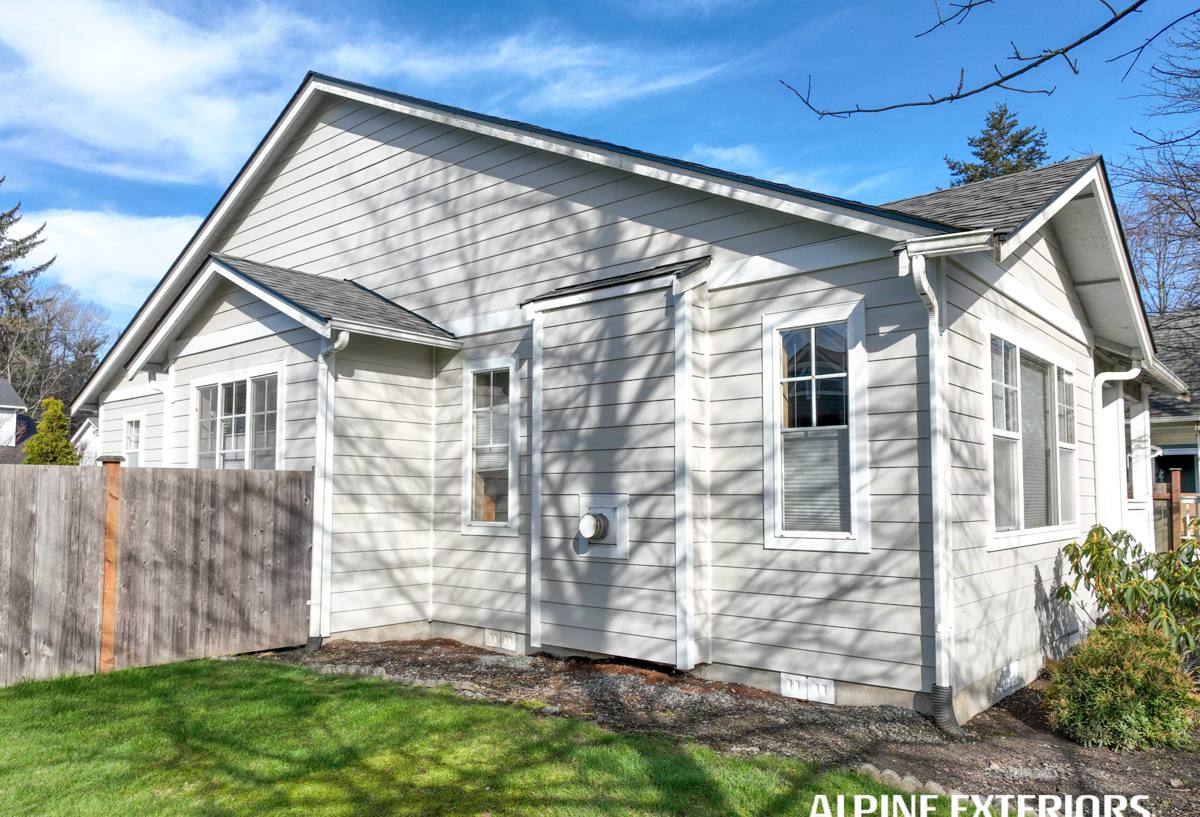
What Salt Air Actually Does to a Roof
Salt air is corrosive to unprotected or poorly coated metal. On a roof, that shows up in a handful of predictable places:
- Galvanized fasteners and nail heads that rust and back out over time, breaking the seal around shingles or panels
- Flashing around chimneys, skylights, and roof-to-wall transitions that pits and thins faster than it would inland
- Metal roof vents and pipe boots where the metal collar corrodes before the rubber gasket even wears out
- Gutter systems and drip edge that can develop pinhole corrosion years before an inland install would
The fix isn't complicated, but it does require using the right materials the first time. Stainless steel or coated fasteners, properly lapped flashing, and corrosion-resistant vent components cost a little more than standard hardware, but on a waterfront property they're the difference between a repair that lasts and one you're revisiting in two or three years.
Why "Just Caulk It" Doesn't Hold Up Here
A common shortcut repair is to seal a corroded fastener or a lifted flashing edge with roofing cement or caulk instead of replacing the damaged component. In a low-exposure location that might buy a season or two. On a Semiahmoo roof, constant salt air and wind-driven moisture break down sealant-only fixes much faster, and the underlying corrosion keeps spreading underneath the patch. We treat sealant as a finishing step, not the repair itself.
Wind-Driven Rain and the Weak Points It Finds
Driving rain off the water doesn't fall straight down — it gets pushed sideways and upward under roof edges, at valleys, and around anything that penetrates the roof plane. That means the usual leak points (chimneys, skylights, plumbing vents, roof-to-wall junctions) are under more pressure here than on a sheltered inland roof. A repair that would pass fine in calmer conditions can still leak on a Semiahmoo home if the underlayment lap or flashing overlap isn't generous enough to handle wind-blown water.
When we diagnose a leak on a waterfront property, we're specifically checking:
- Whether step flashing and counter-flashing at walls and chimneys have enough overlap for wind-driven conditions, not just standard lap
- Whether valley flashing or valley shingle weaving is tight enough to shed water moving sideways, not just downhill
- Whether ridge and hip caps are sealed and fastened well enough to resist wind uplift, since a lifted cap is an open door for driving rain
- Whether ice-and-water-shield or self-adhered underlayment is present at the vulnerable spots, not just at the eaves
Moss: The Slow Damage Most Homeowners Underestimate
Whatcom County's wet, mild climate keeps moss growing on north-facing and shaded roof slopes for most of the year, and Semiahmoo's cooler, moisture-heavy microclimate near the water extends that season further than you'd see a few miles inland. Moss looks cosmetic, but it causes real damage over time:
- Moss holds moisture against the shingle surface long after rain has stopped, accelerating granule loss and shingle aging
- Rhizoids (moss root structures) work into shingle seams and can lift tabs, creating entry points for water
- Thick moss mats redirect water flow, sometimes pushing it under shingles instead of down and off the roof
- Moss in gutters and at eaves contributes to the kind of standing water that leads to ice damming or rot at the fascia
Moss removal has to be done correctly to avoid making things worse. Aggressive scraping or pressure washing strips granules and can crack aged shingles. We remove moss with methods that don't damage the roofing material underneath, and where a roof has chronic moss buildup we'll talk about zinc or copper strip installation as a long-term prevention measure — a one-time addition that keeps moss from re-establishing on treated slopes.
What a Correct Repair Looks Like
A proper roof repair on a Semiahmoo home isn't just patching the spot where water is visibly getting in. Leaks travel — water can enter at one point and show up on a ceiling several feet away, following a rafter or sheathing seam before it drips. Our repair process is built around finding the actual entry point, not just the symptom.
| Step | What We're Checking |
|---|---|
| Roof surface inspection | Shingle or panel condition, granule loss, lifted tabs, moss coverage, fastener condition |
| Flashing and penetrations | Chimney, skylight, vent, and wall flashing for corrosion, gaps, or inadequate overlap |
| Underlayment and decking | Where accessible, checking for soft spots, staining, or rot indicating a leak has been active for a while |
| Gutters and drainage | Moss debris, corrosion, and whether water is actually draining away from the structure |
| Attic or interior check | Tracing staining or moisture back to its true source before finalizing the repair scope |
Once we've identified the real cause, we repair with materials suited to the exposure — corrosion-resistant fasteners and flashing, properly lapped underlayment at vulnerable points, and moss-conscious workmanship that won't strip the surrounding roof. We also document what we find so you know exactly what was wrong and what was done, not just a verbal "we fixed it."
Repair vs. Replacement: An Honest Read
Not every roof issue on a waterfront home needs a full replacement, but salt air and long moss seasons do shorten the realistic lifespan of a repair-only approach in some cases. We'll give you a straight assessment of which category your roof falls into:
| Signs a repair is the right call | Signs replacement should be considered |
|---|---|
| Isolated flashing failure or a small area of storm damage | Widespread granule loss across most slopes |
| Roof is under 15-20 years old with good overall condition | Multiple past repairs in different areas suggest systemic aging |
| Moss is present but shingles underneath are still sound | Soft decking or rot found in more than one location |
| Leak source is a single, identifiable penetration | Roof is well past its expected service life for the material type |
Why Local Experience on Semiahmoo Matters
A roofing crew that mostly works inland jobs doesn't always think to upgrade fasteners for salt exposure or account for wind-driven rain angles at a chimney flashing. That's not a knock on general roofing skill — it's just a different problem set. We've done repair work across Whatcom County, including waterfront properties like Semiahmoo, and we bring that specific knowledge to every estimate: what materials hold up here, where wind and salt cause the most wear, and how aggressive the moss treatment needs to be for a given roof's orientation and shade exposure.
We also know the practical side of working on the peninsula — access considerations, weather windows for roof work near the water, and the value of getting a repair right the first time rather than making a return trip after the next storm rolls in off the water.
What to Watch For Between Visits
Between professional inspections, homeowners can catch small problems early by watching for:
- Granules collecting in gutters or at downspout outlets, a sign of accelerated shingle wear
- Rust streaking below vent pipes, flashing, or fasteners
- Dark green or black moss patches expanding season over season, especially on shaded slopes
- Any ceiling staining, even faint, after a wind-driven rainstorm
- Lifted or curling shingle tabs, particularly near ridges, hips, and roof edges facing the water
Catching these early keeps a small, inexpensive repair from turning into a larger one down the road.
Get a Straight Answer on Your Roof
If you're seeing signs of wear, a leak, or heavy moss on a Semiahmoo home, we're happy to take a look and give you an honest read on what's actually going on — no pressure, no upsell to a full replacement if a targeted repair will do the job. Reach out for a free estimate using the form below.