 Ferndale Siding
 Deck Repair Built for Lynden's Weather
Lynden sits inland from the salt water, but it doesn't escape the marine-influenced weather that defines this part of Whatcom County. The same weather systems that push salt-tinged air and driving rain off the Strait of Georgia and Bellingham Bay reach the farmland and neighborhoods around Lynden too, and a deck out here takes a beating from it. Wet falls, damp winters, and shaded yards that never fully dry out add up to a long moss season and a lot of standing moisture against wood that was never built to handle it indefinitely.
We repair decks in Lynden regularly, and the damage we find follows a pattern. It's rarely one dramatic failure. It's usually years of small moisture exposures — a gap in the flashing, a board that traps water instead of shedding it, a railing post that was never properly sealed at the base — that finally catch up with the structure. Deck repair done right in this climate means finding and fixing the moisture path, not just replacing the board that looks bad.
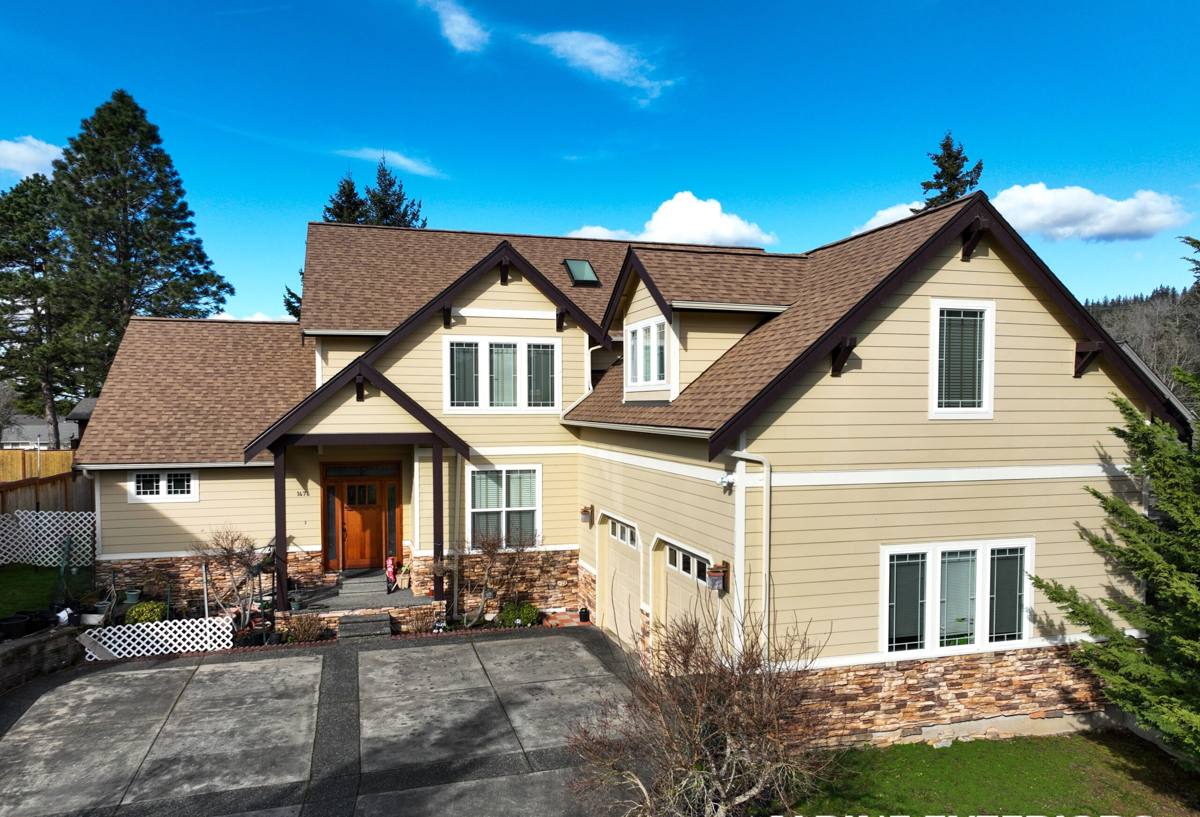
How Whatcom County Moisture Damages a Deck
Understanding the failure pattern helps explain why we approach repairs the way we do.
Moss and Standing Moisture
Moss doesn't just make a deck slippery — it holds moisture against the wood surface long after the rest of the yard has dried. On shaded decks, especially ones tucked under trees or on the north side of a house, moss can keep boards damp for weeks at a stretch during the wet months. That constant dampness is what drives rot, not any single storm.
Driving Rain and Wind-Driven Water
Whatcom County storms often come with real wind behind the rain, which pushes water sideways into places a vertical downpour never would — under railing caps, behind fascia boards, into the gap where a ledger board meets the house. Those are exactly the spots we check first on a repair call, because they're rarely visible from a casual look at the deck.
Freeze-Thaw Cycling
Lynden gets more cold snaps than the immediate coastline. Water that's soaked into a joist or post base can freeze, expand, and split wood fibers that were already weakened by rot. It's a slower process than storm damage, but it's a real contributor to structural failures we find in older decks.
Signs Your Lynden Deck Needs Repair
Most homeowners call us after noticing one of these. If you're seeing more than one, it's worth having the whole structure looked at, not just the visible spot.
- Boards that feel spongy, soft, or bounce slightly underfoot
- Persistent moss or dark staining that comes back no matter how often you clean it
- Gaps or separation where the deck meets the house (the ledger board connection)
- Railings or posts that wiggle, feel loose, or have visible cracking at the base
- Nails or screw heads popping up above the board surface
- Stair stringers that feel uneven or flex when you step on them
- Visible daylight or gaps between joists and the boards they support
- A grayed, splintery surface that's gone past simple refinishing
Repair vs. Replacement: How We Decide
Not every deck problem calls for a full rebuild, and not every problem is fixable with a few new boards. The honest answer depends on what's happening underneath the surface, which is why we always inspect the substructure before quoting anything.
| Situation | Typical Approach | Why |
|---|---|---|
| Isolated soft or split boards, frame is solid | Board-level replacement | Structure is sound; only the wearing surface has failed |
| Rot at the ledger board or house connection | Ledger repair with proper flashing correction | This is a structural safety issue, not cosmetic — it's the connection holding the deck to the house |
| Multiple joists soft or rotted | Joist sistering or replacement | Compromised framing affects the whole deck's load capacity |
| Loose or cracked railing posts | Post and hardware replacement, code-compliant reattachment | Railings are a fall-safety item; loose posts get fixed, not patched |
| Widespread rot across framing and decking, deck is 20+ years old | Full or partial rebuild | Past the point where patching makes financial sense |
Where We Find the Most Problems
The Ledger Board Connection
This is the single most important structural joint on most decks and one of the most common failure points in our climate. If flashing was skipped or installed poorly when the deck was built, water works its way behind the ledger board and into the house rim joist. We check this connection on every repair, even when the homeowner's concern is somewhere else on the deck.
Joists and Beams
Framing lumber that isn't sealed on cut ends or that sits in standing water at a low point in the deck is where rot tends to start. It's often invisible from above until the damage is advanced, which is why a real inspection means getting underneath the deck, not just walking the surface.
Posts and Footings
Wood posts set directly in soil or concrete without a proper base connector will wick moisture over time. We look at post bases closely on any older deck, especially where landscaping or mulch has been built up against the post over the years.
Stairs and Railings
Stairs see more direct foot traffic and weather exposure than the deck surface itself, and railings take the brunt of both use and moisture at their post connections. Both are safety items, not just wear items, so we treat looseness or splitting here as a priority repair rather than something to defer.
Matching Materials the Right Way
Repairing a deck usually means matching what's already there, and that decision matters more than it seems.
- Pressure-treated lumber: the most common Lynden deck framing and decking material. Repairs need treated stock of the correct rating, cut ends resealed, and hardware matched to avoid galvanic corrosion between dissimilar metals.
- Cedar: common on older decks for its natural look. Cedar repairs should use cedar, since mixing species affects how the deck weathers and finishes over time.
- Composite decking: lower maintenance but not immune to substructure rot underneath — composite boards can look fine while the framing below has failed. We inspect the frame independently of what the surface material shows us.
When we can't get an exact match to older boards, we tell you that upfront and talk through the closest honest option rather than installing something that will visibly clash or behave differently under moisture.
Our Deck Repair Process
- Full inspection, top and bottom. We check the ledger connection, joists, posts, and surface boards, not just the spot you called about.
- Honest assessment. We tell you what's cosmetic, what's structural, and what can wait versus what shouldn't.
- Written scope and estimate. You know what's being replaced, what's being repaired, and roughly why, before work starts.
- Correct the moisture path first. Flashing, drainage, and sealing get fixed alongside the visible repair — replacing a board without fixing the reason it failed just buys you a few more years before the same problem returns.
- Rebuild to current safety standards on any structural component, including railing height and post attachment, even when the original build predates current code.
- Clean job site, clear final walkthrough. You see the finished repair before we consider the job done.
What Affects the Cost of a Deck Repair
| Factor | Why It Matters |
|---|---|
| Extent of framing damage | Structural repairs (joists, ledger, posts) take more labor and material than surface board swaps |
| Accessibility | Decks with limited underneath access or tall elevations take longer to inspect and repair safely |
| Material match | Cedar and specialty composite boards typically cost more than standard pressure-treated lumber |
| Railing and stair scope | Safety-code items often require full replacement rather than patching |
| Age and prior repair history | Older decks or ones with a history of DIY patches sometimes reveal more once we're inside the structure |
Every deck repair job is different, which is why we give a real number after we've actually looked at the deck rather than a phone estimate based on guesswork.
Why It Matters to Hire a Crew That Already Works in Lynden
Deck repair isn't complicated in theory, but doing it right in Whatcom County means understanding how our specific weather pattern attacks a structure over time — where moisture collects, which connections fail first, and how long a "quick fix" actually holds up before the same rot returns. A crew that works this area regularly has already seen how local moss growth, drainage, and rain exposure play out on decks like yours, and builds repairs that account for it instead of applying a generic patch. That local pattern recognition is the difference between a repair that lasts one season and one that lasts a decade.
Get a Free, No-Pressure Estimate
If your Lynden deck has soft spots, a shaky railing, or just doesn't look right anymore, we're happy to take a look and give you a straight answer on what it needs. There's no obligation and no pressure — just an honest assessment from a crew that knows what Whatcom County weather does to a deck. Use the form below to request your free estimate.