 Ferndale Siding
 Deck Replacement Built for Blaine's Waterfront Exposure
Blaine sits right on the water at the northwest corner of Whatcom County, and that location puts real stress on an exterior deck that homes further inland don't deal with nearly as often. Salt-laden air moves in off Semiahmoo Bay and the Strait of Georgia, rain tends to come in sideways rather than straight down, and a damp, shaded climate keeps moss active on horizontal surfaces for most of the year. A deck is the part of a home's exterior that takes this exposure most directly — it's flat, it's outdoors, and it's built low to the ground where moisture collects. We replace decks in Blaine on a regular basis, and the approach we use is built around what that specific combination of salt, rain, and moss actually does to decking material, fasteners, and the framing underneath.
A deck replacement here isn't just swapping old boards for new ones. It's a chance to correct the framing, flashing, and drainage details that caused the original deck to fail in the first place, so the new one doesn't follow the same path in another ten or fifteen years.
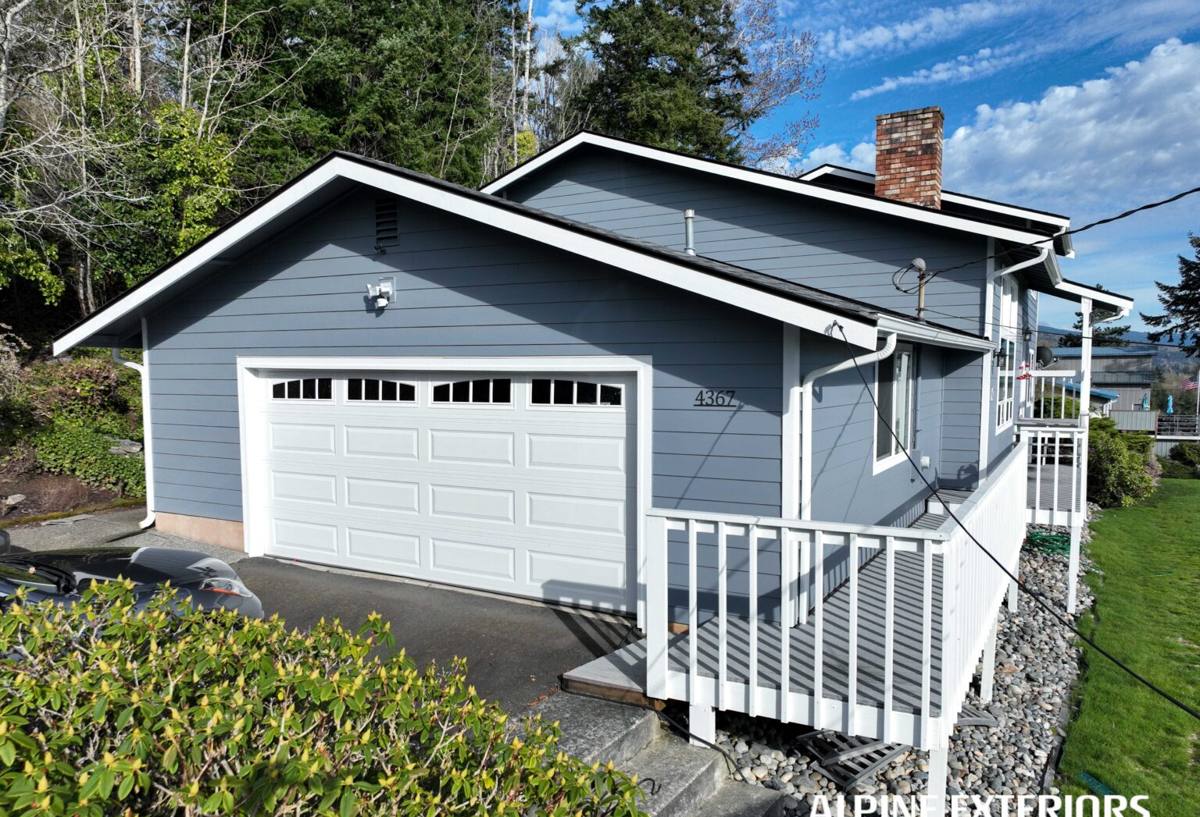
What Blaine's Climate Does to a Deck
Salt Air and Fastener Corrosion
The closer a property sits to open water, the more salt-laden moisture settles on every exposed surface, including a deck's ledger board, joist hangers, and fasteners. Standard-grade hardware corrodes faster under that kind of exposure, and once a fastener starts to rust, it loses holding strength long before it looks bad enough to notice from the surface. On a structural deck attachment, that's not a cosmetic problem — it's a safety one.
Driving Rain at the Ledger Connection
Wind off the water pushes rain sideways into the seam where a deck ledger board attaches to the house, which is the single most common point of failure we find on older decks in this area. Without proper flashing and a water-resistant barrier behind the ledger, that connection stays wet longer than it should, and the framing behind it can rot for years before anyone sees a visible sign from outside.
A Long Moss and Algae Season
Shaded decks and north-facing surfaces in Blaine grow moss and algae for much of the year, not just in the wettest winter months. Beyond making a deck surface slippery, sustained moss growth holds moisture against the decking boards and framing underneath, which speeds up rot in wood decking and can stain or degrade the surface of composite material if it isn't cleaned off.
Freeze-Thaw on Saturated Wood
Blaine gets fewer hard freezes than towns further inland, but it still sees enough cold snaps that saturated, aging deck boards can freeze and thaw repeatedly through a winter. Wood that's already taken on moisture expands when it freezes, which accelerates splitting, checking, and fastener pull-through on a deck that's already past its prime.
Signs a Blaine Deck Needs Replacing, Not Repairing
Not every deck problem calls for a full tear-out. But there's a point where patching individual boards stops making sense and a full replacement becomes the more honest recommendation. We look for a combination of these signs before making that call:
- Soft, spongy, or spring-feeling boards in more than a couple of isolated spots
- Visible rot, staining, or fungal growth at the ledger board or where posts meet the ground
- Loose, rusted, or corroded joist hangers and structural fasteners
- Railings or posts that flex or wobble under normal weight
- A deck that was never properly flashed at the house connection to begin with
- Boards cupping, splitting, or separating widely at multiple points across the surface
If the framing underneath is sound and it's mainly the surface boards showing wear, resurfacing can sometimes be the right, more affordable call. We'll tell you honestly which situation you're in rather than defaulting to the bigger job.
What a Correct Deck Replacement Involves in This Climate
Ledger Flashing Done Right
Every deck we build ties into the house at the ledger board, and in a wind-driven-rain climate like Blaine's, that connection has to be flashed properly with a water-resistant membrane and metal flashing that sheds water away from the house rather than trapping it against the sheathing. This is the detail most likely to be shortcut on a lower-cost deck job, and it's the one most likely to cause a hidden rot problem years down the line.
Corrosion-Resistant Fasteners and Hardware
Given the salt exposure this close to the water, we use fasteners and structural connectors rated for coastal or wet-service conditions rather than standard interior-grade hardware. It costs more upfront and makes no visible difference on install day, but it's the difference between joist hangers that are still solid in fifteen years and ones that are rusting through in five.
Framing and Footing Inspection
Because so much deck failure in this area starts underneath the visible surface, a proper replacement includes a real inspection of the posts, footings, and joists — not just the decking boards on top. Undersized or rotted framing gets replaced or upgraded to current structural standards, not just built over.
Drainage and Grading Underneath
Water that pools under a deck instead of draining away keeps the framing, posts, and ground contact points wet far longer than they should be. We pay attention to grading and drainage beneath the deck itself, not just what happens on the surface, since that's often where the next round of rot starts if it's ignored.
Decking Material Options for a Blaine Property
We'll talk through material choice honestly, based on how each option actually performs under sustained coastal moisture and moss exposure, not just on upfront cost.
| Material | How It Handles Blaine's Climate | Maintenance |
|---|---|---|
| Composite decking | Resists moisture absorption and rot far better than wood; some entry-level composites can still stain from moss if not cleaned | Low — periodic washing, no sealing or staining |
| Pressure-treated wood | Affordable and structurally solid, but end grain and fastener holes need consistent sealing to resist this climate's moisture | Higher — annual cleaning and periodic sealing or staining |
| Cedar decking | Naturally rot-resistant compared to other wood species, but still needs regular maintenance to hold up to sustained coastal dampness | Higher — regular oiling or sealing |
| PVC decking | Fully resists moisture absorption and rot; performs well in wet, salt-exposed conditions | Low — occasional washing |
Composite and PVC decking have become our default recommendation for waterfront and near-waterfront properties in Blaine because they don't absorb moisture into the board itself, which removes the main mechanism behind wood rot. That said, a well-built, well-maintained wood deck can still be the right call for a homeowner who prefers the look and is willing to keep up with sealing on a regular schedule — we'll lay out the honest maintenance trade-off either way rather than push one option.
Our Deck Replacement Process
- On-site assessment: We inspect the existing deck, ledger connection, framing, and footings to determine what's actually failing and why.
- Honest scope and estimate: You get a clear picture of what needs full replacement versus what can be preserved, with pricing that reflects the real scope.
- Tear-out: The old decking, and any framing or ledger components that don't meet current standards, comes out.
- Framing and flashing: New or upgraded framing goes in along with proper ledger flashing and coastal-rated fasteners.
- Decking and railing installation: Your chosen material goes down with attention to drainage, spacing, and secure railing attachment.
- Final walkthrough: We go over the finished deck with you and answer any maintenance questions before we consider the job done.
Why a Crew That Already Works Blaine Matters
A deck replacement in Blaine isn't the same job as a deck replacement in a drier, more sheltered part of the county. A crew that works this area regularly knows which wall and deck orientations catch the worst of the wind-driven rain, how aggressively moss takes hold on a shaded, water-facing lot, and which flashing and fastener details are worth the extra time given how sustained the moisture exposure is here. That local, hands-on experience shows up in decisions that don't get made on a spec sheet — where to add extra flashing, which posts need a closer look at ground contact, and how to grade underneath the deck so water doesn't sit where it shouldn't. It's the difference between a deck that's still solid in fifteen years and one that's showing the same rot problems the old one had.
If you're weighing a deck replacement in Blaine or anywhere else near Ferndale, we're happy to take a look and give you a straightforward, no-pressure estimate — no obligation, just an honest read on what your deck actually needs.