 Ferndale Siding
 Metal Roofing in Marietta: Built for What This Corner of Whatcom County Actually Deals With
Marietta sits close enough to the water that homes here take a different kind of weather beating than roofs a few miles inland. Salt-laden air moves off the bay, driving rain comes in sideways during fall and winter systems, and the shaded, moisture-heavy stretch of the year that everyone in Whatcom County just calls moss season runs longer here than it does on the drier east side of the county. A roof that works fine in a subdivision outside Bellingham can still struggle in Marietta if it wasn't chosen and installed with these specific conditions in mind.
Metal roofing has become a popular answer for homeowners in this area, and for good reason — but "metal roof" covers a wide range of products, fastening methods, and installation quality. This page is about what actually matters when you're putting a metal roof on a home in Marietta specifically, not metal roofing in general.
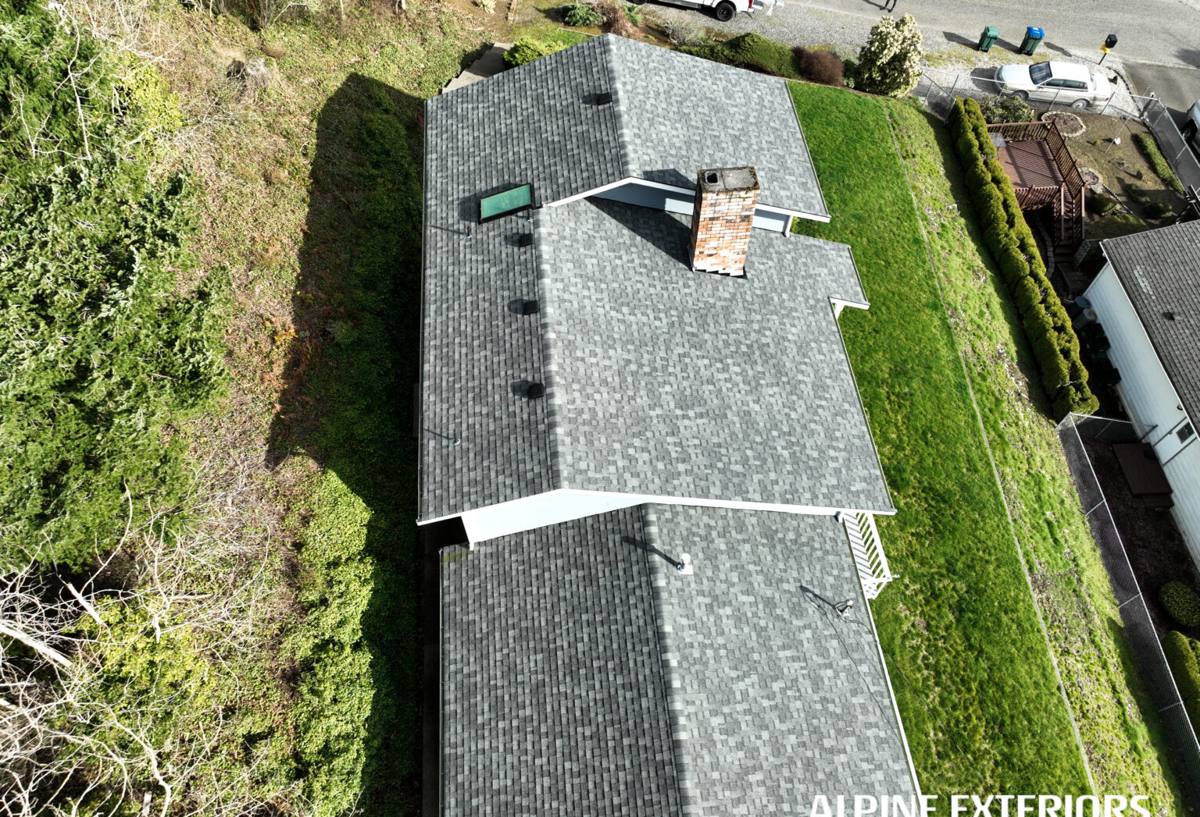
What Marietta's Coastal Climate Does to a Roof Over Time
Salt Air and Corrosion
Airborne salt is corrosive to exposed metal fasteners, cut edges, and any coating that gets scratched or worn thin during installation. It's not dramatic — you won't see rust show up in year one — but over a decade or two, a roof built with the wrong fastener grade or a coating not rated for coastal exposure will show it at every screw head and panel seam first. This is one of the biggest differences between a metal roof installed for an inland home and one installed correctly for a home near Marietta's shoreline.
Driving Rain and Wind-Driven Water
Storms moving in off the water don't always drop rain straight down. Wind-driven rain gets pushed sideways and upward under panel laps, around penetrations, and into any gap that a standard installation might get away with elsewhere. Underlayment choice, lap length, and flashing detail all matter more here than they would on a calmer inland roof.
Moss and Shade
Marietta's tree cover and the region's damp, mild winters give moss a long window to establish itself — often eight or nine months of the year in shaded areas. Moss holds moisture against a roof surface, and on the wrong material or the wrong installation, that trapped moisture is what eventually causes problems, not the moss itself.
Why Metal Handles This Better Than Some Alternatives — When It's Installed Right
Metal roofing has real advantages for a climate like this: it sheds water fast, it doesn't absorb moisture the way some roofing materials do, and a quality panel with a proper factory coating resists moss growth far better than a porous surface. It also holds up well against wind, which matters during the fall and winter storm season that rolls through this part of Washington.
None of that is automatic, though. A metal roof is only as good as its fastening system, its flashing detail, and the coating quality behind the finish. We install metal roofing as a system, not just a covering — every seam, penetration, and edge is treated as a place water will eventually try to get through, because near Marietta, it will.
Choosing the Right Metal Roofing System for a Marietta Home
Not every metal roof is built the same way, and the differences matter more here than in a mild inland climate. The two systems we install most often are standing seam and exposed-fastener panel systems, and each has a place depending on the home, the roof pitch, and the budget.
| System | How It's Fastened | Best Fit | Coastal Considerations |
|---|---|---|---|
| Standing Seam | Concealed clips, no exposed fasteners on the field of the panel | Homes wanting the longest service life and cleanest look | No exposed screw heads to corrode over time; handles wind-driven rain best |
| Exposed Fastener (Ag Panel) | Screws driven through the panel face, with washers | Budget-conscious projects, outbuildings, simpler rooflines | Fastener quality and washer life become the weak point in salt air over the years |
For a full-time Marietta residence exposed to salt air, we generally steer homeowners toward standing seam or a high-quality exposed-fastener system with marine-grade fasteners — not because exposed-fastener panels are a bad product, but because the long-term maintenance burden in this specific environment is higher, and we'd rather be upfront about that trade-off before the work starts than have a homeowner discover it at year twelve.
What a Correct Metal Roof Installation Actually Involves
The panel itself is the part homeowners see. What determines whether that panel lasts 20 years or 50 happens underneath and around it.
Underlayment
We use a synthetic or self-adhered underlayment rated for the wind-driven rain conditions this area sees, not a bare-minimum felt that's really meant for drier climates. This is the roof's backup layer if wind ever pushes water past a seam.
Flashing at Every Transition
Valleys, chimneys, vent penetrations, and wall intersections are where roofs fail first — metal or otherwise. Each of these gets custom-formed flashing and proper lap sequencing so water is always directed downhill and off the roof, never trapped or funneled sideways where wind can push it under a seam.
Fastener Selection
Given the salt exposure Marietta homes deal with, fastener and washer quality is not a place to cut cost. We use fasteners rated for coastal or marine exposure rather than standard-grade hardware, specifically because standard fasteners are where corrosion shows up first.
Ventilation
A metal roof deck still needs to breathe. Proper intake and exhaust ventilation keeps moisture from condensing on the underside of the panels, which matters in a climate where the air itself carries a lot of moisture much of the year.
Moss, Algae, and the Long-Term Maintenance Reality
No roofing material is fully "moss-proof" if the conditions favor it — shade, moisture, and organic debris will eventually try to establish somewhere. What a quality metal roof gives you is a surface moss struggles to grip and that sheds debris rather than holding it. Homeowners in Marietta's shadier lots still benefit from:
- Keeping overhanging branches trimmed back so the roof gets more sun and airflow
- Clearing gutters and valleys of needles and leaf debris each fall before the wet season sets in
- A yearly visual check of flashing points and roof edges, especially after the first major storm of the season
- Avoiding pressure washing metal panels, which can damage coatings — a soft wash or gentle rinse is enough
This maintenance load is real but modest compared to what shingle roofs in the same shaded, moss-prone spots typically require.
Our Process for a Marietta Metal Roofing Project
We approach every metal roofing job here the same structured way, adjusted for the specific home and lot:
- On-site assessment — we look at pitch, existing decking condition, tree cover, and exposure to prevailing wind and rain direction before recommending a system.
- System and color selection — standing seam versus exposed-fastener, panel gauge, and coating are chosen based on the home's exposure, not a one-size default.
- Tear-off and deck inspection — we check the roof deck for any moisture damage from the prior roofing system before anything new goes down.
- Underlayment and flashing installation — the part that determines long-term performance, done to the standard this climate requires.
- Panel installation — precise alignment, correct fastener spacing and torque, and clean seam work.
- Final walkthrough — we review the completed roof with the homeowner and cover basic maintenance expectations specific to their property.
What Metal Roofing Typically Costs — and What Actually Moves the Number
Metal roofing costs more upfront than asphalt shingles, but the gap narrows considerably when you factor in service life and reduced maintenance in a climate like Marietta's. Rather than quote a flat number that won't reflect your actual roof, here's what genuinely drives the price up or down on a project like this:
| Factor | Effect on Cost |
|---|---|
| Panel system (exposed-fastener vs. standing seam) | Standing seam typically runs higher due to labor and concealed fastening hardware |
| Roof complexity (valleys, dormers, penetrations) | More transitions mean more custom flashing labor |
| Existing deck condition | Any rot or damage found at tear-off adds repair cost before new roofing goes on |
| Coating and gauge selection | Heavier gauge and marine-grade coatings cost more but pay off in coastal exposure |
| Access and pitch | Steep or hard-to-access rooflines increase labor time and safety equipment needs |
We give firm, itemized quotes after an in-person assessment — not a phone estimate — because these variables genuinely change the number, and we'd rather you see exactly what you're paying for.
What to Ask Before Hiring Anyone for a Metal Roof in This Area
- Do you use fasteners and coatings actually rated for coastal or high-moisture exposure, or standard-grade hardware?
- Will you inspect and address any deck damage found during tear-off before installing new panels?
- What underlayment do you use, and is it rated for wind-driven rain?
- How do you detail flashing at valleys and penetrations — is it custom-formed for this roof, or generic trim pieces?
- Can you show me examples of similar work done in this immediate area, not just the wider region?
Why It Matters That We Already Work in Marietta
A roofing crew that mostly works drier, inland jobs can still install a technically correct roof and still get outperformed by one built specifically for salt air and driving rain, simply because the assumptions baked into "standard installation" are different here. Working Marietta and the surrounding Ferndale area regularly means we already know which fastener grades hold up, which flashing details actually stop wind-driven rain at this exposure level, and how long the moss season really runs on shaded lots in this part of Whatcom County — not from a manufacturer's spec sheet, but from years of roofs we've installed and returned to check on.
If you're weighing metal roofing for a home in Marietta, we're glad to walk your roof, talk through what your specific lot and exposure actually call for, and put together a clear, no-pressure estimate. There's a form below to get that started whenever you're ready.