 Ferndale Siding
 Roof Replacement for Kendall: Built for What This Area Does to a Roof
Kendall sits in the rural and semi-rural stretch of Whatcom County northeast of Ferndale, where properties tend to be larger, tree cover is heavier, and homes sit further from a paved main road than they do in town. That combination changes what a roof deals with over its lifespan. Marine air off the Salish Sea still reaches this far inland, driving rain still gets pushed sideways and up under shingle edges during winter storms, and the heavier tree canopy common on Kendall lots adds its own set of problems — shade that keeps roof surfaces damp longer, needles and leaf litter that pack into valleys and gutters, and moss that gets a long head start every fall and doesn't let go until late spring.
A roof replacement done right in Kendall isn't just about swapping old shingles for new ones. It's about building a roof system that can shed wind-driven rain, resist a long moss season, and hold up on a property where a roof problem might not get noticed as quickly as it would on a house closer to town with more foot traffic and closer neighbors.
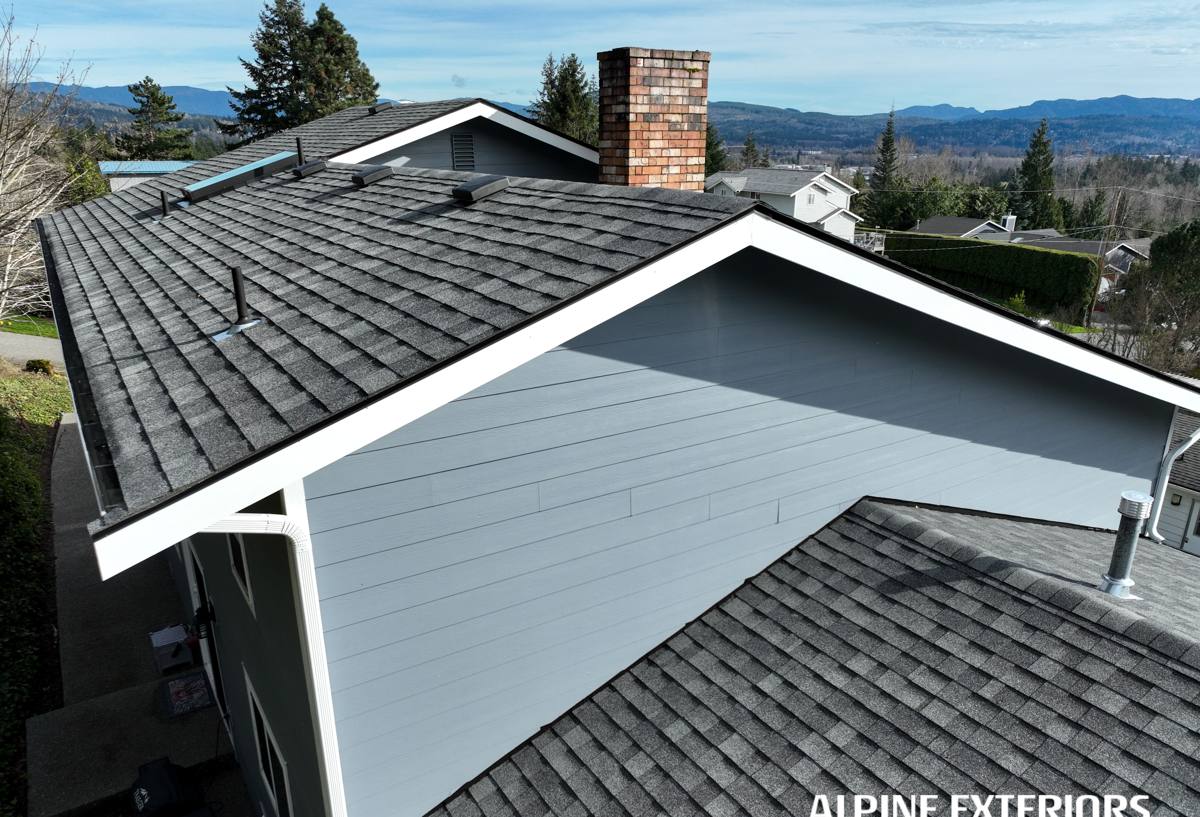
What This Climate Actually Does to a Roof Over Time
Three regional factors do most of the damage to roofs in this part of Whatcom County, and they don't act independently — they compound each other.
Salt-Tinged Marine Air
Even well inland from the water, the marine air that moves through this region carries enough salt content to accelerate corrosion on unprotected metal — fasteners, flashing, and drip edge in particular. Cheap or poorly coated metal components corrode faster here than they would in a dry inland climate, and once a fastener or flashing seam starts to fail, water finds its way in.
Driving Rain
Rain in this region rarely just falls straight down. Storms push it sideways and up under shingle tabs, at valleys, and around anything that penetrates the roof surface — vents, chimneys, skylights. A roof that would perform fine somewhere with calmer weather can leak here if the underlayment, shingle lap, and flashing aren't installed with that wind-driven pattern specifically in mind.
A Long Moss Season Made Worse by Tree Cover
Moss needs shade and moisture, and Kendall properties tend to have both in abundance thanks to heavier tree cover than in-town lots. Moss doesn't just look bad — it holds moisture against the roof surface, works its way under shingle edges as it grows, and can lift shingles enough to let water underneath over several seasons. Add in needle and leaf debris collecting in valleys and around penetrations, and you get standing moisture in exactly the places a roof is most vulnerable.
Signs a Kendall Roof Is Due for Replacement
Because many Kendall properties sit back from the road with less day-to-day visibility, roof problems can go longer without being noticed than they would on a more visible in-town home. It's worth checking these signs directly rather than waiting for a leak to show up inside.
- Shingles that are cupping, curling, or missing granules in patches, especially on shaded, north-facing slopes
- Heavy moss growth that's visibly lifting shingle edges rather than just sitting on the surface
- Dark streaking or algae staining that keeps returning after cleaning
- Soft spots or sagging when the roof deck is walked, which usually points to trapped moisture underneath
- Granules collecting in gutters or at the base of downspouts
- Daylight visible through the roof deck from inside the attic
- Rusting or visibly corroded flashing, fasteners, or drip edge
- Interior water stains on ceilings, especially near chimneys, skylights, or valleys
- A roof that's simply reaching or past the expected lifespan of its material, with repairs becoming more frequent
What a Correct Roof Replacement Involves
A roof replacement is more than removing old material and nailing down new shingles. Each step affects how well the finished roof performs against the specific conditions Kendall homes face.
Tear-Off and Deck Inspection
A full tear-off, rather than a layover of new shingles on top of old ones, is the only way to actually see the condition of the roof deck underneath. On homes with heavier tree cover and a longer moss history, it's common to find sections of decking that have taken on moisture over time and need to be replaced before new roofing goes down. Skipping this step just buries the problem under a new roof.
Underlayment
Underlayment is the roof's backup layer against water that gets past the shingles, and it matters more here than in drier climates because wind-driven rain pushes water further up and under shingle edges. Synthetic and self-adhered underlayment systems handle that intrusion far better than older felt products, particularly at eaves, valleys, and low-slope sections where water sits longer.
Flashing at Valleys, Chimneys, and Penetrations
Most roof leaks in this climate start at flashing, not in the open field of the roof. Valleys, chimney bases, skylight curbs, and vent penetrations all need flashing detail sized and lapped correctly for wind-driven rain, with corrosion-resistant metal given the marine air this far into the county.
Ventilation
Proper intake and exhaust ventilation keeps moist air from getting trapped in the attic, which otherwise accelerates deck rot from underneath and encourages moss and algae growth on the roof surface itself. On heavily shaded Kendall lots, ventilation is doing extra work compared to a roof that gets more direct sun exposure to dry out between rain events.
Material Selection
Algae-resistant shingles, treated cedar alternatives, or metal roofing all perform differently against a long moss season and heavy shade. The right choice depends on the home's roof pitch, how much direct sun different slopes get, and the homeowner's budget and maintenance preferences.
Comparing Roofing Approaches for a Shaded, Rural Property
| Factor | Standard Asphalt Shingle | Algae-Resistant Shingle | Metal Roofing |
|---|---|---|---|
| Upfront cost | Lowest | Modest upcharge over standard | Highest |
| Moss and algae resistance | Develops staining and growth within a few years on shaded slopes | Slows dark staining and organic growth significantly | Sheds moisture fast enough to discourage sustained moss growth |
| Expected lifespan here | Shorter on heavily shaded slopes | Longer than standard on the same slopes | Longest of the three, with proper install |
| Maintenance under heavy tree cover | More frequent cleaning needed | Reduced but not eliminated | Lowest ongoing maintenance |
| Best fit | Sunnier slopes, tighter budget | Most shaded Kendall roofs | Homeowners prioritizing longevity over upfront cost |
None of these are wrong choices on their own — the right fit depends on how much of the roof sits in shade, how the property is maintained, and how long the homeowner plans to stay in the home. What matters is that the decision gets made with the property's actual sun and tree exposure in mind, not a generic recommendation.
Cost Factors Specific to Kendall Properties
Two roof replacement bids for similar-sized homes can differ meaningfully once the specifics of a rural, tree-covered property are accounted for.
| Cost Factor | Why It Comes Up in Kendall |
|---|---|
| Tree trimming or clearance | Overhanging branches near the roofline often need to be cut back before or during the job to protect the new roof and give the crew safe access |
| Site access and staging | Longer driveways and more distance from a paved road can affect how material is delivered and where debris disposal is staged |
| Deck repair from long-term moisture | Heavier shade and a longer moss history increase the odds of finding soft or damaged decking once tear-off begins |
| Ventilation upgrades | Shaded roofs benefit more from improved intake and exhaust ventilation than roofs that get regular direct sun |
| Flashing scope | Older rural homes may have outdated or corroded flashing that needs full replacement, not just reuse |
Our Process, Start to Finish
The process for a Kendall roof replacement isn't fundamentally different from anywhere else we work, but the details we look for on the initial walk-through reflect the specific conditions of the property.
- In-person roof inspection: We walk the roof directly, checking shade patterns, moss condition, flashing, and any visible sagging or soft spots, rather than estimating from the ground or from photos.
- Written estimate: You get an itemized bid covering tear-off, underlayment, flashing scope, ventilation, and material choice — not a one-line total.
- Scheduling around weather: Roofing work depends on dry stretches, and we build realistic timeline expectations rather than promising a fixed date that weather is likely to push back.
- Tear-off and deck inspection: Old material comes off and the deck gets checked before anything new goes down, so any hidden damage gets addressed rather than covered up.
- Underlayment, flashing, and ventilation installed to spec: Each of these gets installed with the property's actual sun exposure and rain exposure in mind, not a one-size-fits-all default.
- New roofing material installed: Whichever system was chosen goes on according to manufacturer specifications, which also protects the material warranty.
- Cleanup and magnetic nail sweep: The property gets cleared of debris and stray fasteners before the job is considered finished.
- Final walkthrough: We go over the finished roof with you directly and answer any remaining questions before wrapping up.
Why Hiring a Crew That Already Works Kendall Matters
A crew that regularly works properties in and around Kendall has already seen how heavier tree cover and rural site conditions affect a roof — which slopes hold moss longest, how much clearance trimming typically needs before work starts, and how driveway length and access affect scheduling and delivery. That familiarity shows up in a more accurate estimate the first time, rather than surprises discovered mid-job.
It also matters after the work is done. A workmanship warranty is only as good as a contractor's willingness and ability to come back out to a rural property years later if a question comes up. A crew already working this area regularly can respond to that kind of follow-up far more easily than one that only passes through occasionally.
A Few Things Worth Checking Before You Sign
- Is tear-off, underlayment type, flashing scope, and material clearly spelled out in the written bid — not just a total price?
- Does the contractor hold an active Washington state contractor license, general liability insurance, and workers' compensation coverage?
- Did they physically walk the roof before quoting, rather than estimating from the ground or a satellite image?
- Do they have current or recent experience on rural, tree-covered properties similar to yours?
- Is the workmanship warranty separate from the manufacturer's material warranty, and clearly explained?
- Does the estimate account for likely tree trimming, site access, or deck repair contingencies rather than assuming a best-case scenario?
Get a Straightforward Estimate
If your roof is showing signs of wear, has a persistent moss problem, or you're simply due for a replacement and want an honest look at what it actually needs, we're happy to come out, walk the roof, and put together a clear, no-pressure written estimate — use the form below to get started.