 Ferndale Siding
 Why Fairhaven Roofs Wear Differently Than Roofs Further Inland
Fairhaven sits close enough to the water that homes here take on a different kind of weather load than a roof twenty miles inland in Whatcom County. Salt-laden air off the bay accelerates corrosion on exposed metal fasteners, flashing, and vent caps. Wind-driven rain doesn't just fall straight down here — it gets pushed sideways under shingle tabs and around poorly sealed penetrations. And the long, wet, mild winters that define this part of Washington create a moss season that can stretch nearly year-round on north-facing slopes and shaded sections of roof.
None of that means a roof in Fairhaven needs to be exotic or overbuilt. It means the details — flashing choices, fastener grade, underlayment coverage, and ventilation — have to be right the first time, because this climate is unforgiving of shortcuts. A roof that would hold up fine in a dry inland town can fail early here if it was installed the same way.
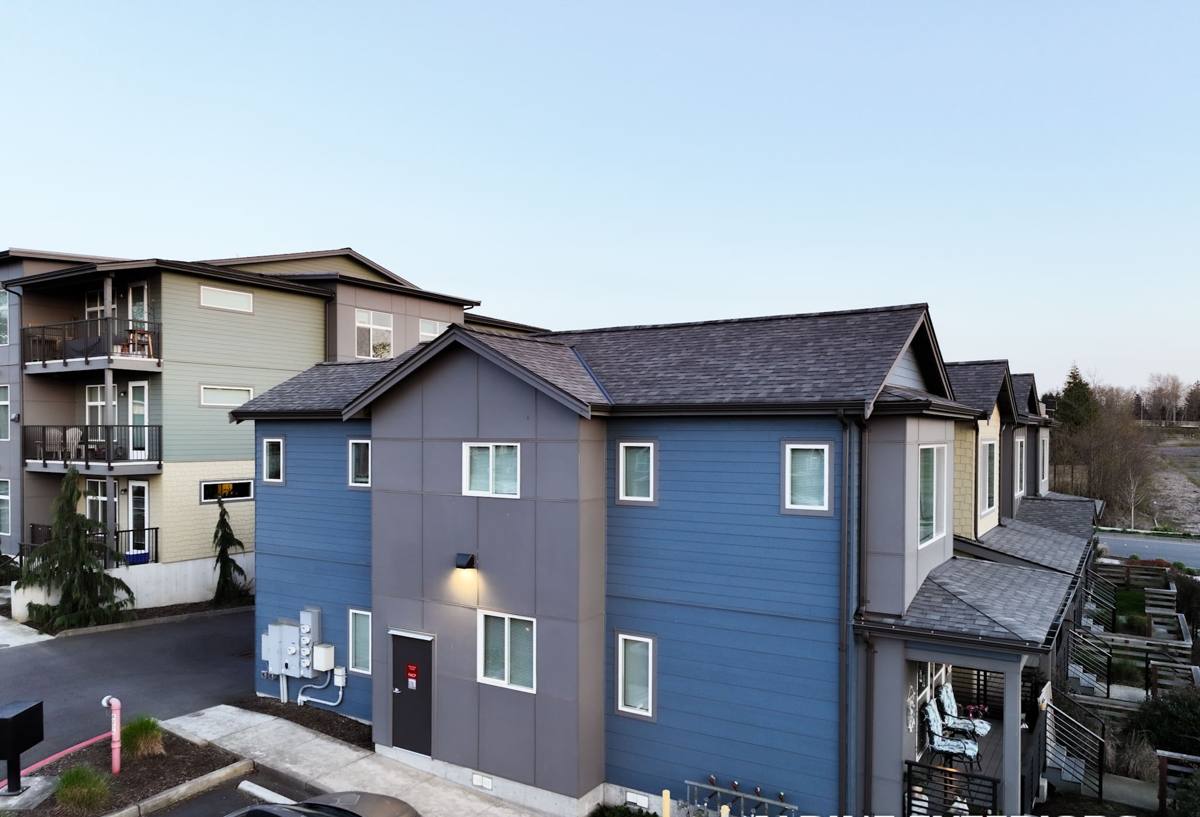
Signs a Fairhaven Home Needs Replacement, Not Another Repair
Not every roof problem calls for full replacement, but there's a point where patching stops being cost-effective. We look at the whole picture before recommending a tear-off:
- Granule loss heavy enough that you're finding grit in gutters and downspouts every season
- Shingles that are cupping, curling, or cracking across large sections rather than one isolated spot
- Moss and moisture staining that keeps returning within months of cleaning, especially on shaded or north-facing slopes
- Soft spots in the decking, visible sagging, or daylight showing through the attic in more than one place
- Multiple past repairs in different areas of the roof, which usually signals the whole system is past its useful life
- A roof already at or beyond its expected service life for the material, especially if it was installed without proper underlayment or ventilation the first time
If a roof is showing one or two of these signs in isolation, targeted repair can still make sense. When several show up together, replacement is almost always the more honest recommendation, both for cost over time and for protecting the rest of the house.
Choosing a Roofing Material for This Climate
There's no single "best" roofing material — there's a best fit for a given roof pitch, budget, and exposure. For a coastal-influenced Whatcom County property, here's how the common options compare on the factors that actually matter in this climate:
| Material | Performance in Salt Air & Rain | Moss Resistance | Maintenance Burden |
|---|---|---|---|
| Architectural asphalt shingle | Strong when installed with proper flashing and starter courses; good wind rating | Moderate — benefits from zinc/copper strips and periodic cleaning | Low to moderate |
| Standing seam metal | Excellent once properly coated fasteners and flashing details are used | High — moss struggles to gain a foothold on smooth metal | Low |
| Cedar shake | Traditional Pacific Northwest look, but demands more upkeep in a wet marine climate | Lower — organic material is more hospitable to moss and moisture retention | Higher — regular treatment and inspection needed |
| Composition/3-tab shingle | Adequate for lower-exposure roofs, less margin on driving-rain areas | Moderate | Moderate |
For most Fairhaven homes, a quality architectural asphalt shingle with the right underlayment and flashing package gives the best balance of upfront cost, appearance, and long-term performance. Metal is worth serious consideration on simpler rooflines or for homeowners planning to stay long-term, since it holds up especially well against both salt exposure and moss. We'll walk through the honest trade-offs for your specific roof rather than pushing one product across the board.
A Note on Cedar Shake
Cedar shake has real regional character, and we're happy to install it when a homeowner wants that look. Our professional standard is that it requires more diligence in a marine climate than asphalt or metal — more frequent inspection, more attention to ventilation underneath, and realistic expectations about moss and moisture management over the life of the roof. That's not a knock on the material; it's a maintenance conversation worth having up front.
What a Correct Roof Installation Actually Involves
A roof is a system, not a single layer of shingles. Skipping or shortcutting any one part of that system is where premature failures come from, especially in a climate that pushes moisture from every direction.
Tear-Off and Deck Inspection
We remove the old roofing down to the deck rather than layering over it. That lets us actually see the plywood or sheathing underneath and replace any sections that are soft, delaminated, or water-damaged before they're covered up and forgotten for another 20 years.
Ice and Water Shield at Vulnerable Points
Valleys, eaves, and roof-to-wall transitions get self-adhering waterproof membrane, not just felt paper. These are the spots where wind-driven rain and ice damming (on the colder inland edges of the county) cause the most damage, and it's cheap insurance relative to the cost of a leak.
Underlayment Across the Full Deck
A synthetic underlayment layer goes down over the entire roof deck before any shingles are installed. In a region with this much annual rainfall, that second line of defense matters more than it does in drier climates — it's what protects the structure if wind or age ever compromises the shingle layer above it.
Flashing Details
Chimneys, skylights, vent pipes, and wall intersections are where most roof leaks actually originate — not in the open field of shingles. Correct step flashing, counter-flashing, and pipe boots, using corrosion-resistant materials suited to salt-air exposure, are non-negotiable parts of the job.
Ventilation
Balanced intake and exhaust ventilation keeps the attic temperature and moisture level in check, which extends shingle life and reduces the moisture buildup that feeds moss and mildew from the underside of the roof deck.
Our Process for a Fairhaven Roof Replacement
We keep the process straightforward and communicate at each stage, since a roof replacement is disruptive enough without surprises:
- On-site inspection of the current roof, attic ventilation, and any visible interior signs of moisture
- Written estimate that breaks down material choice, scope of work, and a realistic timeline
- Scheduling built around Whatcom County's weather patterns to avoid starting a tear-off ahead of a multi-day rain system
- Protection of landscaping, siding, and gutters during tear-off and disposal
- Deck inspection and repair of any damaged sheathing before new materials go down
- Installation of ice and water shield, underlayment, flashing, and roofing material per manufacturer specification
- Final walkthrough with the homeowner and a thorough site cleanup, including a magnetic sweep for stray fasteners
Before Work Begins Checklist
- Confirm material and color selection in writing
- Verify attic ventilation plan (intake and exhaust balance)
- Confirm flashing scope for chimneys, skylights, and vents
- Review permit requirements with the local jurisdiction, if applicable
- Set a weather-flexible start window rather than a single fixed date
- Walk the property to flag landscaping or driveway areas needing protection
Moss Management and Long-Term Ventilation
Moss in this part of Washington isn't a sign of neglect — it's a function of shade, moisture, and a mild year-round climate that rarely gets cold or dry enough to knock it back on its own. A new roof installation is the best opportunity to address moss proactively rather than reactively: zinc or copper control strips near the ridge, adequate attic ventilation to reduce condensation on the underside of the deck, and material choices that shed water and dry out faster all reduce how aggressively moss returns. No roof in this climate will be permanently moss-free, but the difference between a roof set up to resist it and one that wasn't is significant over a 20-plus year lifespan.
Timeline and Scheduling Around Local Weather
Most residential roof replacements take one to a few days of actual on-roof work, depending on roof size, pitch, and material. The bigger scheduling factor in Whatcom County is weather — a tear-off shouldn't start without a reasonable dry window, since an open deck exposed to a heavy rain event is exactly the kind of risk a correct installation is supposed to prevent. We build a buffer into scheduling and communicate honestly if a forecast shifts our start date, rather than rushing a tear-off into a storm to hit an arbitrary deadline.
Why Local Experience in Fairhaven Matters
A roofing crew that works this specific stretch of Whatcom County regularly knows which flashing details tend to fail first on homes exposed to bay winds, which slopes on a given lot hold moss longest through the winter, and how to sequence a job around the area's rain patterns instead of guessing. That local pattern recognition doesn't replace good workmanship, but it does mean fewer surprises and fewer callbacks down the road. We treat every Fairhaven roof as a system that has to perform in salt air and driving rain, not just look good on install day.
If you're weighing repair versus replacement, or just want an honest read on where your current roof stands, we're glad to come out and take a look. Reach out for a free, no-pressure estimate using the form below.