 Ferndale Siding
 Birch Bay Homes Face a Tougher Climate Than the Rest of Ferndale
Birch Bay sits right on the water, and that changes the math on siding. A house a mile inland in Ferndale deals with Whatcom County's normal wet winters and mossy shade. A house in Birch Bay deals with all of that plus salt-laden air coming straight off the water, wind-driven rain that hits walls at an angle instead of falling straight down, and a longer damp season because the marine air keeps humidity up even between storms. None of this is exotic or rare — it's just constant, year after year, and it's exactly the kind of exposure that separates siding that lasts twenty-five years from siding that starts failing in eight or ten.
We install exclusively James Hardie fiber cement siding, and we did not arrive at that decision casually. It comes from watching what actually happens to different siding materials on homes in this specific stretch of Whatcom County, not from a sales pitch.
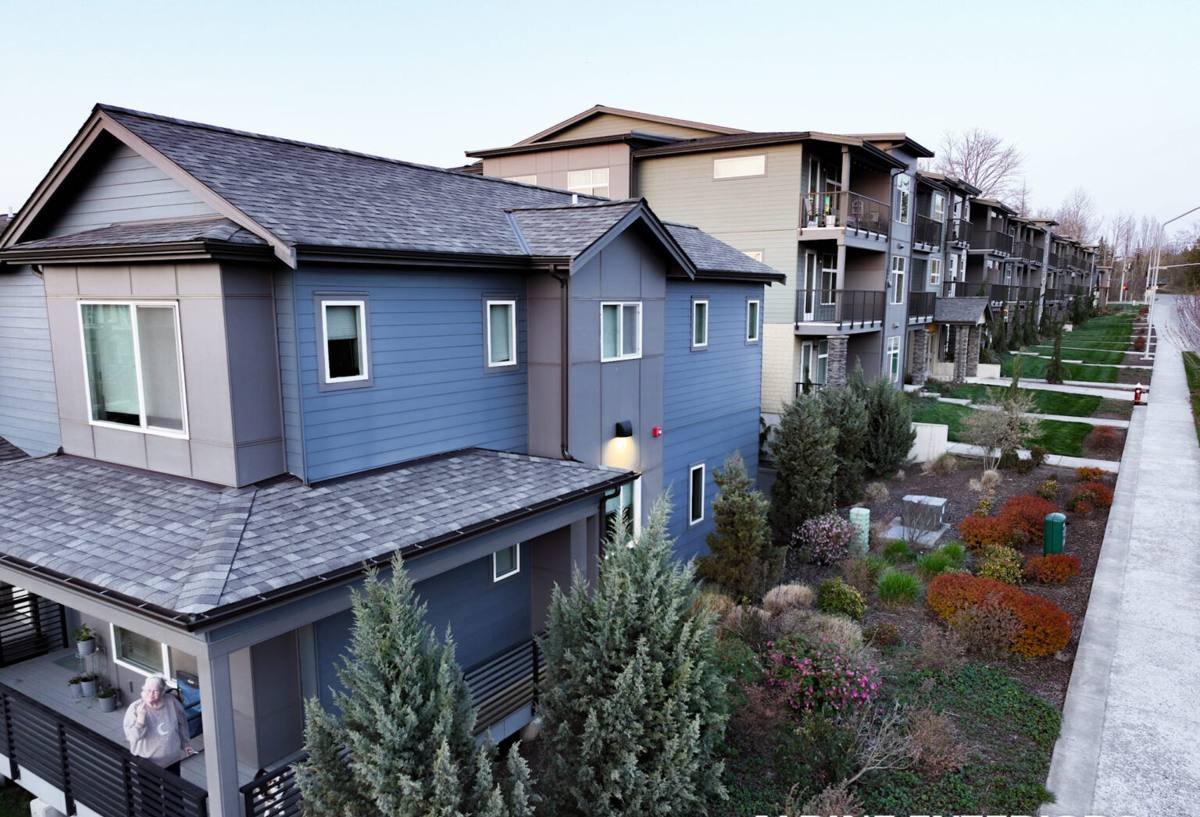
What Salt Air, Driving Rain, and Moss Actually Do to a Wall
Salt air
Airborne salt is corrosive to metal fasteners, flashing, and trim, and it also accelerates the breakdown of lower-grade paints and coatings. Over years, salt exposure dulls finishes and can pit or corrode hardware that isn't rated for it. It doesn't rot wood by itself, but it degrades the protective layers that are supposed to keep water out, which opens the door to rot.
Driving rain
Wind off the water pushes rain sideways and up under laps, trim edges, and butt joints that would stay dry in a calmer inland location. Siding systems that rely on paint or caulk alone to keep water out struggle here, because wind-driven rain finds every gap a standard install leaves open. The materials, the laps, and the flashing details all have to assume water will hit the wall at an angle, not just from above.
Moss and sustained dampness
Marine air keeps humidity elevated even on dry days, and shaded north and west walls near the water stay damp longer after every rain. That's the environment moss and mildew thrive in. On wood-based products, sustained dampness plus organic growth is a direct path to rot. On a non-organic material, it's mostly a cosmetic issue that a good factory finish resists.
Why We Only Install James Hardie in Birch Bay
James Hardie fiber cement is made from sand, cement, and cellulose fibers, and it doesn't have the vulnerabilities that make coastal exposure so hard on other siding materials. It's non-combustible, it doesn't rot, and it isn't attractive to insects. Its factory-applied ColorPlus finish is baked on under controlled conditions, which gives it more resistance to salt air and UV fading than a field-applied paint job can match — and it comes with a longer color-warranty than site-applied coatings.
We don't install vinyl, LP SmartSide, Cemplank, Allura, primed spruce, or cedar, and in a location like Birch Bay the reasons matter more, not less:
| Material | Coastal exposure concern |
|---|---|
| Vinyl siding | Panels expand and contract more with temperature swings, seams can loosen over time, and it isn't a moisture-managed rainscreen system the way a properly installed Hardie assembly is |
| LP SmartSide (engineered wood) | Wood-strand core is more sensitive to sustained dampness and cut-edge exposure than fiber cement; needs field-sealed cut edges maintained over the life of the siding |
| Cedar / primed spruce | Organic material in a high-moisture, mossy environment — the exact combination that drives rot and repaint cycles |
| Other fiber cement (Cemplank, Allura) | May lack the specific climate-engineered HZ formulation and factory finish warranty structure we standardize on |
| James Hardie fiber cement | Non-combustible, doesn't rot, factory-baked ColorPlus finish, engineered HZ5 formulation for wetter climates |
This isn't a claim that every one of those products fails on every house. It's that we've standardized on one material and one installation method so we can guarantee the work, and for a waterfront climate like Birch Bay's, fiber cement is the material that holds up with the least ongoing homeowner maintenance.
HZ5 — the Product Line Built for This Exposure
James Hardie engineers its siding differently depending on climate zone, and the HZ5 formulation is built for regions with more moisture cycling — which fits Whatcom County generally and Birch Bay specifically. HZ5 products are engineered for enhanced resistance to moisture and freeze-thaw movement compared to formulations built for drier climates. For Birch Bay homes, we spec HZ5 lap siding, panel, and trim products as standard, not as an upgrade.
Beyond the base material, the finish matters as much as the substrate. ColorPlus factory finishes are cured onto the board before it ever reaches the jobsite, giving more consistent coverage and better fade and chip resistance than a field-primed-and-painted board — which matters more here, given how much UV and salt exposure a water-facing wall takes over a decade.
What a Correct Installation Actually Involves
The siding material is only half the equation. Most siding failures we see on coastal homes — regardless of brand — trace back to installation shortcuts, not the product itself. A correct Hardie install in a Birch Bay exposure includes:
- A weather-resistant barrier installed and lapped correctly behind the siding, with all penetrations properly sealed
- Rainscreen or drainage gap detailing where conditions call for it, so bulk water has somewhere to go besides trapped against the sheathing
- Correct fastener type, spacing, and penetration depth — Hardie specifies this precisely, and it's not optional in a high-wind, high-moisture setting
- Proper flashing at every window, door, deck ledger, and roof-to-wall transition, since these are the spots wind-driven rain actually gets in
- Manufacturer-specified minimum gaps and clearances at butt joints, trim, and ground clearance to prevent wicking
- Factory-cut or properly sealed field cuts, so no exposed edge is left unprotected
Skipping any one of these doesn't usually cause an immediate problem. It shows up two, five, or ten years later as a soft spot, a stain, or a section that needs to come off and get redone — which costs far more than doing it right the first time.
Our Process for a Birch Bay Project
1. On-site assessment
We walk the exterior, note which walls take the most wind and rain, check the condition of the current siding, trim, and flashing, and look for any existing moisture damage that needs to be addressed before new siding goes on — not covered up by it.
2. Product and detail plan
We spec HZ5 Hardie products, the ColorPlus finish and profile that fit the home, and the flashing and drainage details specific to that house's exposure — a west-facing wall that takes direct wind off the water gets more attention than a sheltered side yard.
3. Tear-off and prep
Old siding comes off, sheathing is inspected and repaired where needed, and the weather-resistant barrier goes on correctly before a single piece of new siding is hung.
4. Installation to spec
Fastening, flashing, gapping, and joint treatment are done to Hardie's published specifications, not shortcuts — this is the step that determines whether the siding performs for its full service life.
5. Final walkthrough
We review the finished work with the homeowner, including care and maintenance basics specific to a coastal property.
Cost Factors for a Birch Bay Hardie Project
Every home is different, but the same variables tend to drive cost up or down on Birch Bay projects specifically:
| Factor | Why it affects the estimate |
|---|---|
| Extent of existing damage | Rot or moisture damage behind old siding has to be repaired before new siding goes on |
| Wall exposure to wind and water | Water-facing walls often warrant more careful flashing and drainage detailing |
| Home size and complexity | Dormers, multiple stories, and cut-up wall lines take more labor and material than a simple rectangular footprint |
| Trim and accessory scope | Fascia, soffit, and trim replacement alongside the field siding adds to the project scope |
| Access | Steep sites, limited driveway access, or tight setbacks common near the water can affect staging and labor time |
We give straight, itemized estimates so you know what you're paying for and why — not a single vague number.
Maintaining Hardie Siding in a Salt-Air Environment
One of the real advantages of fiber cement over wood-based siding is how little ongoing maintenance it needs — but "little" isn't "none," especially this close to the water. A short annual routine keeps it performing the way it's designed to:
- Rinse salt residue and grime off the exterior once or twice a year, especially on walls facing the water
- Keep gutters clear so water isn't overflowing and running down the siding face
- Trim back vegetation and keep at least a few inches of clearance between soil, mulch, or plantings and the bottom edge of the siding
- Check caulking at trim, window, and door joints periodically and re-caulk where it's cracked or pulling away
- Look at north- and west-facing walls each fall for early moss or mildew growth and clean it off before it spreads
- Have flashing and joints inspected if you notice any staining, bubbling paint, or soft spots anywhere on the exterior
Why Local Experience in Birch Bay Matters
A siding crew that mostly works dry, sheltered, inland jobs doesn't automatically know how to detail a wall that takes direct wind off open water. Fastener choice, flashing sequencing, and drainage detailing all get adjusted based on what a specific wall actually faces, and that judgment comes from having done the work in this exact kind of exposure repeatedly — not from a generic install checklist. Working regularly in Ferndale and along the Birch Bay waterfront means we've seen how salt air, wind-driven rain, and moss behave on real homes here, and we build our installation approach around that, not around a one-size-fits-all method built for a different climate.
If you're planning a siding project on a Birch Bay home, we're glad to take a look and give you a straightforward, no-pressure estimate — including exactly what your home's exposure calls for and why.