 Ferndale Siding
 Building Decks That Last in Blaine's Marine Climate
Blaine sits right up against the water, and that location comes with a specific set of conditions that inland decks never have to deal with. Salt-laden air moves in off the water and settles on every exposed surface. Rain here isn't just frequent — it often comes in sideways, driven by wind, which means water finds its way into places a calm, straight-down rain never would. And for a good stretch of the year, shaded and north-facing surfaces stay damp long enough for moss and algae to take hold. A deck built without those three factors in mind will show problems within a few seasons: corroded hardware, soft spots in the framing, and a walking surface that turns slick and dangerous every winter.
A deck built for Blaine looks the same as one built anywhere else on the surface, but the material choices, fastener specs, and framing details underneath are different. That's the gap we focus on closing.
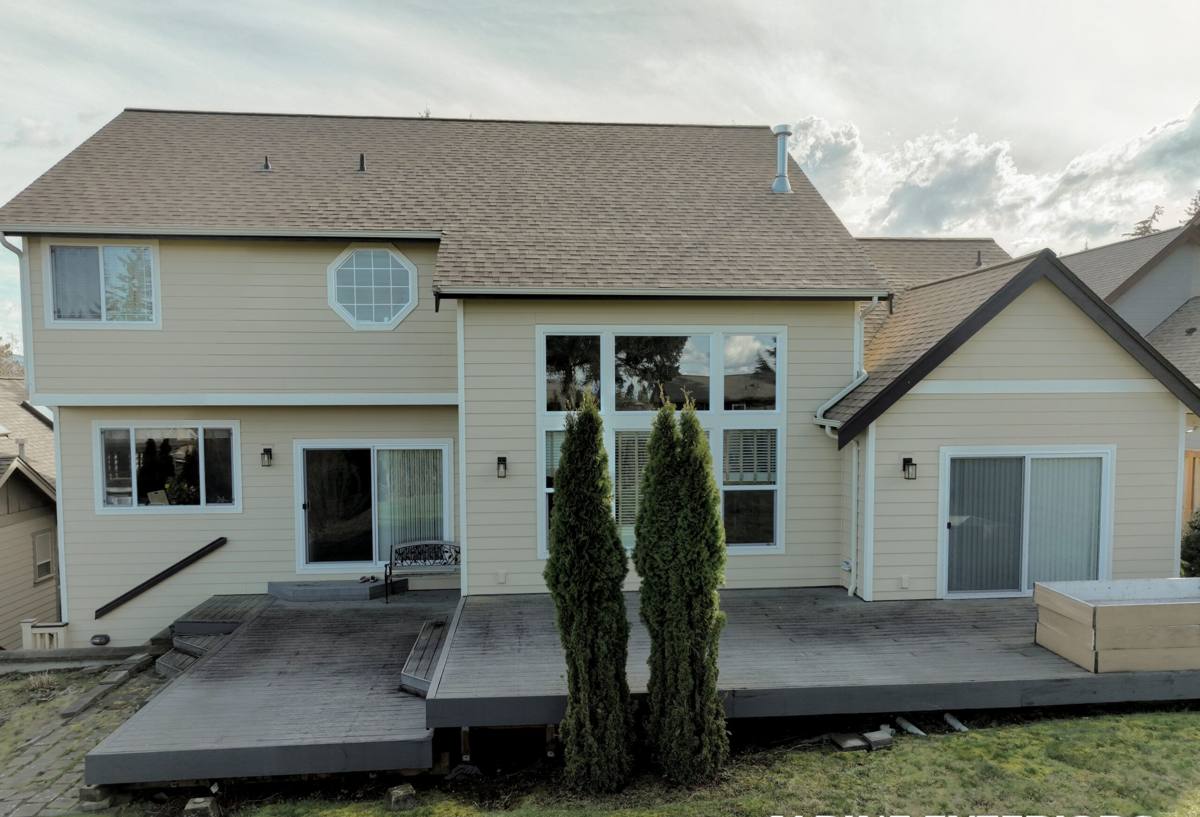
What Blaine's Weather Actually Does to a Deck Over Time
Salt air and corrosion
Metal hardware — screws, joist hangers, bolts, brackets — is the first thing to suffer near the water. Standard galvanized coatings that hold up fine forty miles inland can start showing rust within a couple of years this close to salt air. Once a fastener starts corroding, it loses holding strength long before it looks obviously bad, which is part of what makes this a hidden risk rather than an obvious one.
Driving rain and hidden moisture
Wind-driven rain gets pushed up and under railings, ledger boards, and stair stringers instead of just running off. Any gap in flashing or any spot where water can collect against wood — rather than shed off it — becomes a slow rot problem. This is almost always invisible from the top of the deck; it shows up first in the framing underneath.
Moss, algae, and slip hazards
Whatcom County's damp, mild winters are exactly the conditions moss and algae need. On a deck, that growth doesn't just look bad — it turns a smooth board into a slip hazard, especially on stairs and any section that stays shaded through the day. Decking surface choice and airflow underneath the deck both affect how much of a problem this becomes.
Choosing the Right Decking Material for a Blaine Property
There's no single "best" decking material — the right choice depends on budget, how much upkeep you're willing to do, and how exposed the deck is to weather. Here's how the common options actually compare for a property in this climate:
| Material | How it handles salt air & rain | Moss/algae resistance | Maintenance |
|---|---|---|---|
| Pressure-treated wood | Needs sealing and re-staining regularly; end grain and fastener holes are vulnerable points | Low — porous surface holds moisture and organic growth | Annual cleaning and re-sealing recommended |
| Cedar | Naturally more rot-resistant than pine/fir, but still needs finish maintenance in this climate | Moderate | Periodic cleaning and refinishing |
| Composite decking | Doesn't absorb water or rot; handles salt air well | Higher, but surface film can still support algae if not cleaned | Occasional washing, no sealing/staining |
| PVC/capped composite | Fully water-resistant surface, best option directly exposed to spray and driving rain | Highest of the common options | Lowest — periodic washing only |
Wood costs less up front and can look great, but it asks for more attention year after year in a climate that's actively working against it. Composite and capped composite cost more initially but shift the ongoing burden away from the homeowner. We'll walk through this trade-off honestly based on your budget and how the deck will be used — there's no upsell pressure either direction.
Framing and Substructure: Where Most Deck Failures Actually Start
The decking boards get all the attention, but the framing underneath is what determines whether a deck lasts fifteen years or forty. This is also where corners get cut on lower-quality builds, because it's the part nobody sees once the job is finished.
Ledger board attachment and flashing
The ledger board — where the deck attaches to the house — is the single most common failure point on decks generally, and it's especially important here because wind-driven rain pushes water toward that seam. Proper flashing, correctly lapped and sealed, keeps water from tracking behind the siding and into the house structure, not just off the deck.
Joist hardware and spacing
Joist hangers, structural screws, and any structural connectors need to be corrosion-resistant hardware rated for the exposure — not just whatever's cheapest at the supply house. Spacing also matters more than people assume: tighter joist spacing gives a stiffer, longer-lasting deck and matters even more under composite decking, which behaves differently under load than solid wood.
Footings and ground contact
Footings need to go below frost depth and bear on solid, undisturbed soil. In areas with poor drainage or heavy clay, that can mean deeper or wider footings than a "standard" build would use. Cutting corners here doesn't show up as a problem for years — until it does, all at once.
Railings, Fasteners, and Hardware That Actually Hold Up Here
Railings take a disproportionate amount of stress and weather exposure — people lean on them, they're often the most exposed part of the deck, and any moisture that collects at post bases or baluster connections has nowhere to go but into the wood or metal. For a property exposed to salt air, we specify stainless steel or coated fasteners rated for corrosive environments rather than standard exterior-grade hardware. It costs a bit more per fastener, but replacing corroded railing hardware later means partially disassembling a finished deck — far more expensive than doing it right the first time.
How Our Deck-Building Process Works
- On-site assessment — we look at sun exposure, drainage, existing structure (if it's a rebuild), and how the deck will actually be used day to day.
- Material and layout discussion — we walk through decking, railing, and hardware options with honest cost and maintenance trade-offs, not a sales pitch toward the most expensive option.
- Permitting — we handle the permit application and any required inspections through the local building department so you don't have to manage that process yourself.
- Framing and structural work — footings, ledger flashing, joists, and hardware go in first, with inspection sign-off before decking goes down.
- Decking, railings, and finish work — surface material, railings, stairs, and any lighting or finish details are installed and checked for level, drainage slope, and fastener consistency.
- Final walkthrough — we go over care and maintenance specific to the material you chose before we consider the job done.
A Maintenance Checklist for Blaine Homeowners
Even a well-built deck needs some seasonal attention in this climate. This is a reasonable baseline regardless of which material you choose:
- Sweep debris off the deck regularly — trapped leaves and needles hold moisture against the surface and speed up moss growth
- Rinse or wash the surface at least once or twice a year to remove salt residue and early algae growth before it takes hold
- Check railing posts and stair connections annually for movement or corrosion at fastener points
- Inspect the ledger board area and flashing for staining or soft spots, especially after a wet winter
- Re-seal or re-stain wood decking on the manufacturer's recommended schedule — don't wait until it looks obviously weathered
- Keep gutters and downspouts near the deck clear so roof runoff isn't dumping extra water onto or under the structure
Permits and Local Considerations in Blaine
Deck projects in Blaine typically require a building permit, and the specifics — setback requirements, height restrictions, guardrail code — depend on your lot and whether you're inside city limits or unincorporated Whatcom County. Properties closer to the shoreline can also fall under additional review depending on proximity to the water. We handle the permit application and coordinate inspections as part of the build, but every lot is different enough that we treat this as something to confirm early rather than assume.
Why Hire a Crew That Already Works in Blaine
A deck built to a generic spec sheet will function fine somewhere with a mild, dry climate. It won't necessarily hold up the same way a few blocks from the water in Whatcom County. Knowing which fastener grades actually hold up to salt air, how much flashing detail a ledger board needs given how rain moves through here, and which decking surfaces stay walkable through a wet, mossy winter isn't something you get from a manual — it comes from building and repairing decks in these exact conditions, season after season. That's the difference between a deck that needs attention every year and one that quietly does its job for decades.
If you're planning a new deck or replacing one that's showing its age, we're happy to come take a look and talk through what makes sense for your property. There's no pressure and no cost to get an honest estimate — just fill out the form below and we'll set up a time to walk the site with you.