 Ferndale Siding
 Siding Installation Built for Blaine's Coastal Exposure
Blaine sits closer to open salt water than almost anywhere else in Whatcom County, and that changes what "good siding" means. Homes here take on airborne salt off the bay, driving rain that comes in sideways off the water during winter storms, and a moss season that can run eight or nine months out of the year on north-facing walls and anything shaded by fir and cedar. Siding that would hold up fine twenty minutes inland in Ferndale can fail early on a Blaine lot that sits exposed to the water or tucked under a tree canopy that never fully dries out. A correct installation has to account for both conditions at once.
We install exclusively James Hardie fiber cement siding, and we've done enough work in and around Blaine to know where the exposure problems actually show up — not in theory, but on real walls: the seaward-facing gable that takes the brunt of winter wind, the shaded north wall behind a fence line that stays damp into July, the trim around windows that face the water where caulking and fasteners take the worst of the salt cycle. Getting siding right here is less about the material label on the piece and more about how it's detailed, flashed, and fastened for this specific exposure.
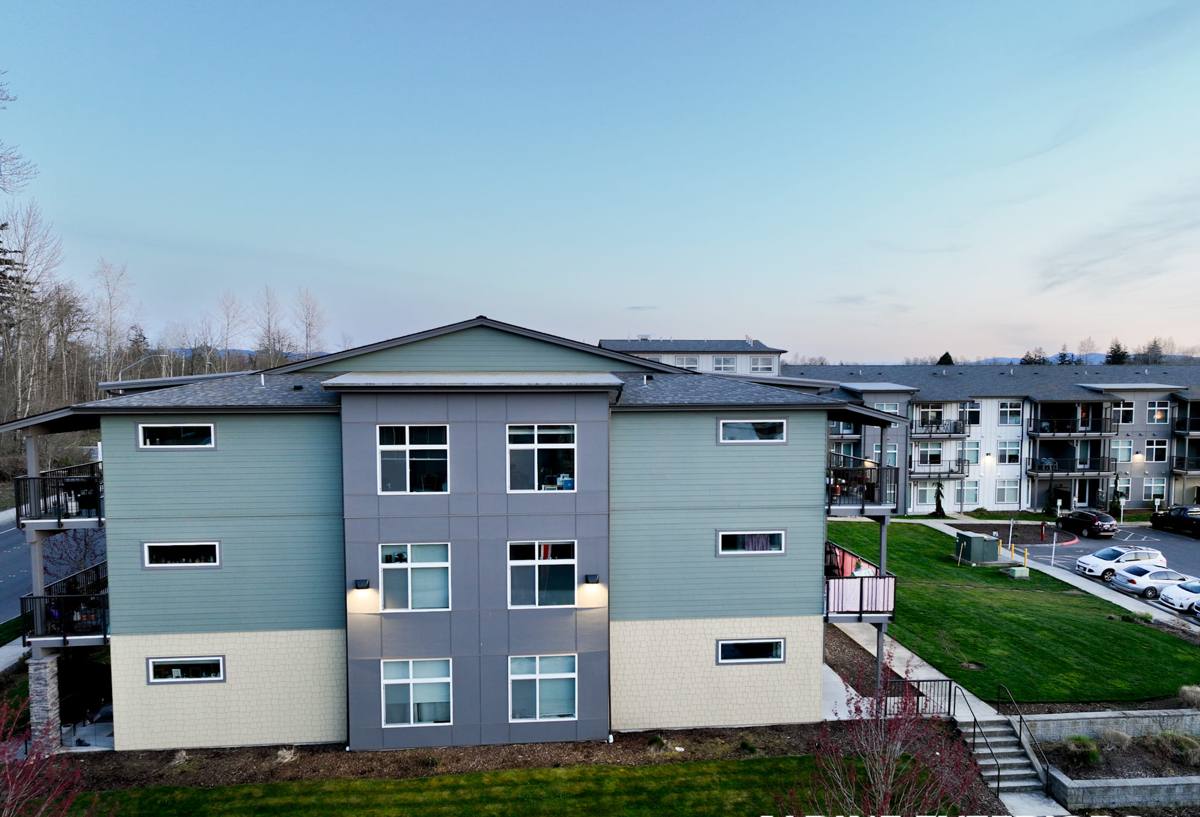
What Blaine's Climate Actually Does to Siding
Salt Air and Corrosion
Airborne salt is corrosive to metal fasteners, flashing, and trim hardware long before it does anything visible to a wall surface. Homes closer to Semiahmoo Bay and Drayton Harbor see this first — galvanized fasteners that would last decades inland can start showing rust bleed through paint in half that time near the water. This is a fastener and flashing decision as much as a siding decision, and it's one of the first things worth asking a contractor about before they start.
Driving Rain
Winter storms off the water push rain horizontally into wall assemblies, not straight down. That means lap siding needs correct overlap and gapping, window and door flashing needs to actually shed water outward rather than trap it, and any penetration — hose bibs, vents, light fixtures — needs to be sealed and flashed as if wind-driven rain will find it, because eventually it will.
Moss and Prolonged Dampness
Whatcom County's wet season is long, and Blaine's tree cover and marine humidity stretch it further. Moss doesn't just look bad — it holds moisture against a wall surface for months at a time, which is exactly the condition that breaks down siding that isn't dimensionally stable or isn't properly ventilated behind it. A rainscreen gap and correct bottom clearances matter more here than they do in a drier part of the state.
Why We Only Install James Hardie
We made a standing decision years ago to install James Hardie fiber cement exclusively, and we don't install vinyl, LP SmartSide, Cemplank, Allura, or wood siding like cedar or primed spruce. That's not a marketing position — it's a maintenance and durability call based on what actually holds up under repeated wet-dry cycling and salt exposure.
- Non-combustible core — fiber cement doesn't feed a fire the way wood-based or wood-fiber products can, which matters given how many Whatcom County homes back up to trees and brush.
- Dimensionally stable — it doesn't swell, cup, or delaminate the way engineered wood siding can when it stays damp for extended stretches, which is the exact condition Blaine's moss season creates.
- Factory-applied ColorPlus finish — the color and protective coating are baked on at the factory under controlled conditions, not sprayed on-site, which gives more consistent, longer-lasting protection against UV and moisture than field-applied paint.
- Climate-engineered HZ product lines — Hardie's HZ10 formulation is built specifically for wetter, colder regions like ours, which is the version we spec for Blaine work.
- Transferable warranty — a real, honored warranty structure that follows the house, which matters to buyers if the home ever sells.
We're not going to claim other products are junk — vinyl is cheap and easy to install, LP SmartSide has real fans, and cedar has genuine curb appeal. But we've made our call: for a coastal-exposed, high-moisture environment like Blaine, fiber cement installed correctly is what we're willing to put our name on.
What a Correct Installation Involves
The siding material is only part of the job. Most siding failures we get called out to inspect — on any brand — trace back to installation details, not the product itself. For Blaine specifically, we pay close attention to:
- Correct fastener type and spacing, upgraded where salt exposure is highest (typically anything within a few blocks of open water)
- Proper flashing at every window, door, and roof-to-wall transition, lapped to shed water outward rather than behind the plane
- A rainscreen gap behind the siding so moisture that does get behind the wall can actually dry out instead of sitting against sheathing
- Correct minimum clearance at the bottom of the wall — from grade, decks, and roof lines — so splash-back and standing moisture don't sit against the bottom course
- Caulking only where Hardie's install specs call for it, and never as a substitute for proper flashing
- Factory-cut edges sealed per manufacturer spec, since a raw cut edge is the fastest way for moisture to get into the board
Our Process for a Blaine Project
1. On-Site Assessment
We walk the exterior and identify exposure zones specific to the lot — which walls take direct weather off the water, which stay shaded and damp longest, where existing moss or moisture staining tells us something about drainage or past installation shortcuts.
2. Tear-Off and Sheathing Check
Old siding comes off and we inspect the sheathing underneath before anything new goes up. This is where hidden rot or moisture damage from a prior installation shows up, and it needs to be dealt with before new siding goes on top of it — not after.
3. Weather Barrier and Flashing
House wrap, flashing, and a rainscreen gap get installed to current best practice, not just to code minimum. This step matters more in Blaine's exposure than almost anywhere else in the county.
4. Hardie Installation
Panels and lap siding go up per James Hardie's published installation specifications, with fastener and clearance choices adjusted for the specific wall's exposure.
5. Trim, Caulk, and Final Detail
Trim, corners, and penetrations get sealed correctly, and we walk the finished job looking specifically for anything that could let wind-driven rain in over the next few winters.
Why a Crew That Already Works Blaine Matters
Siding crews that mostly work drier, inland areas sometimes under-detail for coastal exposure — not out of carelessness, but because it's simply not what they run into every day. A crew that regularly works Blaine and the surrounding Whatcom County waterfront knows which walls need upgraded fasteners before being asked, knows how far up a shaded north wall moss will climb by year three if the rainscreen gap is shorted, and doesn't need to relearn those lessons on your house. That local repetition is worth more than a generic spec sheet.
Cost Factors for Blaine Siding Installation
Every home is different, and we'll always give you an actual number after walking your property — but these are the factors that typically move the price on a Blaine project:
| Factor | Why It Affects Cost |
|---|---|
| Tear-off and disposal of existing siding | More layers or hidden damage means more labor and disposal cost |
| Sheathing repair | Rot or moisture damage found during tear-off adds material and labor before new siding can go up |
| Exposure zone | Walls facing open water may need upgraded fasteners and flashing detail |
| Home size and wall complexity | More corners, gables, and penetrations mean more trim and flashing work |
| Siding profile and color | Lap width, panel style, and ColorPlus color selection affect material cost |
| Site access | Waterfront or wooded lots with tight access can add labor time |
Signs Your Blaine Home Needs New Siding Soon
- Persistent moss or dark staining that returns within a season of cleaning
- Soft spots, bubbling, or visible warping, especially on north-facing or shaded walls
- Rust streaking near fasteners or trim, particularly on walls closest to open water
- Paint that's failing faster than it should, or bare wood showing through at seams
- Visible gaps or separation at corners, windows, or the bottom starter course
If you're seeing any of that on a Blaine property, or you're just planning ahead for a siding replacement, we're happy to come take a look and give you a straightforward, no-pressure estimate — no obligation, just an honest read on what your home actually needs. Use the form below to get started.