 Ferndale Siding
 Windows Built for Everson's Weather, Not Just Its Style
Everson sits inland from Ferndale along the Nooksack River valley, but it still gets the same wet, marine-influenced weather that defines Whatcom County. The difference here isn't just rain totals — it's the combination of moisture that never fully dries out, salt-tinged air pushing in off Bellingham Bay and the Strait of Georgia, and long stretches of overcast, low-sun days that let moss and mildew take hold on anything that stays damp. Windows take the brunt of this. They're the seams in your home's envelope where water intrusion, seal failure, and wood rot show up first, usually years before anyone notices a problem with the siding around them.
A window that was fine for a drier climate — or one installed without real attention to flashing and drainage — will start failing here on a compressed timeline. We've replaced windows in this area that were less than fifteen years old but already had rotted sills, fogged glass, and frames that had swollen and stopped closing square. Custom window work in Everson isn't about upgrading for looks; it's about correcting for a climate that punishes shortcuts.
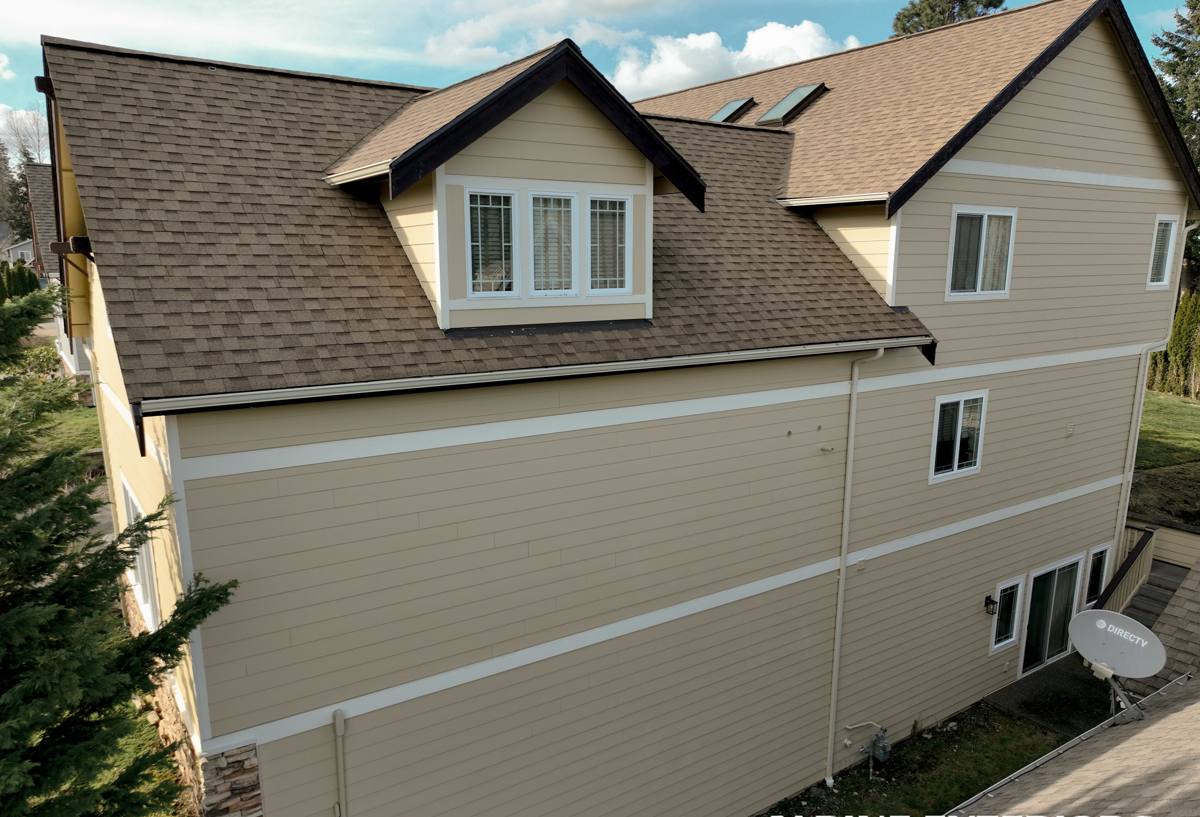
What "Custom" Actually Means for a Window Job
Custom windows aren't just special shapes or oversized openings, though we do plenty of that. Custom means the window and the installation are matched to the specific opening, the specific wall assembly, and the specific exposure of your house — not a one-size-fits-all unit dropped into a rough opening and caulked around the edges.
Exact Fit, Not Approximate Fit
Older homes in this area, especially farmhouses and homes built before standardized window sizing became common, often have openings that don't match any stock size. Custom-ordered windows are built to the actual measured opening, which means less shimming, less gap-filling with foam or caulk, and a tighter, more consistent seal around the whole perimeter.
Matched to Exposure
A window on the weather-facing side of a house — typically the side that takes the prevailing wind-driven rain — needs different attention to flashing and drainage than one on a sheltered wall. We treat those differently rather than installing every window on the house the same way.
Signs Your Windows Are Losing the Fight Against the Climate
Most window failure in this region is slow and easy to miss until it's expensive. Look for these signs, especially on walls that face prevailing weather:
- Fogging or a cloudy haze between panes of double-pane glass — the seal has failed and the insulating gas has escaped
- Soft or spongy wood at the sill or bottom corners of the frame
- Visible moss or dark green-black staining building up on the sill or in the frame's shadow lines
- Windows that stick, won't latch fully, or have gone out of square
- Paint or finish peeling or bubbling around the frame edges rather than on the flat wall
- A cold draft at the frame even when the window is fully closed and locked
- Water staining on interior drywall or trim below or beside the window after heavy rain
Any one of these on its own might just mean a caulk touch-up is due. Several together, especially soft wood combined with fogged glass, usually means the window and the flashing behind it need to come out.
What a Correct Installation Actually Involves
The window itself is only part of the job. Most of the failures we see trace back to what's underneath the window, not the window unit — flashing that was skipped, taped over housewrap instead of properly integrated with it, or sealant used as a substitute for real drainage. In a climate that stays wet as long as this one does, that shortcut always shows up eventually.
Removal Without Collateral Damage
We remove the old window and inspect the rough opening before anything new goes in. If there's rot in the framing or sill, that gets addressed now — installing a new window over compromised framing just moves the problem down the road a few years.
Flashing and Drainage, in the Right Order
Sill pan flashing, properly lapped house wrap or building paper, and head flashing that sheds water out and away from the opening — installed in the correct shingle-style order so water always drains outward, never behind the next layer. This is the single biggest factor in whether a window installation lasts.
Air Sealing That Isn't Just Caulk
Low-expansion foam or backer rod and sealant at the interior gap, done without over-filling or bowing the frame, keeps conditioned air in and moist outside air from working its way through the wall assembly.
Final Weatherproofing
Exterior trim, sealant beads at the right joints (not everywhere — over-sealing traps moisture instead of shedding it), and a final check that the sash operates smoothly and locks tight.
Frame Material: What Holds Up in This Climate
We get asked constantly which frame material is "best." The honest answer depends on the exposure, the home's style, and how much upkeep you want to take on. Here's how the common options actually perform in a wet, salt-influenced climate like ours over the long run:
| Frame Material | Moisture Resistance | Upkeep | Best Fit |
|---|---|---|---|
| Vinyl | Very good — won't rot, doesn't need painting | Low — occasional cleaning | Most homes, budget-conscious replacements |
| Fiberglass | Excellent — dimensionally stable in wet/dry swings | Low | High-exposure walls, larger custom openings |
| Aluminum-clad wood | Good on exterior face, wood core still needs a sound seal | Moderate — seal integrity matters | Homes wanting a wood interior look |
| Solid wood | Poor without diligent maintenance in this climate | High — regular repainting/sealing | Historic restorations where authenticity matters more than upkeep |
We're upfront that solid wood frames, while attractive, require a maintenance commitment that most homeowners underestimate here — repainting and resealing on a schedule the marine climate doesn't forgive if skipped. That's not a knock on wood as a material; it's a fair-warning about what owning it actually requires in Whatcom County weather. For most Everson homes, vinyl or fiberglass gives the durability the climate demands without that ongoing burden.
Glass Options Worth Understanding
Beyond the frame, the glass package matters for both comfort and moisture performance:
- Double-pane, low-E glass — the standard baseline for this region; a good insulated seal is more important here than in drier climates since a failed seal shows up faster as fogging
- Triple-pane — worth considering on the coldest or windiest exposures, adds insulating value and can reduce condensation on the interior glass surface during cold snaps
- Argon or krypton gas fill — improves insulating performance; a fogged window is the visual proof the seal (and the gas fill) has failed
How We Approach a Custom Window Job Here
1. On-Site Assessment
We look at each opening individually — exposure, existing frame condition, signs of past water intrusion — rather than quoting a blanket price per window. Two windows on the same house can need very different scopes of work.
2. Accurate Measurement and Ordering
Custom units are built to the actual opening. We double-check measurements before ordering since custom windows aren't something you can easily resize after the fact.
3. Lead Time
Custom-sized windows typically take several weeks to arrive from the manufacturer. We'll give you a realistic timeline up front rather than a best-case guess, so you're not left waiting on false promises.
4. Installation Day
Removal, rough opening inspection and any needed repair, flashing, the new unit, air sealing, and exterior trim — done in that order, one window's sequence completed before moving to the next so no opening sits exposed longer than necessary.
5. Walkthrough
We check operation, locks, and seals with you before calling the job done.
Why It Matters That We Already Work This Area
A crew that works Ferndale, Everson, and the surrounding Whatcom County communities regularly knows what this climate does to a window installation over five, ten, fifteen years — not just what it looks like on install day. We've seen which flashing details hold up through repeated wet winters and which shortcuts turn into rot claims later. That local track record shapes how we detail every custom window we install, not just the ones on waterfront or high-exposure lots.
We also understand the practical side of working in this area — the types of homes common to Everson and nearby Ferndale, the older housing stock that often needs rough-opening repair as part of the job, and realistic scheduling around the region's wetter months when window openings are best kept covered as briefly as possible.
Get a Straight Answer for Your Home
If your windows are fogging, sticking, or showing soft wood at the sills, it's worth having someone look before another wet season adds to the damage. We offer free, no-pressure estimates for custom window work in Everson and the greater Ferndale area — use the form below to get a straightforward assessment of what your home actually needs.