 Ferndale Siding
 Why Window Replacement Works Differently Near Bellingham Bay
Homes in the Fairhaven area sit close enough to Bellingham Bay that salt-laden air, driving winter rain, and a long stretch of shaded, moss-friendly weather all take a toll on building materials most inland Whatcom County homes never deal with in the same combination. Windows are one of the first places that shows up. Aluminum hardware pits and corrodes faster near the water. Wood sashes that would last decades in a drier climate start showing rot at the sill in half that time if the finish isn't maintained. And the near-constant damp keeps moss and algae established on north-facing trim and glazing longer each year than it would just a few miles inland.
None of that means windows near the water are doomed to fail early. It means the replacement has to be specified and installed with those conditions in mind, not treated the same as a job in a drier part of the county. That's the difference between a window that looks fine for a year or two and one that actually holds up through another twenty Whatcom County winters.
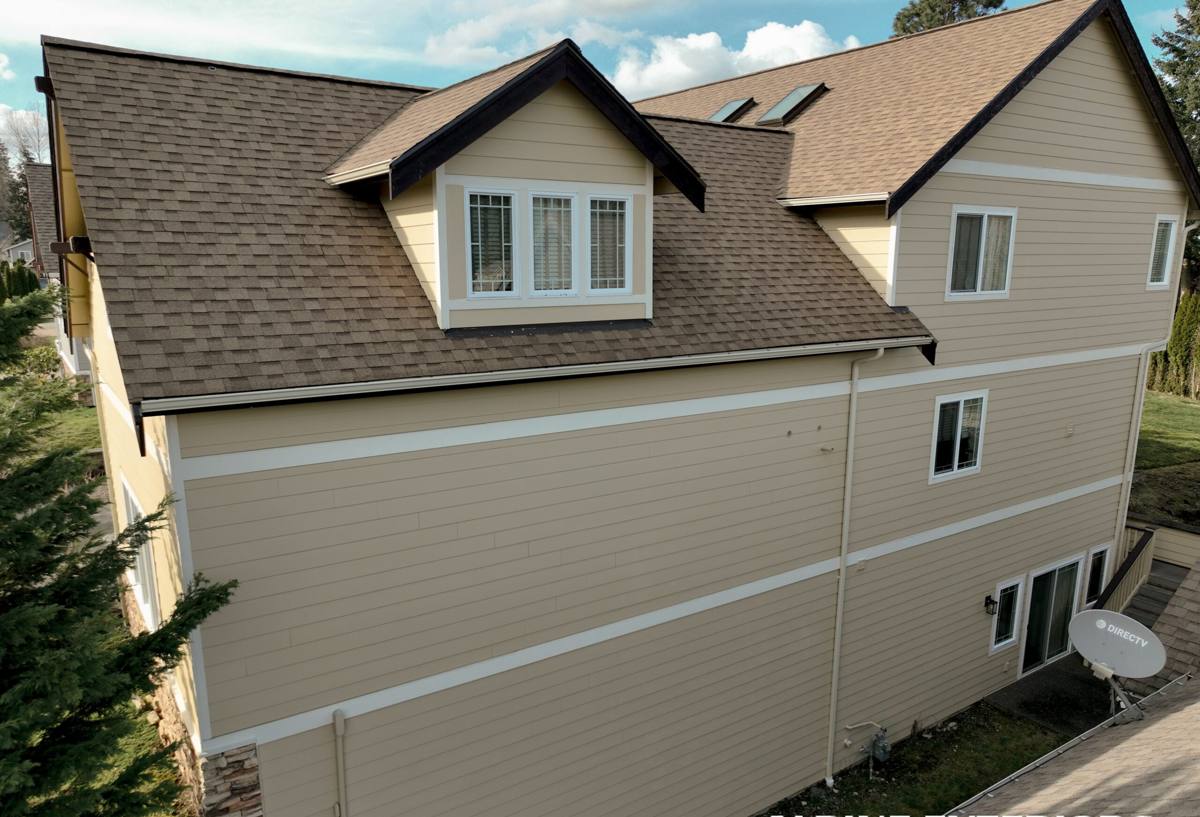
Signs a Fairhaven Home Needs New Windows, Not Just Repair
Not every drafty or sticky window needs full replacement. But there are a handful of signs that point to the frame or seal itself having failed, at which point patching is a temporary fix at best.
- Fogging or a permanent haze between panes of double-glazed glass — the seal has failed and the insulating gas is gone
- Soft or spongy wood at the sill or lower corners of the frame, especially on walls that face prevailing wind and rain
- Visible corrosion, pitting, or stuck hardware on aluminum-framed windows
- Persistent moss, algae, or black staining on the frame or trim that comes back within weeks of cleaning
- Noticeable draft or cold spot near the window even with it fully latched
- Paint that bubbles or peels repeatedly at the same spot on a wood frame, a sign moisture is getting trapped underneath
- Windows that are difficult to open, close, or lock — often a sign the frame has swollen, warped, or shifted
A single one of these on its own might just need a repaint or a reseal. Two or three together on the same window, especially on a wall exposed to weather off the bay, usually means the frame itself has reached the end of its useful life.
What a Correct Window Replacement Job Actually Involves
It's Not Just the Window Unit
Swapping in a new window without addressing what's around it is one of the most common shortcuts in this trade, and it's exactly the shortcut that fails fastest in a wet, salt-air climate. A correct job accounts for the whole opening, not just the unit that sits in it.
- Sheathing and framing inspection — the old window has to come out cleanly so the rough opening can actually be checked for hidden rot or water damage before anything new goes in
- Flashing, not just caulk — proper window flashing sheds water down and out over the building paper or house wrap below it; caulk alone is not a substitute and fails first in driving rain
- Sill pan installation — a sloped sill pan under the window gives any water that gets past the primary seal somewhere to drain instead of pooling against the frame
- Air sealing and insulation — the gap between the new frame and the rough opening needs to be sealed and insulated correctly, not just stuffed with fiberglass
- Interior and exterior trim — reset properly so the finished look matches the house and doesn't leave gaps that let moisture or pests in
Skipping the flashing and sill pan work is invisible on install day. It's also the single biggest reason a "new" window starts showing rot at the sill again within a few years near the water.
Choosing the Right Frame Material for This Climate
There's no single "best" window material for every home — it depends on the home's style, the wall it's going in, and how much upkeep the owner wants to do. Near the bay, though, some trade-offs matter more than they would further inland.
| Frame Material | How It Handles Salt Air & Rain | Maintenance | Best Fit |
|---|---|---|---|
| Vinyl | Doesn't corrode or rot; handles salt air well | Low — occasional cleaning | Most homes prioritizing low upkeep and value |
| Fiberglass | Very stable, resists moisture and salt exposure | Low | Homes wanting a narrower, more traditional sightline than vinyl |
| Wood (clad exterior) | Good if the exterior cladding is intact; exposed wood suffers near the bay | Higher — finish needs periodic attention | Historic or period-style homes where wood interior trim matters |
| Bare wood | Poor without diligent upkeep in this climate | High | Generally not recommended for exposed, weather-facing walls here |
| Aluminum | Prone to corrosion and pitting in salt air over time | Moderate to high | Limited to specific architectural needs; not our default recommendation near the water |
Our default recommendation for most Fairhaven-area homes is vinyl or fiberglass for weather-facing walls, simply because they hold up with the least maintenance in salty, wet air. That's a maintenance and moisture-behavior call, not a knock on wood or aluminum — both have their place, and we'll walk through the honest trade-offs for your specific home rather than push one product on every job.
Glass Package Matters as Much as the Frame
In this climate, the glass package is worth as much attention as the frame material. Double-pane, argon-filled units with a low-E coating are the practical standard for most homes here — they cut heat loss, reduce condensation on the interior glass during cold, damp stretches, and hold up well under the temperature swings between a cold rainy night and a sunny afternoon.
Our Window Replacement Process
- On-site assessment. We look at each window individually — not every window on a house is in the same condition, and the wall facing prevailing weather often needs different attention than a sheltered one.
- Honest recommendation. We'll tell you which windows genuinely need replacement, which could be repaired, and why — including the maintenance trade-offs of each material option for your specific exposure.
- Measurement and ordering. Each opening is measured individually rather than assumed uniform, since older homes rarely have perfectly consistent rough openings.
- Removal and opening inspection. Old windows come out carefully so we can check the framing and sheathing underneath before anything new goes in.
- Flashing and sill pan installation. This is the step that actually determines whether the job holds up in driving rain — done before the new window ever goes in.
- New window installation and air sealing. Set, leveled, shimmed, and sealed correctly around the full perimeter.
- Trim and finish work. Interior and exterior trim reset or replaced to match the home.
- Final walkthrough. Every window operated and checked before we consider the job done.
What Affects the Cost of a Window Replacement
Every home is different, so we won't quote a number without seeing the job, but these are the main factors that move the price up or down.
| Factor | Why It Matters |
|---|---|
| Number of windows | Per-window cost typically drops somewhat as the total count on a single job goes up |
| Frame material | Vinyl and fiberglass generally cost less upfront than clad wood; bare wood custom units cost more |
| Condition of the rough opening | Hidden rot or damage found during removal adds repair work before the new window can go in |
| Window size and style | Large picture windows, bays, or custom shapes cost more than standard double-hung or slider sizes |
| Glass package | Upgraded coatings or gas fills add a modest cost but improve comfort and efficiency |
| Access and height | Second-story or hard-to-reach windows can add labor time |
As a general rule, homeowners in this area should expect a wide range depending on these factors — anywhere from a few hundred dollars per window for a straightforward standard-size vinyl replacement up to significantly more for large custom units or jobs that uncover hidden framing repairs. A written, itemized estimate after an on-site look is the only way to get a real number for your home.
Why It Matters to Hire a Crew That Already Works This Area
A crew that regularly works in and around Fairhaven and the greater Ferndale area has already seen how homes here age. That means recognizing sill rot patterns typical of homes facing prevailing wind off the bay, knowing which flashing details actually hold up through a wet Whatcom County winter, and not being surprised by moss and algae buildup that would look unusual somewhere drier. It also means understanding local permitting and inspection expectations, and being available for follow-up if a question comes up after the job is done rather than being three hours away.
None of that replaces sound installation technique — a good flashing detail is a good flashing detail anywhere. But local experience shortens the learning curve on the parts of the job that are specific to coastal Whatcom County weather, and it means the crew has a reputation in the community worth protecting.
Caring for New Windows After Installation
New windows still need occasional attention in this climate, even though the maintenance burden is far lower than with older wood-frame originals.
- Rinse salt residue and grime off exterior frames and glass a couple of times a year, more often on walls directly exposed to weather off the bay
- Clear moss or algae buildup on trim and sills before it gets a foothold — a soft brush and mild cleaner is usually enough if caught early
- Check exterior caulking and sealant lines annually and touch up anywhere it's cracked or pulled away
- Operate each window a few times a year, even ones rarely opened, so hardware and weatherstripping don't seize up
- Keep gutters and downspouts clear so water isn't sheeting directly down over window openings
If you're noticing drafts, fogged glass, or sill damage on a Fairhaven-area home, we're happy to take a look and give you a straightforward, no-pressure assessment of what's actually needed. Use the form below to request a free estimate.