 Ferndale Siding
 Custom Windows Built for a Lummi Nation Property
Lummi Nation sits out on the peninsula west of Ferndale, close enough to open water that its homes take a heavier version of the weather the rest of Whatcom County deals with. Salt-laden air moves in off Bellingham Bay and the Strait almost constantly, rain arrives sideways as often as it falls straight down, and the moss and mildew season here runs longer than it does on more sheltered, inland lots. That combination matters most when a window opening isn't a standard size off the shelf — when it's a custom shape in an older home, a widened opening in a remodel, or a replacement that has to match a window line the original builder discontinued years ago. Custom work leaves less room for error, because every opening is being flashed, sealed, and fitted from scratch rather than dropped into a factory-matched frame.
We handle custom window installation and replacement for homes in and around Lummi Nation regularly, alongside siding, roofing, and deck work, and we treat a window as one piece of the wall assembly rather than a standalone product. On a peninsula lot, that connection between the window, the flashing, and the surrounding wall is exactly where problems start if it's rushed.
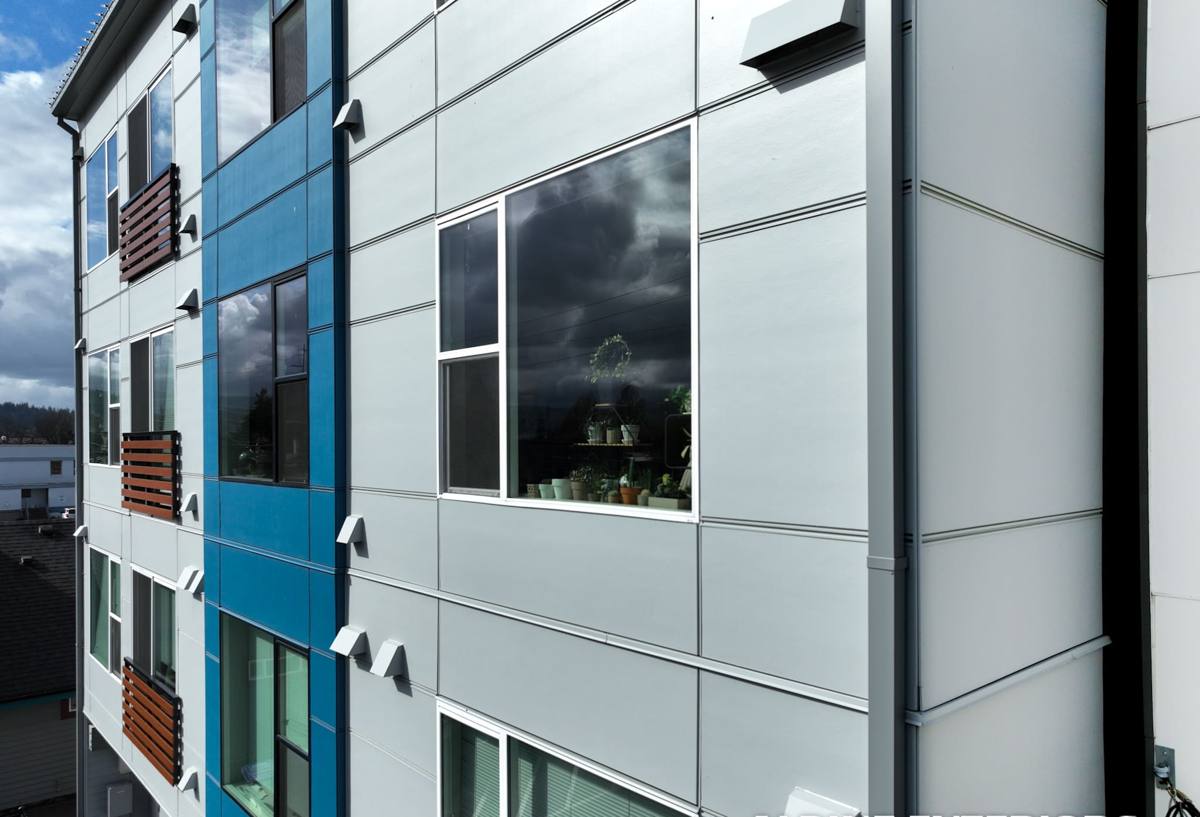
What "Custom" Actually Means for a Window Project
Custom windows come up in a handful of real situations, and each one calls for a slightly different approach:
- Non-standard openings: Older homes, additions, and remodeled floor plans often have rough openings that don't match any stock window size, which means the unit has to be built or special-ordered to fit rather than pulled off a shelf.
- Matching an existing window line: A single failed window in a home with an otherwise consistent look needs a replacement that matches the sightlines, grid pattern, and proportions of the windows around it, not just the same rough opening size.
- New openings in a remodel or addition: Adding a window where there wasn't one before means building the opening correctly from framing through flashing, with no existing hole to work from.
- Egress and code-driven sizing: Bedroom additions and finished basements often require a specific minimum opening size for emergency egress, which can rule out certain stock sizes and push the project toward a custom unit.
- Shape and specialty units: Arched, angled, or oversized openings, common in older or architecturally detailed homes, generally require custom fabrication rather than a standard rectangular window.
None of these are exotic requests, but they all raise the stakes on measurement, ordering, and installation accuracy compared to a straightforward like-for-like replacement.
What This Climate Does to a Window Opening
Salt Air and Hardware Corrosion
Homes on or near Lummi Nation's peninsula sit closer to open water than most of Ferndale proper, which means more salt-laden moisture moving across hardware, screen frames, and fasteners over time. On a custom installation, that shows up as a reason to spec corrosion-resistant hardware and fasteners up front rather than relying on whatever ships standard with a given window line. Lower-grade finishes tend to show pitting or stiff, sticking hardware years before a properly specified unit would.
Driving Rain and Flashing on a Non-Standard Opening
Open water exposure means fewer windbreaks, and wind is what turns rain into a sideways problem instead of a straight-down one. On a stock replacement, the flashing detail is largely the same from job to job. On a custom opening, the flashing and sill pan have to be built to fit a shape or size that doesn't have a factory template, which means there's more room for a shortcut to slip through if the crew isn't used to doing it right. A custom window installed with a properly pitched, correctly lapped flashing system holds up fine in this exposure. One installed with caulk standing in for real flashing detail usually doesn't survive its first hard winter storm.
A Long Moss and Mildew Season
Peninsula terrain and near-constant moisture add up to a moss and mildew season that runs longer here than in drier parts of the county, and it shows up first on shaded, north-facing walls. Around a window, that moisture tends to collect at the sill and lower corners, which is precisely where a custom-built sill pan needs to shed water outward rather than let it pool against the frame.
Frame Material Options for Custom Windows Here
Frame material matters more on a custom unit than a stock one, since you're often committing to a longer lead time and a higher cost to get it right the first time. There's no single correct answer for every home — budget, sun exposure, and how long you plan to stay in the house all factor in.
| Frame Material | Moisture & Salt Behavior | Custom Fabrication Availability | Realistic Lifespan Here |
|---|---|---|---|
| Vinyl | Won't rot; performance depends heavily on weld and seam quality | Widely available in custom sizes; shape options more limited | 20-30 years |
| Fiberglass | Dimensionally stable, resists moisture and corrosion well | Available custom, often at a higher lead time and cost | 30-40+ years |
| Wood, painted or clad | Best fit for matching historic profiles; vulnerable at joints and sills without upkeep | Most flexible for custom shapes and specialty grid patterns | 15-30 years depending on upkeep |
| Aluminum | Conducts cold; can corrode in salt-influenced air unless well-finished | Common for larger custom or angled units | 20-30 years |
For a Lummi Nation property specifically, the salt and moisture load pushes us toward vinyl or fiberglass for most custom replacements, and toward clad wood when the priority is matching an older home's original look. We'll walk you through the real trade-offs for your specific opening and exposure rather than defaulting to whatever is easiest to order.
Full Custom Fabrication vs. Modified Standard Sizing
Not every "custom" job means a fully bespoke, made-to-order unit. Some openings can be handled with a modified standard size, a stock window adjusted slightly with jamb extensions or a built-out frame, which is faster and less expensive than true custom fabrication. Others, especially non-rectangular shapes, unusually large openings, or a precise match to an existing historic window line, genuinely require a custom-built unit from the manufacturer. We measure and evaluate the actual opening before quoting either direction, because guessing wrong on this decision either wastes money on unnecessary custom fabrication or leaves you with a window that never quite fits right.
Lead Times Worth Planning For
True custom windows typically take longer to manufacture than stock sizes, sometimes several weeks longer depending on the shape, material, and manufacturer's order volume. On a peninsula property where wet-season timing matters, that lead time is worth building into the schedule from the start, especially if the opening will be exposed to weather during the gap between removal and installation.
Installation Fundamentals We Don't Treat as Optional
Most window failures in this climate trace back to installation shortcuts rather than the window product itself, and that risk goes up on a custom opening where there's no factory template to fall back on. On every job, that means:
- A properly pitched sill pan, built to the actual opening dimensions, that sheds water outward instead of letting it pool under the frame
- Head flashing integrated with the housewrap or building paper above the window, lapped correctly for water to shed downward and outward
- Jamb flashing tied into the surrounding wall assembly rather than relying on caulk alone
- Weep holes and drainage paths left clear and functional, not sealed shut during installation
- Corrosion-resistant fasteners and hardware appropriate for a consistently salt-influenced, damp climate
- Insulation and air sealing around the frame that doesn't trap moisture against the framing
- Precise verification of rough opening dimensions before the custom unit is ordered, since a measurement error on a custom size can mean weeks of delay waiting on a corrected unit
None of these add meaningfully to the cost of the project relative to the window itself, but skipping any of them is what turns a custom window that should last decades into one that's leaking behind the wall within a few wet seasons.
Signs a Lummi Nation Home Needs Window Attention
- An opening with an unusual shape, size, or an older window line that's no longer manufactured
- Visible fogging or condensation between panes, usually meaning a failed seal on a double- or triple-pane unit
- Soft, discolored, or spongy trim and sill material, especially on shaded or weather-facing walls
- Difficulty opening, closing, or latching a window that used to operate smoothly
- Rusting hardware, pitted screen frames, or chalky, faded finish on window trim
- Visible gaps, cracked caulk, or daylight around the frame from inside
- Water staining on interior wall or ceiling surfaces near a window, particularly below or beside the sill
Any one of these is worth a professional look before it's addressed with a custom or standard replacement. Caught early, most point to a repair or resealing job rather than a full opening rebuild.
Why a Local, Water-Exposed-Lot Crew Matters for Custom Work
Custom window work leaves a lot more room for a mistake to become permanent than a standard replacement does, since there's no factory template correcting for measurement or flashing errors. A crew that installs windows on Lummi Nation and the surrounding peninsula regularly knows how far wind-driven rain actually travels up a wall on an exposed lot, which orientations hold moss and moisture longest, and where extra flashing attention on a custom sill pan is worth the added time. That experience matters more here than almost anywhere else in our service area, because a Lummi Nation property's proximity to open water means a flashing shortcut that might survive a few seasons on a sheltered inland lot tends to fail here within one.
Our Process and What to Expect
- An in-person walk-through and precise measurement of the opening or openings involved
- An honest read on whether the job calls for full custom fabrication, a modified standard size, or a straightforward like-for-like replacement
- A clear explanation of frame material trade-offs for your specific exposure, budget, and the look you're after
- A realistic timeline that accounts for custom manufacturing lead times, especially if the opening will sit exposed during the transition
- A written estimate with no pressure to sign on the spot
If your Lummi Nation home needs a custom window opening addressed, whether that's matching an older window line, sizing a new opening in a remodel, or replacing a unit that's finally failed after years of salt and rain, we're glad to take a look. Reach out using the form below to schedule a free, no-pressure estimate.