 Ferndale Siding
 Siding Built for Where the Water Meets the Land
Homes in and around Lummi Nation sit in one of the more demanding stretches of Whatcom County for exterior materials. Proximity to open water means salt-laden air moving through siding joints and fastener heads almost year-round. Add driving rain that comes in sideways during winter storms, and a wet, shaded season that can stretch six months or longer, and you have a climate that will find every weakness in a siding system within a few years — not decades.
We install James Hardie fiber cement siding exclusively, and we've done work throughout the Ferndale and Lummi Nation area long enough to know which failure patterns show up here specifically. This page covers what a correctly installed, climate-appropriate siding job looks like for this area, not a generic overview of siding in general.
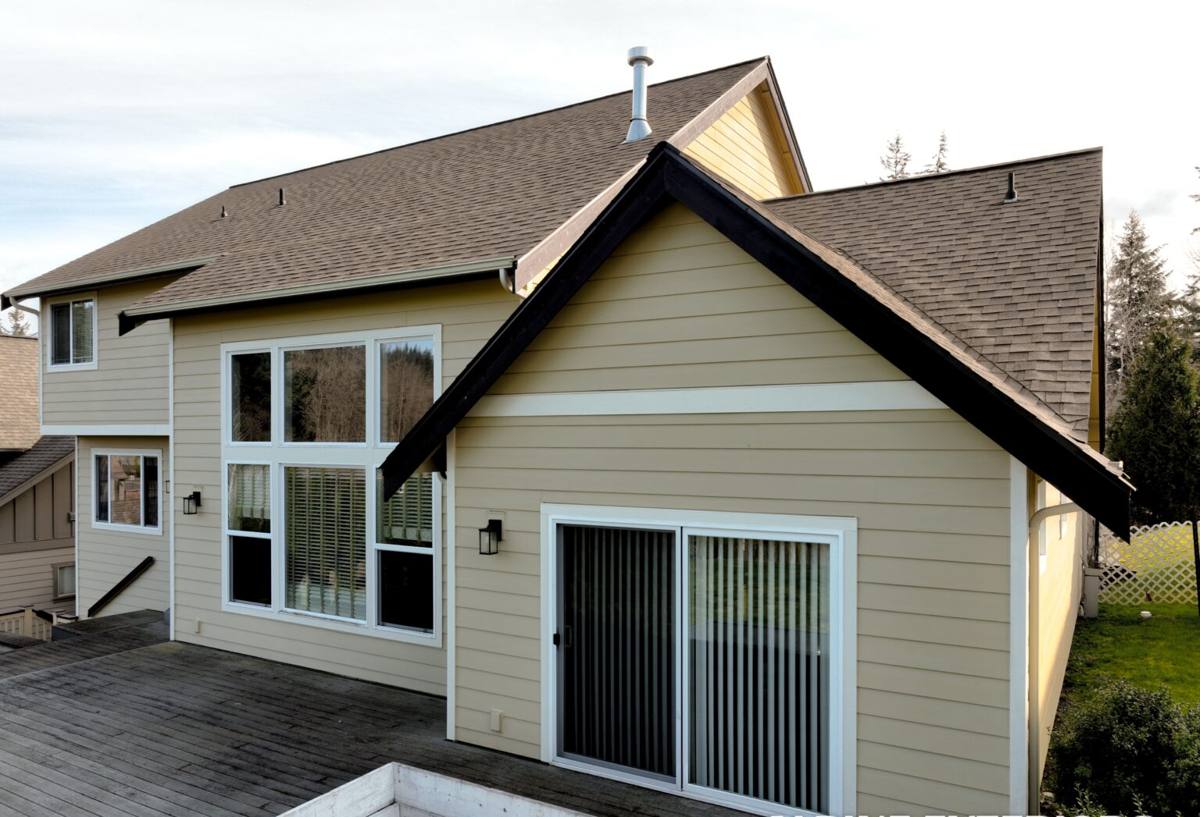
What This Climate Does to the Wrong Siding, or the Wrong Install
Salt Air and Metal Fatigue
Airborne salt accelerates corrosion on anything metal — nail heads, flashing, trim fasteners, even the staples holding house wrap in place. When those fail, water finds a path behind the siding long before the siding itself looks worn. This is one of the biggest reasons we use corrosion-resistant fasteners and flashing details rated for coastal exposure on every job in this area, not just as an upsell option.
Driving Rain and Wind-Driven Moisture
Whatcom County gets a lot of rain, but it's the wind-driven kind near open water that causes the real damage. Rain that's pushed sideways under laps, around window trim, and into unsealed penetrations doesn't behave like rain falling straight down. A siding system built for a drier inland climate — with tighter tolerances and less redundancy — often can't handle this pattern, which is part of why we don't install materials engineered around less aggressive weather assumptions.
Moss, Shade, and Prolonged Dampness
Many properties in this area have mature tree cover, which is great for privacy and shade but keeps north- and east-facing walls damp for extended stretches. Materials that absorb moisture or trap it behind an inadequate drainage plane will grow moss, mildew, and eventually rot in these conditions. Materials that shed water and dry out quickly hold up.
Why We Only Install James Hardie Fiber Cement Here
We made a deliberate decision years ago to install James Hardie fiber cement exclusively and to stop installing vinyl, LP SmartSide, primed wood, and comparable fiber cement alternatives. In a climate like this one, the reasons are practical, not brand loyalty:
- It's non-combustible. Fiber cement doesn't feed a fire the way wood-based products can, which matters for insurance conversations as much as safety.
- It doesn't absorb water the way wood-based siding does. Engineered wood products can swell and deteriorate at cut edges and fastener points when they take on repeated moisture — exactly the exposure homes near open water get.
- The factory-applied ColorPlus finish holds up to salt air and UV far better than field-applied paint, and it doesn't need repainting on the same cycle a painted wood product does.
- Hardie's HZ5 product line is engineered for this exact climate zone — the moisture and freeze-thaw behavior here, not a generic national spec.
- The warranty is transferable and backed by a large manufacturer, which matters if the home changes hands.
Hardie fiber cement isn't maintenance-free — nothing exposed to this climate is — but it's the product we're willing to put our name behind for homes that take this much weather.
What a Correct Installation Involves in This Climate
The Drainage Plane Comes First
Before a single piece of siding goes up, the weather-resistive barrier and drainage plane behind it matter more than the siding itself. In an area with this much wind-driven rain, we install a code-compliant water-resistive barrier with proper lapping and a true drainage gap, so any moisture that does get past the siding has somewhere to go besides the wall sheathing.
Fastening and Clearances
James Hardie specifies exact nailing patterns, fastener types, and clearances from grade, roofs, and decks — and those specs exist for a reason. Too-tight clearances trap moisture against the bottom of the siding; the wrong fastener corrodes and lets a board work loose over time. We follow manufacturer spec on every job, which is also what keeps the Hardie warranty valid.
Flashing, Trim, and Penetrations
Windows, doors, hose bibs, vents, and light fixtures are where most siding failures actually start — not the flat field of siding. Correct step flashing, head flashing, and sealant at every penetration is what keeps driving rain from tracking behind the wall assembly.
Pre-Installation Checklist
- Old siding and any damaged sheathing removed and inspected, not covered over
- Water-resistive barrier installed with correct laps and seams
- Drainage gap product installed where conditions call for it
- Flashing installed at every window, door, and penetration before siding starts
- Corrosion-resistant fasteners specified for coastal exposure
- Manufacturer clearances confirmed at grade, roofline, and decks
Our Process, Start to Finish
The process is the same discipline on every home, adjusted for the specific exposure of that property:
- On-site assessment. We look at wall orientation, tree cover, water exposure, and the condition of the existing siding and sheathing before quoting anything.
- Written estimate. A clear scope covering removal, any sheathing repair, water-resistive barrier, flashing, Hardie product line and color, and fastening plan.
- Permitting. We handle the permitting requirements that apply to the property, which can vary depending on the specific location and jurisdiction in this area.
- Removal and inspection. Old siding comes off, and we inspect the sheathing underneath for hidden moisture damage before covering anything back up.
- Weather barrier and flashing installation. This is the step that determines how the house performs in a storm five years from now, and we don't rush it.
- Hardie siding installation to manufacturer spec. Correct nailing, clearances, and joint treatment throughout.
- Final walkthrough. We go over the finished work with the homeowner before calling the job done.
Cost Factors for Siding Installation in This Area
Every home is different, but the same handful of factors drive most of the variation in scope and price for jobs in and around Lummi Nation:
| Factor | Why It Affects the Job |
|---|---|
| Condition of existing sheathing | Homes with hidden moisture damage need sheathing repair or replacement before new siding goes on |
| Wall exposure to wind and water | Walls facing open water or prevailing storm winds often need more robust flashing and drainage detailing |
| Home size and wall complexity | Dormers, multiple gables, and cut-up wall lines add labor and trim work |
| Siding profile and color selection | Lap width, shingle-style panels, and custom ColorPlus colors vary in material cost |
| Access and site conditions | Tree cover, slopes, and tight lot lines can slow staging and installation |
| Trim and accessory scope | Corner boards, window trim, and fascia work are often bundled with a full siding job |
We walk through these factors on-site so the estimate reflects the actual house, not a generic square-footage number.
Maintenance After the Job Is Done
Hardie siding is low-maintenance compared to wood or vinyl, but "low-maintenance" isn't "no-maintenance" in a climate like this. A rinse-down once or twice a year — more often on shaded, moss-prone walls — keeps salt residue and organic buildup from accumulating. Keeping gutters clear and vegetation trimmed back from the siding also goes a long way toward extending the life of the finish. None of this is difficult, but skipping it in this climate shortens the interval before the exterior starts to look tired.
Why Hiring a Crew That Already Works This Area Matters
Siding installation isn't just about the product — it's about whether the crew understands the specific way weather behaves on a given property. A crew that mostly works drier, inland jobs may not think twice about a clearance detail or a flashing lap that's genuinely load-bearing for a home exposed to salt air and driving rain off the water. Working repeatedly in and around Ferndale and Lummi Nation means we've seen how these homes age, where the water actually gets in, and which details are worth the extra time.
If your current siding is showing gaps, soft spots, persistent moss on shaded walls, or fastener staining, it's worth having it looked at before those issues reach the sheathing. We're happy to take a look and give you a straightforward, no-pressure estimate for James Hardie siding installation — fill out the form below to get started.