 Ferndale Siding
 Siding Repair for Lynden Homes
Lynden sits inland from Ferndale, up in the Nooksack River valley farm country of Whatcom County, close enough to the Canadian border that the flat, open fields around town take weather straight off the water with almost nothing to slow it down first. It's a different setting than the coastal stretch closer to Bellingham Bay, but the underlying pattern is the same one that drives exterior repair calls across this part of the county: driving rain that hits siding sideways instead of falling straight down, a long moss and mildew season that never fully lets up, and marine air moving up the valley that carries more moisture and salt than most homeowners realize. We take repair calls in Lynden regularly, and the approach we bring to a damaged wall is built around what that specific combination does to siding over time — not a generic repair playbook.
We install James Hardie fiber cement siding exclusively, and that shapes how we think about repair work too. When we're patching or replacing damaged sections on a home that already has Hardie siding, we know exactly how the material behaves and what a correct repair looks like. When we're called out to a Lynden home with an older or different siding product, we'll give you an honest read on what's actually salvageable versus what's a sign the whole wall system needs a longer-term plan.
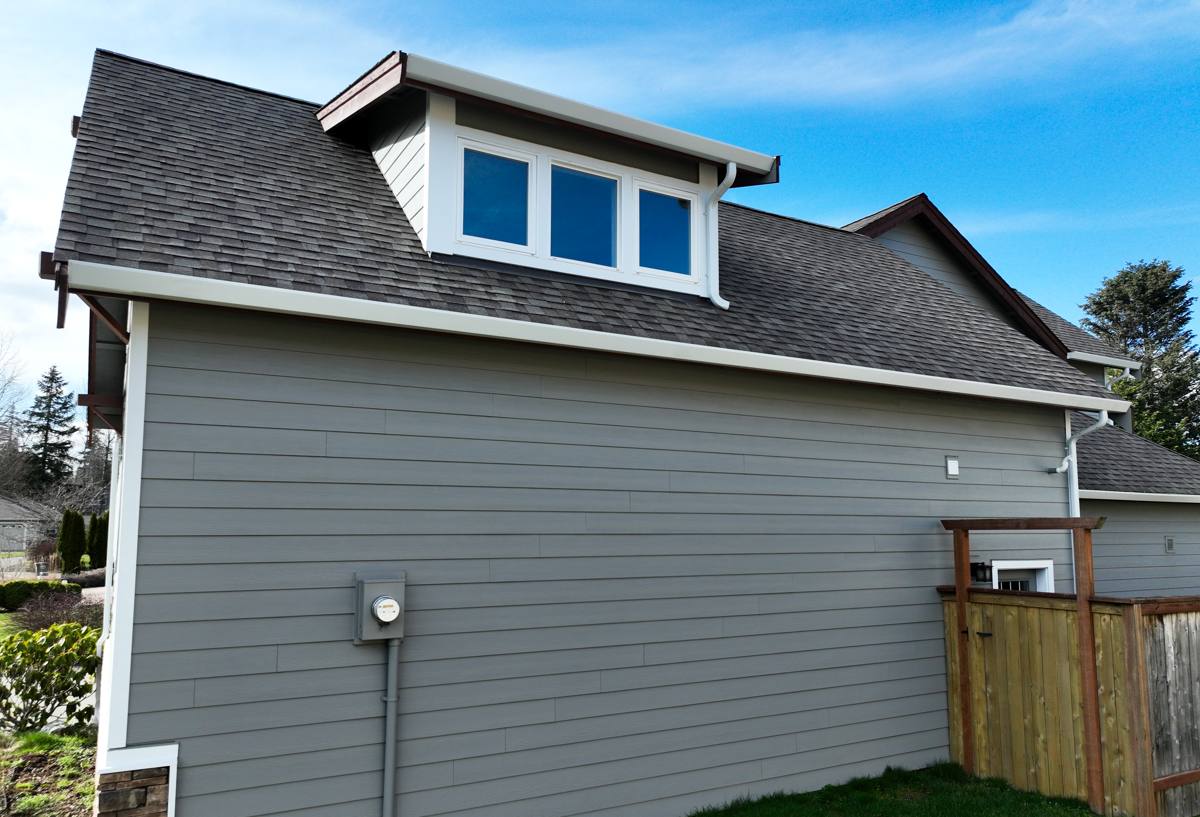
What Lynden's Climate Does to Siding
Driving Rain Across Open Farmland
Lynden's surrounding terrain is flat, open agricultural land with little in the way of hills or dense tree cover to break up incoming weather. That means storms moving through the valley hit exposed walls with more direct, sustained wind-driven rain than a sheltered in-town lot would see. Siding that isn't lapped, flashed, and sealed correctly at every seam takes on water fastest in exactly this kind of exposure, and repair calls after a hard fall or winter storm are common for that reason.
Marine Air Reaching the Valley
Lynden is inland enough that it doesn't take the same direct salt spray a beachfront property does, but Whatcom County's marine air still pushes up the Nooksack valley on a regular basis, carrying moisture and a measure of salt content with it. Over years, that steady low-level exposure contributes to corrosion in fasteners, flashing, and trim hardware — often showing up first as rust staining bleeding down from a nail head or a corner post that's started to separate.
A Long Moss and Mildew Season
Mild temperatures and persistent regional dampness keep moss and mildew active on shaded and north-facing walls across most of the year here, same as the rest of the county. On a Lynden property with mature landscaping or outbuildings casting shade on part of the house, that growth holds moisture against the siding surface far longer than an exposed, sun-facing wall — which is exactly the condition that turns a cosmetic problem into a repair call.
Cold Nights on the Valley Floor
Open farmland cools off faster and harder than in-town lots with more surrounding structure, and Lynden sees colder overnight temperatures and more frequent frost than milder parts of the county closer to the water. Water that's already worked its way into a seam, a cracked board, or a gap in old caulking expands when it freezes, which is often what turns a small, easy-to-miss crack into a section that needs real repair by the time spring arrives.
Common Siding Damage We See in Lynden Homes
Most repair calls we get in the Lynden area fall into a handful of recurring categories. Wind-driven rain finds failed caulk joints and open seams first, especially around window and door trim where sealant has a shorter service life than the siding itself. Older or lower-grade siding materials show warping, cupping, or delamination at cut edges after repeated wet-dry cycles, since they absorb and release moisture differently than fiber cement does. Shaded walls accumulate moss and mildew staining that, left alone, keeps the wall damp longer with every rain event. Corroded or backed-out fasteners loosen panels and trim over time, particularly where marine air has had years to work on unprotected metal. And on rural and agricultural properties, mechanical damage from equipment, debris, or storm-blown branches is more common than it would be on a tighter in-town lot.
None of these are unusual problems for this part of Whatcom County. What matters is catching them before the moisture behind the siding does more damage than the siding itself shows on the surface.
Repair vs. Full Replacement: How We Decide
| Factor | Leans Toward Repair | Leans Toward Replacement |
|---|---|---|
| Extent of damage | Isolated section, single wall, or a handful of boards | Damage spread across multiple walls or elevations |
| Age and material of existing siding | Newer Hardie siding still within its service life | Original siding is decades old, discontinued, or already failing broadly |
| Underlying moisture or rot | Sheathing and framing test dry once siding is opened up | Water has been tracking behind the wall and reached the sheathing or framing |
| Cosmetic match | Replacement material and color can be matched closely | Fading or a discontinued profile makes a clean match impossible |
| Root cause | A single identifiable failure point, like one bad flashing detail | A systemic problem, like a missing or failed water-resistive barrier |
We open up damaged sections before we quote anything, because the siding surface only tells part of the story. What we find underneath — dry sheathing versus soft, discolored sheathing — is usually what actually decides whether a repair holds up or just delays a bigger conversation.
What Correct Siding Repair Involves
Matching Existing Hardie Siding
On a home that already has James Hardie siding, a good repair starts with matching the exact profile, exposure, and ColorPlus finish already on the wall. Hardie's factory-applied color is consistent within a production run, but sun exposure fades any exterior finish gradually over years, so a section replaced with brand-new material can sit slightly brighter than the surrounding wall for a season or two before it settles in. We're upfront about that rather than pretending a repair will be invisible on day one.
Finding and Fixing the Moisture Source, Not Just the Symptom
Replacing a damaged board without figuring out why it failed just buys time until the same spot fails again. Before closing up a repair, we trace the actual path water took to get behind the siding — a gap in flashing, a failed sealant joint, a fastener that backed out — and correct that underlying issue, not just the visible damage on top of it.
Flashing, Fasteners, and Sealant Detail
Repair work lives or dies on the small details: flashing that's lapped correctly with the water-resistive barrier behind it, fasteners set to the right depth and pattern for the wind exposure this area sees, and sealant used where it belongs instead of as a substitute for proper flashing. A repair that looks right from the ground but skips these details tends to fail again within a wet season or two.
If Your Home Isn't Hardie Yet
Plenty of homes in and around Lynden are sided in vinyl, cedar, LP SmartSide, or other products we don't install as our standard system. We'll still take an honest look at a repair call on any of those materials. In some cases, a targeted patch or board replacement is a reasonable short-term fix, and we'll tell you that plainly. In other cases — particularly with wood-based or engineered wood products that have absorbed moisture over multiple wet seasons, or vinyl that's cracked and become brittle with age — a repair is really just a temporary measure on a wall system that's approaching the end of its useful life. When that's the situation, we'll say so directly, explain what we're seeing and why, and let you decide whether a repair now or a longer-term plan toward full replacement makes more sense for your home and budget. We won't talk you into a bigger job than what's actually in front of us.
Our Siding Repair Process
- An on-site inspection of the damaged area and the surrounding wall, including opening up affected sections to check the sheathing underneath
- An honest explanation of what caused the damage and whether a repair, partial replacement, or broader conversation about full re-siding fits the situation
- A written estimate that spells out the scope of the repair, materials involved, and timeline
- Repair work that addresses the root cause — flashing, sealant, or fastening issues — not just the visible damage
- A final walk-through so you can see and approve the completed repair before we consider the job done
Siding Repair Readiness Checklist
- Walls checked for cracked, warped, or missing siding sections, especially on wind-exposed or open-field-facing walls
- Caulk and sealant joints around windows, doors, and trim inspected for cracking or separation
- Shaded and north-facing walls checked for moss, mildew, or dark staining that's holding moisture against the surface
- Fasteners and metal trim inspected for rust staining or corrosion
- Any soft or spongy spots pressed gently to check for hidden moisture damage underneath
- Interior walls near suspect exterior areas checked for musty odors, staining, or soft drywall
Why a Local Lynden-Area Crew Matters for Repairs
Repair work rewards familiarity with a specific area in a way full replacement doesn't always require. Knowing that Lynden's open farmland exposes walls to more direct wind-driven rain than a sheltered in-town lot, that marine air still reaches this far up the valley even without direct salt spray, and that colder overnight temperatures here push freeze-thaw damage further than in milder parts of the county all shape where we look first and how we prioritize a fix. A crew that only sees a property once, on a single service call, doesn't have that context. We work this area regularly enough to know what tends to fail here and why, which makes for a repair that actually holds rather than one that looks fine until the next storm season.
If you've got a section of damaged, cracked, or moisture-stained siding on a Lynden home, we're glad to take a look, open it up, and give you a straight answer on what it needs. Reach out using the form below to schedule a free, no-pressure estimate.