 Ferndale Siding
 Roofing in Marietta: A Different Set of Conditions Than Inland Whatcom County
Marietta sits low, flat, and close to the water at the edge of Bellingham Bay, just outside Ferndale proper. That location is part of what makes the area a pleasant place to live, but it also puts roofs here through a rougher cycle than homes even a few miles inland. Salt-laden air off the bay, wind-driven rain that comes in sideways during fall and winter storms, and a moss season that can run eight months out of the year all work against a roof at the same time. A roofing job that would hold up fine in a drier, more sheltered part of Whatcom County can fail early in Marietta if it wasn't built with these specific conditions in mind.
This page is about one job: putting a new roof on a Marietta home. Not a repair, not a patch — a full installation, done in a way that accounts for what this particular stretch of coastline does to roofing materials and roofing fasteners over time.
What Salt Air, Rain, and Moss Actually Do to a Roof
Salt Air and Metal Fasteners
Airborne salt is corrosive to exposed or under-protected metal. On a roof, that means nails, screws, flashing, vents, and any exposed metal trim take more of a beating in Marietta than they would ten miles inland. A roof built with standard-grade fasteners or thin, uncoated flashing may start showing rust streaks and early corrosion well before the shingles themselves are due for replacement. The fix isn't complicated — it's using fastener and flashing grades rated for coastal exposure from the start — but it has to be a deliberate choice at install time, because you can't easily upgrade fasteners after the fact without tearing into the roof again.
Driving Rain and Wind-Driven Water
Marietta's exposure means storms often arrive with real wind behind the rain, not just straight-down precipitation. Wind-driven rain gets pushed sideways and even slightly upward under roof edges, into vents, and around penetrations in a way that gentler rainfall doesn't. This is where underlayment quality, proper flashing laps, and sealed penetrations matter more here than in calmer areas. A roof that's watertight in a light rain can still leak in a Marietta wind event if the underlying details weren't built for lateral water intrusion.
Moss and Sustained Moisture
Whatcom County's long wet season gives moss plenty of time to establish, and Marietta's proximity to the water keeps humidity levels up even between storms. Moss holds moisture against the roof surface, works its way under shingle edges as it grows, and can lift tabs enough to let water in over time. North-facing slopes and areas shaded by trees are the most common trouble spots. Moss isn't just a cosmetic issue — left unaddressed, it shortens the life of the roofing material underneath it.
What a Correctly Installed New Roof Looks Like Here
A new roof installation in Marietta should be built as a system, not just a layer of shingles nailed over a deck. Every layer plays a role in how the roof handles salt exposure, wind-driven rain, and sustained damp.
- Deck inspection and repair: Old sheathing is checked for rot, soft spots, and delamination before anything new goes down — covering a compromised deck just hides the problem.
- Ice-and-water or high-quality synthetic underlayment at eaves, valleys, and other vulnerable areas, sized to handle wind-driven rain intrusion, not just standard runoff.
- Corrosion-resistant fasteners and flashing rated for coastal or marine-adjacent exposure, used throughout — not just at obvious trouble spots.
- Proper flashing details at chimneys, skylights, vent pipes, and wall intersections, with laps oriented to shed water even when it's blowing sideways.
- Balanced attic ventilation so moisture from inside the home doesn't add to what the roof is already fighting from outside.
- Moss-resistant material choices or treatments where appropriate, based on the slope's sun and shade exposure.
Skipping any one of these doesn't necessarily cause an immediate failure, but it shortens the roof's working life and increases the odds of a leak showing up in exactly the kind of storm Marietta sees most winters.
Choosing Roofing Material for a Marietta Home
There's no single "best" roofing material for every home — the right choice depends on the home's roof pitch, exposure, budget, and how the owner wants it to look. What matters most for this location is how a material handles sustained moisture and salt exposure over decades, not just how it performs on a spec sheet.
| Material | How It Handles This Climate | Maintenance Consideration |
|---|---|---|
| Asphalt composition shingles | Good performance when installed with coastal-grade fasteners and proper underlayment; algae-resistant granule options help slow moss and moisture staining | Periodic moss and debris removal, especially on shaded slopes |
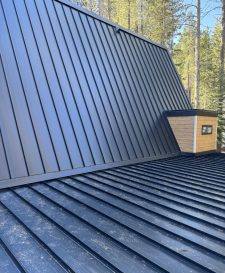
| Metal roofing | Sheds wind-driven rain very effectively and resists moss better than shingles; coating and fastener quality matter more here due to salt exposure | Low ongoing maintenance if coatings and fasteners are marine-rated |
| Wood shake or shingle | Higher maintenance burden in a sustained-moisture, moss-prone environment; more prone to moisture retention issues near the coast | Requires more frequent treatment and inspection than other options |
We'll walk through these trade-offs honestly during an estimate rather than push one product — the right call depends on the specific roof and what the homeowner wants to manage long-term.
Our Installation Process
1. On-Site Assessment
We start by looking at the existing roof, the deck condition, ventilation, and any trouble spots — moss buildup, flashing wear, soft decking — that are specific to that home's exposure and slope orientation.
2. Material and System Recommendation
Based on that assessment, we recommend materials and underlayment specs suited to the home's actual exposure, not a one-size-fits-all package. A roof on a wide-open, water-facing slope gets treated differently than a roof tucked behind trees and neighboring structures.
3. Tear-Off and Deck Repair
Old roofing is removed down to the deck, and any rot, soft spots, or damaged sheathing is repaired or replaced before new material goes down. This step gets skipped by some crews trying to save time — it shouldn't be, especially in an area where trapped moisture under old roofing is common.
4. Underlayment and Flashing Installation
This is the layer that does the real work when wind-driven rain hits the roof. We pay particular attention to valleys, eaves, and penetrations, since these are the spots where lateral water intrusion causes the most damage.
5. Roofing Material Installation
Shingles, metal panels, or other chosen material go down with fastener spacing and exposure rated for coastal wind and moisture conditions, not just manufacturer minimums.
6. Final Inspection and Cleanup
We check flashing, seal points, and ventilation before calling the job done, and clear the site of old material and debris.
Ventilation: The Part of a Roof Job That's Easy to Overlook
A new roof isn't just what's visible from the street — proper attic ventilation is part of a correctly installed roofing system, especially in a climate as damp as Whatcom County's. Without balanced intake and exhaust ventilation, moisture from inside the home can condense against the underside of the roof deck, adding to the moisture load the roof is already dealing with from outside. Over time, that trapped moisture can lead to premature deck rot, reduced insulation performance, and conditions that favor mold growth in the attic space. Ventilation upgrades are a normal part of a full roof replacement and are worth discussing during the estimate rather than treating as an afterthought.
Timing a Roof Replacement Around Ferndale's Weather
Roofing work can be done through most of the year here, but the driest stretches — generally summer into early fall — give the best working conditions for tear-off and underlayment installation, since those steps involve exposed decking that needs to stay dry. That said, waiting until an active leak forces the issue isn't the ideal way to plan a roof replacement. Signs worth acting on ahead of time include:
- Granule loss or bald patches on asphalt shingles
- Persistent moss growth that returns quickly after cleaning
- Curling, cracked, or lifted shingle edges
- Rust staining around flashing, vents, or fasteners
- Visible sagging in the roofline
- Water stains on interior ceilings, especially after a windy storm
Getting an assessment before a roof is actively failing gives more flexibility on timing and material choice, rather than scrambling during the wet season.
Why a Crew That Already Works Marietta Matters
Roofing crews who mostly work drier, more inland jobs don't always build in the coastal-grade details Marietta homes need — not because they're careless, but because it's simply not what their usual jobs call for. A crew that regularly works this specific stretch of Whatcom County, close to the water, already knows which fastener and flashing grades hold up, which slopes tend to collect moss fastest, and where wind-driven rain typically finds its way into a poorly detailed roof. That familiarity translates directly into fewer callbacks and a roof that performs the way it's supposed to through its first few real coastal winters, not just on a sunny installation day.
Get a Free, No-Pressure Estimate
If you're weighing a new roof for your Marietta home — whether it's due to age, storm damage, or ongoing moss and moisture issues — we're glad to take a look and walk you through what your roof actually needs, with no pressure to commit on the spot. Fill out the form below to schedule a free estimate.