 Ferndale Siding
 Composite Decking Built for the Nooksack Area's Climate
The Nooksack area sits low in the Whatcom County landscape, close to the river bottomland northeast of Ferndale, where the ground holds moisture longer into spring and the air carries a mix of salt from Bellingham Bay and constant marine dampness. That combination is hard on outdoor living spaces. Wood decking in this part of Whatcom County fights a losing battle against checking, splintering, and rot within a handful of seasons unless it's babied with annual sealing. Composite decking was built to handle exactly this kind of exposure — but only when it's installed correctly for the site it's going on.
We've worked on decks throughout the Ferndale and Nooksack area long enough to know that "composite" isn't a single product with one installation method. Board composition, substructure design, and hardware choices all have to match the local conditions — driving rain off the water, a long moss season that starts in fall and doesn't let go until late spring, and soil that stays saturated far longer than it does on higher, better-drained lots.
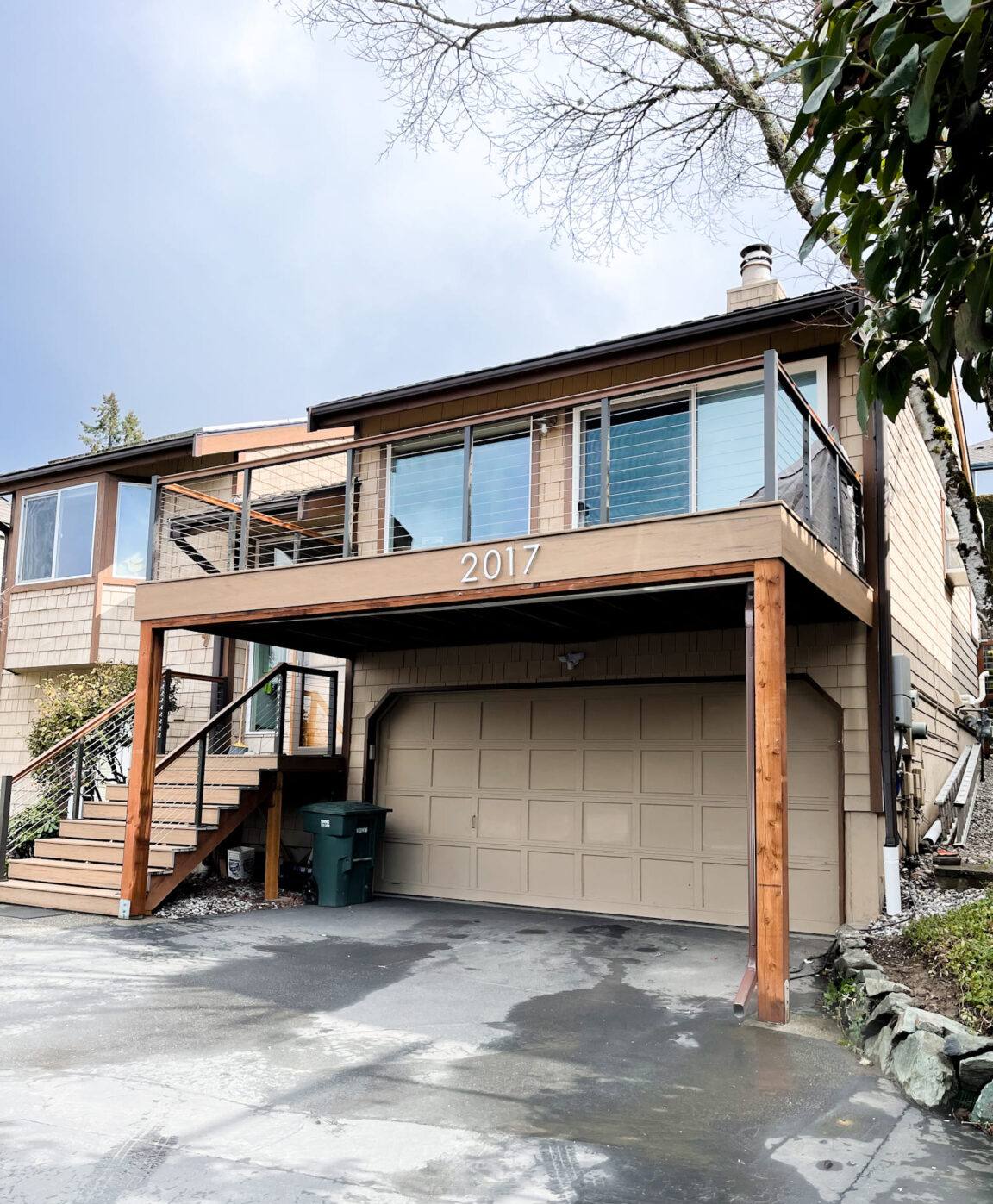
What a Correct Composite Deck Installation Involves
A composite deck is only as good as the framing underneath it and the details most homeowners never see once the boards go down. In a wet climate, those hidden details determine whether a deck holds up for decades or starts showing problems in year three.
Framing and Moisture Protection
- Ledger board flashing — where the deck attaches to the house, water intrusion behind an improperly flashed ledger is one of the most common sources of hidden rot in this region. Correct flashing sheds water away from the house band board every time, not just most of the time.
- Joist tape — a self-adhering membrane over every joist top keeps standing water out of the wood framing under the composite decking, which matters more here than in drier climates because framing simply doesn't get the chance to dry out between rain events for months at a stretch.
- Corrosion-resistant hardware — with salt air in the mix, standard fasteners corrode faster than they would further inland. We use hardware rated for coastal and treated-lumber exposure so it doesn't become the weak point.
- Post footings and ground clearance — on lots closer to the river bottom, footings need to be set below frost depth and clear of the seasonal high water table, with enough ground clearance under the deck for airflow to actually dry the space out between storms.
Drainage and Airflow
Composite boards don't rot, but the space underneath a deck still needs to drain and breathe. A deck built tight to grade with no airflow becomes a damp, shaded pocket that grows moss and algae faster than the deck surface itself. Board spacing, deck height, and skirting design all get planned with drainage and ventilation in mind, not just appearance.
Capped vs. Uncapped Composite: What's the Difference
Most composite decking sold today falls into one of two categories, and the difference matters a lot in a climate this wet.
| Feature | Capped Composite | Uncapped Composite |
|---|---|---|
| Moisture resistance | Polymer shell resists water absorption at the surface | More prone to surface moisture absorption over time |
| Moss/algae resistance | Smoother, less porous surface is easier to keep clean | More porous surface can hold onto grime and organic growth |
| Fading/staining | Cap layer resists UV fading and staining better | More prone to visible fading and staining over the years |
| Upfront cost | Higher material cost | Lower material cost |
| Typical warranty | Longer stain and fade warranties from most manufacturers | Shorter or more limited warranty coverage |
Neither option is wrong — it's a question of budget versus long-term maintenance, and we'll walk through both honestly based on what your project actually needs. In a climate with this much year-round moisture, we generally steer homeowners toward capped boards on ground-level and low-airflow sections of the deck, where organic buildup is most likely.
Design Considerations Specific to Nooksack-Area Homes
Elevation and Water Management
Homes in this part of Whatcom County often sit on lots with subtle grading toward low points, and river-adjacent properties can see a higher water table for parts of the year. Deck height, post footing depth, and surface slope all get set with that in mind, so water sheds off the deck and away from the house foundation rather than pooling under it.
Railing and Hardware
Composite or aluminum railing systems hold up better here than painted wood rail, which needs repainting every couple of years just to keep pace with the moisture. We match railing material to the same corrosion-resistant standard as the deck hardware itself.
Board Direction and Ventilation
Board layout isn't just a look — the direction boards run relative to the house and the prevailing wind and rain affects how quickly a surface dries after a storm. On shaded, north-facing decks especially, we plan layout and gaps to give the surface the best chance to dry between rain events.
Our Installation Process
- On-site assessment — we look at grade, drainage, existing structure (if replacing an old deck), sun and shade exposure, and proximity to moisture sources like downspouts or low ground.
- Design and material selection — board type, railing system, and layout get chosen based on that assessment, not a one-size-fits-all default.
- Framing and flashing — ledger flashing, joist tape, and corrosion-resistant hardware go in before a single composite board is placed.
- Decking installation — hidden-fastener systems where appropriate, correct board spacing for drainage, and attention to expansion gaps so the deck performs through temperature swings.
- Final walkthrough — we go over the finished deck with you, including what routine care it needs and what it doesn't.
Maintenance in a Moss-Prone, Wet Climate
Composite decking cuts out sanding, staining, and sealing, but it isn't zero-maintenance in a climate that grows moss on north-facing roofs and fences most of the year. Here's what actually keeps a composite deck looking and performing right in this area:
- Sweep off leaves, needles, and organic debris regularly, especially in fall — trapped organic matter is what feeds moss and algae growth on any decking surface.
- Rinse or wash the deck a couple of times a year with a soft-bristle brush and mild soap; avoid pressure washing directly into board seams, which can drive water into fastener holes.
- Keep gutters and downspouts clear so runoff isn't dumping directly onto or under the deck.
- Check that skirting and under-deck areas stay ventilated — trimming back vegetation that blocks airflow underneath makes a real difference in moss control.
- Inspect railing posts and ledger flashing annually for any sign of movement or water staining.
Cost Factors to Expect
| Factor | Why It Affects Price |
|---|---|
| Board type (capped vs. uncapped) | Capped composite carries a higher material cost but lower long-term upkeep |
| Deck size and shape | More linear footage, cuts, and framing complexity increase labor |
| Height and footing depth | Taller decks or soft/wet ground can require deeper or additional footings |
| Railing system | Composite and metal rail systems cost more upfront than basic wood rail |
| Old deck removal | Tear-off and disposal of an existing structure adds to the scope |
Every deck is different, and we'd rather walk your property and give you real numbers than throw out a broad estimate that doesn't hold up once we see the actual site.
Why a Crew That Already Works the Nooksack Area Matters
Decking work in this part of Whatcom County isn't the same as decking work in a dry inland climate, and it shows in details a homeowner might not think to ask about — how deep footings need to go given local soil and water table conditions, which hardware actually holds up against salt air over ten or fifteen years, and how to lay out a deck so it dries out between the area's frequent rain events instead of staying damp and growing moss. A crew that's done this work around Ferndale and the surrounding Nooksack area brings that judgment to your project instead of learning it on your deck.
What to Ask Before You Hire a Deck Contractor
- Do they flash the ledger board and tape the joists, or is that treated as optional?
- What hardware do they use, and is it rated for coastal/marine exposure?
- Can they explain the difference between capped and uncapped composite in plain terms?
- Do they account for site drainage and ground clearance, or use a standard height regardless of lot conditions?
- Are they licensed and insured to work in Whatcom County?
- Will they put the manufacturer's warranty terms in writing as part of the project?
If you're weighing a new composite deck or a replacement for an aging wood deck in the Nooksack area, we're happy to walk the site with you and give you a straightforward, no-pressure estimate — just fill out the form below to get started.