 Ferndale Siding
 Window Installation Built for Nooksack's Weather
Homes around Nooksack sit close to the river bottoms and open farmland east of Ferndale, which means they take weather differently than a house tucked into a subdivision. Wind off the Nooksack River valley drives rain sideways against west- and south-facing walls, humidity lingers longer in the low-lying areas near the water, and the moss season here runs longer than most homeowners expect — often eight or nine months out of the year. Windows are one of the first places that shows up. A window that was installed correctly ten or fifteen years ago is usually still tight. One that wasn't will tell you with fogged glass, soft trim, or a draft you can feel standing three feet away.
We install windows throughout the Ferndale area, including the Nooksack corridor, and the approach doesn't change from house to house — but the details we pay extra attention to do. Flashing, sealant choice, and how the window ties into the wall assembly matter more out here than they would somewhere drier and more sheltered.
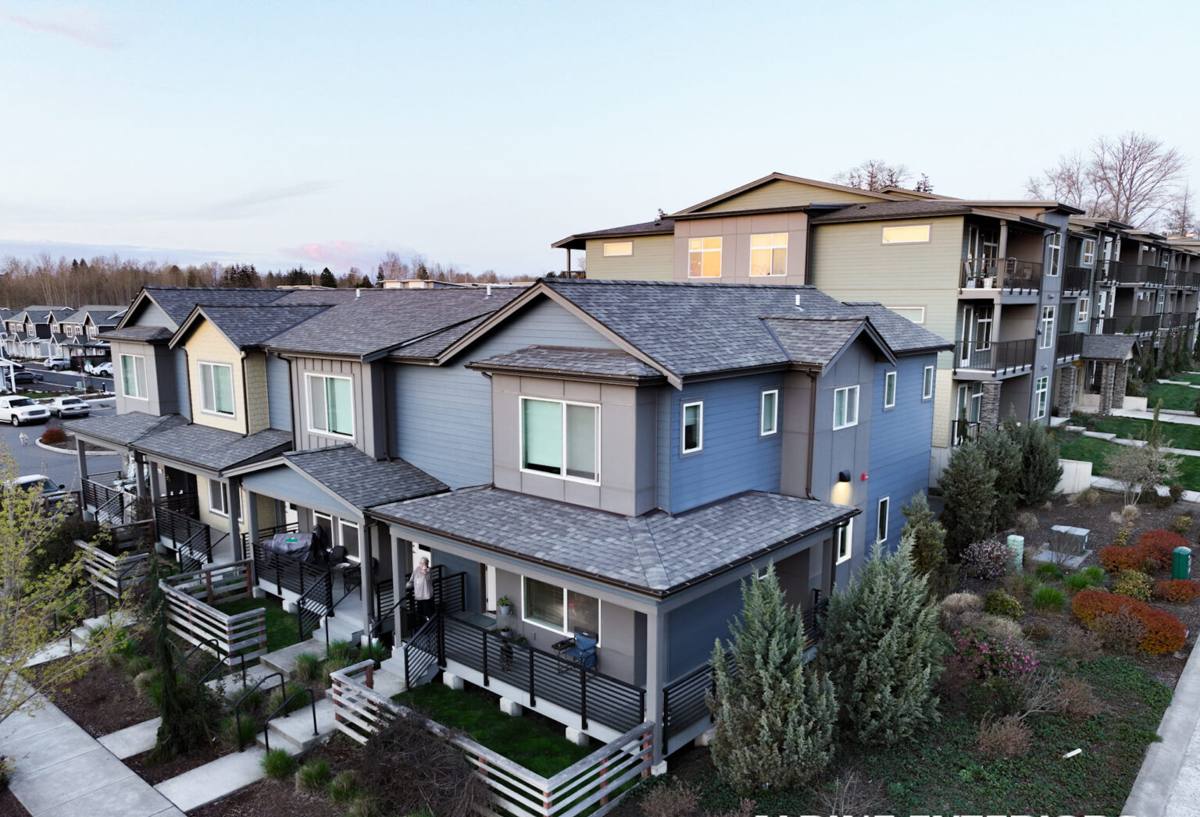
What Local Conditions Actually Do to a Window
Wind-Driven Rain
Whatcom County's storms don't just fall straight down — they come in at an angle, pushed by wind funneling through the river valley. That means rain gets forced up under trim and into gaps that would stay dry in a calmer climate. A window that relies on caulk alone, without proper flashing behind it, will eventually let water in around the frame even if the glass and sash are in perfect shape.
Salt Air and Humidity
Proximity to Bellingham Bay and the Salish Sea means a steady low-grade exposure to salt-laden air, especially on days with a west wind. Salt air accelerates corrosion on hardware, fasteners, and metal flashing that isn't rated for coastal exposure. It also holds moisture near building surfaces longer, which slows drying time after a storm.
Moss and Shade
Many Nooksack-area properties have mature trees or sit close to tree lines, which keeps window trim and sills shaded for much of the day. Shade plus moisture is exactly what moss needs. Moss on a sill or on wood trim around a window holds water against the surface and keeps it from drying out between rains, which is one of the more common causes of rot we find around older window openings.
Signs a Window Needs Attention
Most window problems don't announce themselves right away. By the time a homeowner notices, moisture has often been working on the frame or the wall behind it for a season or two. Here's what we tell people to watch for:
- Condensation or fogging between the panes on a double- or triple-glazed unit (means the seal has failed)
- Soft or spongy trim when pressed, especially at the bottom corners of the sill
- Visible gaps or daylight around the frame when the window is closed
- Paint that's bubbling, peeling, or discolored near the window edges
- Difficulty opening, closing, or locking a window that used to operate smoothly
- A noticeable draft or cold spot near the window in winter
- Moss or dark staining building up on the sill or exterior trim
What a Correct Installation Actually Involves
Swapping the visible window unit is the easy part. The work that determines whether the installation lasts happens underneath — flashing, sealing, and how the new window ties back into the existing wall assembly. This is where a lot of shortcuts get taken, and it's also where problems show up years later, usually as rot that's already spread into the framing before anyone notices.
A correct install, in our sequence, looks like this:
- Remove the old window and inspect the rough opening for existing rot, moisture staining, or framing damage before anything new goes in
- Repair or replace any compromised framing — we don't install a new window over a wet or soft opening
- Install a sloped sill pan flashing so any water that gets past the window has a way out, not a place to sit
- Set the window plumb, level, and square, shimmed correctly so it isn't relying on the frame to hold its shape
- Integrate window flashing tape with the house wrap or building paper in the correct shingle-lap order, so water sheds down and out, not into the wall
- Insulate the gap between the window frame and the rough opening — a gap packed too tight or left empty both cause problems
- Seal and trim the exterior, and finish the interior
Where Window Installations Commonly Go Wrong
| Shortcut | What It Leads To |
|---|---|
| Caulk used in place of proper flashing | Water intrusion once the caulk ages or cracks — usually 3-7 years |
| Skipping the sill pan | Water that gets past the window has nowhere to drain, so it soaks into the framing |
| Reusing old, compromised framing | New window installed over hidden rot, which keeps spreading unseen |
| Wrong flashing tape lap order | Water gets directed behind the house wrap instead of over it |
| Over-packed insulation in the gap | Frame bows slightly, affecting how the window opens, closes, and seals |
Choosing a Window for a Nooksack-Area Home
Material choice matters more here than in a drier climate, because whatever you pick has to hold up to sustained moisture exposure and temperature swings between damp winters and warmer summer days. There's no single right answer for every house — it depends on the home's age, style, and budget.
| Material | Moisture Performance | Maintenance | Best Fit |
|---|---|---|---|
| Vinyl | Very good — won't rot, resists moisture well | Low — occasional cleaning | Most homes, especially where budget and durability both matter |
| Fiberglass | Excellent — dimensionally stable, resists warping | Low | Homes with larger window openings or where long-term stability matters |
| Wood (clad exterior) | Good if the exterior cladding is intact and maintained | Higher — exterior clad protects wood, but seals need periodic checking | Older or historic-style homes where wood interior trim is part of the look |
| Aluminum | Fair — prone to condensation without a thermal break | Moderate | Limited use; we typically don't recommend it for this climate |
We install for the material the homeowner chooses, but we'll always tell you honestly if we think a particular product is a poor fit for a specific opening or exposure. On a west-facing wall that catches the worst of the wind-driven rain, for example, we'll flag it if a lower-end product's seal design isn't going to hold up to that kind of sustained exposure.
Our Process, Start to Finish
We keep the process straightforward because most homeowners just want to know what's happening and when:
- Assessment: We look at the existing windows and openings, check for hidden moisture or rot, and talk through what's actually needed versus what can wait
- Estimate: A clear, written estimate — no pressure, no vague line items
- Scheduling: We work around weather when we can, since a dry install window matters for how well flashing and sealants perform
- Installation: Old window out, opening inspected and repaired as needed, new window flashed, set, insulated, and finished
- Walkthrough: We check operation on every window before we call the job done and walk through anything you should know for upkeep
Why Local Experience Matters for This Work
A crew that only works occasionally in Whatcom County might not think twice about flashing sequence or sill pan drainage, because in a lot of the country those details are optional. Out here, with the amount of rain the Nooksack area sees and the wind pattern coming off the valley, skipping them isn't a minor risk — it's close to guaranteed to cause a problem eventually. We work this area regularly, which means we've seen what actually fails on local homes and we build the installation around avoiding those specific failure points, not a generic checklist.
What Affects Cost
| Factor | Why It Matters |
|---|---|
| Window material and glazing | Vinyl, fiberglass, and wood-clad units are priced differently, and double- vs. triple-pane glazing adds cost |
| Condition of the existing opening | Rot or framing repair adds labor before the new window can go in |
| Number of windows and access | Multiple windows on one visit is more efficient than single replacements spread over time |
| Window size and configuration | Larger units, bay windows, or custom shapes take more time to flash and set correctly |
| Trim and finish work | Matching existing exterior trim or doing full interior finish work adds to the scope |
Costs for a straightforward window replacement typically run from a few hundred dollars per window on the low end to well over a thousand per window for larger units, premium materials, or openings that need repair — every home is different, which is why we don't quote a number until we've actually looked at the job.
If you're noticing drafts, fogged glass, or moss creeping onto your sills, it's worth getting a second set of eyes on it before it turns into a bigger repair. We offer free, no-pressure estimates for homes in Nooksack and throughout the Ferndale area — use the form below to get started.