 Ferndale Siding
 Windows Built for the Sudden Valley Lot, Not a Generic Forecast
Sudden Valley sits back in the trees along Lake Whatcom, and that setting changes how a window ages compared to a home out in the open. Heavy tree canopy means long stretches of shade, slower drying after rain, and a steady drift of needles and moss spores onto sills and trim. Add the lake's ambient humidity and the wind-driven rain that rolls through this part of Whatcom County every fall and winter, and you have a climate that is genuinely harder on windows than most manufacturers' warranty language assumes.
We work throughout Ferndale and greater Whatcom County, and Sudden Valley comes with its own personality: a mix of original lake cabins from decades past and newer construction, most of it tucked under mature evergreens with limited direct sun. That combination of age, shade, and moisture is exactly why a window that performs well on a sunny, exposed lot can still underperform here if it isn't selected and installed with this specific environment in mind.
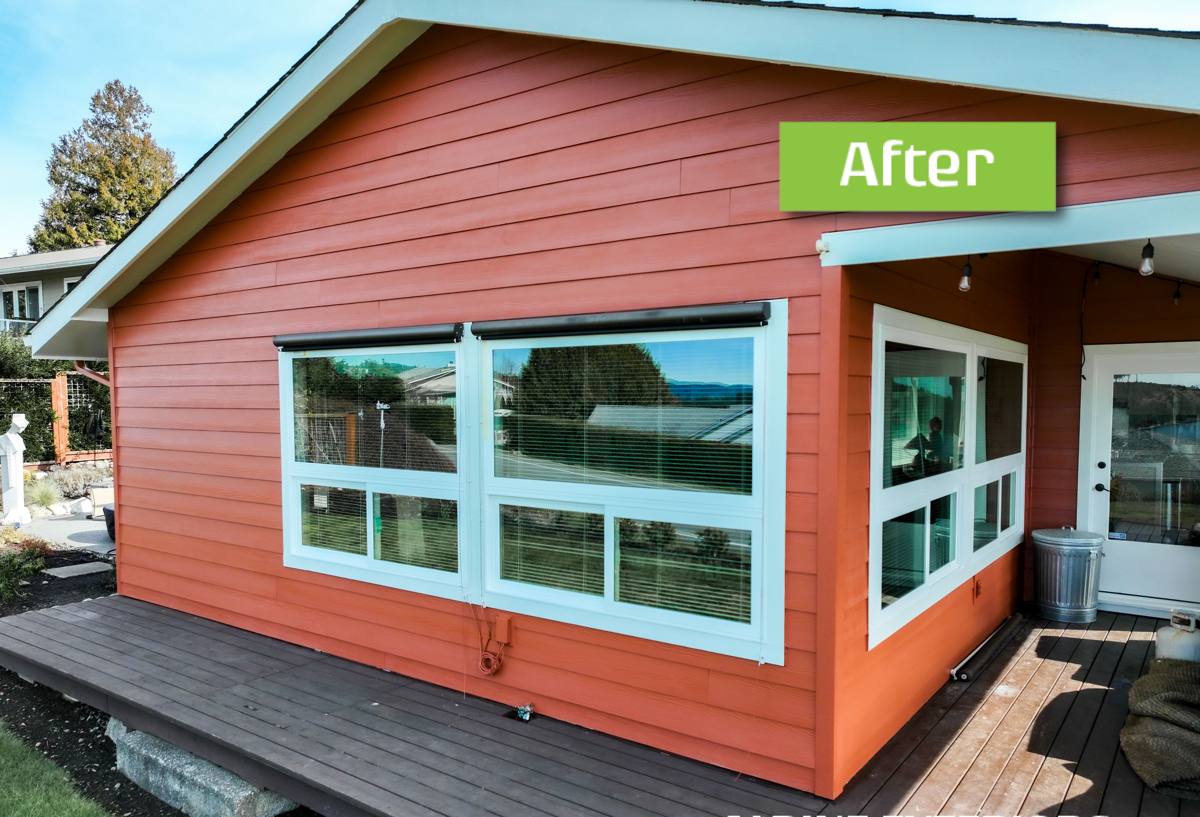
What This Climate Does to Windows Over Time
Wood-frame and aluminum windows installed decades ago in Sudden Valley are often still functional, but functional isn't the same as efficient. Here's what we typically find during an assessment:
- Seal failure: the sealed gas layer between double-pane glass breaks down, letting in moisture that shows up as permanent fogging or cloudiness between the panes.
- Frame and sill rot: shaded, slow-drying wood surfaces hold moisture longer, which accelerates rot at the sill and lower frame corners — the first place we check.
- Hardware corrosion: latches, cranks, and balances corrode faster in persistent damp conditions, especially on older aluminum units.
- Moss and algae staining: shaded horizontal surfaces — sills, exterior trim, mullions — collect organic growth during the long moss season, which holds moisture against the frame even longer.
- Caulk and sealant failure: driving rain finds any gap in old or improperly applied sealant, which is often the real source of a "drafty window" complaint rather than the glass itself.
None of this is unique to Sudden Valley, but the combination of shade and moisture makes it show up sooner and more consistently than it does on a more exposed lot elsewhere in Ferndale.
What "Energy-Efficient" Actually Means
The term gets used loosely, so it's worth being specific about what actually matters for a home in this part of Whatcom County. Every legitimate window carries an NFRC (National Fenestration Rating Council) label with a few key numbers:
U-Factor
This measures how much heat the window lets escape — lower is better. Our climate is heating-dominated for most of the year, so U-factor is usually the single most important number for a Sudden Valley home. A lower U-factor means your furnace or heat pump works less to hold indoor temperature through a long, wet winter.
Solar Heat Gain Coefficient (SHGC)
This measures how much solar heat passes through the glass. On a shaded, tree-covered lot, you're not fighting summer overheating the way a south-facing, open lot might be, so we typically don't push SHGC as hard here — the priority stays on heat retention.
Low-E Coatings and Gas Fills
A low-emissivity (Low-E) coating is a microscopically thin layer that reflects heat back into the room without noticeably darkening the glass. Combined with an argon gas fill between panes, it meaningfully improves the U-factor at a modest cost difference over standard double-pane glass. For most Sudden Valley homes, Low-E argon-filled double-pane glass hits the right balance of performance and cost.
Frame Material: The Choice That Matters Most in a Wet, Shaded Setting
Glass technology gets most of the marketing attention, but frame material is often the bigger long-term decision for a shaded lake-area lot. Here's how the common options compare for this specific environment:
| Frame Material | Moisture Resistance | Maintenance | Relative Cost |
|---|---|---|---|
| Vinyl | Excellent — will not rot or corrode | Low; occasional cleaning | $ |
| Fiberglass | Excellent — very stable in wet, shaded conditions | Low | $$ |
| Wood-clad (wood interior, clad exterior) | Good on the exterior; interior wood still needs protection from condensation | Moderate; interior finish maintenance | $$$ |
| Bare wood | Poor in continuous shade and moisture without diligent upkeep | High | $$ - $$$ |
We don't install bare wood frames on shaded Sudden Valley lots as a matter of standard practice. It's not that wood is a bad material — it's that a continuously damp, low-sun environment is the hardest possible setting for exposed wood to hold up in over the long run, and the maintenance burden it creates isn't something we want to hand a homeowner without a clear heads-up. Vinyl and fiberglass simply remove that ongoing maintenance variable entirely.
The Installation Details That Actually Determine Performance
A high-performance window installed poorly will underperform a mid-grade window installed correctly — this is the single most important thing to understand about window replacement in a driving-rain climate. Most of the "efficiency" a homeowner is paying for gets determined by what happens during install, not by the product label.
What we pay close attention to on every Sudden Valley job:
- Sill pans: a sloped, sealed pan under the window directs any water that does get past the frame back outside instead of into the wall cavity.
- Flashing sequencing: flashing tape and building paper have to be layered correctly — shingle-style, top over bottom — so water sheds outward at every layer, not just at the surface.
- Integration with the existing weather barrier: the new window has to tie into the house wrap or building paper already on the wall, not just get caulked at the edges.
- Sealant selection and placement: the wrong sealant, or sealant in the wrong location, can actually trap moisture inside the wall instead of keeping it out.
- Proper shimming and leveling: an out-of-square install stresses the frame, which accelerates seal failure and makes the sash harder to operate over time.
This is also where hiring a crew that already works this specific area pays off. A contractor who understands driving rain patterns and shaded, slow-drying wall assemblies builds in more margin than one applying a generic install process to a lot with a very particular set of conditions.
Our Process for a Sudden Valley Window Replacement
- On-site assessment. We check the existing frames, sills, and surrounding trim for rot, moisture intrusion, and hardware condition before recommending anything.
- Measurement and product review. We measure each opening precisely and walk through frame material, glass package, and grille or trim options based on your home's exposure and your budget.
- Scheduling around access. Wooded, sloped lots common in Sudden Valley sometimes need extra planning for staging materials and protecting landscaping — we account for that up front rather than discovering it on install day.
- Removal and inspection. When we pull the old window, we inspect the rough opening for hidden rot or moisture damage before anything new goes in.
- Installation with proper flashing and sealing. Sill pan, flashing sequence, insulation, and sealant are done to manufacturer specification, not shortcuts.
- Cleanup and walkthrough. We haul away the old units and debris and walk you through operation and care before we consider the job finished.
Trees, Shade, and Community Guidelines
A couple of things come up often enough in Sudden Valley that they're worth mentioning directly. First, many homes here fall under a community or homeowners' association with its own guidelines on exterior changes — if that applies to your property, it's worth checking those guidelines before work begins so window color, trim, or grille pattern doesn't need to be revisited later. Second, mature tree cover on many lots means careful staging: protecting root zones and landscaping, and sometimes adjusting the work schedule around limited truck or ladder access. We'd rather plan for these details ahead of time than treat them as surprises mid-project.
Signs Your Current Windows Are Already Costing You Money
Not every homeowner needs a full-home window replacement right away. These are the signs worth acting on:
- Visible fogging or cloudiness trapped between the panes of glass
- Noticeable draft or cold spot near the window even with it fully closed
- Frames or sashes that have swollen, are difficult to open, or won't latch cleanly
- Soft, discolored, or spongy wood at the sill or lower frame corners
- Moss, algae, or persistent black staining building up on sills or trim
- A heating bill that seems high relative to the size and age of the home
- Condensation forming on the inside of the glass regularly during colder months
Any one of these on its own might just mean a repair or a resealing job. Several of them together, especially on original windows, usually means replacement is the more cost-effective long-term move.
Get a Straight Answer for Your Home
Every Sudden Valley home is shaded and exposed to moisture a little differently depending on tree cover, lake proximity, and orientation, so a real recommendation has to start with a look at your actual windows, not a one-size-fits-all pitch. If you'd like an honest read on where your home stands and what it would take to fix it, request a free, no-pressure estimate using the form below.