 Ferndale Siding
 Window Installation Built for Sudden Valley's Site Conditions
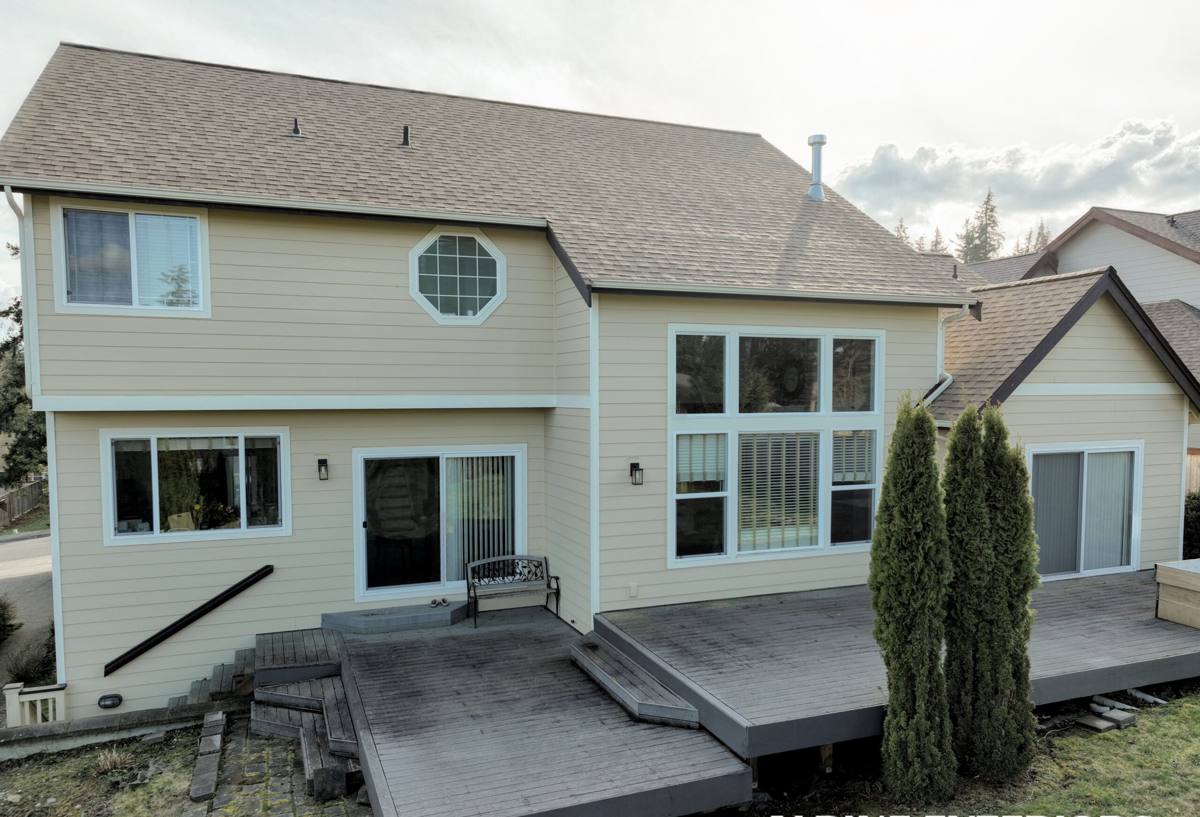
Sudden Valley sits in a different microclimate than a lot of the neighborhoods we work in around Whatcom County. Homes here are typically set among mature trees near Lake Whatcom, which means more shade, more standing humidity around the building envelope, and a slower dry-out time after rain than you'd get on an open, sun-exposed lot. Combine that with the driving rain and salt-tinged marine air that move through this part of Washington off the Strait of Georgia, and you get a set of conditions that are genuinely tough on window systems over time.
None of that means Sudden Valley homes need exotic products. It means the installation details — flashing, sealing, drainage, and material choice — have to be done right the first time, because a shaded, tree-covered lot doesn't give a poorly sealed window much chance to dry out between storms.
What This Climate Does to Windows Over Time
Whatcom County's wet season isn't just occasional rain — it's weeks of sustained moisture, often blown sideways against the west and south faces of a house. On a shaded lot like many in Sudden Valley, that moisture lingers. Wood trim stays damp longer. Moss and algae get a foothold on sills, tracks, and nearby siding. Over years, this shows up as:
- Soft or discolored wood framing around older wood windows, especially at the bottom corners of the sill
- Fogging or moisture between panes on aging double-pane units, meaning the seal has failed
- Sticking sashes or hardware that's stiffened from swelling and repeated wet-dry cycles
- Moss or dark streaking on sills and exterior trim that keeps coming back no matter how often it's cleaned
- Drafts or a noticeable temperature difference near the window on windy, rainy days
Any one of these can usually be lived with for a while. Together, they're a sign the window and its surrounding flashing are no longer keeping water out the way they should — and in a shaded, wet microclimate like this one, that problem tends to accelerate rather than plateau.
What a Correct Installation Actually Involves
Window installation quality is decided almost entirely by what happens before the new window ever goes in the opening. The window itself is a commodity product; the installation is where a job either holds up through twenty Whatcom County winters or starts leaking in three.
The details that matter most in a high-moisture setting
- Sill pan flashing — a sloped, sealed pan under the window opening that directs any water that gets past the window itself back outside, instead of into the wall cavity
- Proper flashing sequencing — house wrap, flashing tape, and window flanges layered so water sheds downward and outward, shingle-style, at every layer
- Correct sealant, not excess sealant — a bead of caulk is not a substitute for proper flashing; over-sealing can trap moisture inside the wall instead of keeping it out
- Weep holes kept clear — drainage paths in the window frame need to stay open, especially on shaded units where debris and moss spores settle and don't get washed away by direct sun and rain the way they would on an open lot
- Shimming and squaring — a window that isn't plumb and square won't seal or operate correctly no matter how good the flashing is
Skipping any one of these doesn't usually cause an immediate problem. It causes a problem in year four or five, hidden inside the wall where you can't see it until there's rot, mold, or a sagging sill. That's the real cost of a rushed installation — it's paid later, and it's paid in framing repair, not just a window.
Choosing a Frame Material for a Shaded, Wet Lot
There's no single "best" window material for every house, but on shaded lots with heavy moisture exposure, some tradeoffs matter more than others.
| Frame Material | How It Handles This Climate | Maintenance |
|---|---|---|
| Vinyl | Won't rot or corrode; performs well in sustained damp shade | Low — occasional cleaning of tracks and weep holes |
| Fiberglass | Very stable in temperature swings, resists warping in prolonged wet-dry cycling | Low — durable finish, minimal upkeep |
| Wood (unclad) | Attractive but vulnerable in shaded, moss-prone conditions without diligent upkeep | High — regular painting/sealing, especially on shaded elevations |
| Wood-clad | Wood interior with a protective exterior shell; better moisture resistance than bare wood | Moderate — interior wood still needs normal indoor care |
We're not going to tell you unclad wood windows are a bad product — plenty of homeowners love the look and are willing to keep up with the maintenance. But on a shaded Sudden Valley lot where sills stay damp longer, we'll be straight with you about what that upkeep commitment actually looks like before you commit to it, so there are no surprises two years in.
Our Installation Process
- On-site assessment — we look at each opening individually, not just the house as a whole. Shaded, north- or west-facing openings often need extra attention to flashing and drainage.
- Removal and opening inspection — once the old window is out, we check the framing, sill, and sheathing for hidden moisture damage before anything new goes in. This is often where we find problems the homeowner never knew about.
- Repair framing if needed — soft or damaged wood gets addressed before the new window is installed, not covered over.
- Sill pan and flashing installation — built to shed water outward at every layer, sequenced correctly with the house wrap.
- Window set, shimmed, and squared — checked for level and proper operation before final fastening.
- Insulation and air sealing — the gap between the window frame and the rough opening is insulated and sealed correctly, not overpacked or left open.
- Interior and exterior trim — finished to match the home, with attention to how the trim itself will shed water going forward.
- Final walkthrough — operation, locks, and seals checked with you before we consider the job done.
What Affects the Cost of a Window Installation
| Factor | Why It Matters |
|---|---|
| Number and size of openings | Larger openings and more windows mean more material and labor |
| Frame material chosen | Vinyl, fiberglass, and wood-clad options carry different material costs |
| Condition of existing framing | Hidden rot or moisture damage found during removal adds repair time |
| Access and site conditions | Tree cover, elevation changes, and tight side yards common on wooded lots can affect setup time |
| Full-frame vs. insert replacement | Full-frame replacement (down to the studs) costs more but is often the right call when flashing or framing has failed |
We give straightforward, written estimates and explain the reasoning behind them — including when a cheaper insert replacement is genuinely fine, and when it isn't.
Signs It's Time to Replace, Not Repair
- Fogging between the panes that doesn't clear — the seal is gone and can't be restored
- Soft wood at the sill or bottom corners of the frame when you press on it
- Windows that won't stay open, lock properly, or seat tightly when closed
- Visible daylight or a draft around the frame on a windy day
- Recurring moss or dark staining on the sill that returns within weeks of cleaning
- Noticeably higher heating bills with no other explanation
A single one of these might just need a repair or a re-seal. Several together, especially on a shaded elevation, usually mean the window has reached the end of its useful life and repair would just be delaying the inevitable.
Why Local Experience in Sudden Valley Matters
A crew that regularly works Sudden Valley and the surrounding Whatcom County communities knows what to expect before the first window comes out — which elevations of a wooded, lakeside lot tend to hold moisture longest, how shaded sills behave differently than sun-exposed ones, and what the region's driving rain and marine air do to flashing and sealant over a few winters. That's not something you get from a crew passing through on a one-off job. It shows up in fewer surprises during removal, better material choices for your specific lot, and an installation that's set up to handle another twenty years of Pacific Northwest weather rather than just the next dry season.
If your windows in Sudden Valley are showing their age — or you just want an honest read on whether repair or replacement makes more sense for your home — we're happy to come take a look. Reach out for a free, no-pressure estimate using the form below.