 Ferndale Siding
 Decks Built for How Sumas Actually Weathers
A deck in Sumas earns its keep differently than a deck in a dry climate. It isn't the occasional hard freeze that wears a deck down here — it's the steady grind of wet weather stacked up over months at a time. Rain that never quite stops, humidity that lingers under the structure, and moss that finds a foothold on anything that stays damp long enough. A deck built without that reality in mind will look fine for a season or two and then start showing problems: soft spots, slick moss growth on the boards, corroding fasteners, and framing that stays wet long after the surface has dried.
We build decks in Ferndale and throughout Whatcom County, and the jobs in Sumas get the same attention to drainage, ventilation, and material choice as everywhere else we work. The goal isn't just a deck that looks good on installation day — it's a deck that's still solid and safe ten or fifteen years from now, after a lot of wet winters have had their chance at it.
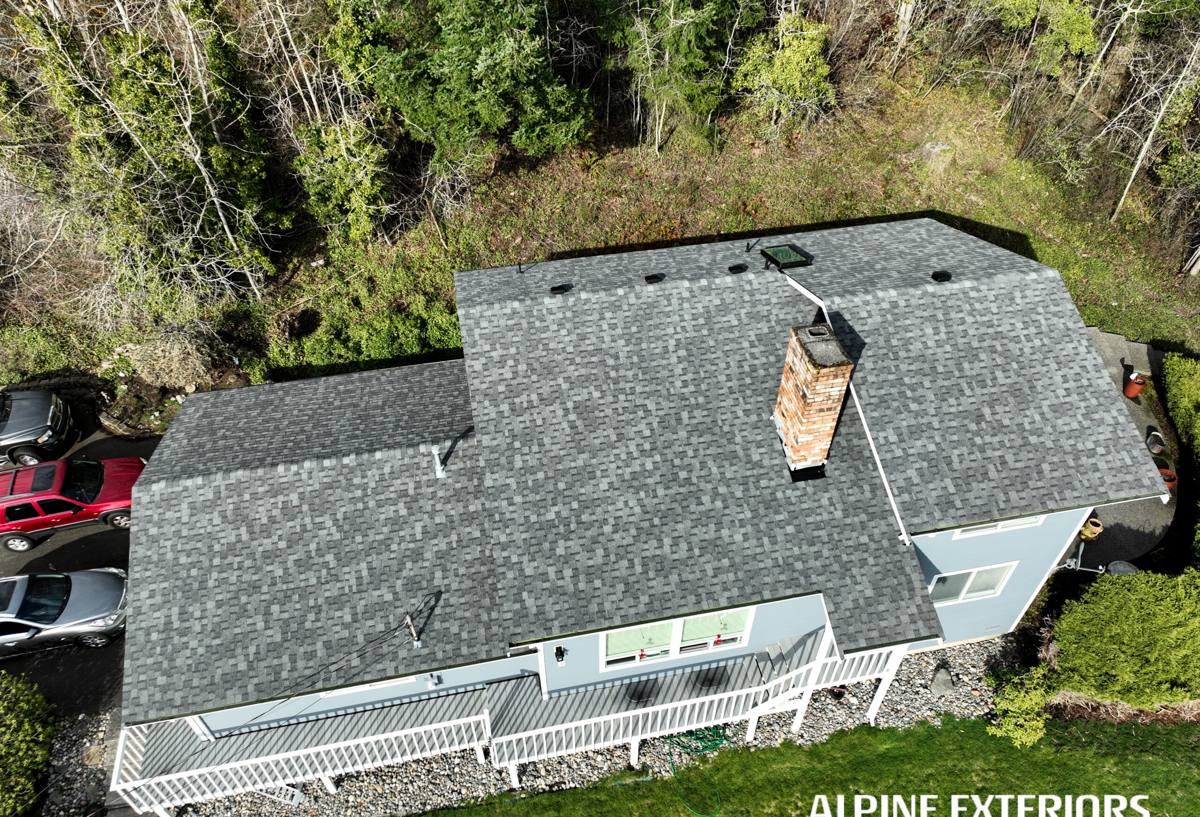
What Whatcom County Weather Does to a Deck Over Time
Understanding the failure points helps explain why we build the way we do. In this region, decks don't usually fail because of one big storm — they fail slowly, in places you can't see until the damage is already done.
Moisture that doesn't dry out
A long moss season means extended stretches where surfaces stay damp. On a deck, that moisture doesn't just sit on top — it works into ledger boards, joist hangers, and any spot where two pieces of wood meet without a gap for airflow. Wood that stays wet for weeks at a time is wood that eventually rots, no matter how good it looked when it was installed.
Moss and algae on walking surfaces
Moss doesn't just look bad — it holds moisture against the decking and turns stairs and walking surfaces slick and genuinely dangerous underfoot. Decking with poor drainage or too little gap between boards gives moss exactly the damp, shaded conditions it needs to take hold.
Corrosion in fasteners and hardware
Driving rain and persistent damp air accelerate corrosion in screws, nails, and structural hardware that isn't rated for the exposure. Once a fastener starts to fail, it's often hidden under decking or siding, so the first sign of trouble is a board that's come loose or a railing that's gone wobbly.
Ground contact and footing movement
Saturated soil around footings, especially through a long wet season, can shift over time if footings weren't set deep enough or drainage around the base wasn't handled correctly. This shows up as a deck that's developed a slight lean or a step that's no longer level.
Choosing the Right Decking Material for a Wet Climate
There's no single "best" decking material — there's a best material for your budget, your maintenance appetite, and how the deck will actually be used. Here's how the common options stack up specifically against Whatcom County's wet, moss-prone conditions.
| Material | Upfront Cost | Maintenance in This Climate | How It Handles Moisture |
|---|---|---|---|
| Pressure-treated wood | Lowest | Needs re-sealing every 1-2 years; regular moss/algae cleaning | Good when properly sealed and ventilated; vulnerable if maintenance lapses |
| Cedar | Mid-range | Regular sealing or staining to preserve color and prevent graying/moss | Naturally rot-resistant but still needs attention in constant damp |
| Composite decking | Highest upfront | Occasional washing; no sealing or staining required | Doesn't absorb moisture or rot, though surface can still get slick with moss if not cleaned |
We're upfront with clients about the trade-offs. Pressure-treated wood is the most affordable way to get a solid deck, but it only holds up if someone actually keeps up with sealing and cleaning. Cedar looks better longer with the same commitment to maintenance. Composite costs more to install but removes most of the ongoing upkeep — a real consideration if you don't want moss scrubbing and re-staining on your yearly to-do list. None of these are wrong choices; they're just different bets on cost now versus maintenance later.
Framing and Structural Details That Actually Matter Here
The decking surface is what you see, but the framing underneath is what determines whether the deck survives a decade of Whatcom County winters. A few details we treat as non-negotiable:
- Ledger board flashing — where the deck attaches to the house needs proper flashing so water is directed away from the house structure, not funneled behind the ledger where it can rot both the deck framing and the home's wall assembly.
- Joist tape or capping — protecting the tops of joists from standing water extends framing life significantly, especially under decking that traps moisture between boards.
- Corrosion-resistant fasteners and hardware — hangers, screws, and structural connectors rated for exterior, high-moisture exposure, matched correctly to the decking and framing material being used.
- Proper board spacing — enough gap between boards for water to shed and air to move, which also slows moss growth on the walking surface.
- Footings set to local frost and soil requirements — depth and placement that account for how the ground around here behaves when it's saturated for long stretches.
- Under-deck ventilation — clearance and airflow beneath the structure so the framing has a chance to dry out between rain events instead of staying damp indefinitely.
Our Deck Building Process
1. On-site assessment
We look at the site itself — grade, drainage, sun and shade exposure, how the deck will tie into the house — before talking materials or layout. A deck design that ignores drainage patterns on the lot is starting off on the wrong foot.
2. Material and layout conversation
We walk through the honest trade-offs between wood and composite options for your budget and how much upkeep you actually want to take on, and design the layout and railing to fit how you'll use the space.
3. Permitting
Most new decks and many significant deck rebuilds require a permit. We handle that process rather than leaving it for the homeowner to sort out, and we build to the structural requirements that inspection will check.
4. Construction
Footings, framing, flashing, decking, and railing — built in that order, with the moisture-management details above treated as standard, not upgrades.
5. Final walkthrough
We go over the finished deck with you, including what maintenance it needs and roughly how often, so there are no surprises about upkeep after we've left.
Permits and Building Code in Whatcom County
Deck construction is governed by local building code, and that code exists largely because of exactly the failure modes described above — undersized footings, missing flashing, and hardware that isn't rated for exterior exposure. Requirements typically cover footing depth and spacing, railing height and baluster spacing for safety, ledger attachment methods, and load capacity for stairs and guardrails. We pull the required permits and build to code as a baseline, not something we cut corners on to save time. An inspected, code-compliant deck also tends to matter later if you ever sell the home.
Deck Maintenance: What Ownership Actually Looks Like Here
Every deck material needs some maintenance in this climate — the difference is how much and how often. Here's a realistic seasonal checklist for keeping a deck sound through Whatcom County's wet stretches:
- Clear leaves and debris from between boards and off the surface before wet weather sets in, so they don't trap moisture through the winter.
- Wash off moss and algae buildup at least once a year, more often on shaded or north-facing decks.
- Check and re-seal or re-stain wood decking on the schedule appropriate to that product — skipping this is the single biggest cause of premature wood deck failure.
- Inspect fasteners, railing connections, and stair stringers annually for looseness or corrosion.
- Confirm gaps between boards haven't closed up from swelling, which blocks drainage and speeds up moss growth.
- Look underneath the deck occasionally for standing water, soft framing, or signs of pests that thrive in damp wood.
Why Hire a Crew That Already Works in Sumas
A deck contractor who mostly works drier climates can still build something structurally sound, but they won't always default to the details that matter here — the flashing, the ventilation, the fastener grade, the footing depth for consistently wet soil. We work throughout Ferndale and Whatcom County, and the moisture-management approach we use on a Sumas deck is the same one we've refined on siding, decks, and other exterior work across the region for years. That means fewer surprises during the permit and inspection process, and a deck built to actually handle the long moss season rather than just survive its first dry summer.
Get a Straightforward Estimate
If you're weighing whether to repair an aging deck or build new, or you just want a straight answer on materials and cost for your property, we're glad to take a look and walk you through the options. There's no pressure and no obligation — just a clear estimate based on what your deck actually needs. Use the form below to request a free estimate.