 Ferndale Siding
 Deck Repair Built for Sumas's Wet, Mossy Climate
A deck in Sumas doesn't fail the same way a deck in a dry climate does. Out here, the damage is usually slow and hidden — water working its way into end grain, moss holding moisture against boards for months at a stretch, and framing that stays damp long after a storm has passed through the rest of Whatcom County. By the time a board feels soft underfoot or a rail wiggles more than it should, the problem has usually been building for a year or two.
We work on decks throughout the Ferndale area, including Sumas, and the repair calls we get here follow a pattern: driving rain that gets pushed sideways into ledger boards and stair stringers, and a moss season that runs long in the shaded, low-lying parts of the county. A repair that doesn't account for that pattern tends to fail again within a couple of seasons. One that does can add many years of safe use to a deck that still has good bones.
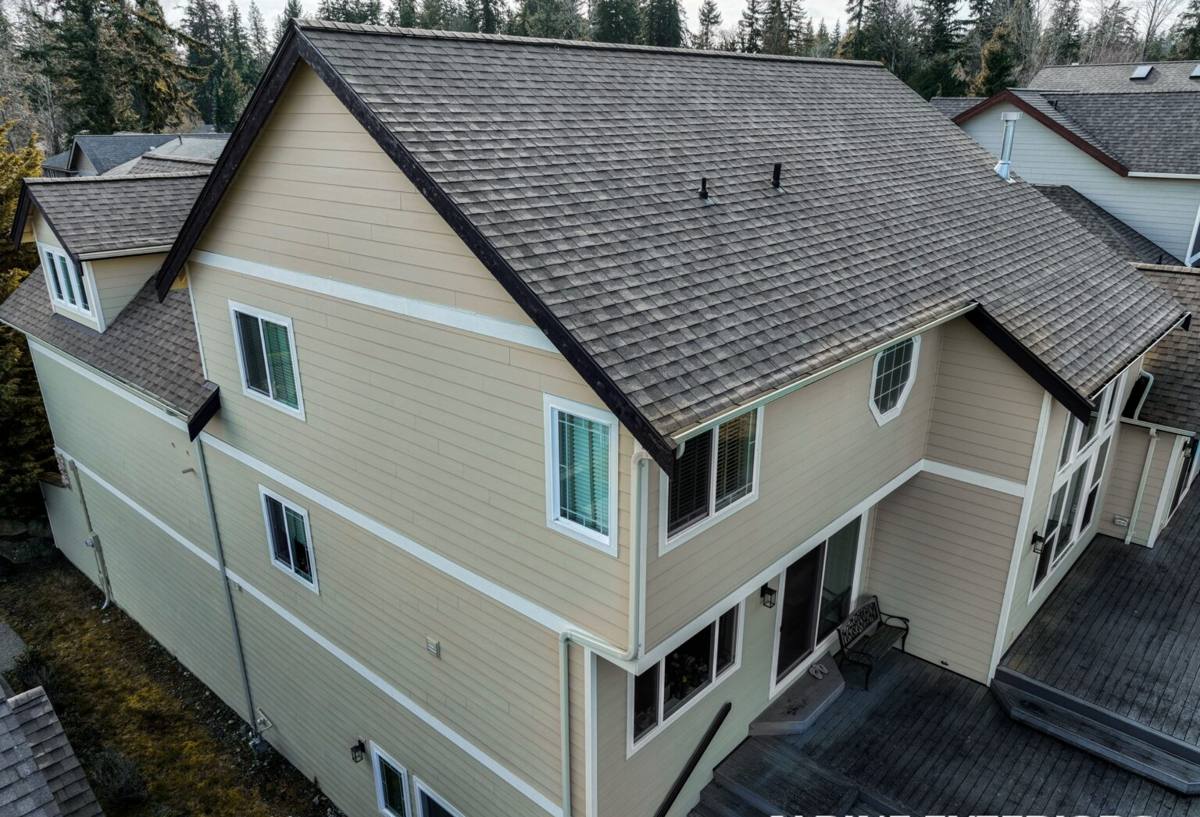
Signs Your Sumas Deck Needs Repair
Most decks don't need to be torn out and rebuilt. They need the failed parts identified and fixed correctly, while the sound structure is left alone. Here's what we look for on an inspection, and what homeowners can check themselves before calling anyone:
- Soft, spongy, or spring-back decking boards, especially near the house or in shaded corners
- Green or black staining that doesn't wash off — a sign moss or algae has been sitting there a while
- Gaps, rust streaks, or popped fastener heads around nails and screws
- Any wobble in the railing when you push on it firmly
- Stair stringers that flex or feel uneven step to step
- Visible daylight or a hairline gap where the deck ledger board meets the house
- Standing water or slow drainage after a rain, rather than water sheeting off
- Any post that feels loose at its base or shows soft wood at ground contact
If you're seeing two or more of these, it's worth having someone look at the framing underneath, not just the surface boards. Surface problems are cheap to fix. Framing problems that get ignored are what turn a repair into a rebuild.
What's Actually Failing: The Common Culprits
Moisture that never fully dries
A deck in full sun sheds water and dries between storms. A deck under trees, next to a fence line, or facing the prevailing weather doesn't get that break. In Sumas's setting, tucked into the valley with plenty of tree cover and long stretches of overcast, damp weather, some decks simply don't get enough sun and airflow to dry out between rains. That's not a design flaw — it just means those decks need more attentive maintenance and more moisture-tolerant materials at ground level and along the ledger.
Moss and organic buildup
Moss isn't just cosmetic. It holds water directly against the wood fibers, keeps the surface from drying, and its root structure works into the wood grain over time. Left alone through a full moss season, it accelerates rot in exactly the spots that already get the least sun — usually the north side of the house or under overhangs.
Fastener and connector failure
Older decks were often built with standard galvanized nails or hardware that wasn't rated for constant wet-dry cycling. Over years of driving rain and damp winters, those fasteners corrode, lose grip, or react badly with modern treated lumber chemicals. A board that looks fine can still be barely attached.
Ledger board and flashing problems
The ledger board — where the deck attaches to the house — is the single most common point of structural failure we find. If it wasn't flashed correctly when built, or if the flashing has failed over time, water tracks behind the siding and into the rim joist. This is a safety issue, not just a cosmetic one, since the ledger carries a significant share of the deck's total load.
Our Deck Repair Process
We treat every deck repair as a diagnosis first, repair second. Here's how a typical job runs:
- Inspection. We check decking, framing, ledger attachment, posts, footings, stairs, and railings — not just the areas you called about, since related problems often hide nearby.
- Probe testing. We use an awl or screwdriver to probe suspect wood. Sound wood resists; rotted wood gives way. This tells us the real extent of damage, not just what's visible.
- Written scope. You get a clear explanation of what's structural, what's cosmetic, and what we recommend fixing now versus monitoring.
- Repair. We replace only what's failed — boards, joists, posts, ledger sections, or hardware — matched to the existing structure where possible, and upgraded to corrosion-resistant fasteners and proper flashing where the original build fell short.
- Final check. We test railings, stairs, and connections under real load before calling the job done.
Repair or Replace? What Actually Drives the Decision
Homeowners often assume any rot means a full rebuild. That's rarely true. The decision usually comes down to how much of the structural frame — as opposed to the surface decking — is affected.
| Factor | Leans Toward Repair | Leans Toward Replacement |
|---|---|---|
| Decking boards | Isolated soft or damaged boards | Widespread rot across most of the surface |
| Framing (joists, beams) | One or two sections affected | Rot at multiple structural connections |
| Ledger board | Flashing issue caught early | Long-term water intrusion into the rim joist |
| Posts and footings | Surface deterioration, sound core | Soft wood at ground contact or shifted footings |
| Age of the deck | Under 15–20 years, built to code | Older deck, outdated hardware or span sizing |
| Railings and stairs | Loose but structurally sound connections | Rot in stringers or undersized/non-compliant railing |
We'll always tell you honestly which side of that line your deck falls on. A repair that's done right — with attention to drainage, fasteners, and moisture sources — can extend a deck's life by many years without the cost of a full rebuild.
Decking Material Matters for a Lasting Repair
Wood decking
Pressure-treated lumber is still the most common decking material we work on, and it repairs well when you match species and treatment level correctly. The key in this climate is making sure cut ends and fastener holes get re-sealed, since factory treatment doesn't penetrate wood that's cut or drilled after the fact — a step that's easy to skip and one of the most common reasons repaired sections fail again within a couple of years.
Composite and PVC decking
Composite boards don't rot the way wood does, but they aren't maintenance-free either. We see composite decking with hidden fastener systems that have failed, boards that have expanded or contracted improperly at butt joints, and moisture that's collected underneath where airflow was blocked. Repairing composite decking correctly means understanding the specific manufacturer's fastening and spacing requirements — mixing systems or improvising hardware is where most composite repairs go wrong.
Our standard on materials
We repair with materials matched to what's already on your deck whenever that makes sense structurally, and we're upfront when a mismatched repair — say, patching wood decking with a different species or treatment class — would create an uneven wear pattern or a moisture trap down the line. Our goal is a repair that ages evenly with the rest of the structure, not one that stands out or fails first.
Railings, Stairs, and Code Compliance
Railings and stairs are where deck age shows up as a safety issue, not just a wear issue. Older decks in the area were sometimes built to standards that have since been tightened — baluster spacing, railing height, and stair stringer sizing among them. When we repair a railing or stair system, we check it against current code requirements, not just against how it was originally built. If a repair is a good opportunity to bring a railing up to a safer spacing or a sturdier post connection, we'll flag that as an option rather than just patching around an outdated design.
Why a Local Whatcom County Crew Matters for Sumas Homes
Deck repair is one of those jobs where local experience shows up directly in the outcome. A crew that works decks across Ferndale and the surrounding Whatcom County area has already seen how driving rain finds its way into ledger boards, how long moss season actually runs in the shaded, low-sun spots typical of this area, and which fastener and flashing choices hold up here versus a drier climate where those same products are rated for.
That local pattern recognition means less guesswork on your job. We're not learning the region's moisture behavior on your deck — we already know where to look first, and we're a short drive away if a question comes up after the work is done.
After the Repair: Keeping Moss and Rot From Coming Back
A good repair buys you time, but a little seasonal upkeep buys you a lot more of it. Here's what actually makes a difference in this climate:
- Sweep leaves and debris off the deck surface regularly through fall, especially in shaded corners
- Treat visible moss growth early in the season before it establishes, rather than waiting until it's thick
- Keep gutters and downspouts clear so runoff isn't draining directly onto or under the deck
- Check the ledger board and flashing area once a year for gaps, cracking caulk, or staining
- Re-seal cut ends and fastener holes any time new lumber is added
- Trim back overhanging branches and nearby shrubs to improve airflow and sun exposure where possible
None of this prevents every problem, but it slows the moisture cycle down significantly — and that's really what deck longevity in Whatcom County comes down to.
If your deck has soft spots, a wobbly railing, or you just haven't had it looked at in a few years, we're happy to come take a look. Estimates are free, there's no pressure to do more work than what's actually needed, and you'll get a straight answer about what's structural and what can wait — just fill out the form below to get started.