 Ferndale Siding
 Siding Installation for Sumas Homes, Done by a Ferndale-Based Crew
Sumas sits at the edge of our regular service territory out of Ferndale, and it's a part of Whatcom County with its own personality — open farmland, close proximity to the border, and weather that swings between soggy lowland rain and sharp seasonal temperature shifts. Homes here take a real beating over the decades: salt-tinged marine air moves through the county on prevailing winds, driving rain finds every gap in a siding system, and a long, damp moss season coats anything that holds moisture against a wall. Siding installation in this area isn't a cosmetic upgrade. It's the single biggest factor in whether a home's sheathing, framing, and insulation stay dry for the next 30 years.
We install siding in Sumas the same way we install it everywhere in our service area — to one standard, using one product line, done by people who already know what this climate does to a wall assembly.
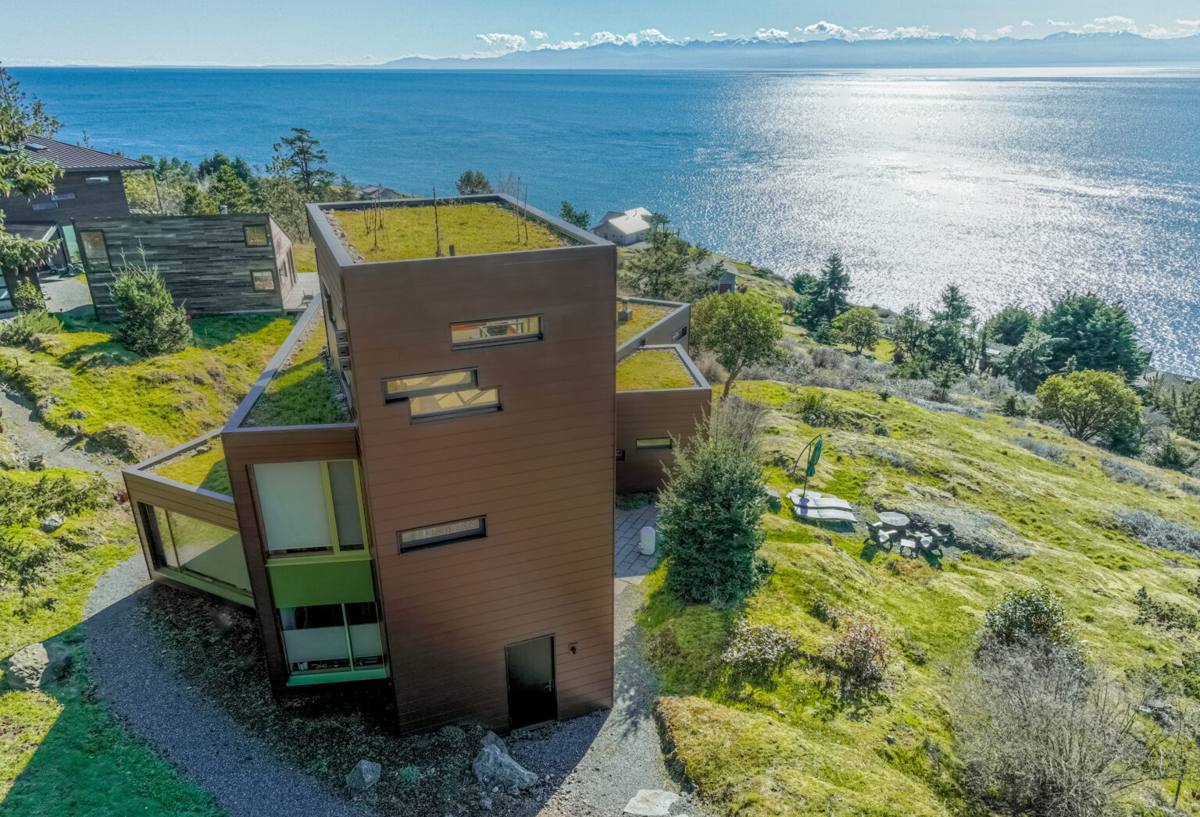
What Sumas' Climate Actually Does to Siding
It helps to be specific about what "tough climate" means here, because the failure modes are predictable if you've seen enough of them.
Driving Rain
Whatcom County doesn't just get a lot of rain — it gets a lot of wind-driven rain, which behaves very differently than a straight-down drizzle. Wind-driven rain gets pushed sideways and upward under laps, around trim, and into any seam that isn't properly flashed or lapped. A siding system that isn't detailed for driving rain will eventually let water past the surface layer, and once water is behind the cladding, the damage happens where you can't see it until it's expensive.
Salt-Influenced Marine Air
The marine air that moves through this part of Washington carries moisture and trace salt that accelerates corrosion on fasteners, staples, and any exposed metal flashing. Over years, that slow corrosion is one of the quiet reasons older siding systems start failing at the fastener line long before the panel itself wears out.
A Long Moss Season
Shaded walls, north-facing elevations, and anything near mature trees or overhangs stay damp for extended stretches of the year. Moss and algae don't just look bad — they hold moisture against the siding surface, and on materials that aren't dimensionally stable or properly sealed, that sustained moisture is what starts rot, delamination, or paint failure.
What a Correct Siding Installation Involves
A siding job that's built for this climate isn't just "nail panels to the wall." The details underneath and around the visible surface are what determine whether the job lasts.
- Weather-resistive barrier installed continuously and lapped correctly, with all penetrations sealed
- A drainage gap (rainscreen) behind the siding so any incidental moisture that gets past the cladding can drain and dry instead of sitting against the sheathing
- Flashing at every horizontal transition — window and door heads, trim boards, roof-to-wall intersections, and butt joints — so water is directed out, not trapped in
- Correct fastener type, spacing, and penetration depth, matched to the product manufacturer's specification, not a generic nailing pattern
- Proper clearance between the bottom of the siding and grade, decks, or roof lines, so splash-back and standing moisture don't sit against the material
- Factory-finished, sealed cut edges wherever a panel is trimmed on site, so the cut edge isn't left absorbing moisture
Skip any one of these and the siding can still look fine for a few years. The problems that show up from skipping them tend to surface five, ten, or fifteen years later — after the workmanship warranty (if there was one) has expired.
Why We Only Install James Hardie Fiber Cement
We standardized on James Hardie fiber cement siding, and we don't install vinyl, LP SmartSide, Cemplank, Allura, or bare cedar and spruce products. That's a deliberate professional decision, not a sales preference, and it matters even more in a climate like Sumas'.
Fiber cement is non-combustible, dimensionally stable, and doesn't absorb and swell with moisture the way engineered wood products can if a seam or cut edge gets compromised. James Hardie's ColorPlus factory finish is baked on under controlled conditions, which holds color and resists the fading and chalking that field-applied paint deals with after a few Pacific Northwest winters. Hardie also builds region-specific HZ (HardieZone) product formulations engineered for the moisture and temperature patterns of different climate zones — which is directly relevant in a county where damp, mossy shade and open, wind-exposed farmland can exist a few miles apart.
None of this means every other product is unusable — vinyl and engineered wood siding both have legitimate uses and reasonable installations elsewhere. We simply won't put our name on installations of products whose long-term moisture behavior, maintenance burden, or warranty structure we're not willing to stand behind in this specific climate. Hardie is the product we're confident recommending without a caveat.
Siding Material Comparison for Whatcom County Conditions
| Factor | James Hardie Fiber Cement | Vinyl Siding | Engineered Wood (LP-type) |
|---|---|---|---|
| Moisture/rot resistance | Non-combustible, doesn't rot; stable in wet climates | Doesn't rot, but can warp/buckle with heat and impact | Vulnerable at cut edges and compromised seams if moisture gets in |
| Finish durability | Factory-baked ColorPlus finish, long color retention | Color molded through, but fades/chalks over time | Field-applied paint/primer wears and needs recoating |
| Fire resistance | Non-combustible material | Combustible, can melt/deform near heat | Combustible |
| Maintenance | Occasional wash; repaint only if desired, not required | Low, but cracks/fades are not repairable, only replaceable | Requires ongoing caulk/paint maintenance at seams |
| Typical lifespan when installed to spec | Multiple decades, long transferable warranty | 20–40 years, but appearance degrades sooner | Shorter effective life if moisture management fails |
The pattern across all three factors — moisture, finish, and maintenance — is the same: fiber cement holds up better specifically in the wet, moss-prone, wind-driven conditions that define this part of Whatcom County.
How Our Sumas Siding Installation Process Works
1. On-Site Assessment
We walk the home, check existing siding and sheathing condition, note moisture-prone elevations (typically north-facing or shaded walls), and identify any rot or water damage that needs to be addressed before new siding goes on — new siding over a compromised wall assembly just hides the problem.
2. Tear-Off and Wall Prep
Old siding comes off, sheathing is inspected and repaired as needed, and a continuous weather-resistive barrier is installed with a drainage gap behind the new cladding.
3. Flashing and Trim
Windows, doors, and all horizontal transitions get flashed before any siding goes up around them. This is the step that gets rushed on low-bid jobs and is the one most responsible for long-term leaks when it's skipped.
4. Installation to Manufacturer Spec
James Hardie panels and boards go up using the fastening pattern, clearances, and joint treatment specified by the manufacturer for this climate zone.
5. Final Walkthrough
We review the finished job with the homeowner, including care and maintenance guidance specific to a marine, moss-heavy climate.
What to Expect From (and Ask) Any Contractor Installing Siding on a Sumas Home
- Do they explain the drainage gap and flashing details, or just talk about the visible panel?
- Do they specify which James Hardie product line and finish is being used, and why it fits this climate zone?
- Do they address existing moisture or rot damage before covering it with new siding?
- Is the workmanship warranty separate from the manufacturer's material warranty, and is it in writing?
- Do they have experience with this specific area's weather exposure, not just siding in general?
Why a Crew That Already Works This Area Matters
Siding installation isn't one-size-fits-all across Whatcom County. A wall assembly detailed for a drier, more sheltered site doesn't automatically perform the same way on a property exposed to open wind and driving rain, or on a shaded elevation that stays damp through moss season. A crew that already works in and around Ferndale and out toward Sumas has seen how local homes actually fail — which elevations take the worst weather, where moss builds up fastest, and which details matter most for a wall assembly to hold up here rather than in a generic climate spec sheet. That local pattern recognition, combined with installing one product system to one consistent standard, is what keeps a siding job performing for decades instead of just looking good for a few years.
If you're planning a siding project on a Sumas-area home, we're happy to take a look, walk you through what your specific home needs, and put together a free, no-pressure estimate using the form below.