 Ferndale Siding
 Why Bellingham Decks Fail Sooner Than You'd Expect
Bellingham sits close enough to Bellingham Bay and the Salish Sea that salt-laden air reaches yards well inland, and it sits squarely in a stretch of Whatcom County that sees long stretches of driving rain from fall through spring. Add in the shade from mature Pacific Northwest trees and the moss season that follows, and you have a climate that's tough on outdoor wood structures in ways a lot of homeowners don't fully clock until their deck is already failing. It's not one big storm that does the damage — it's months of low-grade moisture exposure, freeze-thaw cycling in the colder snaps, and organic growth that holds water against wood and fasteners longer than it should.
A deck built without that reality in mind — undersized flashing, the wrong fastener metal, decking laid without enough airflow underneath — will show problems years before a deck built for this specific climate. That's the gap we work to close on every Bellingham deck replacement: not just swapping old boards for new ones, but rebuilding the whole system so it actually holds up here.
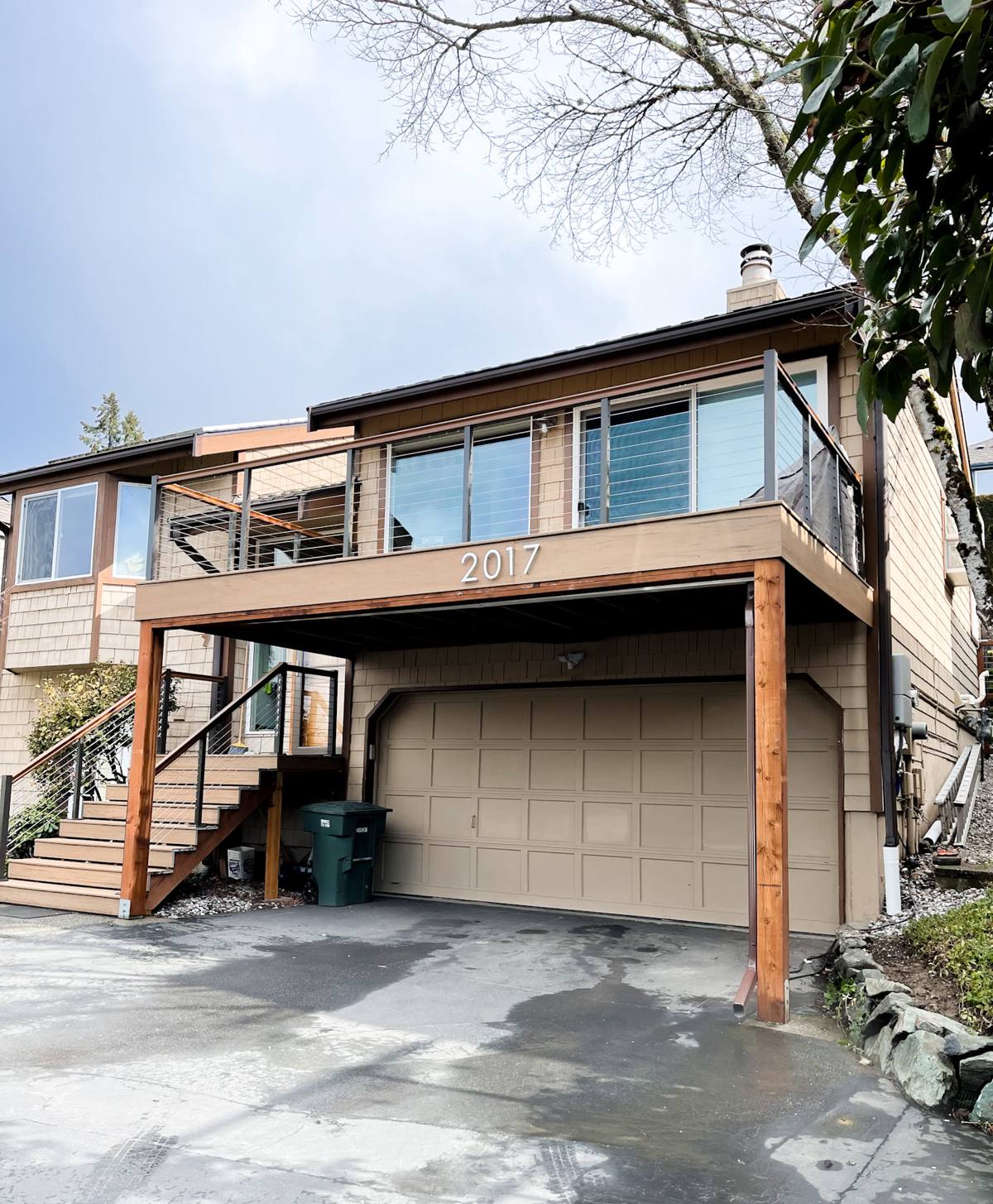
Signs a Bellingham Deck Needs Replacement, Not Repair
Not every tired deck needs a full replacement. But in this climate, certain signs tell you repair is just delaying the inevitable:
- Soft or spongy spots in the decking, especially near the house or in shaded corners where moss and debris collect
- Rust streaking or crumbling around fasteners and joist hangers
- Gaps or soft wood at the ledger board where the deck meets the house — a common moisture entry point
- Visible sag between joists, or a deck surface that feels bouncy when you walk it
- Persistent moss or algae growth that keeps coming back no matter how often it's cleaned
- Posts or footings that have shifted, cracked, or show rot at the base
If it's just a handful of surface boards showing wear and the structure underneath is sound, repair can make sense. Once the framing, ledger connection, or footings are compromised, patching individual boards just buys a little time before the same failure shows up somewhere else.
What a Correct Deck Replacement Actually Involves
A deck replacement done right is mostly about what you can't see once it's finished. The decking boards get the attention, but the framing, flashing, and fasteners underneath are what determine whether the deck lasts five years or twenty-five in this climate.
Ledger Attachment and Flashing
The ledger board — where the deck attaches to the house — is the single most common failure point on older decks in wet climates, because water that gets behind it has nowhere to go and rots the house's rim joist along with the deck framing. A correct replacement includes proper ledger flashing, integrated with the house's existing water-resistive barrier, plus structural fasteners rated for the load and for exterior exposure. This is also where we catch hidden rot in the house framing itself before it becomes a much bigger repair.
Framing and Footings
Joists, beams, and posts need to be sized correctly for the deck's span and use, and footings need to sit below frost depth and bear on undisturbed soil. In areas with poor drainage or heavy tree cover — common around Bellingham — we pay close attention to grading and footing placement so water doesn't pool against posts or under the deck long-term.
Fasteners and Hardware
Given the salt air off Bellingham Bay, we specify stainless steel or heavy hot-dip galvanized fasteners and connectors rather than standard coated hardware, which corrodes faster in coastal-influenced air. Cheap fasteners are one of the most common hidden causes of premature deck failure — they're inexpensive to buy but expensive to have failed inside a structure you can't easily inspect.
Choosing Decking Material for This Climate
There's no single "best" decking material for every homeowner — it depends on budget, how much upkeep you want to do, and how the deck is used. Here's how the common options actually perform under Whatcom County's rain and moss pressure:
| Material | Moisture & Moss Resistance | Maintenance | Typical Lifespan |
|---|---|---|---|
| Pressure-treated wood | Good if sealed regularly; prone to moss and graying without upkeep | Annual cleaning and re-sealing recommended | 10–15 years |
| Cedar | Naturally rot-resistant but still needs sealing in this rainfall | Sealing every 1–2 years, regular moss removal | 12–18 years |
| Capped composite | Excellent — sealed cap resists moisture absorption and moss staining | Occasional washing, no sealing needed | 25–30 years |
| Uncapped composite | Moderate — can absorb moisture at cut edges and fastener holes over time | Low, but edge sealing helps longevity | 15–20 years |
We install both quality wood and composite decking depending on what the homeowner wants, but for decks with heavy shade or limited airflow underneath — common in wooded Bellingham lots — we'll generally steer clients toward capped composite or well-sealed cedar, simply because the maintenance burden of uncapped or unsealed wood in those conditions is real and ongoing.
Our Deck Replacement Process
- On-site assessment — we inspect the existing deck, ledger connection, and any visible framing or foundation issues, and talk through material and layout options.
- Written estimate — a clear scope of work and price before anything is scheduled, so there are no surprises.
- Tear-off — full removal of the old deck, with a check of the house framing behind the ledger board once it's exposed.
- Framing and flashing — new or reinforced joists, beams, and posts as needed, correctly flashed ledger attachment, and footings set to code depth.
- Decking installation — boards, railing, and stairs installed with corrosion-resistant fasteners and proper spacing for drainage and airflow.
- Final walkthrough — we go over the finished deck with the homeowner, including any maintenance recommendations specific to the material chosen.
Permits and Code Considerations
Deck replacements involving structural changes — new footings, altered framing, or changes to railing height and guard spacing — typically require a permit and inspection through the local jurisdiction. Even when a deck is being rebuilt on the same footprint, code requirements for railings, stair geometry, and guard spacing have tightened over the years, so an older deck rebuilt "like for like" often needs to be brought up to current code. We handle the permit process as part of the job so homeowners aren't left navigating it alone.
Why Hire a Crew That Already Works Bellingham
A deck built for a dry climate and a deck built for Whatcom County are not the same structure, even if they look identical from the street. Crews who work this area regularly already know which details matter here — ledger flashing that accounts for driving rain, fastener specs that hold up to salt air, footing depth and drainage suited to local soil and rainfall, and decking choices that won't turn into a moss farm by year three. That local pattern recognition is what prevents the same failures from showing up again in five years.
It also means faster, more accurate estimates. When a crew has already seen how a particular lot's shade, slope, or exposure to weather off the Bay tends to affect deck longevity, they can flag problems — and solutions — during the first walkthrough instead of discovering them mid-project.
Keeping a New Deck Healthy Long-Term
A well-built deck still needs some basic upkeep to hit its full lifespan in this climate. A simple annual routine goes a long way:
- Clear leaves and debris from the deck surface and between boards before fall rains set in
- Rinse off moss and algae early, before it has a chance to stain or hold moisture against the boards
- Check that gaps between boards remain clear so water can drain and air can circulate underneath
- Inspect the ledger board area yearly for any signs of moisture intrusion or gaps in caulking/flashing
- Re-seal wood decking on the manufacturer's recommended schedule — don't wait until it's visibly gray
- Tighten or replace any fasteners showing early rust before they fail
What Affects the Cost of a Deck Replacement
Every deck is different, but the main cost drivers we see on Bellingham projects are consistent: total square footage, whether footings and framing need to be rebuilt or just the surface decking, material choice (wood versus composite), stairs and railing complexity, and site access for material delivery and debris removal. We give homeowners a real, itemized estimate rather than a rough per-square-foot number, because the framing condition underneath an old deck can vary a lot even between similar-looking houses.
If your deck is showing its age or you're just ready for something built to actually handle Bellingham's weather, we're happy to come take a look. The estimate is free, there's no pressure, and you'll walk away with a clear picture of what your deck needs and what it'll cost — just fill out the form below to get started.