 Ferndale Siding
 Windows Built for Where You Actually Live
Homes in and around Lummi Nation sit closer to the water and the weather than most of Whatcom County. That proximity is part of what makes the area special, but it's also why windows here fail faster than windows twenty minutes inland. Salt-laden air off Bellingham Bay and the Strait of Georgia corrodes hardware and etches glass coatings over time. Driving rain off the water finds every gap in old flashing. And the long, damp moss season that defines a Pacific Northwest fall through spring keeps wood trim and sills wet for weeks at a stretch. None of that is a reason to avoid good windows — it's a reason to install them correctly the first time.
This page covers window installation specifically for Lummi Nation homes: what the climate does to windows here, what a properly installed window looks like, and how we approach a job in this area differently than we would twenty minutes inland in a more sheltered part of the county.
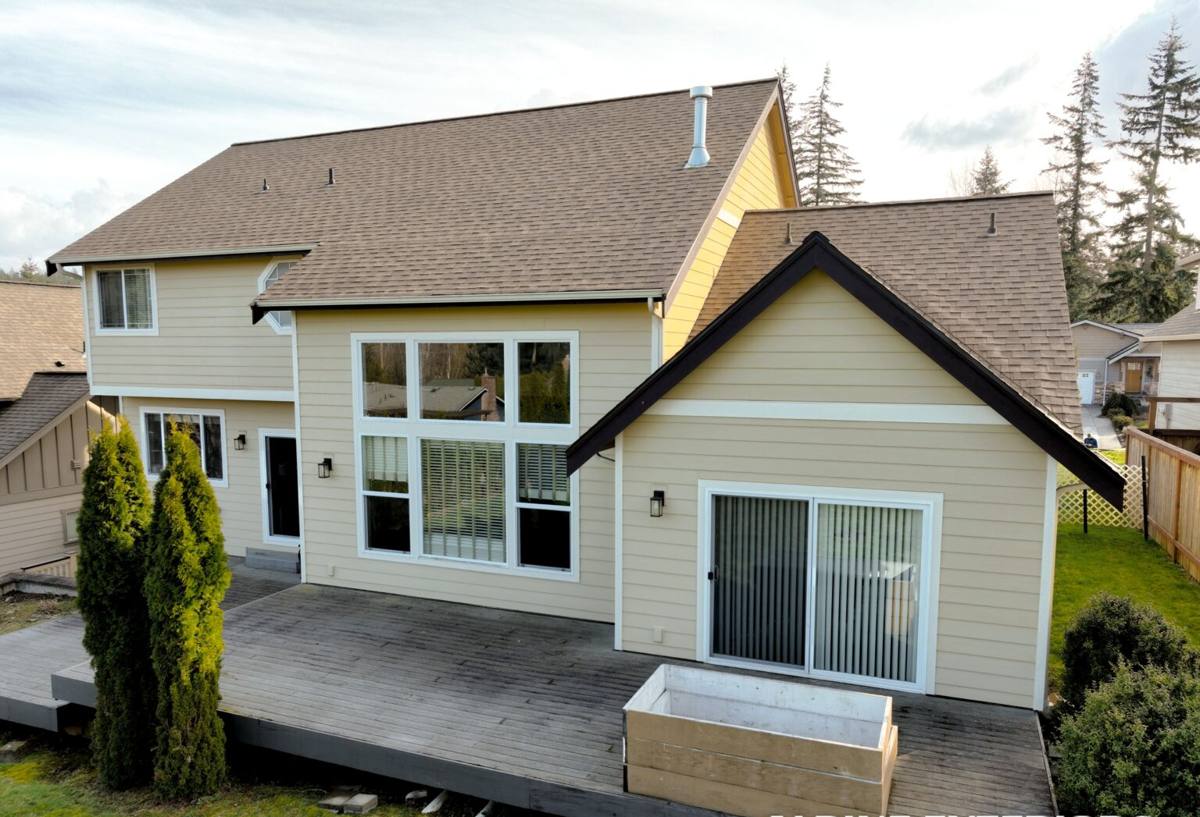
What Salt Air and Coastal Moisture Do to Aging Windows
If you've lived near the water for a while, you've probably already noticed some of this. It's worth naming plainly so you know what you're looking at when you walk your own house.
Hardware Corrosion
Window locks, hinges, and balance mechanisms are usually the first thing to go in a salt-air environment. Steel and lower-grade aluminum hardware pit and seize up well before the glass or frame shows any problem. A window that's hard to lock, hard to lift, or won't stay open on its own is often a hardware issue, not a full-window failure — but on an older unit, replacement hardware is frequently unavailable, which pushes the decision toward full replacement anyway.
Seal and Glass Failure
Modern insulated glass units rely on a sealed gap between panes filled with inert gas. Salt air and constant moisture cycling accelerate seal breakdown. Once that seal fails, you'll see fogging or a hazy film between the panes that no amount of cleaning will fix. It's a sign the insulating value of that window is largely gone, even if the frame still looks fine.
Wood Rot and Moss Staining
Whatcom County's moss season isn't just a roof problem. Moss and algae hold moisture against wood sills, trim, and cladding around windows for extended periods, especially on north- and west-facing walls that don't get much sun to dry out between rain events. Softened wood at the sill or the bottom corners of a window frame is one of the clearest signs that water has been getting in — often through failed caulking or flashing rather than through the window itself.
Choosing the Right Window Material for a Coastal-Adjacent Home
Material choice matters more here than in a sheltered inland neighborhood. We walk every homeowner through the real trade-offs rather than pushing one product line.
| Material | Salt Air / Moisture Performance | Maintenance | Typical Investment Tier |
|---|---|---|---|
| Vinyl | Good — won't rust or rot; UV-stable formulations hold up well near the water | Low; occasional cleaning | Budget to mid-range |
| Fiberglass | Excellent — dimensionally stable, resists corrosion and moisture-driven warping | Low | Mid to premium |
| Aluminum | Fair to poor unless marine-grade and properly coated; standard aluminum corrodes and conducts cold | Moderate; coatings need upkeep | Mid-range |
| Wood / Wood-clad | Requires diligent maintenance to prevent rot in this climate; exterior cladding helps but isn't a substitute for upkeep | High | Premium |
Our default recommendation for homes in this area is vinyl or fiberglass, because both shrug off the salt-air and moisture exposure without demanding ongoing homeowner maintenance. Wood-framed or wood-clad windows can still be the right call for a specific look or a historic home, but we tell every homeowner up front what the upkeep commitment looks like — that's a maintenance-burden conversation, not a knock on the product.
What a Correct Installation Actually Involves
Most window failures we get called out to fix aren't failures of the window itself — they're failures of the installation around it. In a high-moisture, salt-exposed area, the installation details matter more than the brand name on the window.
Sill Pan Flashing
Every rough opening should get a sloped sill pan that directs any water intrusion back outside the wall assembly rather than letting it sit against the framing. This is a step that's easy to skip and impossible to see once the window is in — which is exactly why it's the step most often skipped by installers working fast.
Weather-Resistive Barrier Integration
The window's flashing needs to tie into the house's weather-resistive barrier in the correct shingle-lap order — barrier, then side flashing, then head flashing over the top — so water sheds down and out instead of behind the siding. Get this sequence wrong and you can trap water inside the wall, where it won't show up as a visible leak for months or years.
Sealant Selection and Placement
Not every gap should be caulked. A weep path at the sill needs to stay open so any water that does get past the outer defenses can drain back out. Sealing that path shut to make the job "look clean" is one of the more common mistakes we find on older installs, and it's a direct cause of rot inside the wall.
Insulation and Air Sealing
The gap between the window frame and the rough opening needs low-expansion foam or backer rod and sealant — packed too tight, foam can bow the frame and cause the sash to bind; left too loose, it's a draft and moisture path straight into the wall cavity.
Our Process, Start to Finish
- On-site assessment. We look at every window being replaced, plus the condition of the surrounding trim, sill, and siding, so nothing hidden gets covered up by a new window.
- Product selection. We walk through material, glass package, and grille options based on your home's exposure, orientation, and your budget — no pressure toward the most expensive option.
- Measure and order. Exact measurements are taken for each opening; older homes rarely have perfectly square or uniform openings, and we plan for that rather than forcing a standard size.
- Removal and opening inspection. Once the old window is out, we check the framing and sheathing underneath for hidden rot or moisture damage before anything new goes in.
- Flashing and sill pan installation. This is the step that determines whether the window stays dry for the next twenty years — done before the new window ever goes into the opening.
- Window installation and leveling. Set, shimmed, and fastened per manufacturer spec so the sash operates smoothly and the frame isn't under stress.
- Insulation, sealant, and exterior trim. Gaps are filled correctly, weep paths stay clear, and exterior trim is sealed and finished to match your home.
- Final walkthrough. We test operation, check the seal, and walk you through anything you should know about the new windows before we leave.
Common Problems We Find on Older Installations
When we're called out to a Lummi Nation home for a window issue, a handful of patterns show up again and again:
- Caulk used as the only defense against water intrusion, with no flashing behind it
- Weep holes sealed shut, trapping water at the sill
- Foam insulation packed so tight it bowed the frame and jammed the sash
- Undersized or missing head flashing, letting wind-driven rain track behind the trim
- Original builder-grade hardware that corroded within a few years of installation
Every one of these is preventable with correct technique at install time — none of them require exotic materials, just attention to the parts of the job you don't see once the trim goes back on.
Why Local Experience in This Area Matters
A window installer who mostly works sheltered, inland neighborhoods is going to approach a Lummi Nation home the same way they'd approach any other job — and that's exactly how avoidable problems get built into a house. Crews who work this area regularly know to spec heavier weather-resistive barrier integration, choose hardware and finishes that hold up to salt exposure, and expect wood trim and sills to need more attention during moss season than the same details would inland.
There's also a practical side to working in this community: homes here can fall under different permitting and inspection processes depending on whether a project sits under Lummi Nation, Whatcom County, or City of Ferndale jurisdiction. We take the time upfront to understand which applies to your project so there are no surprises partway through the job.
Energy Efficiency and Comfort Payoff
Beyond stopping water intrusion, correctly installed, properly sealed windows make a real difference in comfort and heating costs through a Whatcom County winter. Failed seals and gapped installations let cold, damp air infiltrate right where you sit — near the window — which is often what people describe as a "draft" even when the window itself is closed and locked. A tight, well-flashed installation with a good glass package cuts that infiltration, reduces condensation on the interior glass on cold mornings, and takes pressure off your heating system during the wettest, coldest stretch of the year.
Maintenance Checklist for Homeowners in This Area
Once new windows are in, a little seasonal attention keeps them performing for decades. This is especially worth doing before and after the wet season:
- Clear moss and organic debris away from sills and trim before it holds moisture against the wood or frame
- Check that exterior caulking around trim is intact and not cracked or pulling away
- Confirm weep holes at the sill are clear and not blocked by dirt, moss, or paint
- Operate each window through a full open-close cycle a couple times a year so hardware doesn't seize
- Wipe down hardware and tracks periodically to slow salt-air corrosion
- Watch for any fogging between panes, which signals a failed seal worth addressing before it worsens
Ready to Talk About Your Windows?
If your windows are original to the house, showing wood rot at the sill, fogging between the panes, or just hard to operate, it's worth a look before another wet season goes by. We offer free, no-pressure estimates for Lummi Nation homeowners — we'll assess what's actually going on, explain your options honestly, and give you a straightforward quote with no obligation. Reach out using the form below to get started.