 Ferndale Siding
 Why Bellingham Roofs Take a Different Kind of Beating
Homes in and around Bellingham deal with a roofing climate that's harder on materials than most of the country ever sees. Whatcom County sits close enough to the water that salt-laden air works its way into fasteners, flashing, and metal drip edges year-round. Add driving rain that comes in sideways during winter storms, and a moss season that can run from early fall through late spring in shaded, moisture-heavy conditions, and you've got a roof that's rarely given a break. A repair that would hold up fine in a drier inland climate can fail here in a single wet season if it isn't done with this specific environment in mind.
That's the difference between a generic patch job and a repair that actually lasts in this part of Washington. We're not guessing at how a roof will hold up under these conditions — we see the same failure patterns on Bellingham-area homes repeatedly, and we build our repairs around them.
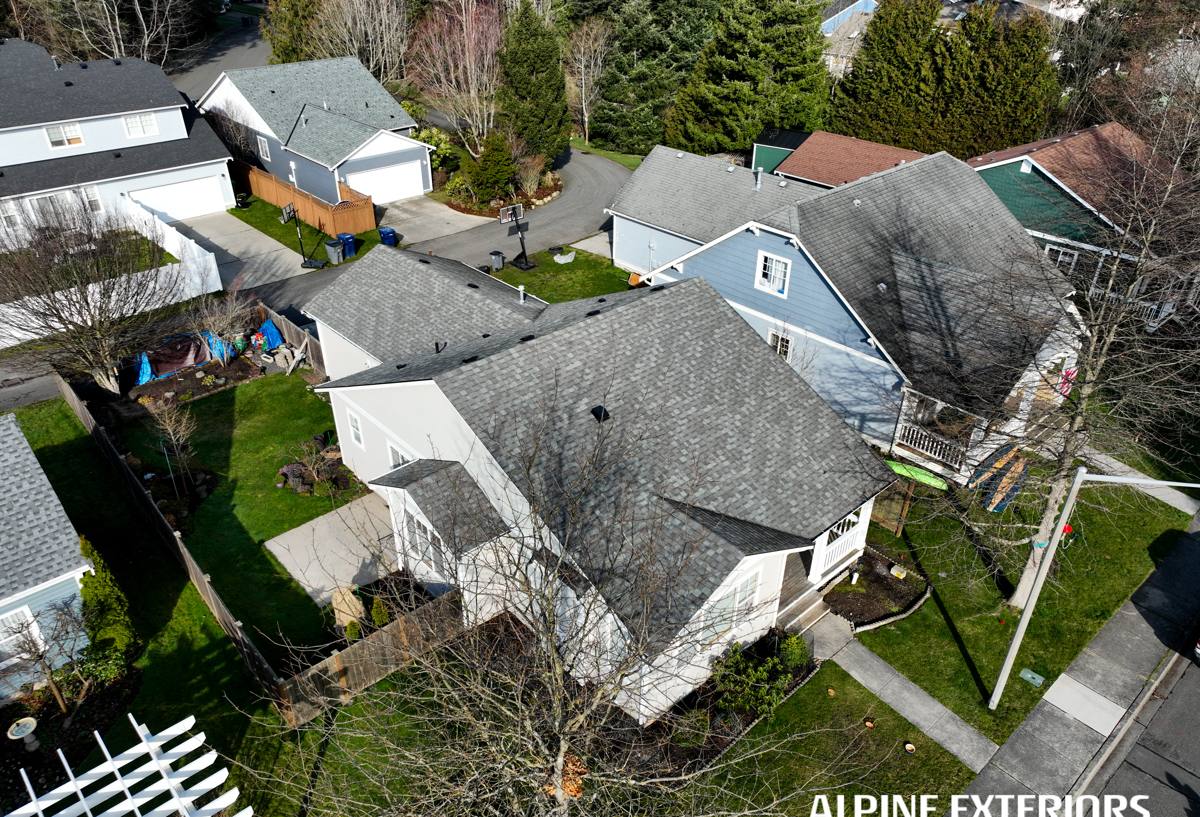
Signs Your Roof Needs Repair Before It Needs Replacement
Most roof problems don't start as emergencies. They start small, and catching them early is usually the difference between a modest repair bill and a full replacement. Walk your property periodically and look for the following:
- Granules collecting in gutters or at downspout outlets — a sign shingles are wearing down faster than they should
- Shingles that are curling, cupping, or lifting at the edges, especially on slopes that get direct rain exposure
- Thick moss mats holding visible moisture against the roof surface, particularly on north-facing or tree-shaded slopes
- Soft or spongy spots when the roof is walked, which usually points to decking that's already absorbing water
- Water stains, discoloration, or sagging on interior ceilings, especially after a heavy storm
- Rust streaks, gaps, or lifted edges around flashing at chimneys, skylights, and roof valleys
- Daylight visible through the roof deck when viewed from inside the attic
Any one of these on its own might just need a targeted repair. Several together, especially combined with an older roof, usually means it's time for a more honest conversation about remaining lifespan.
What a Correct Roof Repair Actually Involves
Finding the Real Cause, Not Just the Symptom
A leak that shows up on your ceiling in the dining room might have entered the roof ten feet away, following a rafter or running along the underlayment before finding a gap in the drywall. Patching the spot where water appears inside the house without tracing it back to the actual entry point is one of the most common reasons homeowners end up paying for the same repair twice. Every repair we do starts with figuring out where water is actually getting in, not just where it's showing up.
Matching Materials and Fastening Method
Shingles, underlayment, and flashing all age and weather over time, which means a repair section rarely matches new-off-the-shelf material in color or profile right away. More importantly, the repair needs to be installed with the same fastening pattern, nail placement, and overlap sequence as the surrounding roof so it sheds water the same way the rest of the system does. A repair that looks right but doesn't follow correct shingle course and nailing pattern can create a new weak point instead of fixing the old one.
Flashing, Valleys, and the Details That Actually Stop Leaks
Most roof leaks trace back to flashing and valleys rather than the field of the roof itself — the transitions where a roof meets a chimney, wall, skylight, or another roof plane. In a climate with as much driving rain as Bellingham sees, these details need to be sealed and layered correctly, with proper step flashing, counter-flashing, and valley metal, rather than relying on sealant alone to hold back water. Sealant has its place, but it's a supplement to correct flashing work, not a substitute for it.
Moss, Algae, and Whatcom County's Long Wet Season
Moss is more than a cosmetic issue on roofs in this part of Washington. Its root structure holds moisture directly against the shingle surface and can work its way under shingle edges, lifting them slightly over time and giving wind-driven rain an opening it wouldn't otherwise have. Shaded slopes, tree cover, and the extended damp stretch that runs through much of the fall, winter, and spring around Whatcom County all favor heavy moss growth, especially on north-facing sections of roof that never fully dry out between storms.
Algae staining is a related but separate issue — it's mostly cosmetic, showing up as dark streaks, but it indicates a roof surface that stays damp longer than it should. Removal matters, but the method matters just as much. Pressure washing a shingle roof can strip granules and shorten its life dramatically, which is its own kind of damage. Moss and debris should be cleared gently, with hand tools and controlled rinsing, and gutters and valleys kept clear so water actually has somewhere to go instead of pooling against a moss mat.
Common Roof Repair Calls We Get in Bellingham
The table below reflects the repair calls that come up most often on homes in and around Bellingham, along with what typically causes each one and how urgently it usually needs attention.
| Issue | Likely Cause | Typical Fix | Urgency |
|---|---|---|---|
| Active interior leak | Failed flashing, cracked pipe boot, or wind-lifted shingles | Trace and seal entry point, replace damaged shingles/flashing | High — schedule promptly |
| Moss mats on north slopes | Shade, moisture retention, long wet season | Gentle moss removal, gutter clearing, zinc/copper strip consideration | Moderate — address before it lifts shingles |
| Curling or brittle shingles | UV and weather cycling near end of shingle life | Spot replacement now, plan for replacement timeline | Moderate to high depending on age |
| Rusting or lifted flashing | Salt air corrosion, age, or original install shortcuts | Replace flashing sections, re-seal transitions | Moderate — worsens with each storm |
| Clogged or overflowing gutters | Moss, needle debris, undersized gutter for roof area | Clear, inspect fascia, correct pitch or size if needed | Moderate — can cause water intrusion at eaves |
Our Repair Process, Start to Finish
A repair should be predictable for the homeowner, not a mystery. Here's how we approach it:
- Inspection. We get on or above the roof (not just a look from the ground) to check the actual condition of shingles, flashing, decking, and ventilation.
- Diagnosis and explanation. We tell you what we found, what's causing it, and why — in plain terms, not sales language.
- Honest options. If a targeted repair makes sense, we say so. If the roof is close enough to the end of its life that repair is a short-term patch, we say that too.
- The repair itself. Matched materials, correct fastening and overlap, proper flashing detail — done to hold up through the next storm season, not just pass a quick visual check.
- Cleanup and debris removal. Nails, old shingle pieces, and moss debris don't get left in gutters or on the ground.
- Follow-up. We're straightforward about what to watch for afterward, especially heading into the wetter months.
Repair or Replace? How We Help You Decide
Not every roof problem needs a full replacement, and not every roof is worth continuing to repair. The honest answer depends on a handful of factors:
| Factor | Leans Toward Repair | Leans Toward Replacement |
|---|---|---|
| Roof age | Under roughly two-thirds of expected shingle lifespan | At or past expected lifespan for the material |
| Extent of damage | Isolated to one section, slope, or detail | Widespread across multiple slopes |
| Decking condition | Solid, no soft spots found during inspection | Soft, delaminated, or water-damaged in multiple areas |
| Leak history | First occurrence or isolated incident | Repeated leaks in different locations over time |
| Moss/algae extent | Manageable with cleaning and spot repair | Heavy, long-term growth that's already lifted shingles |
We'll walk through where your roof falls on each of these before recommending anything, and we won't push a full replacement when a repair is genuinely the right call.
Why Hiring a Crew That Already Works in Bellingham Matters
Roofing crews that work primarily in drier climates sometimes underestimate how much moisture management matters here. A repair approach that's perfectly fine in a low-rain region can leave gaps in a place where roofs deal with sustained wet weather, salt air, and heavy moss for a large part of the year. Working regularly on homes throughout Whatcom County, including Bellingham, means we're familiar with the roof pitches, tree cover, and exposure patterns common to the area, and we know which failure points to check first because we've seen them before on similar homes nearby. That familiarity shortens the diagnosis process and helps us avoid repair approaches that look fine on day one but don't hold up through a real Pacific Northwest winter.
Materials We Use and Why
We're selective about materials for roof repairs in this climate, and we'll explain our reasoning rather than just naming a brand. In valleys and along eaves, we favor a self-adhering ice-and-water membrane underneath the shingle or metal surface — these are the areas where wind-driven rain is most likely to force its way under a standard felt underlayment, and the extra membrane gives water a second line of defense. For shingles, we pay attention to algae-resistant granule options where it makes sense, since algae staining is a persistent issue in a climate this damp, though we're upfront that algae resistance affects appearance more than it affects structural performance. On flashing, we lean toward corrosion-resistant metals given the salt air exposure, since a flashing detail that rusts through in a few years just moves the leak problem down the road rather than solving it. None of this is about steering you toward the most expensive option — it's about matching material choices to what actually holds up in this specific environment, and being honest when a cheaper option carries a real maintenance trade-off.
If you're dealing with a leak, aging shingles, or moss buildup on a Bellingham-area roof, we're glad to take a look and give you a straightforward assessment. There's no pressure and no obligation — just a clear picture of what's going on and what it would take to fix it right. The form below is the fastest way to get a free estimate scheduled.