 Ferndale Siding
 Why Birch Bay's Waterfront Climate Is Hard on Siding
Birch Bay sits right on the water in Whatcom County, and that location comes with a specific set of stresses most siding products were never designed to handle. Salt-laden air moves off the water and settles on exterior surfaces every day, not just during storms. Add in wind-driven rain that hits siding at an angle instead of falling straight down, plus long stretches of overcast, damp weather that keep north- and water-facing walls shaded and wet for days at a time, and you have a climate that actively works against wood, foam-backed panels, and anything with seams that can trap moisture.
Homes here don't fail because the materials were installed carelessly. They fail because a lot of siding products are engineered for drier, calmer regions and simply weren't built for a coastal Pacific Northwest exposure. That's the starting point for every siding conversation we have with Birch Bay homeowners: what does this specific wall, on this specific home, actually face every year?
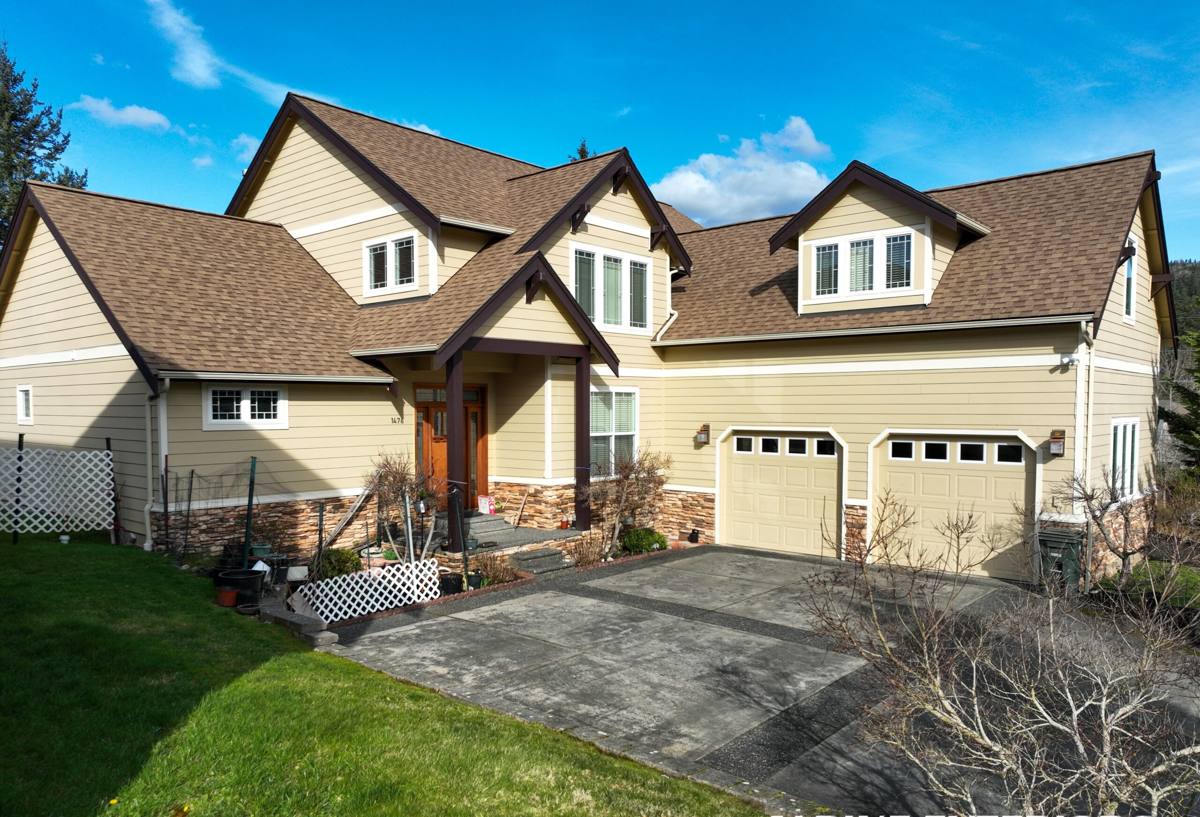
What Salt Air and Driving Rain Do to Common Siding Materials
Every siding material responds differently to salt exposure and sustained moisture. Understanding those differences is the difference between a siding job that lasts decades and one that needs attention again in five to seven years.
| Material | Response to Salt Air | Response to Driving Rain | Moss & Algae Behavior |
|---|---|---|---|
| Vinyl | Doesn't corrode, but UV and salt exposure can fade and chalk the surface faster near the water | Seams and J-channels can allow wind-driven rain behind the panel | Grows on the surface; no factory treatment to resist it |
| Cedar / Untreated Wood | Salt accelerates surface breakdown of the wood fibers | Absorbs moisture directly, prone to cupping, splitting, and rot at joints | Wood is an organic food source for moss and mildew |
| Engineered Wood (e.g. LP SmartSide) | Wood-strand core is more stable than solid wood but still wood-based | Edge and cut-end swelling if moisture reaches the substrate | Requires field-applied coatings to resist growth long-term |
| James Hardie Fiber Cement | Cement-based composition does not corrode or rust from salt exposure | Dense, engineered material resists moisture absorption into the panel itself | ColorPlus finish is formulated to resist fading and support easier cleaning |
None of this means the other materials are junk — cedar has real appeal, engineered wood has genuine strengths in the right application, and vinyl is inexpensive for a reason. But when we evaluate a product against Birch Bay's specific combination of salt, wind-driven rain, and moss pressure, fiber cement is the one that holds up with the least long-term maintenance and the least risk of moisture getting where it shouldn't.
Why We Only Install James Hardie Fiber Cement
We made a decision as a company to install James Hardie fiber cement siding exclusively — not LP SmartSide, not vinyl, not Cemplank, not Allura, not primed spruce or cedar. That's not a marketing position, it's a standard we hold ourselves to because of what we've seen coastal Whatcom County exposure do to homes over time.
Non-Combustible, Cement-Based Composition
Hardie siding is made primarily from sand, cement, and cellulose fibers. It doesn't rot, it doesn't provide food for insects, and it doesn't corrode from salt exposure the way metal fasteners or trim can if left unprotected. For a home sitting close to open water, that composition matters more than it does further inland.
Climate-Engineered HZ Product Lines
James Hardie manufactures HZ5 products specifically engineered for wetter, harsher climate zones, which includes coastal Pacific Northwest exposures like Birch Bay. The formulation and moisture-management engineering behind HZ5 is built for exactly the kind of sustained dampness and wind-driven rain this area sees every winter.
ColorPlus Factory Finish
Rather than relying on a field-applied paint job that has to fight UV, salt, and moisture from day one, ColorPlus finish is baked on in a controlled factory environment. That finish is engineered to resist fading and hold up against the elements longer than most site-applied paint systems, which matters on a home where repainting every few years isn't something most owners want to budget for.
A Strong, Transferable Warranty
Correctly installed Hardie siding carries a manufacturer warranty backed by a company with decades of fiber cement manufacturing behind it. That warranty is also transferable, which matters to buyers and sellers alike in a market like Birch Bay where waterfront and near-waterfront properties change hands.
What a Correct Fiber Cement Installation Actually Involves
Fiber cement is only as good as the installation behind it. A huge share of the siding problems we get called out to inspect on older homes trace back to installation shortcuts, not the product itself. In a salt-air, high-rain environment, those shortcuts show up faster.
Moisture Management Comes First
Before a single piece of siding goes up, the wall assembly needs a proper weather-resistive barrier, correctly lapped and taped seams, and flashing at every window, door, and penetration. Fiber cement panels are only one layer of a larger moisture-management system — if the layer behind the siding is wrong, the siding itself won't save the wall.
Clearances and Fastening
James Hardie publishes specific clearance requirements between siding and grade, roof lines, decks, and other horizontal surfaces where water can pool or splash back onto the panel. Fasteners need to be the correct type, corrosion-resistant, and driven to the manufacturer's specified depth and pattern — not just close enough. Butt joints need to be properly caulked or flashed, not left to rely on caulk alone as the only line of defense.
Trim, Caulking, and Paint-Grade Details
Where trim meets siding, and where siding meets windows and doors, is where wind-driven rain finds its way in if the detailing is sloppy. Getting these transitions right is slower and less forgiving than a straightforward wall run, which is exactly why it's worth getting right the first time.
Our Process for Birch Bay Siding Projects
Every home is different, but our approach on Birch Bay properties follows the same disciplined sequence because the stakes for getting it wrong near the water are higher.
- On-site assessment: We walk the exterior, check for existing moisture damage, evaluate wall orientation relative to prevailing wind and rain, and look at trim, flashing, and roofline details that affect siding performance.
- Tear-off and substrate inspection: Old siding comes off so we can inspect sheathing and framing underneath for rot or hidden moisture damage before it gets covered back up.
- Weather barrier and flashing correction: Any deficiencies in the water-resistive barrier or flashing get corrected before new siding goes on — not patched around.
- Hardie installation to manufacturer spec: Panels, fasteners, clearances, and joint treatment follow James Hardie's published installation requirements for the HZ5 zone.
- Trim, caulking, and final detailing: Transitions at windows, doors, corners, and rooflines get finished carefully, since these are the highest-risk points for wind-driven rain intrusion.
- Final walkthrough: We review the completed work with the homeowner and go over basic care so the siding performs the way it's designed to.
Moss Season and Long-Term Maintenance
Whatcom County's long wet season means moss and algae pressure on north-facing and shaded walls is a fact of life, not an occasional problem. Organic siding materials give moss and mildew something to feed on and take hold in. Fiber cement's cement-based composition doesn't offer that food source, and the ColorPlus finish is designed to make routine cleaning easier than it is on a field-painted surface, where aggressive cleaning can strip or damage the paint film itself.
That said, no exterior surface is maintenance-free in this climate. Homeowners should still expect to periodically rinse siding to keep moss and organic buildup from accumulating, especially on shaded elevations facing the water or tree cover. The difference with correctly installed Hardie siding is that this upkeep stays cosmetic — it doesn't turn into structural repair work the way it can with wood-based products that absorb the moisture moss and algae thrive in.
Simple Homeowner Checklist Between Professional Inspections
- Rinse shaded, north-facing, or water-facing walls periodically to limit moss and algae buildup
- Check caulking at trim, window, and door transitions annually for cracking or gaps
- Keep gutters and downspouts clear so water doesn't overflow onto siding below
- Watch for soft spots, staining, or discoloration near ground level, which can indicate splash-back moisture
- Trim back vegetation that keeps a wall section shaded and damp for extended periods
What Drives Cost on a Coastal Siding Project
Every Birch Bay quote is different, but the same factors tend to move the number up or down. We walk through these with homeowners before any work starts so there are no surprises.
| Cost Factor | Why It Matters |
|---|---|
| Home size and wall complexity | More square footage and more corners, gables, and dormers mean more cutting, fitting, and trim work |
| Tear-off vs. new construction | Removing and disposing of old siding, and repairing anything found underneath, adds labor beyond a straightforward install |
| Moisture or rot repair | Damaged sheathing or framing found during tear-off needs to be corrected before new siding goes on |
| Trim and accessory work | Corner boards, fascia, soffit, and window/door trim detailing add time relative to plain wall runs |
| Panel and color selection | Lap width, texture, and ColorPlus color options can shift material cost |
| Site access | Waterfront lots, tight setbacks, or limited equipment access can affect labor time |
Why a Crew That Already Works Birch Bay Makes a Difference
Coastal exposure isn't uniform even within Whatcom County — a wall facing open water deals with different wind-driven rain and salt exposure than a wall set back from the shoreline. A crew that has already worked on homes in this specific area has seen firsthand which elevations take the worst of it, how local moisture patterns behave through the wet season, and what clearance and flashing details actually hold up here versus on paper.
There's also a practical side to it: familiarity with local permitting expectations, typical lot layouts, and the logistics of working on tighter waterfront or near-waterfront properties. None of that replaces a correct installation, but it does mean fewer surprises and a smoother project from estimate to final walkthrough.
Get a Straight Answer for Your Home
If your siding is showing moss buildup, soft spots, fading, or you're simply planning ahead before the next wet season, we're happy to take a look and give you an honest assessment — no pressure, no obligation. Use the form below to request a free estimate, and we'll walk your home's specific exposure with you before recommending anything.