 Ferndale Siding
 Board & Batten Siding Built for Sandy Point's Waterfront Exposure
Sandy Point sits right up against the marine environment that defines this stretch of Whatcom County — salt-laden air off the water, driving rain that comes in sideways during winter storms, and a moss season that stretches for months in the shade of the trees many of these lots were built around. Board and batten siding has a strong, clean look that suits the coastal cottages and newer builds alike out here, but the look only holds up if the material and the installation are matched to what this specific location throws at a house year after year.
We install board and batten siding in Sandy Point using James Hardie fiber cement exclusively. That is not a marketing line — it is the actual standard we hold every job to, and this page explains what that means for a board and batten project on a Sandy Point home specifically.
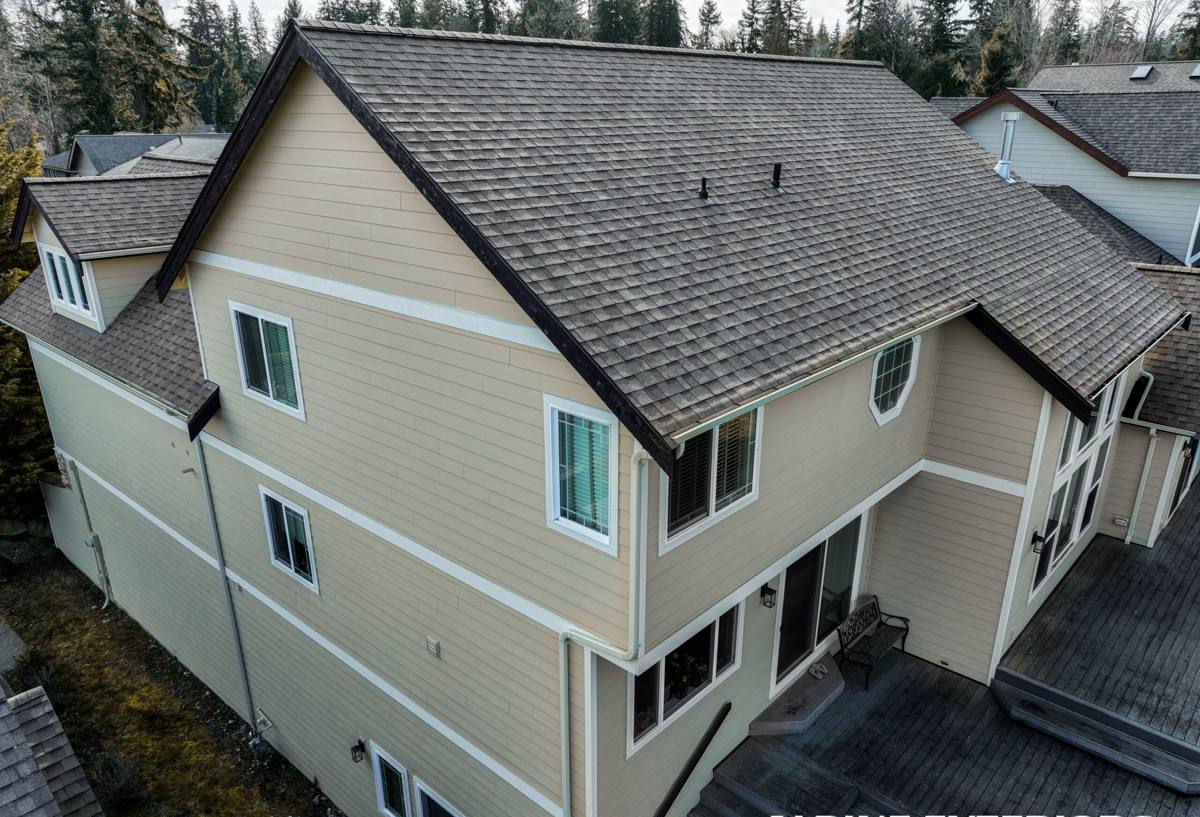
Why Sandy Point Is a Tougher Test for Vertical Siding
Board and batten is a vertical siding pattern — wide boards with narrower battens covering the seams. That vertical orientation is part of its appeal, but it also means water runs down the face of the wall in long, continuous sheets rather than shedding off horizontal laps in shorter runs. On a waterfront lot exposed to wind-driven rain, that vertical water path puts real pressure on the seams, the fastener lines, and especially the bottom edge near grade.
Add in the salt air common to homes near the water in this part of Whatcom County, and you get a second problem: salt accelerates corrosion on fasteners and metal flashing, and it degrades cheaper coatings faster than inland exposure ever would. A board and batten job that would hold up fine twenty minutes inland can fail years early out here if the wrong materials or shortcuts were used.
What This Means in Practice
- Fastener corrosion shows up first at the battens and trim, where thinner material and tighter fastening patterns are used
- Moss and algae growth accelerates on north- and shade-facing walls, especially under tree canopy common on wooded Sandy Point lots
- Wind-driven rain finds any gap in flashing or caulking at window and door transitions far faster on an exposed wall than a sheltered one
- Cheap or improperly sealed board and batten butt joints become the first failure point within a few winters
Why We Only Install James Hardie for This Application
Board and batten is available in vinyl, engineered wood, and fiber cement, and we've made a deliberate choice to install only James Hardie fiber cement — including for this pattern. Vinyl board and batten profiles exist, but vinyl expands and contracts significantly with temperature swings, and that movement is more visible and more failure-prone in a long vertical board than in a short horizontal lap. Engineered wood products carry warranty language and moisture-exposure requirements that don't sit well with a marine environment where humidity and driving rain are a given, not an occasional event.
James Hardie fiber cement holds its dimension in a way wood-based and vinyl products don't, it's non-combustible, and it takes a factory-applied ColorPlus finish that's formulated to resist fading and holds up better against the kind of moisture cycling a waterfront wall goes through. For a pattern like board and batten, where every seam and joint is a potential water path, starting with a material that doesn't move much and doesn't absorb water the way wood-based products do matters more than it does with some other siding styles.
What a Correct Board & Batten Installation Involves
The board and batten look is simple, but doing it right on an exposed, marine-climate home takes more than nailing boards to the wall. A correct installation on a Sandy Point property includes:
Weather Barrier and Drainage Plane
A proper water-resistive barrier with a drainage gap behind the siding is not optional here. Vertical siding needs a way for any moisture that does get behind the boards to drain down and out rather than sitting against the sheathing. We install a rainscreen or drainage mat system as standard on board and batten jobs in this area, not as an upsell.
Fastening and Flashing
Every fastener used in a salt-air environment should be corrosion-resistant, and every flashing detail — window heads, door tops, roof-to-wall transitions — needs to be installed to shed water outward before the siding ever goes up. Board and batten's vertical seams concentrate water flow at specific points, so flashing at horizontal breaks (like a water table or belly band) has to be done correctly the first time.
Batten Spacing and Fastening
Battens are typically face-nailed or blind-nailed depending on the width and manufacturer specification, and spacing has to account for expansion allowances even with a dimensionally stable product like Hardie. Getting this wrong leads to cracking at the fastener points over time — exactly the kind of failure that shows up first in an exposed, wet climate.
Caulking and Sealant Strategy
James Hardie's install specifications call for specific sealant types at butt joints and transitions. In a high-moisture environment, using the wrong sealant — or skipping it at joints that should be sealed — is one of the most common causes of early moisture intrusion we see on board and batten jobs done by crews unfamiliar with coastal conditions.
| Factor | Why It Matters in Sandy Point |
|---|---|
| Drainage plane / rainscreen | Lets moisture that gets behind vertical boards drain instead of sitting against sheathing |
| Corrosion-resistant fasteners | Salt air accelerates standard fastener corrosion, especially at exposed batten lines |
| Flashing at horizontal breaks | Vertical water flow concentrates at these transitions; poor flashing here fails fastest |
| Factory finish (ColorPlus) | Resists the fading and moisture cycling that field-applied paint struggles with near the water |
| Batten fastening pattern | Wrong spacing or fastener choice leads to cracking under repeated wet/dry cycles |
Moss, Shade, and Long-Term Maintenance
Many Sandy Point lots carry mature tree cover, and shaded, north-facing walls in a wet Whatcom County winter are prone to moss and algae growth regardless of siding material. Board and batten's vertical grooves can actually help here compared to some horizontal profiles, since they give less horizontal ledge for organic buildup to collect on — but no siding is immune. James Hardie's factory finish is more resistant to staining and easier to clean than raw or site-painted wood products, which matters on a material you're not planning to repaint every few years.
We're upfront that any siding in this environment benefits from an occasional gentle wash to keep moss and algae from taking hold, especially on shaded elevations. That's a homeowner maintenance item, not a defect — but starting with a material and finish that resists it in the first place cuts down how often it's needed.
Our Process for a Sandy Point Board & Batten Project
- On-site assessment — We walk the property, check current siding and sheathing condition, note sun/shade exposure and wind direction relative to the water, and identify any moisture damage already present.
- Written scope and estimate — You get a clear breakdown of what's being replaced, what drainage and flashing work is included, and the board/batten profile and color being installed — no vague line items.
- Prep and moisture check — Old siding comes off, sheathing gets inspected and repaired where needed, and we don't cover up rot or water damage — it gets addressed before anything new goes up.
- Drainage plane and flashing installation — The weather barrier, rainscreen, and all flashing details go in per manufacturer spec before a single board is hung.
- Board and batten installation — Boards and battens are installed with correct fastening, spacing, and sealant per James Hardie's requirements for this climate zone.
- Final walkthrough — We review the finished work with you, confirm every detail matches the estimate, and answer any maintenance questions before we leave.
Why Hiring a Crew That Knows Sandy Point Matters
Board and batten siding installed to spec inland can still fail early on a waterfront lot if the crew doesn't adjust for salt exposure, wind-driven rain, and drainage needs specific to a marine environment. A crew that already works this part of Whatcom County knows which elevations take the worst weather, how tree cover affects moisture retention on a given lot, and where flashing details tend to get shortcut by crews who don't usually work this close to the water. That local familiarity shows up in fewer callbacks and siding that actually performs the way it's supposed to for its full service life.
What to Check Before You Hire
- Does the crew install a proper drainage plane behind vertical siding, or just siding directly over the weather barrier?
- Are they using corrosion-resistant fasteners appropriate for a salt-air environment?
- Do they follow James Hardie's published installation and sealant specifications, or their own shortcuts?
- Will they show you the sheathing condition before covering it back up?
- Do they have experience with board and batten specifically, not just horizontal lap siding?
If you're considering board and batten siding for a home in Sandy Point, we're happy to take a look and give you a straightforward, no-pressure estimate — including what your specific lot's exposure and shade conditions mean for the job. Use the form below to get started.