 Ferndale Siding
 Why Nooksack-Area Decks Wear Out Faster
Decks in the Nooksack area of Whatcom County take a different kind of beating than decks farther inland. You're close enough to Bellingham Bay and the Strait of Georgia that salt-laden air reaches wood, fasteners, and hardware year-round, even on days that feel calm. Add driving rain off the water, a moss season that can run from October through May in a mild wet winter, and the freeze-thaw swings that show up a few times most winters, and you've got a combination that ages an untreated or poorly maintained deck years ahead of schedule.
None of that means a deck can't last. It means the repair work has to account for what's actually attacking the structure here, not just patch what's visible on top. That's the difference between a repair that holds for another decade and one you're redoing in three years.
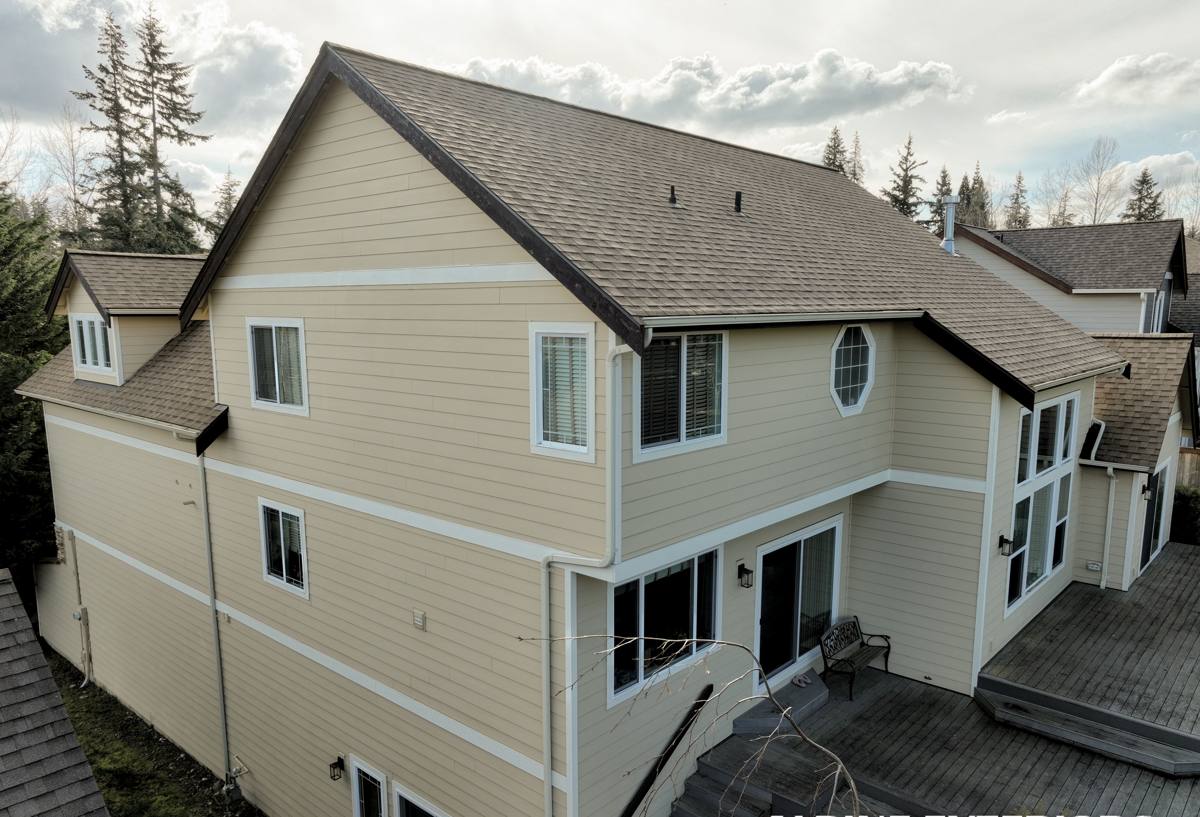
The Damage Patterns We See Most in This Area
Ledger Board and Rim Joist Rot
The ledger board — where the deck attaches to the house — is the single most common failure point we find on repair calls in this region. Flashing that was installed poorly, or not installed at all, lets water track behind the siding and into the ledger and rim joist. By the time you see staining or soft wood on the surface, the rot is often already well established underneath.
Post Base and Footing Deterioration
Posts that sit directly on concrete or in standing water at the base take on moisture from below, which is a slower but just as serious problem as rain damage from above. In wetter yards or low spots common around the Nooksack River drainage, we regularly find post bases that look fine at eye level but are soft or hollow at the bottom foot.
Fastener and Hardware Corrosion
Standard galvanized nails, screws, and joist hangers don't hold up well to sustained salt air. We see rust streaking, weeping fasteners, and hardware that's lost enough strength to compromise a connection long before the wood around it fails. This is one of the most overlooked repair issues because the damage is small and easy to miss during a quick walk-around.
Moss, Algae, and Slick Decking
Beyond being a slip hazard, moss and algae hold moisture directly against decking boards and stair treads for months at a time during our wet season. That constant dampness accelerates wood decay and breaks down the top layer of composite decking faster than manufacturers' warranties usually account for.
What a Proper Deck Repair Inspection Covers
A repair that only addresses the board someone can see wobbling from the yard isn't really a repair — it's a delay. We check the whole structure before we recommend anything:
- Ledger board attachment and flashing condition
- Joist hangers and structural fasteners for rust and loosening
- Posts and footings, checked at and below grade level
- Beam and joist spans for sagging or soft spots
- Decking boards for cupping, splintering, or rot at butt joints
- Railings and guardrails for looseness or undersized posts
- Stair stringers and treads, which take disproportionate wear
We probe suspect areas with a screwdriver or awl rather than guessing from the surface. Wood that looks gray and weathered can still be structurally sound; wood that looks fine on top can be punky an inch underneath. The only way to know is to check.
Repair or Replace? How We Make That Call
Not every deck problem needs a full rebuild, and not every deck is worth patching indefinitely. We walk homeowners through the honest trade-offs rather than defaulting to the bigger job.
| Factor | Leans Toward Repair | Leans Toward Replacement |
|---|---|---|
| Age of structure | Under 15 years, built to a reasonable standard | 20+ years, original construction predates current flashing and hardware practices |
| Extent of rot | Isolated to a few boards, one post, or the ledger connection | Widespread across framing, multiple posts, or the main beam |
| Code compliance | Guardrails, stair rise/run, and ledger flashing already meet current standards | Railing height, baluster spacing, or ledger attachment falls short of current code |
| Cost over time | Repair cost is a fraction of replacement and buys many more years | Repeated repairs are starting to approach the cost of rebuilding |
In a lot of cases here, the framing underneath is in better shape than the decking on top, because sun and standing water attack the horizontal surfaces first. That means a targeted repair — new boards, corrected flashing, upgraded fasteners — can extend a structurally sound deck by many years without a full teardown.
Our Deck Repair Process
We follow the same sequence on every repair, whether it's a single rotted stair tread or a larger structural fix:
- Assessment. Full inspection of framing, connections, and surface decking, with photos of anything hidden that we uncover along the way.
- Scope and options. A clear explanation of what's failing, why, and whether repair or partial replacement makes sense — no upsell to a full rebuild unless the structure actually calls for it.
- Isolate and remove damaged material. We cut back rot to solid wood rather than covering over compromised framing.
- Correct the root cause. If the problem is missing flashing, poor drainage, or a post sitting in standing water, we fix that condition — not just the symptom.
- Rebuild with climate-appropriate materials and fasteners. Detailed below.
- Final check. Railings tested for movement, stairs checked for level and secure attachment, and fasteners confirmed tight before we call the job done.
Materials and Fasteners We Choose for This Climate
Not every product sold for deck repair holds up the same way this close to the water. Our material choices come down to how they perform under sustained moisture and salt exposure, not just upfront cost.
Fasteners and Hardware
We use stainless steel or heavy coated fasteners and hangers rated for corrosive exposure, even when it costs more than standard galvanized hardware. Standard hardware can start showing rust within a few seasons in this environment, and a corroded joist hanger is a structural problem, not a cosmetic one.
Decking Material Trade-offs
Pressure-treated lumber, cedar, and composite decking each have a place, and each comes with a real trade-off:
- Pressure-treated lumber is affordable and easy to repair board-by-board, but it needs periodic sealing to keep moisture out, especially at cut ends.
- Cedar resists rot naturally and looks good, but it's softer and needs consistent maintenance to keep that resistance intact over time.
- Composite decking needs the least upkeep and resists moss staining better than wood, but it's a poor match for framing repairs where flexibility in board selection matters, and lower-grade composites can still trap moisture at poorly ventilated seams.
We'll tell you plainly which option fits your situation and budget rather than steering everyone toward the same product.
Keeping Your Deck Ahead of the Moss Season
A repaired deck stays repaired longer with a little seasonal attention. This is the same checklist we give homeowners after finishing a job:
- Sweep leaves and debris off decking boards regularly through fall, especially in shaded corners where moisture sits longest
- Clean visible moss and algae before it builds a thick mat, rather than waiting until spring
- Check that gaps between boards are clear so water can drain instead of pooling
- Look underneath the deck once a year for standing water or soft soil against posts
- Inspect railings and stair treads for movement, especially after a hard freeze
- Reseal wood decking on the manufacturer's recommended schedule, not just when it looks faded
Why Local Experience in Nooksack Matters
A crew that regularly works decks in and around Nooksack and Ferndale already knows where water tends to collect, which orientations take the worst of the driving rain, and how fast moss builds back in this particular microclimate. That's not something you get from a general repair checklist — it comes from seeing the same failure patterns repeat across similar homes in this part of Whatcom County. It means fewer surprises during the inspection and repair recommendations that are actually calibrated to how this area behaves, not to a national average.
Get a Straight Answer on Your Deck
If your deck has soft spots, rusted hardware, a persistent moss problem, or you're just not sure whether it needs a repair or a rebuild, we're glad to take a look. Fill out the form below for a free, no-pressure estimate — we'll give you an honest read on what's actually going on and what it'll take to fix it right.