 Ferndale Siding
 Why Kendall's Setting Changes the Siding Conversation
Kendall sits back from the coastline compared to the rest of the Ferndale service area, but that doesn't mean the siding job gets easier — it just changes what the siding has to fight. Homes out here tend to sit on wooded, shaded lots close to the North Fork Nooksack drainage, with tree cover that keeps walls damp long after a storm has passed. Add Whatcom County's long, wet shoulder seasons and you get siding conditions that are less about wind-driven salt spray and more about sustained moisture, shade, and the moss and algae growth that comes with both.
That combination is hard on the wrong material and mostly a non-issue for the right one. Fiber cement handles constant dampness because it isn't organic — there's no wood fiber for moisture to swell, no paper facing for fungus to colonize. But "fiber cement" isn't one product with one installation standard, and a siding job that ignores Kendall's shade-and-moisture pattern will show the same problems as a job on any other wet lot in the county: soft caulk joints, moss creeping in at overlaps, and paint that gives out years before it should.
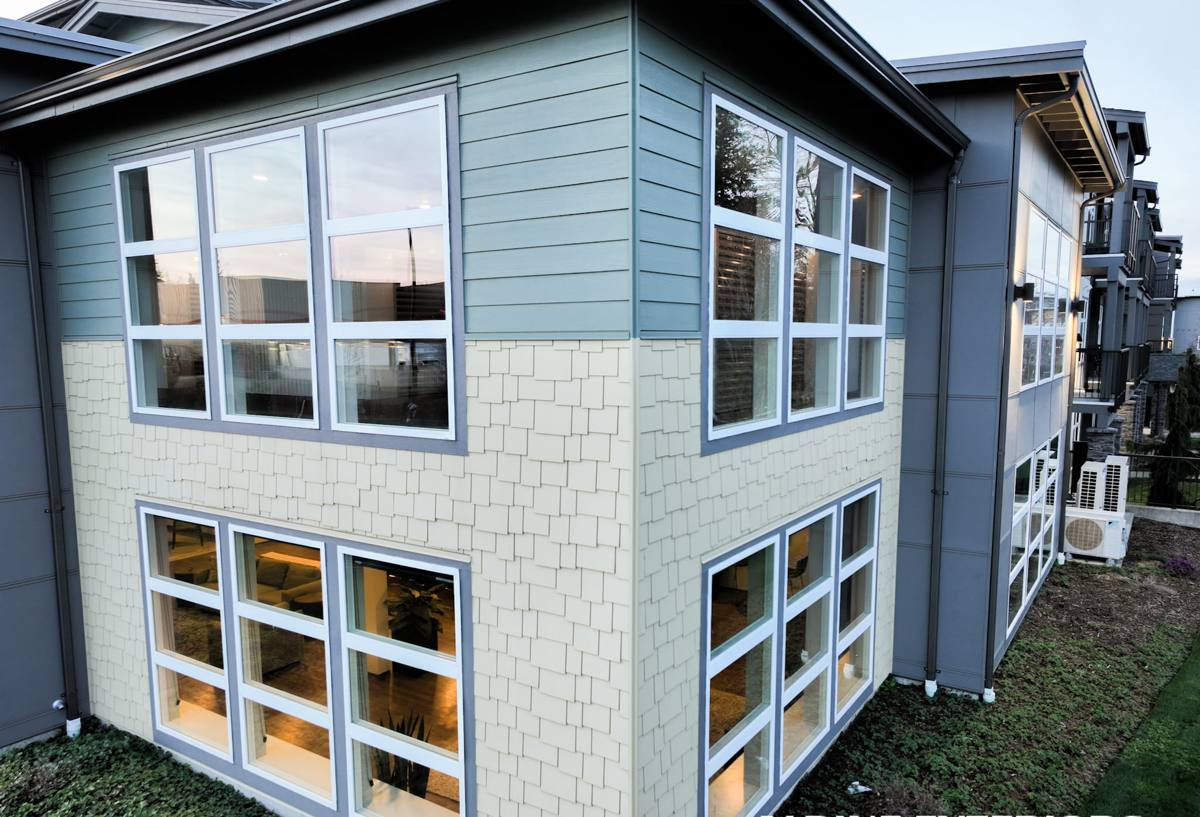
What Driving Rain and a Long Moss Season Actually Do to Siding
Driving Rain
Whatcom County storms rarely fall straight down. Wind pushes rain sideways into wall assemblies, and any siding system without proper flashing, drainage gaps, and lap coverage will eventually let water track behind the cladding. Once moisture gets behind siding, it doesn't matter how tough the face material is — the sheathing and framing behind it are what actually rot.
Moss and Algae
Shaded, damp walls in Kendall grow moss and green algae film faster than sunnier lots closer to open water. This is mostly a surface and maintenance issue rather than a structural one, but it's a real factor in how a siding product ages and how much upkeep it demands. Porous, paint-film-dependent surfaces hold moisture at the surface longer, which feeds growth and accelerates finish breakdown. A dense, factory-finished fiber cement surface sheds that growth more easily and holds its color longer under the same conditions.
Freeze-Thaw and Humidity Cycling
Winters here aren't brutally cold, but they're damp and produce enough freeze-thaw cycling to matter over 20-30 years. Materials that absorb water and then freeze — or that expand and contract more than the fasteners and joints around them — degrade faster in exactly this kind of climate.
Why We Install Only James Hardie Fiber Cement Here
We don't install vinyl, LP SmartSide, primed wood, cedar, or other fiber cement brands like Allura or Cemplank. That's a deliberate standard, not a marketing line, and it matters most on lots like Kendall's:
- Non-combustible core: Hardie's fiber cement doesn't feed a fire the way wood-based products can — relevant for wooded properties with tree cover close to the structure.
- Engineered for this climate: Hardie's HZ10 product line is formulated and warranted specifically for the wetter Pacific Northwest climate zone Kendall sits in, unlike general-purpose siding lines built for drier regions.
- Factory-cured ColorPlus finish: baked on in a controlled environment rather than field-painted, so the finish resists the fading and moisture-driven peeling that shaded, damp walls accelerate on site-painted materials.
- Dimensionally stable: fiber cement doesn't swell, cup, or warp with humidity swings the way wood-based siding can, which keeps joints tight and keeps water from having anywhere to get in.
- Transferable warranty backing: a real factor for Kendall homeowners who want the coverage to mean something if they sell.
We'd rather install one product correctly, on every home, than juggle multiple systems and installation standards. That consistency is part of why we can stand behind the work.
What a Correct Fiber Cement Job Involves
The material is only half the equation. On shaded, moisture-heavy lots like the ones common around Kendall, installation quality determines whether the siding performs for 30+ years or fails early despite being the "right" product.
Drainage and Flashing
A rainscreen or drainage gap behind the siding lets any moisture that does get past the face material escape instead of sitting against the sheathing. Every window, door, and penetration needs correctly lapped flashing — not just caulk — because caulk is a maintenance item, not a waterproofing system.
Clearances and Fastening
Hardie panels need proper clearance from grade, roofing, and decks, and fasteners need to land in framing at the manufacturer's specified pattern and depth. Skipping clearance is one of the most common corner-cuts we see on wooded, tight-to-grade lots, and it's one of the fastest ways to trap moisture at the bottom course.
Joint Treatment
Butt joints and trim intersections are where most siding failures start. Hardie's system is designed around specific joint treatments (H-jamb trim, properly primed and caulked butt joints, or shiplap detailing) — done right, these joints stay tight through the freeze-thaw cycling this climate produces.
Ventilation Behind the Cladding
On heavily shaded walls, ventilation matters as much as drainage. Trapped humidity behind siding is what actually accelerates mold and rot in framing, even when the face material itself is inert.
Mistakes We See on Rushed Jobs
| Shortcut | Why It Matters on a Shaded, Wet Lot |
|---|---|
| No drainage gap / rainscreen | Trapped moisture behind siding has nowhere to go on a wall that already dries slowly |
| Caulk used in place of flashing | Caulk fails years before flashing does, and failures happen behind the wall where they're not visible |
| Panels installed too close to grade or roofing | Wicks standing water and debris into the bottom courses, feeding rot and moss growth |
| Field-cut edges left unsealed | Exposes the fiber cement core to moisture at every cut, undermining the factory finish |
| Fasteners overdriven or missing framing | Loosens panels over time, opening gaps that let wind-driven rain in |
Cost Factors for a Kendall Fiber Cement Project
| Factor | How It Affects the Job |
|---|---|
| Home size and wall complexity | More corners, gables, and trim details mean more cutting, flashing, and labor time |
| Existing siding removal | Tear-off and disposal of old material, especially if moisture damage is found underneath |
| Sheathing or framing repair | Wet, wooded lots more often reveal hidden rot once old siding comes off |
| Access on a treed lot | Tight clearance from trees and slopes can add setup and material-handling time |
| Trim and accessory selection | HardieTrim boards, soffit, and fascia detailing add cost but improve the finished, watertight result |
| Color and plank profile | Standard ColorPlus colors vs. custom finishes, and lap width, are both priced differently |
We give a firm, written number after walking the specific home — not a phone estimate — because the variables above genuinely change the price, and guessing on a wooded lot with hidden conditions does homeowners a disservice.
How We Approach Jobs in Kendall
Working this end of the Ferndale service area regularly means we already know what to expect before we get on site: shaded walls that stay damp longer, moss and algae buildup in predictable spots, and often older siding that's been fighting a losing battle against moisture for years. That familiarity shows up in three practical ways:
- We check for hidden moisture damage at grade, around windows, and at roof-to-wall intersections before quoting — not after tear-off surprises us.
- We plan drainage and ventilation detailing for the specific shade and drainage pattern of the lot, not a generic spec.
- We sequence the work around the wetter stretches of the calendar so panels, flashing, and joints go on under conditions that let sealants and caulks cure properly.
A crew unfamiliar with this pocket of Whatcom County can install Hardie siding by the book and still miss the site-specific details — shade patterns, drainage paths, tree-driven debris — that determine how it actually performs here over the next few decades.
Maintenance Kendall Homeowners Should Expect
Fiber cement is low-maintenance, not no-maintenance, especially on a shaded lot:
- Rinse siding annually to knock down moss and algae before it establishes — a garden hose is usually enough; avoid pressure washing directly into joints and vents.
- Keep gutters clear so overflow doesn't run down wall sections and feed growth at specific spots.
- Trim back vegetation and tree limbs that keep wall sections shaded and slow to dry.
- Inspect caulk joints and trim intersections every year or two and re-caulk before gaps open up.
- Repaint on the manufacturer's recommended cycle if you ever go beyond the factory ColorPlus finish's warrantied lifespan — most homeowners never need to.
Ready for a Straight Answer on Your Home
If you're weighing a siding replacement in Kendall, we're glad to come take a look, tell you honestly what condition your walls are in, and put together a clear, written estimate — no pressure, no phone-quote guessing. Use the form below to get started.