 Ferndale Siding
 Board & Batten in Lynden: A Look That Fits the Area, If It's Built Right
Board and batten has become one of the most requested exterior looks for homes in and around Lynden — the vertical lines read as farmhouse, craftsman, or modern depending on the trim and color, and it pairs well with the barns, outbuildings, and larger lots common in this part of Whatcom County. It's a strong look. It's also a look that punishes bad installation faster than almost any other siding profile, because every seam, batten gap, and fastener line is a place for water to get in if the details aren't right.
This page is about that one product, in this one area: what board and batten needs to hold up here, what we actually do differently, and why we install it exclusively in James Hardie fiber cement rather than wood, vinyl, or engineered wood alternatives.
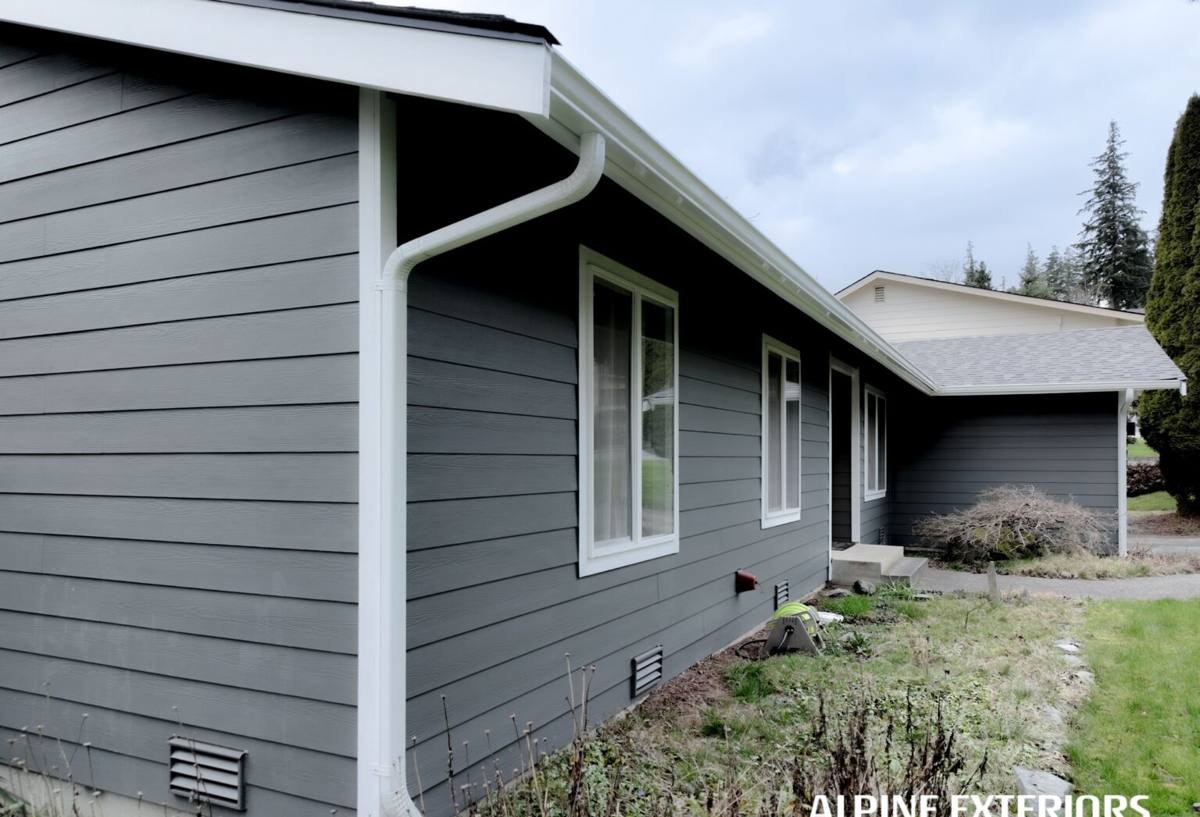
What Lynden's Climate Actually Does to Vertical Siding
Lynden sits inland from Bellingham Bay but still gets a steady dose of the same weather that defines exterior work across Whatcom County: salt-tinged marine air moving in off the Strait of Georgia and Puget Sound, long stretches of driving rain through fall and winter, and a moss season that can run most of the year on shaded elevations and north-facing walls.
Board and batten is more exposed to these forces than lap siding in a few specific ways:
- Vertical water paths. Rain runs straight down the face of the boards and concentrates at the base of every batten and every panel seam — exactly where fastener penetrations and joints already exist.
- More seams per square foot. A batten every 12 to 24 inches means more vertical joints than a horizontal lap profile, and each one is a potential entry point if it isn't flashed or gapped correctly.
- Moss and organic growth on the flats. The flat board sections between battens hold moisture and shaded moss growth longer than a lapped, self-shedding profile, especially on north and west exposures.
- Salt-laden air accelerates coating and fastener wear. Even well inland from the water, the marine air here breaks down inferior finishes and untreated fasteners faster than a dry inland climate would.
None of this means board and batten is a bad choice for a Lynden home. It means the material and the installation both have to be matched to the exposure, not just picked for the look.
Why We Install This Style Only in James Hardie Fiber Cement
Traditional board and batten was originally a wood siding pattern, and it's still sold that way — primed spruce, cedar, or engineered wood panels dressed up with battens. We don't install any of those for this profile, and the reasons are specific to how board and batten behaves in this climate rather than a general dislike of the alternatives.
Wood and engineered wood board and batten
Real wood and engineered wood board and batten look excellent on day one. The problem shows up at the cut ends, the fastener heads, and the flat board faces after a few wet seasons — these are the surfaces most exposed to standing moisture in a vertical profile, and they're also the surfaces most dependent on field-applied paint and caulk holding up. In a climate with this much rain and this long a moss season, that maintenance burden compounds year over year.
Vinyl board and batten
Vinyl board and batten panels are lightweight and low-cost, but they're also thin, they expand and contract more with temperature swings, and the batten reveal lines tend to look noticeably flatter and more uniform than a true dimensional board profile. Impact resistance is also a real concern on street-facing elevations and near play areas.
James Hardie board and batten
Hardie's fiber cement board and batten system uses HardiePanel vertical siding with Hardie battens (or a shiplap panel treated with batten trim), factory-finished in ColorPlus. It's non-combustible, engineered for the Pacific Northwest under Hardie's HZ10 climate designation, and the factory finish is baked on rather than field-applied — which matters enormously on a profile where the flat faces and battens are the parts most exposed to rain and salt air. It's the one board and batten system we're comfortable standing behind for a Lynden home long-term.
| Factor | Wood / Engineered Wood | Vinyl | James Hardie Fiber Cement |
|---|---|---|---|
| Finish durability in salt air | Field-applied paint, wears fastest at seams and cuts | Molded-in color, can fade and chalk | Factory-baked ColorPlus finish, engineered for coastal exposure |
| Moisture and rot resistance | Vulnerable at cut ends and fastener holes | Won't rot, but seams can trap moisture behind panels | Non-combustible, moisture and rot resistant when installed to spec |
| Moss and organic growth on flats | Holds moss without regular cleaning/repainting | Resists rot but moss still colonizes the surface | Dense fiber cement surface, easier to clean without damaging finish |
| Impact resistance | Moderate, dents and splits possible | Lower, can crack in cold or from impact | High, rated for real-world jobsite and weather impact |
| Ongoing maintenance | Repainting and caulk maintenance every few years | Low, but limited repair options if damaged | Occasional wash, no repainting cycle needed for the life of the finish |
| Warranty | Varies by manufacturer, often prorated | Varies, often prorated | Transferable, non-prorated Hardie product warranty when installed to spec |
What a Correct Board & Batten Installation Actually Involves
The style is simple to look at, but the assembly underneath is not forgiving of shortcuts. A correct job includes:
- A sound water-resistive barrier (WRB) installed and lapped correctly behind the whole assembly, with all penetrations flashed before a single panel goes up.
- A drainage plane or furring strategy so water that gets behind the panels has somewhere to go and dry out, rather than sitting against the sheathing.
- Correct fastener spacing and placement per Hardie's published fastening schedule — through-fastened only where specified, with corrosion-resistant fasteners appropriate for this climate.
- Panel and batten gaps sized to spec, not caulked tight edge-to-edge, so the assembly can move seasonally without cracking the finish.
- Flashing at every horizontal transition — window and door heads, water tables, roof-to-wall intersections — since these are the spots where a vertical profile is most likely to funnel water into a wall assembly if missed.
- Field-cut edges sealed per manufacturer instructions, since a factory finish only protects the surface it was applied to.
Where board and batten jobs actually fail
In our experience, board and batten failures almost never come from the material itself — they come from skipped or rushed flashing details, battens caulked shut with no room to move, or fasteners driven wherever was convenient instead of on the engineered pattern. On a profile this exposed to Whatcom County's rain, those shortcuts show up as water stains and soft trim within a few wet seasons, not decades.
Our Process for a Lynden Board & Batten Project
We run every board and batten job through the same sequence, whether it's a full re-side or a single accent wall:
- On-site assessment. We look at wall orientation, existing moisture damage, roofline intersections, and how much of the home is exposed to prevailing wind-driven rain before quoting anything.
- Tear-off and sheathing check. Old siding comes off and we inspect the sheathing underneath for rot or soft spots before anything new goes on — this is the step that gets skipped when a job is priced too low.
- WRB and flashing installation. Barrier, flashing, and any penetration sealing happen before the first panel is hung.
- Panel and batten install to Hardie spec. Correct fastening pattern, correct gaps, correct sequencing around openings.
- Detail work. Trim, corners, and transitions — the parts of a board and batten job that make or break the finished look.
- Final walkthrough. We go over the finished wall with the homeowner before calling the job done.
Maintaining Board & Batten Through Whatcom County's Wet Season and Moss Season
A correctly installed Hardie board and batten wall needs very little from a homeowner, but a little seasonal attention goes a long way in this climate:
- Rinse shaded or north-facing walls once or twice a year to keep moss and organic growth from taking hold on the flat board faces.
- Keep gutters and downspouts clear so runoff isn't sheeting directly down a wall section during heavy rain.
- Trim back vegetation and landscaping that keeps a wall section shaded and damp longer than the rest of the house.
- Have caulking at trim and window transitions checked periodically — even a well-installed panel system relies on these secondary seals staying intact.
- Address any impact damage (from equipment, branches, etc.) promptly rather than letting a chipped area sit exposed through a wet season.
Why Hiring a Crew That Already Works in Lynden Matters
Board and batten is unforgiving of generic installation. A crew that already works regularly in Lynden and the surrounding Whatcom County area brings a few real advantages over a contractor unfamiliar with the area:
- Familiarity with Whatcom County permitting and inspection expectations, so a project isn't held up by paperwork surprises.
- Firsthand experience with how local wind direction and rain exposure actually hit different home orientations, not just generic manufacturer guidance.
- An established sense of which flashing and drainage details matter most on the home styles common to this area — farmhouse, craftsman, and larger rural properties with more wall exposure.
- Faster response for warranty follow-up or a service call, since we're not traveling in from outside the region for every visit.
Board and batten rewards a contractor who treats the flashing and fastening details as seriously as the finished look — that's the standard we hold every Lynden project to.
If you're considering board and batten siding for your Lynden home, we're happy to walk the property, look at your exposure and existing siding condition, and put together a straightforward, no-pressure estimate using the free form below.