 Ferndale Siding
 Deck Building in Lynden: Built for the Weather We Actually Get
Lynden sits in the same wet, marine-influenced weather pattern as the rest of Whatcom County — long stretches of driving rain from fall through spring, heavy dew and fog off the surrounding farmland, and a moss and algae season that can run eight or nine months out of the year on shaded or north-facing surfaces. A deck built to a generic national spec doesn't hold up here the way it might in a drier climate. A deck built for this region does.
We're based out of Ferndale and work throughout Whatcom County, including Lynden. That matters more than it might seem — a crew that only occasionally works this far north doesn't see the same recurring problems we do: fastener corrosion, ledger board rot at the house connection, moss buildup on boards that never get enough sun to dry out. Those are the details that decide whether a deck is still solid in fifteen years or soft and spongy in five.
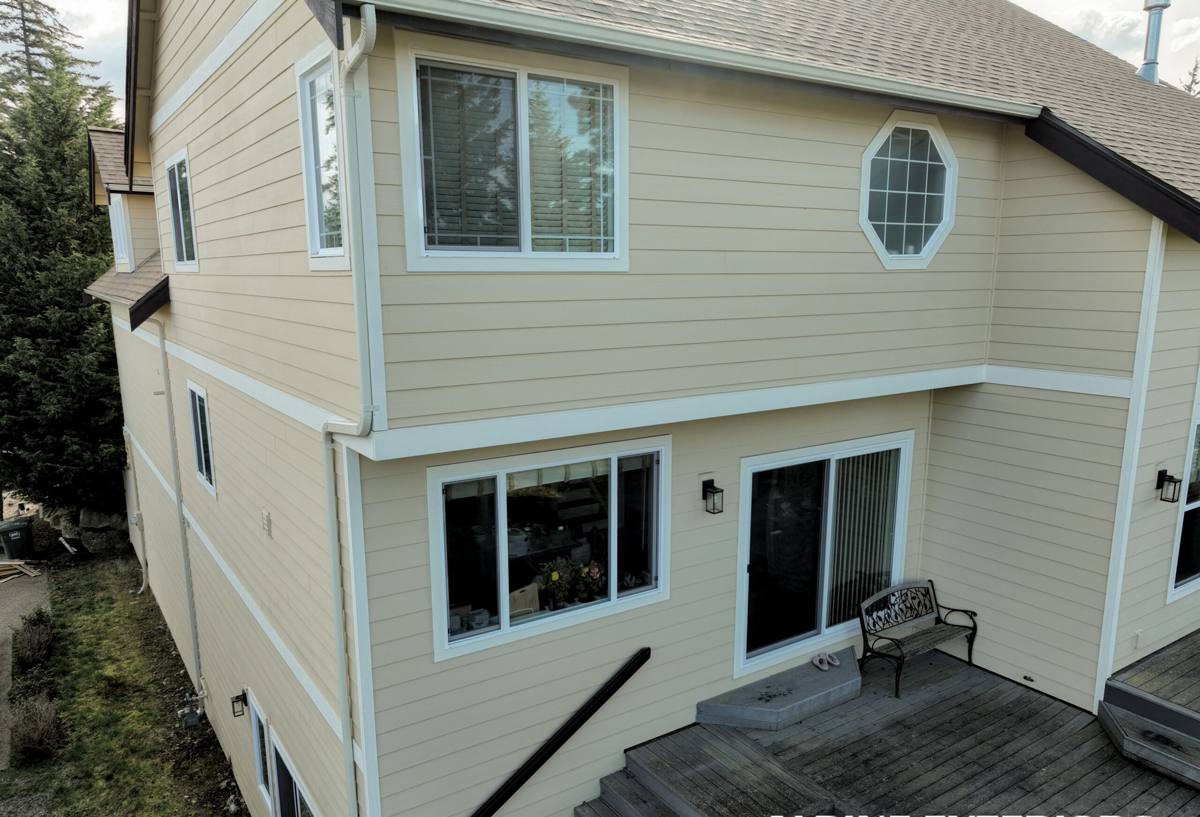
What Lynden's Climate Demands From a Deck
Whatcom County's marine climate brings a few specific challenges that any deck built here needs to be designed around:
- Prolonged moisture exposure. Boards, framing, and hardware sit wet for days at a time during fall and winter storms, not just after a single rain event.
- Slow drying conditions. Overcast skies and high humidity mean surfaces that get shaded by the house, trees, or fencing can stay damp for a long time after rain stops — ideal conditions for moss, algae, and mildew.
- Corrosive air. Between salt-influenced marine air moving inland off the Sound and near-constant dampness, unprotected or poorly coated metal fasteners and connectors corrode faster than homeowners expect.
- Freeze-thaw cycling. Whatcom County gets enough cold snaps each winter that footings need to be set below frost depth and framing needs to tolerate some seasonal movement without loosening connections.
None of this means a deck can't last decades in Lynden. It means the build has to account for water from the start — not try to seal it out after the fact with surface coatings alone.
Choosing the Right Decking Material
There's no single "best" decking material — the right choice depends on budget, how much maintenance you're willing to do, and how much shade and moisture the deck's location gets. Here's how the common options compare in our climate:
| Material | Moisture & Moss Resistance | Maintenance | Typical Lifespan | Cost Tier |
|---|---|---|---|---|
| Pressure-treated pine/fir | Good if sealed regularly; end grain and fastener holes are weak points | Annual cleaning, re-sealing every 1-2 years | 15-25 years | Lowest |
| Western red cedar | Naturally rot- and insect-resistant, but still absorbs moisture and grows moss in shade | Cleaning plus periodic oil or stain to prevent graying and moss | 20-25 years | Mid |
| Capped composite | Excellent — moisture doesn't penetrate the board, and moss rinses off easily | Occasional washing; no sealing or staining | 25-30+ years (manufacturer warranty backed) | Higher upfront |
| Uncapped/early-generation composite | Weaker — some older composite products absorb moisture at the core and are more prone to surface mold | Regular cleaning to prevent staining | Varies widely | Mid |
For decks in shaded yards or under mature trees — common on larger Lynden lots — we lean toward recommending capped composite or well-maintained cedar over uncapped composite or bare pressure-treated boards, simply because those shaded areas are exactly where moss and mildew take hold fastest. We'll walk your specific site and sun exposure with you before making a recommendation rather than pushing one product across the board.
Why We're Selective About Composite Products
Not all composite decking is built the same way, and we don't install every product on the market. Older or uncapped composite boards can absorb water at the core over time, which leads to swelling, staining, and mold growth that no amount of surface cleaning fixes. Our standard is to use fully capped composite products with a documented moisture-resistance warranty, and to install them exactly to manufacturer spacing and fastening specs — those specs exist specifically to manage expansion and drainage in wet climates like ours.
The Construction Details That Actually Determine Whether a Deck Lasts
Most deck failures we get called out to inspect trace back to a handful of overlooked details at the time of construction — not the decking material itself. In a climate like ours, these aren't optional upgrades; they're the baseline for a deck that's supposed to last:
- Ledger board flashing. Where the deck attaches to the house is the single most common point of hidden rot. Proper step flashing and a water-resistant barrier between the ledger and the house sheathing keeps water from tracking behind the siding.
- Joist tape. A self-adhering waterproof membrane over the top of every joist keeps rainwater from sitting in fastener holes and wicking into the wood grain — a major source of slow, hidden joist rot.
- Corrosion-resistant hardware. Hot-dip galvanized or stainless steel joist hangers, screws, and bolts rated for treated lumber contact. Mismatched or under-rated hardware corrodes and weakens structural connections years before the wood itself fails.
- Proper board spacing. Consistent gapping between deck boards lets water drain through instead of pooling on the surface, which speeds drying time and reduces moss growth.
- Ventilation underneath. Adequate clearance and airflow below the deck framing keeps humidity from getting trapped against the joists, which is especially important on lower decks close to grade.
Any one of these done wrong can cut years off a deck's life, and none of them are visible once the deck is finished — which is exactly why it matters who's building it.
Footings, Framing, and Permits in Whatcom County
Deck footings in this area need to be set below the local frost depth and sized to the load the structure will carry — undersized or shallow footings are a common source of shifting and settling over time, especially on the heavier clay-influenced soils found in parts of Whatcom County. Framing lumber should be rated for ground or moisture contact wherever it's within the required clearance of grade, and beam spans need to be sized correctly for our snow load requirements, not just guessed at.
Most new decks and deck rebuilds over a certain height or footprint require a building permit, and the permitting authority depends on whether the property is inside Lynden city limits or unincorporated Whatcom County. We handle the permit application and inspection scheduling as part of the build so you're not tracking down requirements yourself.
Railings, Stairs, and Code Requirements
Any deck surface more than 30 inches above grade requires a compliant guardrail, and stairs with a rise over a certain height require handrails — these aren't optional design choices, they're code minimums that get checked at inspection. Baluster spacing, guardrail height, and stair rise/run all have specific tolerances. We build to code as the floor, not the ceiling, and we'll talk through railing material options — wood, composite, metal, or cable — based on your budget and the look you're going for.
Our Process for a New or Rebuilt Deck
- On-site assessment. We look at sun exposure, drainage, soil, and how the deck connects to the house before recommending materials.
- Design and material selection. We size the structure to actual load requirements and walk you through decking, railing, and hardware options with honest trade-offs on cost and maintenance.
- Permitting. We handle the application and schedule required inspections.
- Framing and waterproofing. Ledger flashing, joist tape, and corrosion-resistant hardware go in before a single deck board is placed.
- Decking, railing, and finish work. Installed to manufacturer spec for proper drainage and expansion.
- Final walkthrough. We go over basic maintenance so the deck performs the way it's supposed to for the long haul.
Keeping a Lynden Deck Moss- and Mildew-Free
Even a well-built deck needs some seasonal upkeep in this climate. A simple maintenance routine goes a long way:
- Sweep off leaves and debris regularly in fall — trapped organic matter holds moisture and feeds moss growth.
- Rinse or wash the deck surface at least once or twice a year, more often in shaded areas.
- Check and clear gaps between boards so water keeps draining freely rather than pooling.
- For wood decks, re-seal or re-stain on the schedule recommended for the product — skipping a cycle in our climate shows up fast as graying and moss.
- Trim back overhanging branches and nearby vegetation to let more sun and airflow reach the deck surface.
Why Hire a Crew That Already Works in Lynden
A deck built by a crew unfamiliar with this area's soil, frost depth, and moisture patterns can look fine on day one and still develop problems within a few years — hidden ledger rot, corroded hardware, or moss that never fully clears because the drainage details weren't handled correctly. We build decks throughout Whatcom County, including Lynden, and we build every one — regardless of decking material — with the flashing, fastening, and drainage standards this climate actually requires, not just the minimum to pass inspection.
If you're planning a new deck or need to replace one that's showing its age, we'd be glad to take a look and give you a straightforward, no-pressure estimate. There's a form below to get started.