 Ferndale Siding
 Building New in Point Roberts: What the Climate Asks of Your Windows
Point Roberts sits out on its own peninsula, surrounded on three sides by water, which means every home built there takes a harder hit from the weather than a comparable house a few miles inland. Salt-laden air moves off the water and settles on everything, wind-driven rain comes in sideways rather than straight down, and the mild, damp Pacific Northwest climate gives moss and mildew a long season to work on any surface that stays shaded or wet. For a new build, that's not background information — it's a set of design constraints that should shape how the windows are specified, flashed, and installed before the first pane ever goes into a rough opening.
New construction is the one point in a home's life where getting windows right is genuinely easier than it will ever be again. The wall is open, the sheathing is exposed, and there's no old caulk, old trim, or old flashing to work around or guess about. Ferndale Siding Contractor treats that as an opportunity, not just a checkbox — a window installed correctly during framing will outperform almost any retrofit for decades, while one installed carelessly becomes the hidden source of a moisture problem that doesn't show up until the drywall or siding around it has already been damaged.
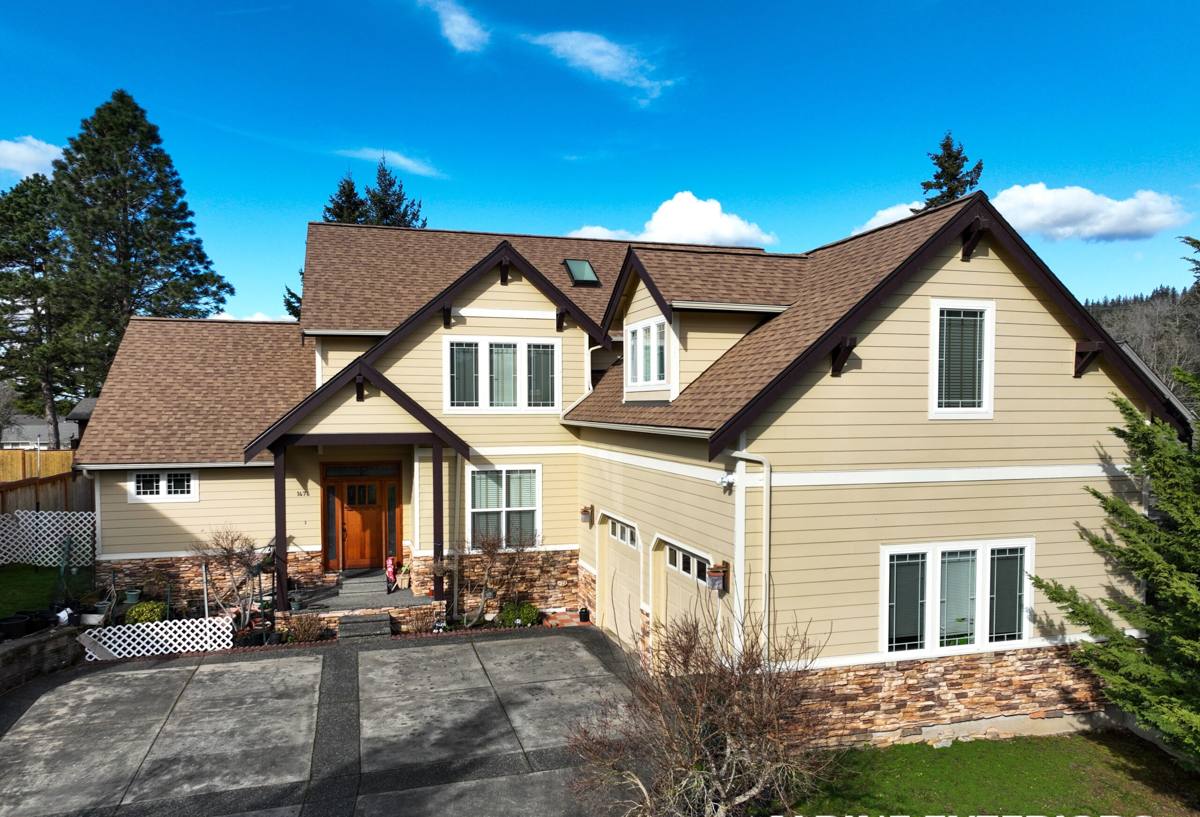
New-Construction Windows Are Not the Same Job as Replacement Windows
It's worth being clear about this up front, because the two jobs are often talked about as if they're interchangeable: they aren't. Replacement windows go into an opening that already has finished siding, interior trim, and a wall assembly that's been living with the elements for years. New-construction windows go in during framing, before the water-resistive barrier and exterior finish are complete, which means the installer is building the entire drainage plane around the window rather than working within one that already exists.
The Rough Opening and Flashing Sequence
Everything starts with the rough opening being framed to the window manufacturer's specified dimensions, square and plumb, with no humps or dips in the sill framing that would trap water. From there, the flashing sequence has to happen in the correct order: a sloped sill pan flashing goes in first so any water that gets past the window sheds back outward rather than sitting against the frame, then the window itself, then jamb flashing, then head flashing with a drip cap that laps over the water-resistive barrier above it. Every layer has to shingle over the one below it, the same way roofing shingles do, so water is always directed down and out rather than getting trapped behind a layer that was installed out of sequence. On a house exposed to the kind of driving, wind-pushed rain Point Roberts sees off the water, a flashing sequence installed even slightly out of order is often where a leak starts, not the window unit itself.
Nail-Fin vs. Block-Frame Installation
Most new-construction vinyl and fiberglass windows use a nailing fin around the perimeter of the frame, which gets fastened directly to the sheathing and integrated into the water-resistive barrier before siding goes on. Some higher-end and wood-clad windows use a block-frame approach instead, where the window sits recessed in the opening and is sealed and flashed differently. Both methods work when they're detailed correctly, but they are not interchangeable installation techniques, and a crew that's used to one can get sloppy applying the same habits to the other. Knowing which method a given window line calls for, and following that manufacturer's instructions exactly, matters more to long-term performance than almost any other single decision on the job.
Choosing the Right Window for a Salt-Air, High-Moss Environment
Frame material is usually the first decision a homeowner focuses on, and it's a meaningful one for a peninsula home. The trade-offs aren't the same as they'd be for an inland build, because corrosion, moisture exposure, and UV load are all higher this close to open water.
| Frame Material | How It Handles Salt Air & Moisture | Trade-Offs to Know |
|---|---|---|
| Vinyl | Won't corrode or rot; reasonably tolerant of salt air | Lower upfront cost, but can expand, contract, and discolor with sun and temperature swings over time; hardware and screens still need corrosion-resistant components |
| Fiberglass | Very stable dimensionally, holds paint and finish well, strong resistance to moisture and salt exposure | Higher material cost than vinyl; fewer ultra-budget product lines available |
| Aluminum | Strong and slim-profile, but a poor insulator and prone to corrosion pitting without a quality marine-grade finish | We generally steer new builds away from bare aluminum this close to the water unless it's a high-end thermally broken system |
| Wood-clad | Attractive interior wood with an exterior cladding meant to block moisture | Any breach in the cladding or sealant at a joint lets moisture reach the wood core; needs more attentive long-term maintenance in a wet climate |
There's no single "correct" answer for every budget and design goal, but for a peninsula build we push clients toward vinyl or fiberglass units with corrosion-resistant hardware as the practical, lower-maintenance choice, and we're upfront when a wood-clad or aluminum option a homeowner likes is going to demand more upkeep in this specific environment.
Glass, Coatings, and Meeting Washington's Energy Code
Washington's energy code sets minimum performance requirements for new-construction windows, and those numbers matter more in a marine climate than homeowners sometimes expect. A low U-factor keeps interior surfaces warmer, which matters directly for condensation control — cold glass and cold frames in a humid coastal climate are exactly what produces the fogged-up windows and dripping sills homeowners complain about in winter. Look for low-E coated glass paired with argon or krypton gas fill between panes, which improves insulating performance without changing how clear the glass looks. For a home exposed to strong afternoon sun off the water on certain elevations, a low-E coating tuned for solar heat gain control can also cut down on unwanted heat gain, depending on which direction that wall faces.
None of this is a place to cut corners to save a small amount up front. Undersized glass packages that technically meet code minimums but don't account for a specific wall's orientation and exposure tend to show their weaknesses first in condensation on the coldest, wettest weeks of the year — exactly the weeks a new homeowner is least prepared to deal with a warranty claim.
Hardware, Sealants, and the Details That Fail First Out Here
The window unit itself usually isn't what fails first in a coastal environment — it's the smaller components around it. Standard-grade hinges, locks, and screen hardware can start showing corrosion pitting within a few years on a wall that takes direct salt spray, while marine-grade or coated hardware holds up considerably longer. Sealants matter just as much: a quality, UV-stable exterior sealant at the window perimeter needs to stay flexible through temperature swings and repeated wetting without cracking, chalking, or pulling away from the substrate. A cheap sealant that looks fine on installation day is often the first thing to fail two or three winters later, right when the flashing behind it needs it most.
- Confirm hardware (hinges, locks, screen clips) is specified in a corrosion-resistant finish, not just standard-grade
- Ask what sealant brand and type is being used at the window perimeter, and whether it carries a real service-life warranty
- Verify the sill pan flashing is sloped to drain outward, not flat or pitched toward the house
- Check that head flashing includes a drip cap that laps over the water-resistive barrier above it
- Make sure the installer is following the specific window manufacturer's installation instructions for that product line, not a generic method
- Ask whether window rough openings will be inspected before insulation and interior finish cover them up
How Our New-Construction Window Installation Works
On a new build, we coordinate window installation directly with framing and the exterior weatherproofing sequence rather than treating it as a separate trade that shows up whenever it's convenient. That means confirming rough opening sizes against the actual window schedule before framing is finished, installing sill pan flashing and integrating it with the water-resistive barrier as that barrier goes on, setting and shimming each window plumb, level, and square, and completing the full flashing sequence before siding crews close the wall up. We check each unit operates smoothly — opening, closing, and locking without binding — before it gets covered by trim or siding, because that's the last easy point to catch a frame that's slightly out of square.
Because Ferndale Siding Contractor also installs the siding and exterior trim around these windows, the same crew that sets the windows is responsible for how they integrate with the wall assembly around them, rather than handing off a finished rough opening to a separate window subcontractor and hoping the details line up. That coordination is where a lot of the moisture problems we see in older homes actually originated — not a bad window, but a handoff between trades where nobody owned the whole assembly.
Why a Ferndale Crew That Already Works Point Roberts Matters
Point Roberts is a U.S. exclave reachable by land only by driving through Canada, and that geography has real, practical consequences for a construction project that a generic quote from an unfamiliar contractor won't account for. Material deliveries, crew scheduling, and border-crossing logistics all take more planning than a job a few blocks off the highway in Ferndale, and a crew that hasn't worked out there before is learning those logistics on your project's timeline rather than showing up already knowing how the day needs to be structured.
There's also the permitting side. New-construction window installation on a Point Roberts build still runs through Whatcom County's building process, and a crew that's pulled permits and passed inspections for other Point Roberts projects already knows what the county is looking for at framing and rough-in stage, rather than finding out partway through the job. None of that replaces sound installation technique, but it does mean fewer surprises, fewer delays, and a schedule that holds up better than one built on guesswork.
Living With New Windows Through a Long Moss Season
Correctly installed new-construction windows are close to maintenance-free for years, but "close to" isn't "completely," especially in a climate where moss and mildew have a long growing season. It's worth keeping an eye on exterior sealant joints for cracking or gaps as the house settles in its first couple of years, clearing any moss or organic debris that accumulates on sills or in window wells before it holds moisture against the frame, and making sure gutters and downspouts near windows are actually directing water away from the wall rather than dumping it down the face of the house. None of this is heavy maintenance — it's the kind of once-or-twice-a-year check that catches a small problem while it's still small.
If you're planning a new build or a major addition in Point Roberts and want windows specified and installed the right way from the start, we're happy to walk through the plans with you and explain exactly what we'd recommend for your specific site and exposure. Reach out below for a free, no-pressure estimate.