 Ferndale Siding
 Roofing in Point Roberts: A Peninsula With Its Own Weather Problems
Point Roberts sits at the end of a peninsula bordered by the Strait of Georgia and Boundary Bay, which also makes it a U.S. exclave reachable only by crossing into Canada or by water. That geography shapes roofing here in two real ways. First, the marine exposure is more constant than what most inland Whatcom County homes deal with — wind and moisture come off the water from more directions and rarely let up. Second, getting the right crew and the right materials there on schedule takes planning that a lot of roofing companies never bother to work out, because they only visit occasionally.
Homes in this area take on salt-laden wind, driving rain that comes in sideways during winter storms, and a moss season that stretches longer than it should because the air stays damp between weather systems. A roof that might comfortably reach the end of its rated lifespan in a drier part of the county can start failing early out here if it wasn't installed with that exposure specifically in mind.
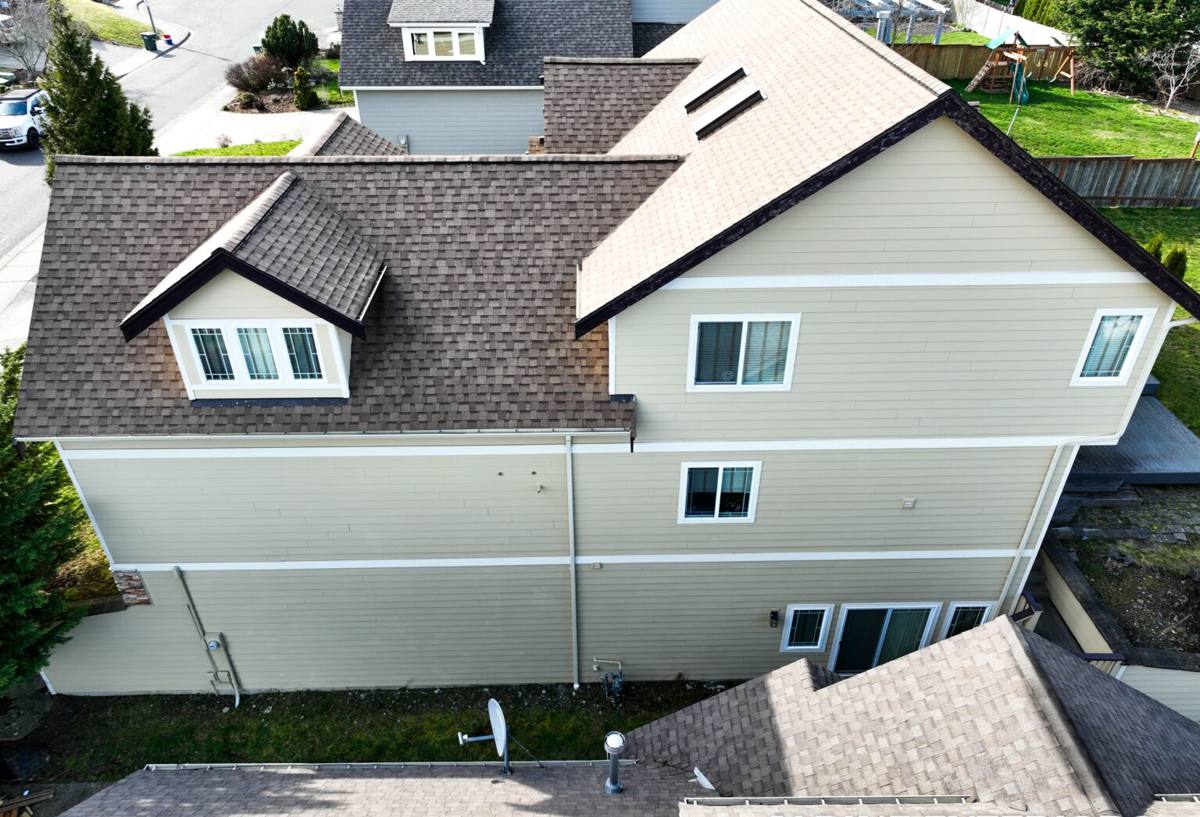
Signs a Point Roberts Roof Has Reached Replacement, Not Repair
Repair makes sense when the problem is isolated. Replacement becomes the honest answer once the roofing system as a whole is wearing out. In this area, that usually shows up as:
- Granule loss and bald patches on south- and west-facing slopes that catch the most sun and wind
- Shingles curling, cupping, or lifting at the edges, especially where wind exposure is worst
- Thick moss mats on north-facing or shaded slopes that keep coming back after cleaning
- Rusted, pitted, or failing flashing and fasteners around chimneys, vents, and valleys
- Soft or spongy decking underfoot, usually a sign moisture has been getting in for a while
- Leaks that only show up during heavy wind-driven rain, not calm weather
- A roof approaching or past 20–25 years old, which is often shorter in real-world terms here than the manufacturer's stated lifespan assumes
Any one of these on its own might be a repair. Two or three together, especially on an older roof, usually means the underlying system has reached the end of its useful life.
What Salt Air, Driving Rain, and Moss Actually Do to a Roof
Salt Air and Fastener Fatigue
Salt in the air accelerates corrosion on anything metal — nail heads, flashing, valley metal, vent caps. Standard fasteners can start rusting years before they would inland, and once a fastener corrodes, it loses grip and the roofing above it starts to lift. This is one of the more overlooked failure points on coastal roofs, because the shingles themselves can still look fine while the metal holding everything together is quietly failing underneath.
Wind-Driven Rain
This isn't a heavy-snow climate, but it is a wind-driven-rain climate, and that changes what the roof needs. Rain that's being pushed sideways by wind can work its way under shingle edges, through poorly lapped seams, and into fastener penetrations that would stay dry in calmer weather. The fix isn't a heavier shingle — it's correct lapping, proper fastening patterns, and water barriers under the roofing that don't rely on gravity alone to keep water out.
Moss and Trapped Moisture
Shaded and north-facing slopes stay damp longer, and moss takes hold wherever moisture sits. Once established, moss holds even more water against the shingle surface, which accelerates granule loss and, over time, can work moisture down to the decking. Left unaddressed long enough, that's how a roof problem becomes a rot problem.
Choosing a Roofing System Built for This Exposure
There's no single "right" roofing material for Point Roberts — the right choice depends on budget, roof design, and how much long-term maintenance a homeowner wants to take on. Here's how the common options compare against the specific conditions this area deals with:
| Roofing System | Salt-Air Performance | Moss Resistance | Typical Lifespan Here | Maintenance |
|---|---|---|---|---|
| Architectural asphalt shingle | Good, with corrosion-resistant fasteners and flashing | Moderate — algae-resistant granules help, but shaded slopes still need periodic cleaning | 20–25 years | Moderate; moss checks and gutter cleaning recommended |
| Standing seam metal | Excellent with the right coating and fastener rating | High — steep, smooth panels shed moss far better than shingles | 40–50+ years | Low; occasional fastener and sealant check |
| Composite or synthetic shake | Good | Moderate to high, better than natural wood shake | 30–40 years | Low to moderate; periodic inspection |
For most Point Roberts homes, the deciding factor isn't which material is "best" in the abstract — it's matching the roof's exposure and pitch to a system that won't need constant intervention to hold up.
What a Correct Roof Replacement Involves
Full Tear-Off and Deck Inspection
We don't install over existing layers. A full tear-off is the only way to actually see the decking, catch soft or rotted plywood before it's covered up, and start the new roof on a clean, solid surface.
Underlayment and Water Barrier
Given how much of the damage here comes from wind-driven rain rather than standing water, we install a synthetic underlayment along with self-adhered waterproof membrane at eaves, valleys, and roof-to-wall transitions — the spots where wind-blown rain is most likely to find a way in.
Flashing and Fasteners
Every fastener and flashing piece on a coastal reroof should be corrosion-resistant — stainless steel or hot-dip galvanized, not the standard-grade hardware that's fine inland but starts failing early out here.
Ventilation
Balanced intake and exhaust ventilation keeps the attic space from staying damp, which matters twice over in this climate: it protects the decking from the inside, and it reduces the moisture that feeds moss growth from the outside.
Why Local Logistics Matter for a Point Roberts Roof Job
This is the part of the job that has nothing to do with shingles and everything to do with whether the project actually goes smoothly. Because Point Roberts is only reachable by crossing an international border or by water, a crew and its materials both have to cross that same route — and that takes real scheduling, not a same-day decision.
A crew that doesn't already work this area regularly can end up improvising: arriving without enough material staged, running into border wait times mid-project, or stretching a job over more open-roof days than necessary. On a roof that's exposed to driving rain, extra open-roof days are exactly what you don't want. A crew that already has a working rhythm for getting people and materials to Point Roberts plans the whole job around that reality up front, which keeps the roof covered and protected in the shortest practical window.
Our Process, Start to Finish
- On-site inspection and a written estimate covering scope, materials, and timeline
- Material selection and scheduling built around a realistic weather window and logistics for this location
- Full tear-off and deck inspection, with any needed decking repairs addressed before anything new goes on
- Installation of the water barrier, flashing, and new roofing system
- Ventilation check to confirm intake and exhaust are balanced
- Full site cleanup and haul-away of old materials
- Final walk-through and warranty paperwork before we consider the job done
Keeping a New Roof Performing After Installation
A correctly installed roof still benefits from a little upkeep in this climate. A few habits go a long way toward getting the full lifespan out of the investment:
- Trim back overhanging branches so shaded slopes get more airflow and sun
- Clean gutters and valleys at least twice a year, more often near trees
- Have moss growth checked and removed early, especially on north-facing slopes, rather than letting it establish
- Avoid pressure washing the roof surface — it strips granules and shortens shingle life
- Have flashing and fastener points inspected periodically given the salt-air exposure
- Address any small leak or lifted shingle promptly rather than waiting for it to spread
What Affects the Cost of a Point Roberts Roof Replacement
Every roof is different, so we don't quote pricing sight unseen, but a few factors consistently move the number up or down: the size and pitch of the roof, how many layers need to be torn off, how much decking repair is needed once we open things up, the roofing system chosen, and the logistics of working in an exclave, which adds planning time compared to a similar job elsewhere in Whatcom County. Broadly speaking, full roof replacements on typical homes can range from the low five figures for a straightforward asphalt shingle job up to considerably more for larger roofs or metal systems — but the only way to get a number that actually applies to your roof is a look at it in person.
If your roof is showing wear from salt air, moss, or one too many wind storms, we're happy to take a look and put together a free, no-pressure estimate — no obligation, just an honest read on where your roof actually stands.