 Ferndale Siding
 Siding Replacement Built for Marietta's Marine Climate
Marietta sits close to the water on the edge of Ferndale, and that location shapes everything about how siding performs here. Homes in this part of Whatcom County take on salt-laden air off the bay, driving rain that comes in sideways during winter storms, and a moss season that can stretch from October well into spring. Siding that would hold up fine twenty miles inland can fail early here if it wasn't chosen or installed with this specific exposure in mind.
When we replace siding on a Marietta home, we're not just swapping old material for new. We're addressing the specific combination of moisture, salt, and shade that this neighborhood deals with every year. That means paying close attention to the water-resistive barrier, flashing details, fastening patterns, and the siding product itself — not just the visible finish coat.
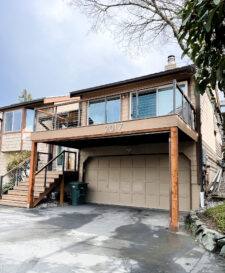
What Salt Air and Driving Rain Do to Siding Over Time
Two things wear down exterior siding faster near the water: airborne salt and sustained moisture exposure.
Salt Air
Salt-laden marine air accelerates corrosion on exposed fasteners, trim fasteners, and any metal flashing that isn't properly protected. It also breaks down lower-quality paint finishes faster, which is why factory-applied, baked-on finishes hold up better than field-applied paint in this kind of exposure.
Driving Rain
Wind-driven rain off the water doesn't just hit siding — it gets pushed up under laps, around window trim, and into any gap where flashing or caulking has failed. Over years, this is how water finds its way behind siding and into wall sheathing, even when the surface looks fine.
Moss and Algae
Whatcom County's long wet season and the shade many Marietta lots get from mature trees create ideal conditions for moss and algae growth on north-facing and shaded walls. Beyond the cosmetic issue, moss holds moisture against the siding surface for extended periods, which shortens the life of moisture-sensitive materials.
Signs a Marietta Home Needs Siding Replacement
Not every siding problem calls for full replacement, but these signs usually mean it's time to have it looked at:
- Soft or spongy spots when you press on the siding, especially near the bottom courses or around windows
- Visible swelling, bubbling, or delamination on panel edges
- Paint that's failing repeatedly in the same spots year after year, no matter how often it's repainted
- Persistent moss or algae staining that returns quickly after cleaning
- Warping, cupping, or gaps opening up between boards or panels
- Visible rot at corners, butt joints, or anywhere trim meets siding
- Rising energy bills that point to a wall assembly no longer doing its job
If you're seeing more than one of these, it's usually a sign that moisture has already gotten behind the siding, not just on top of it — which is a bigger job than a repaint.
What a Correct Siding Replacement Actually Involves
A siding replacement is only as good as what happens underneath it. On a Marietta property, we treat the following as non-negotiable, not optional upgrades:
Full Tear-Off and Inspection
We remove the old siding down to the sheathing so we can actually see what's there. This is the only way to catch hidden rot, compromised sheathing, or old moisture damage before it's covered up again for another twenty years.
Water-Resistive Barrier
A continuous, properly lapped weather-resistive barrier goes on before any siding. In a location that takes on this much wind-driven rain, gaps or shortcuts here are exactly where future leaks start.
Flashing at Every Penetration
Windows, doors, hose bibs, vents, and any other wall penetration get proper flashing integrated with the water-resistive barrier — not just caulk. Caulk is a maintenance item, not a moisture barrier, and it's one of the first things to fail in salt air.
Correct Fastening and Clearances
Fiber cement siding has specific fastening patterns and minimum clearances from grade, roofing, and decks that matter more in wet climates than dry ones. Getting these wrong is one of the most common causes of early siding failure we see on inspections.
Trim and Caulking Details
The finish details — trim boards, caulking joints, touch-up paint on cut edges — are where a lot of installers cut corners. These are also the details that determine whether a paint or coating warranty actually holds up over time.
Why We Install Only James Hardie in This Climate
We install James Hardie fiber cement siding exclusively, and Marietta's exposure is a good example of why. Hardie's HZ5 product line is engineered for the kind of freeze-thaw and moisture cycling that Pacific Northwest marine climates produce, and fiber cement doesn't absorb and swell with moisture the way wood-based products can.
The ColorPlus factory finish is baked on under controlled conditions rather than applied on site, which gives it better adhesion and fade resistance than field-applied paint — a real advantage against sustained salt air exposure. Hardie siding is also non-combustible, which matters increasingly for insurance and building code considerations in Washington.
We've made a standard of not installing vinyl, LP SmartSide, or other fiber cement brands. That's not a knock on every homeowner who has one of those products — it's that after years of installs and repairs in this exact climate, we've settled on the one system we trust to hold up here without surprises, and we'd rather stand behind one product completely than offer several we have reservations about.
Our Process for Marietta Siding Replacement Projects
- On-site assessment. We inspect the current siding, check for moisture damage, and evaluate exposure on each side of the house — the water-facing and shaded sides usually need the most attention.
- Written estimate. You get a clear scope of work and pricing before anything starts, including what's being replaced and why.
- Tear-off and sheathing check. Old siding comes off, and we address any rot or sheathing damage found underneath before moving forward.
- Barrier and flashing installation. Water-resistive barrier and flashing go in at every seam, window, and penetration.
- Hardie siding installation. Panels or lap siding are installed to manufacturer spec, with correct fastening and clearances for this climate.
- Trim, caulking, and touch-up. Finish details are completed and cut edges are sealed per Hardie's specifications to protect the warranty.
- Final walkthrough. We go over the completed work with you before calling the job done.
Cost Factors for Marietta Siding Replacement
Every home is different, but these are the main factors that drive cost on a siding replacement project in this area:
| Factor | Why It Matters Locally |
|---|---|
| Extent of hidden damage | Marine moisture exposure means more homes need sheathing repair than in drier inland areas |
| Home size and wall complexity | Multiple gables, dormers, and trim details add labor time |
| Siding profile chosen | Lap siding, shingle-style panels, and board-and-batten each price differently |
| Existing exterior condition | Rot repair, resheathing, or trim replacement adds to the base siding cost |
| Access and site conditions | Shaded, tight, or sloped lots common in this area can affect scaffolding and staging needs |
We provide itemized estimates so you can see exactly what's driving the number, rather than a single lump figure.
Why a Crew That Already Works Marietta Matters
Siding crews that work this specific area regularly already understand the exposure differences between a shaded, tree-covered lot and one facing open water — and they price and detail the job accordingly instead of guessing. They also know the practical realities of working in this part of Whatcom County: seasonal weather windows, typical permit requirements through Ferndale and the county, and how to sequence a project around the wetter months so materials aren't compromised during installation.
A crew unfamiliar with this climate may use generic clearances, skip flashing details that matter more here than elsewhere, or simply not budget enough time for tear-off surprises that are more common near the water. None of that shows up until years later, when it's a much more expensive problem.
Questions Worth Asking Any Siding Contractor
- Are you licensed and insured to work in Washington, and can you provide proof?
- Do you install a water-resistive barrier and flashing system, or just replace panels over what's there?
- What siding brand and product line do you install, and why that one specifically?
- Will cut edges and fastener heads be sealed and touched up per manufacturer spec?
- Is the manufacturer's warranty transferable if the home is sold?
- Have you worked on homes with similar exposure — shaded, waterfront, or high-moss conditions?
If your Marietta home's siding is showing its age, we're happy to take a look and give you an honest read on what it needs — whether that's a full replacement or something less. Reach out for a free, no-pressure estimate using the form below.